




Carved Timber Hallway Chair
A carved timber hallway chair provides a firm, upright seat and carries the sculptural weight of centuries past.
Carved Timber Hallway Chair
A carved timber hallway chair is an upright seat designed for transient use in a reception space, most commonly appearing from the Victorian period alongside nineteenth-century examples and earlier eighteenth-century forms.
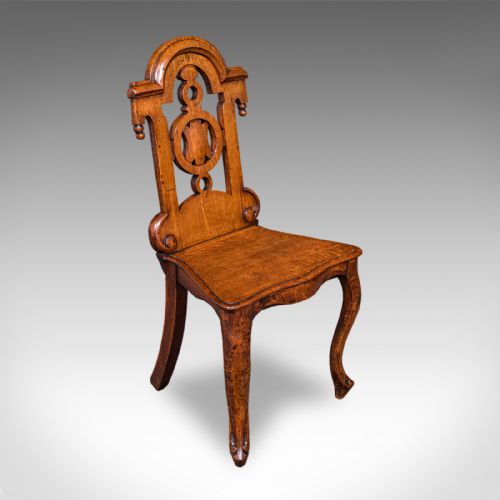
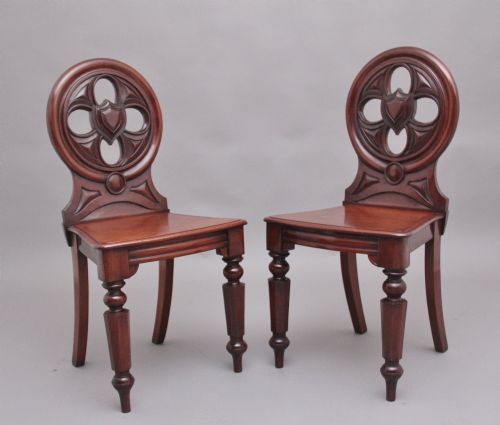
The pieces on this page span styles such as Gothic Revival, Regency, Jacobean Revival, and the Aesthetic Movement, often presenting as single seats, pairs, or matched sets.
Makers such as Gillows and Holland & Sons produced pieces in this category, utilising durable timbers to create functional hall furniture that greeted visitors.
Judging Quality
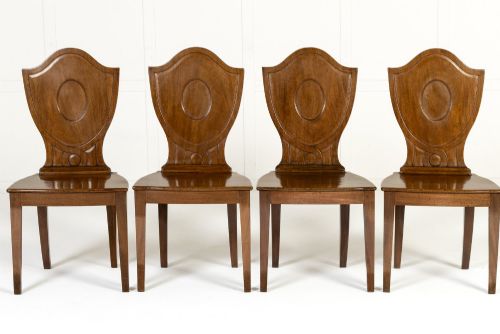
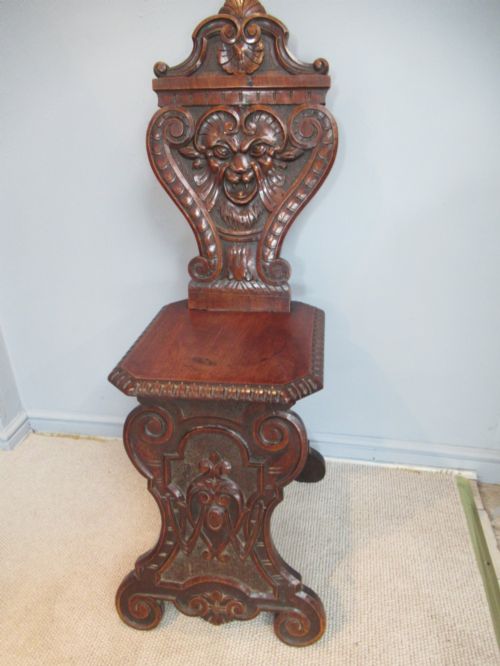
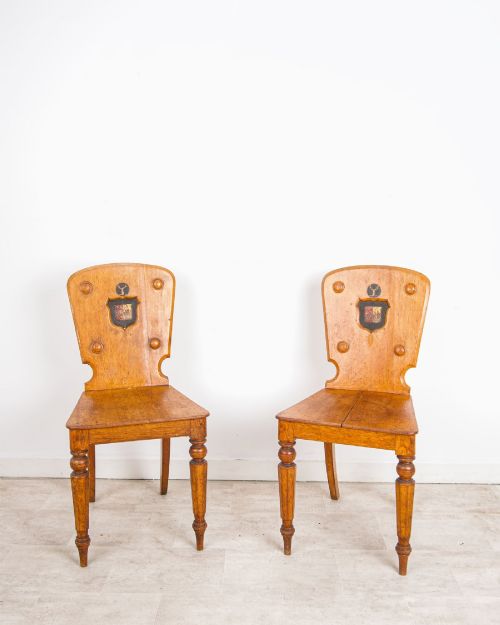
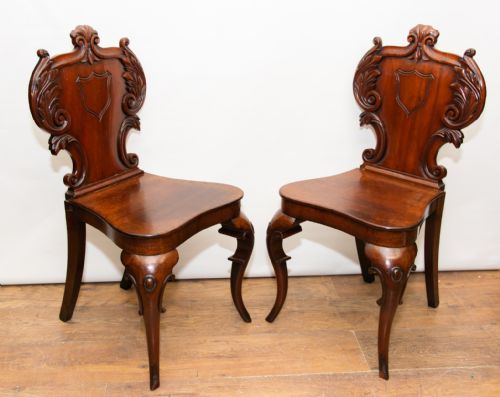
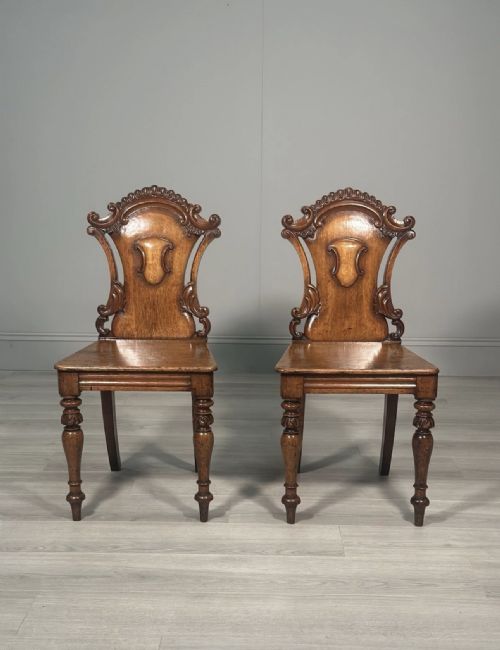
The distinction between tiers rests upon the depth and crispness of the timber carving, particularly on the back panels where heraldic shields or shell designs appear.
Superior examples demonstrate careful selection of grained mahogany or figured oak, maintaining structural rigidity alongside decorative ambition.
Many of these chairs feature carved heraldic shields, allowing generations of visitors to ponder family crests while waiting in the hallway.
Gillows·Holland & Sons
The Carved Timber Hallway Chair Glossary
- Shield back
- A chair back shaped in the outline of a heraldic shield, frequently carved with crests or coats of arms. This form is common in nineteenth-century examples.
- Gothic Revival
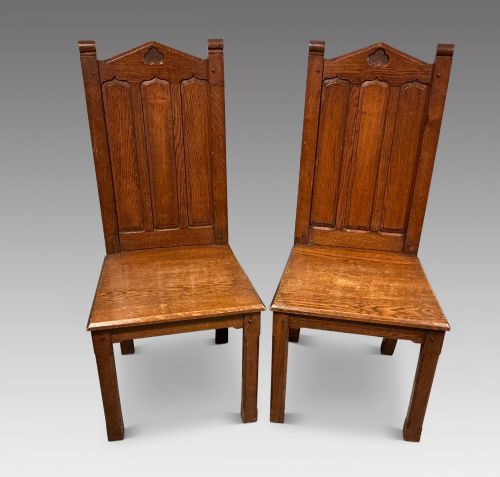
- An architectural and decorative style drawing on medieval forms, featuring pointed arches and heavy timber carving. It appears frequently in Victorian seating.
- Aesthetic Movement
- A late nineteenth-century design current emphasising artistic refinement over strict historical revival. Pieces from this movement display simpler, stylized lines.
- Cabriole leg
- A furniture leg that curves outward and then tapers inward, finishing in a pad or scroll foot. This shape derives from classical animal forms.
Carved Timber Hallway Chair: Frequently Asked Questions
Where should I place a hall chair?
These chairs suit entrance halls, corridors, or landings where space is limited and an upright seat is sufficient for brief moments.
Because they traditionally stood against walls to be seen upon entry, they work well in similar transitional areas today.
How do I care for antique timber?
Keep the wood away from direct heat sources and sudden humidity changes to prevent the timber from splitting or warping over time.
Apply a traditional wax polish occasionally to nourish the surface and maintain the natural lustre of the grain.
Are these chairs comfortable for daily sitting?
Hall chairs were built primarily for posture and display rather than extended lounging, featuring rigid timber seats without upholstery.
They function best as occasional seats or striking decorative elements within a room rather than primary lounging chairs.
How do I distinguish Victorian from Regency styles?
Regency pieces often exhibit classical restraint and clean proportions, frequently executed in rich mahogany with subtle carved details.
Victorian items tend toward heavier ornamentation, incorporating Gothic Revival motifs, deep relief carving, and robust oak construction.