

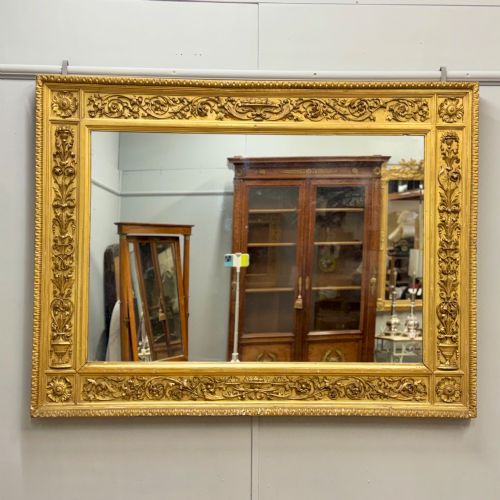
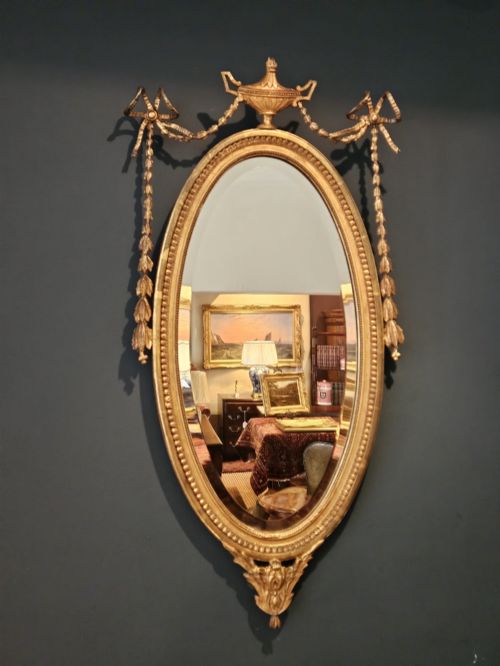
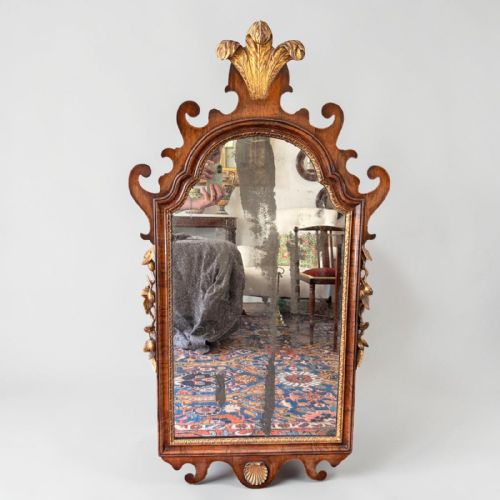
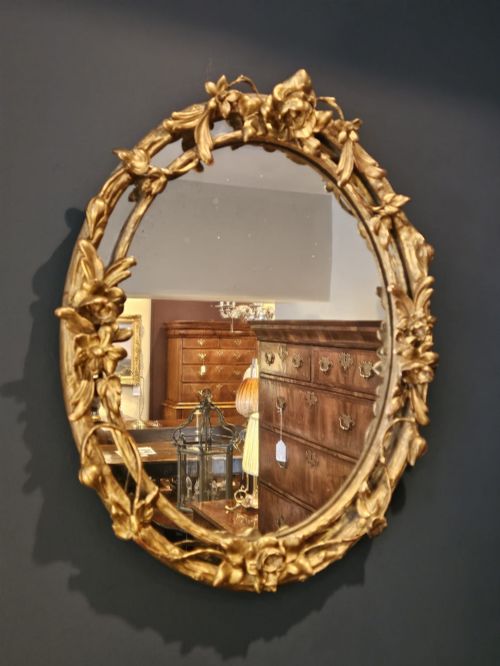
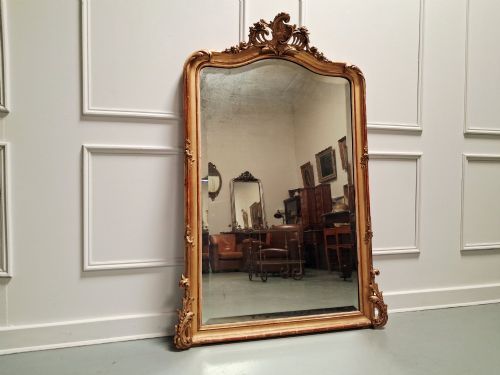

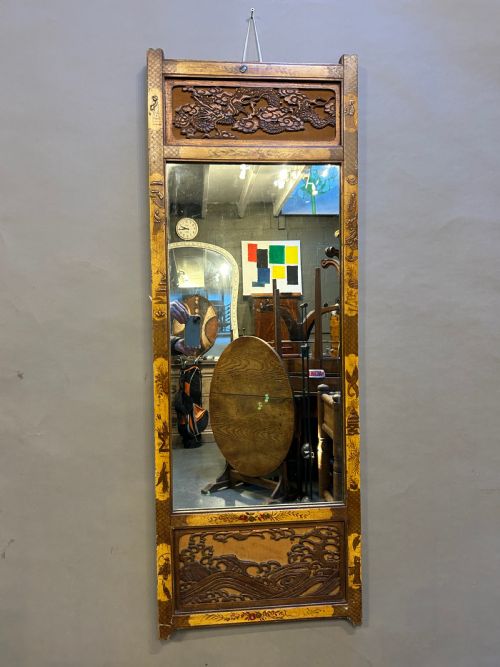


Carved Timber Gilt Mirror
These carved timber gilt mirrors bring warmth and reflection to a room, ranging from grand Victorian proportions to intimate Georgian forms.
Carved Timber Gilt Mirror
A carved timber gilt mirror is a wall-hanging reflector framed in wood that has undergone carving and gilding. These pieces serve both practical reflective use and decorative wall ornamentation.
The selections span several distinct eras, featuring 19th Century and Victorian works alongside Georgian pieces and early 20th century items. Forms vary from oval mirrors and pier wall mirrors to larger Italian carved giltwood wall mirrors.
Buyers will frequently encounter revival aesthetics such as French Rococo, Rococo Revival, Italian Baroque, and Chinoiserie styles. Object types extend from standard wall mirrors to picture frames and fairground boards.
Materials and construction
Carved timber forms the foundational structure of these pieces, utilising woods such as mahogany and walnut alongside general timber and wood. Artisans shape these materials through hand carving to create intricate decorative details like rose vines and architectural pediments.
Surface decoration relies on gesso applied over the wood to create a smooth bed for subsequent gold leaf or gilding. This layered technique provides the bright metallic finish characteristic of antique giltwood and gilded mirror frames.
Carved Timber Gilt Mirror Retail Price Guide 2026
Typical asking prices for carved timber gilt mirror among the pieces listed under this phrase on Sellingantiques today, from the lower quarter to the upper quarter. They describe what is for sale here now, not the wider market.
Listings feature 19th Century, Victorian, Georgian, and early 20th century periods, utilising timber, gesso, glass, and gold leaf.
Distinctions in quality
Quality reveals itself in the crispness and depth of the hand carving upon the timber substrate, where deeply undercut foliage and confident scrollwork distinguish superior examples from simpler mouldings. The application of gesso and gold leaf also plays a decisive role, with smooth, luminous surfaces indicating skilled craftsmanship.
The integrity of the underlying timber structure and the preservation of the original gilded surface further separate exceptional pieces from ordinary ones. Well-maintained frames retain their structural balance and stylistic harmony across periods ranging from the Georgian era to the early 20th century.
The Carved Timber Gilt Mirror Glossary
- Giltwood
- Wood that has been coated with gold leaf or powder. This finish provides the characteristic metallic sheen seen on antique frames.
- Gesso
- A plaster mix applied to wood surfaces to prepare them for gilding. It creates a smooth base that holds fine carved details.
- Pier wall
- A narrow wall space between windows where tall mirrors were traditionally hung. Pier wall mirrors are proportioned specifically for these architectural spots.
- Baroque
- An ornate artistic style characterised by dramatic movement and rich detail. It influences several of the Italian and French wall mirrors in this collection.
Carved Timber Gilt Mirror: Frequently Asked Questions
How do I clean a gilt mirror?
Dust the carved wooden frame gently with a soft, dry brush to protect the delicate gold leaf layer. Avoid liquid cleaners on the gilded surfaces, as moisture can damage the underlying gesso.
Clean the glass separately using a standard glass cleaner applied to a cloth rather than sprayed directly onto the mirror. This prevents moisture from seeping behind the glass edges and harming the silvering or the frame.
How can I date a gilt mirror?
Examine the construction methods of the timber frame, including the joinery and the type of wood used, such as mahogany or walnut. Different periods favour distinct stylistic elements, from Georgian symmetry to Victorian revival curves.
Look closely at the glass plate itself for signs of age, such as slight bevels, minor imperfections, or foxing. The style of the gesso and carving work also provides strong clues regarding the decade of manufacture.
Are these mirrors suitable for bathrooms?
Antique gilt mirrors require stable indoor environments away from excessive moisture and humidity. High steam levels in bathrooms can damage the delicate gesso and gold leaf surfaces over time.
Keep these pieces in dry living areas, hallways, or bedrooms where the timber and gilding remain protected from rapid temperature fluctuations.