






Carved Timber Fragment
A carved timber fragment holds centuries of texture, offering a tangible piece of architectural history for your walls.
Carved Timber Fragment
A carved timber fragment represents a rescued piece of a larger architectural scheme, sculpture, or furnishing. When you examine a carved timber fragment, you look at remnants from structures and decorative woodwork spanning the sixteenth to the nineteenth centuries.
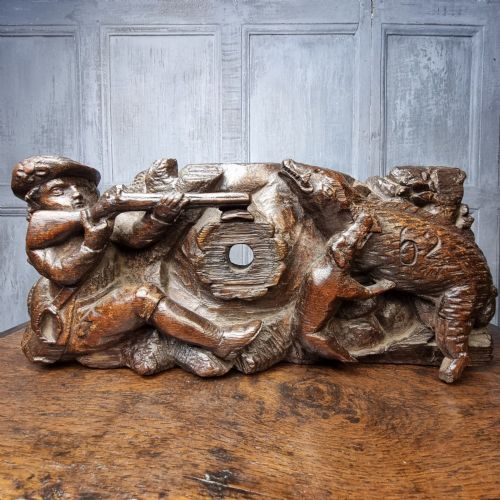
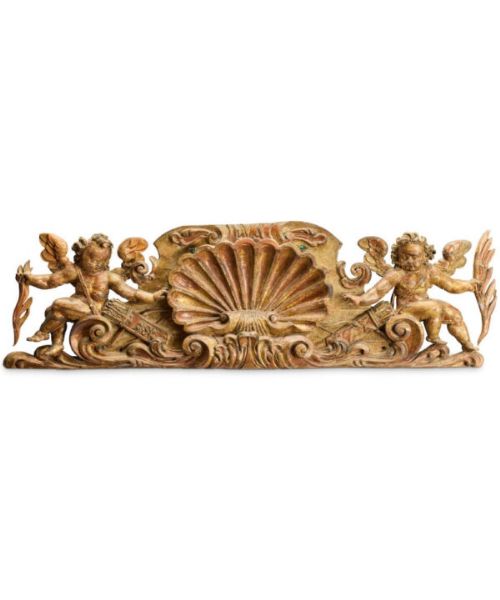
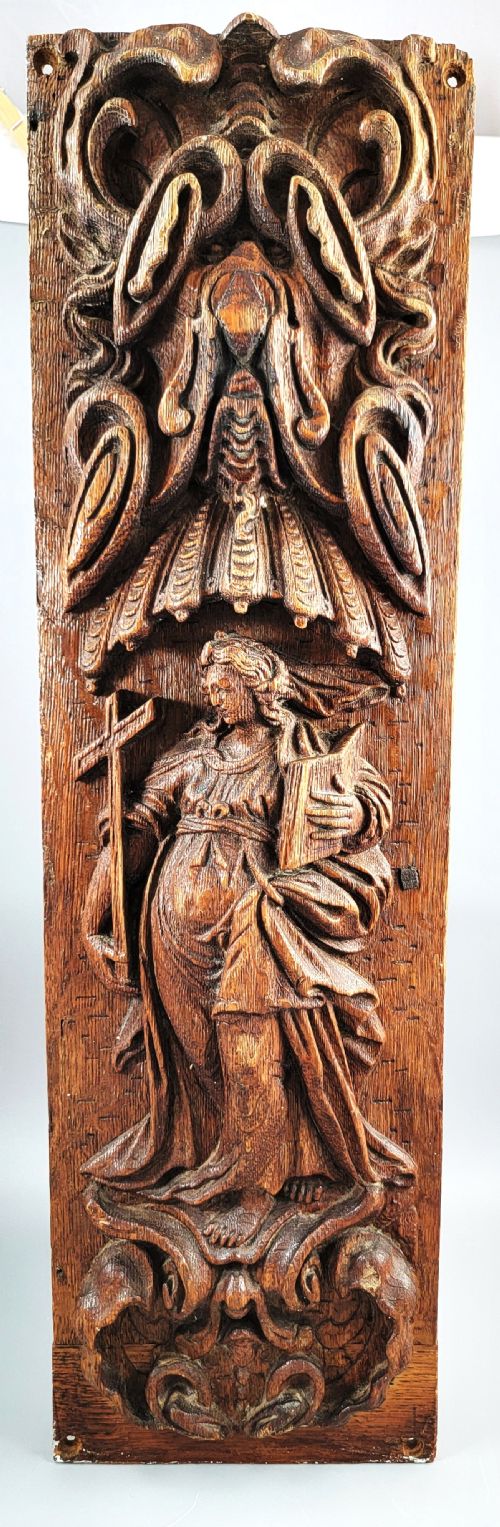
The pieces on this page appear in various forms, including oak panels, ceiling boss panels, friezes, and architectural pediments. You are most likely to meet seventeenth-century oak carvings and panels, alongside sixteenth-century Flemish and French Renaissance fragments.
Origins stretch across European and international traditions, encompassing Italian, French, Flemish, German, and Indian works. These items function primarily as wall reliefs, decor, and sculptures salvaged from historic buildings, furniture, and fairground rides.
Assessing quality in antique carvings
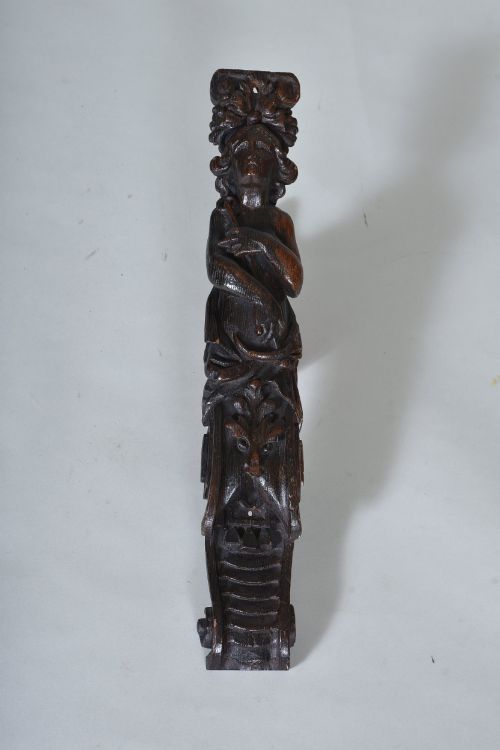
Quality rests upon the depth, clarity, and ambition of the hand-carved detail, distinguishing masterwork figures from simpler regional pieces. Sharp relief work on figures like caryatids, saints, or lion heads indicates superior sculptural competency.
Condition and original context dictate the desirability of each piece, with intact sixteenth and seventeenth-century surfaces holding distinct appeal. The sophistication of the regional style, whether Baroque, Renaissance, or folk art, governs the visual impact.
The selection includes architectural salvage, wall reliefs, and figures executed in Baroque, Renaissance, and folk art styles.
The Carved Timber Fragment Glossary
- Caryatid
- A carved architectural support sculpted in the form of a draped female figure. These serve as columns or pillars in classical and Renaissance architecture.
- Term
- A pedestal figure where the upper body transitions downwards into a parallel-sided pillar. This form appears frequently in sixteenth-century walnut carvings.
- Ceiling Boss
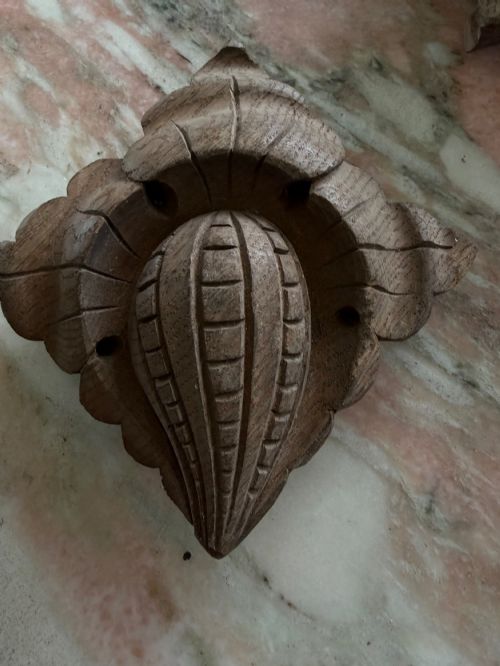
- A decorative projecting block placed at the intersection of ribs in a ceiling or vault. These panels often feature carved floral or geometric motifs.
- Architectural Salvage
- Building materials and decorative elements rescued from structures slated for demolition or restoration. This category preserves historical fragments for decorative display.
- Parcel Gilt
- A surface decoration technique where portions of an object receive a thin layer of gold leaf while other areas remain exposed wood or paint.
Carved Timber Fragment: Frequently Asked Questions
What is a carved timber fragment?
A carved timber fragment is a surviving piece of older architectural woodwork, furniture, or sculpture. These items are salvaged from historic buildings and objects to be displayed as wall art.
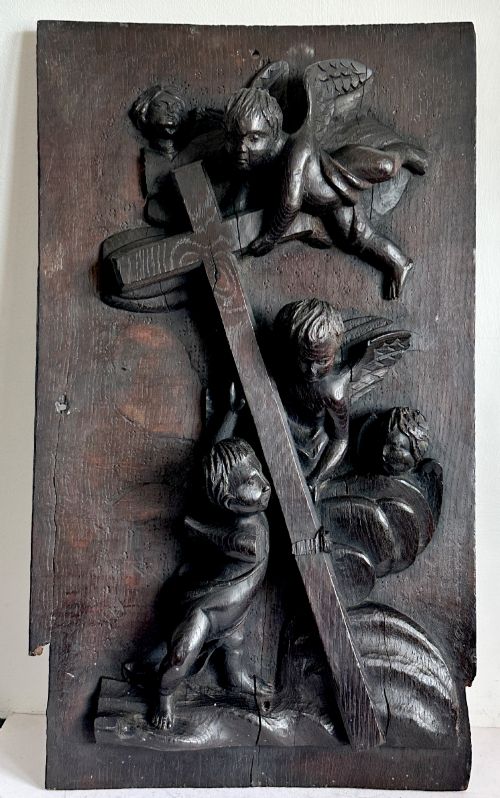
They range from sixteenth-century religious panels to seventeenth-century oak friezes and nineteenth-century decorative elements.
How were these fragments used originally?
Historically, these carvings formed integral parts of larger structures, such as church interiors, stately ceilings, and grand furniture pieces. They decorated pediments, friezes, and structural supports.
Over time, buildings were altered or demolished, leaving these decorative wooden sections behind as isolated artistic elements.
How do I hang a timber fragment?
Hanging these pieces requires assessing the weight and rear structure of the specific timber fragment. Many pieces are heavy oak or walnut and need secure wall fixings.
Consult a professional framer or installer to attach appropriate brackets that support the wood without causing structural damage.
How do I identify the period of a carving?
Period identification relies on recognising stylistic markers, such as Renaissance figures, Baroque flourishes, or Jacobean geometric patterns. The choice of wood, including dark oak or walnut, also points towards specific centuries.
Comparing tool marks and historical wear helps corroborate the age indicated by the style and subject matter.