


Carved Teak Stand
A carved teak stand brings dense floral motifs and rich colonial history into a room, spanning folding tables, plant stands, and reading rests.
Carved Teak Stand
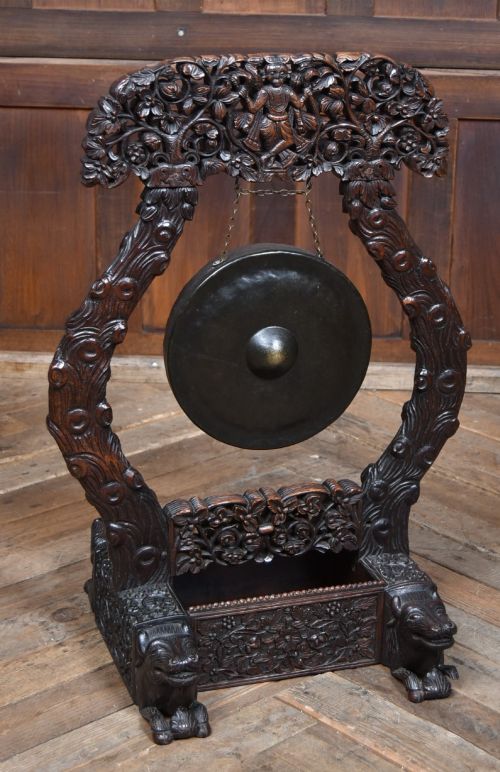
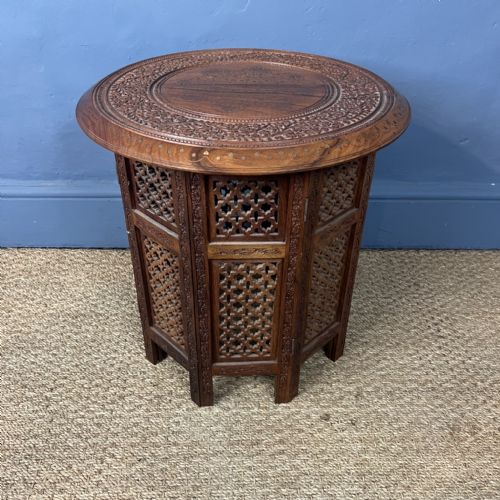
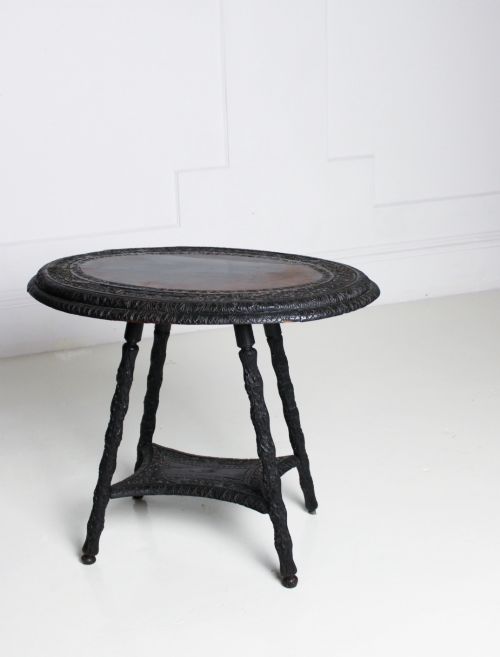
A carved teak stand encompasses a diverse group of occasional furniture, book rests, and plant pedestals originating largely from nineteenth and early twentieth century workshops. Buyers searching for a carved teak stand encounter octagonal tables, folding campaign pieces, and tiered side tables associated with Anglo-Indian and Burmese colonial production.
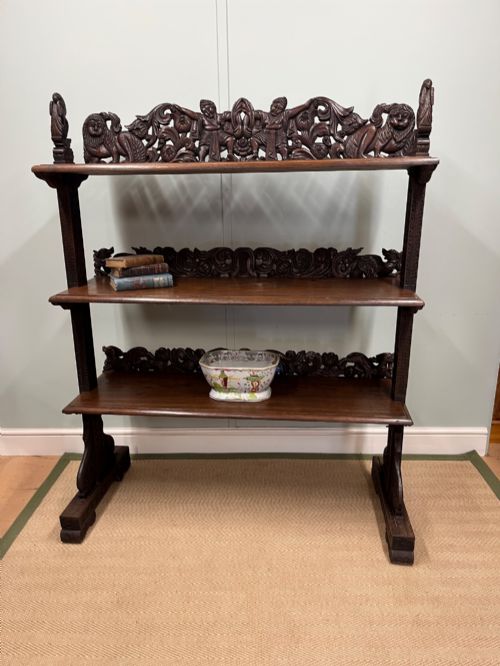
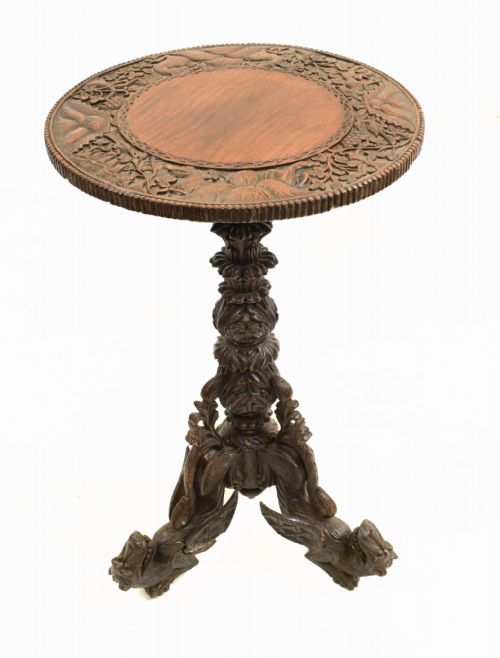
The selection frequently includes specialised forms such as elephant tables, camel tables, and book stands utilising native hardwoods. These items reflect the cross-cultural design exchanges of the British colonial period, blending traditional oriental carving with forms suited to Western drawing rooms.
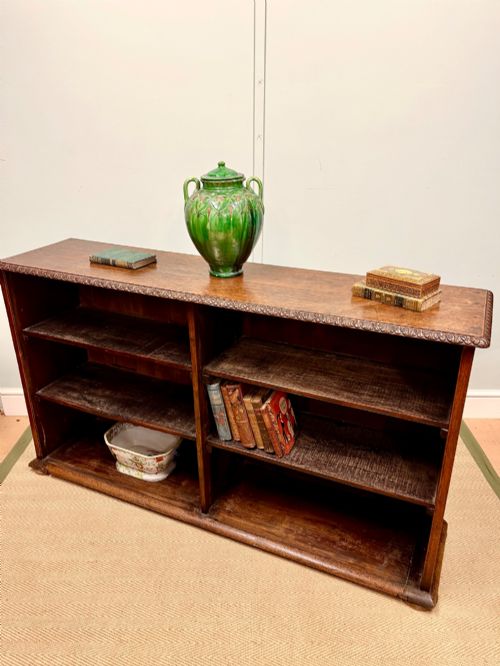
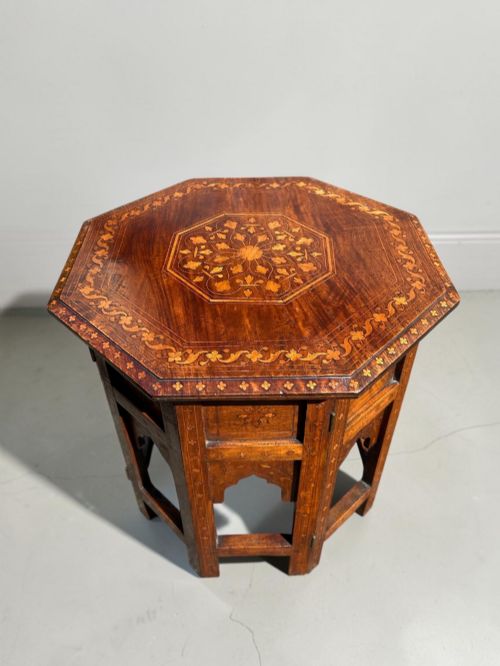
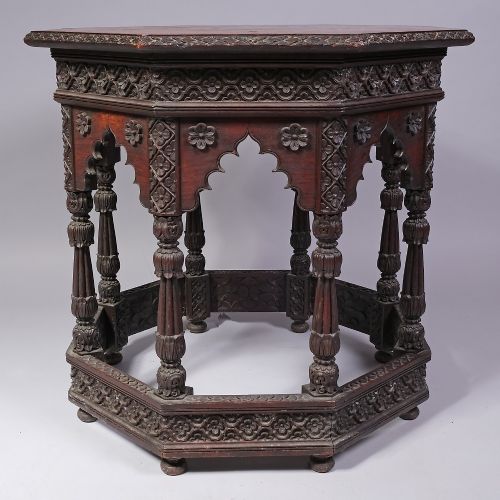
Octagonal occasional tables dominate the available examples, often featuring intricate pierced foliage and geometric patterns. Alongside these sit utilitarian items like book slides, magazine racks, and standard lamp bases designed for domestic use.
What varies in quality
The depth and crispness of the chisel work distinguish superior examples from standard production. Finely carved pieces exhibit sharp undercut foliage and symmetrical geometry, whereas lesser items display shallow, hurried incisions with rounded edges.
The integration of secondary materials dictates the status of the piece within the range. Examples incorporating extensive bone inlay and solid brass wire demonstrate greater workshop skill than those relying solely on wood carving.
Structural stability and the preservation of original folding mechanisms influence overall integrity. Superior survivals maintain tight joints and retain their original finish without excessive sanding or surface replacement.
Listings feature teak alongside rosewood and hardwood, incorporating bone and brass inlay across Victorian and early twentieth-century periods.
The Carved Teak Stand Glossary
- Hoshiarpur
- A town in Punjab renowned for its specialised woodworking and inlay techniques. Pieces from this centre typically display intricate bone and brass work set into teak.
- Elephant Table
- A low occasional table supported by carved elephant figures forming the legs or base. These pieces frequently feature circular or octagonal tops with deep pierced borders.
- Campaign Table
- Portable furniture designed for easy disassembly or folding by military officers and travellers. Teak folding stands in this category utilise hinged cross-frames for simple storage.
- Book Slide
- An adjustable desk accessory with expanding sides to hold volumes upright. Victorian examples in teak often incorporate carved fretwork panels along the extending arms.
Carved Teak Stand: Frequently Asked Questions
What is an octagonal table used for?
An octagonal table functions primarily as an occasional piece for lamps, decorative objects, or tea service. The eight-sided top accommodates circular arrangements of objects in a drawing room.
These tables frequently feature folding bases designed for convenient relocation or storage. Their compact proportions make them suitable for placement beside armchairs or in hallways.
How do I identify Hoshiarpur work?
Hoshiarpur pieces are identified by their characteristic surface decoration combining carved teak with geometric bone and brass wire inlay. The patterns typically feature dense scrolling foliage and floral motifs covering the entire visible surface.
Makers from this region utilised precise micro-mosaic techniques using camel bone. This creates a striking contrast against the dark background of the seasoned timber.
Were these stands made for export?
A large proportion of these stands were produced specifically for the European export market during the nineteenth and early twentieth centuries. British residents in India and visitors to the colonies favoured exotic furnishings as decorative souvenirs.
Workshop production adapted traditional local forms to suit Victorian and Edwardian domestic interiors. This resulted in portable occasional tables, book rests, and plant pedestals tailored to Western tastes.
How should I care for teak furniture?
Teak requires minimal maintenance due to its natural oil content, which helps prevent drying and cracking. Occasional dusting with a soft, dry cloth preserves the intricate carved recesses without accumulating residue.
Avoid placing the timber in direct sunlight or near heat sources to prevent shrinkage. Applying a microcrystalline wax periodically helps maintain the natural lustre of the polished wood.