





Colonial Teak Wine Table
A colonial teak wine table brings distinct Anglo-Indian and Burmese craftsmanship into a room, offering a sturdy surface with rich historic character.
Colonial Teak Wine Table
A colonial teak wine table is a portable surface created during the nineteenth and early twentieth centuries by makers working within British colonial spheres in India and Burma. These pieces function primarily as occasional tables, side tables, or pedestal tables designed for domestic use.
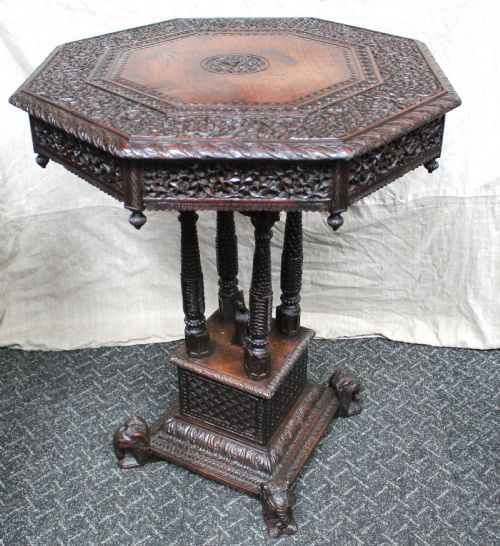
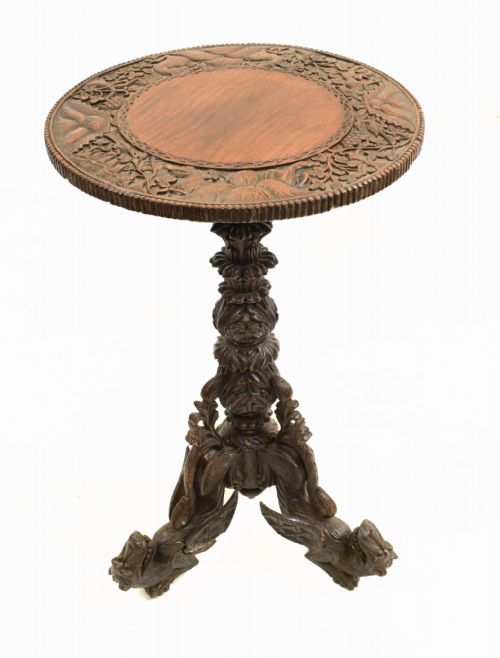
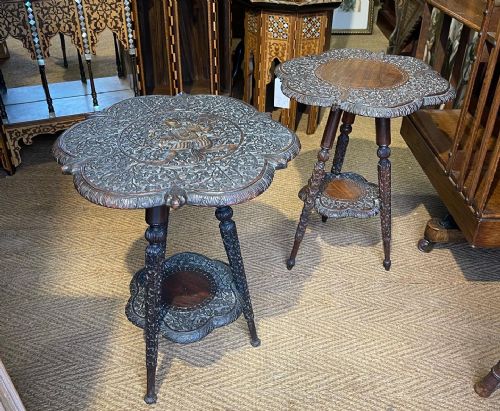
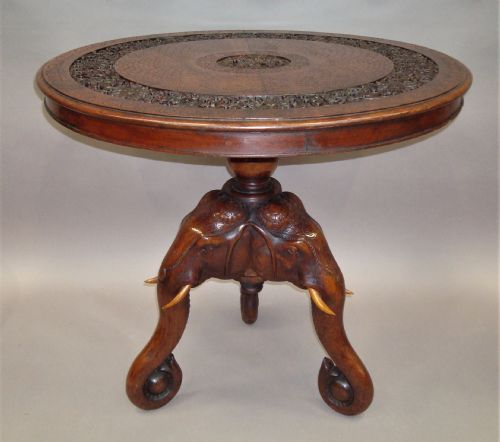
The selections available here span forms such as circular tilt tops, shield-shaped occasional coffee tables, and tripod bases often associated with Hoshiarpur or Burmese workshops. Most examples date from the Victorian era up through the early twentieth century.
Buyers encounter regional variations ranging from heavily carved Burmese surfaces to padouk tilt tops likely originating from the Bombay region. Each piece displays the specific stylistic fusion typical of Anglo-Indian and Anglo-Burmese colonial furniture.
Materials and construction methods
Makers utilised dense tropical timbers such as teak and padouk as the primary structural materials for these tables, ensuring durability and a heavy feel. Hardwood frames frequently support intricate hand-carved decoration characteristic of the period.
Detailing often incorporates contrasting elements like bone inlay or ebony inlay set directly into the wood surfaces. Tripod bases and tilt-top mechanisms require precise joinery to balance the weight of the solid timber tops.
The furniture forms span side tables, occasional tables, and pedestal tables with Anglo-Burmese and Anglo-Indian stylistic influences.
Factors that distinguish individual pieces
The depth and crispness of the hand carving separate simpler items from more ambitious works, particularly on Burmese and Hoshiarpur elephant tables. Sharp relief work and clean geometric or figurative motifs require skilled hand labour.
The choice of secondary materials and embellishments, such as the precision of bone inlay and ebony inlay, influences the overall visual impact of the table. Structural integrity in the tilt-top mechanisms and pedestal bases also determines the practicality of daily use.
The Colonial Teak Wine Table Glossary
- Tilt top
- A table top hinged to the pedestal so it can rotate into a vertical position when not in use. This mechanism allowed easier storage against a wall in historic interiors.
- Padouk
- A heavy, durable reddish-brown tropical hardwood used in fine nineteenth-century cabinetmaking. It accepts intricate carving and maintains stability over long periods.
- Hoshiarpur
- A region in northern India renowned for intense inlaid woodwork. Tables from this area feature dense patterns of bone or ivory set into dark timber.
- Occasional table
- A small, movable table designed for specific, intermittent tasks rather than permanent placement. These forms include side tables, lamp tables, and wine tables.
Colonial Teak Wine Table: Frequently Asked Questions
What is a colonial teak wine table used for?
These pieces serve as small surface tables positioned beside seating or in corners to hold drinks, lamps, or decorative objects. Their compact footprint makes them practical for flexible placement in modern rooms.
Historically, the tilt-top variants allowed servants to clear rooms quickly or store the furniture flat against walls when space was required for other activities.
How do I identify an Anglo-Indian table?
Look for specific regional characteristics such as dense floral carving, geometric bone inlay, or specific wood choices like padouk and teak. Many pieces reflect a blend of traditional Indian motifs with European furniture forms popular during the Victorian period.
Pedestal bases, tripod legs, and shield-shaped tops further point toward nineteenth-century colonial workshop production.
Are these tables sturdy enough for daily use?
Solid teak and tropical hardwoods provide substantial natural strength and weight, making these tables reliable for everyday domestic placement. The heavy timber construction handles normal placement of lamps and decorative items with ease.
Care should be taken with tilt-top mechanisms to ensure the locking catches remain secure when the surface is in the horizontal position.
How do I date a nineteenth-century wine table?
Dating relies on examining the construction methods, tool marks on the underside, and the specific stylistic convergence of British furniture forms with local carving traditions. Pieces marked by regional markers like Bombay padouk work or Hoshiarpur inlay typically align with Victorian production periods.
Turned pedestals and tripod configurations also shift subtly in proportion across the decades from eighteen-fifty to nineteen-twenty.