
Carved Storage Bench
A carved storage bench provides robust seating alongside concealed compartments, bringing centuries of practical woodwork into modern hallways and living rooms.
Carved Storage Bench
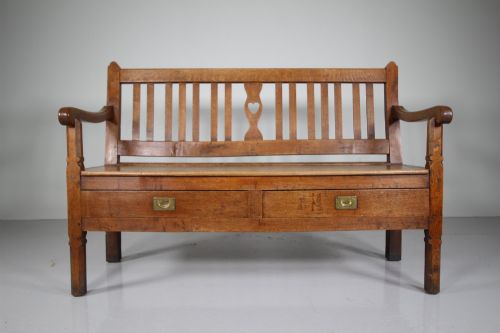
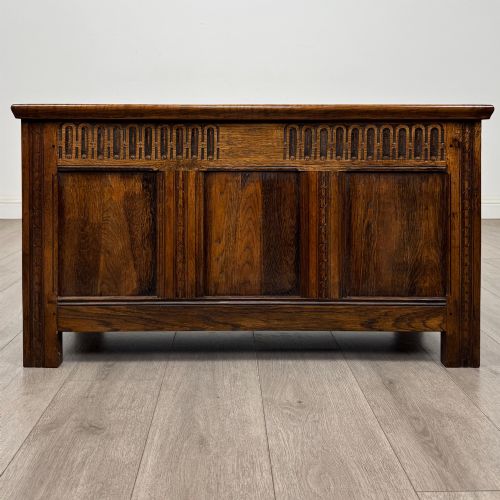
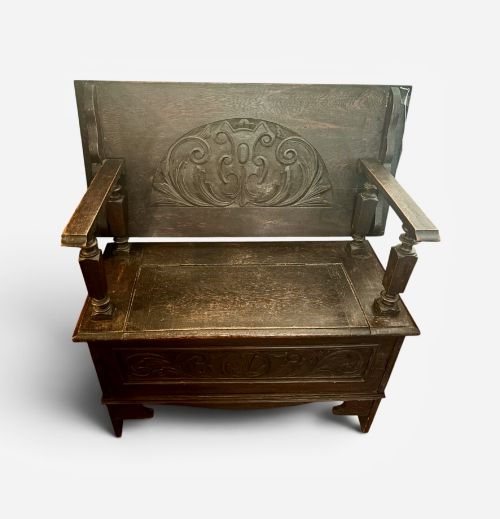
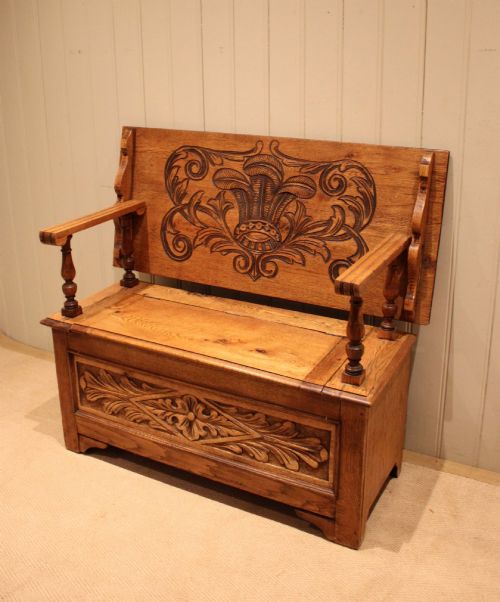
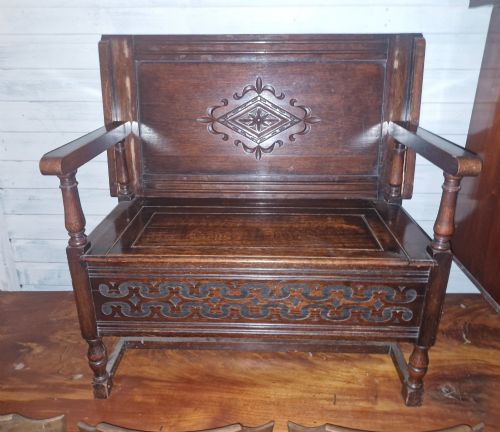
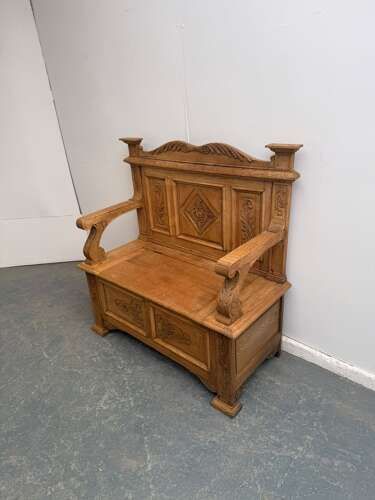
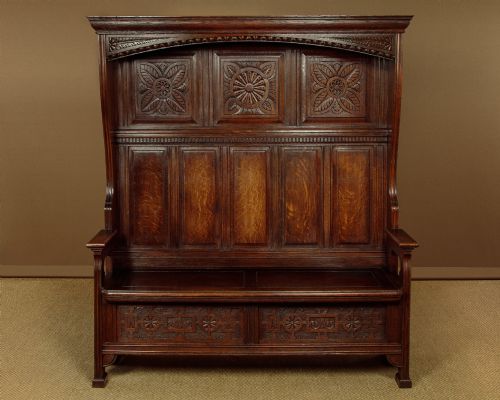
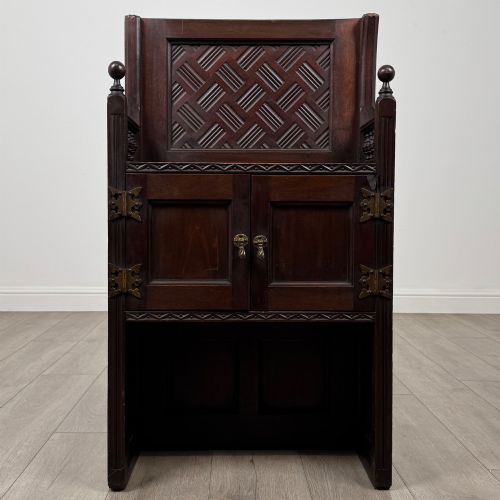
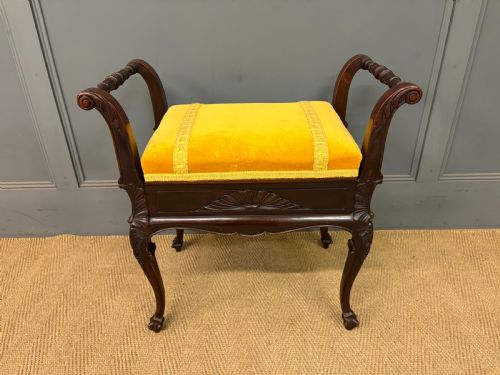
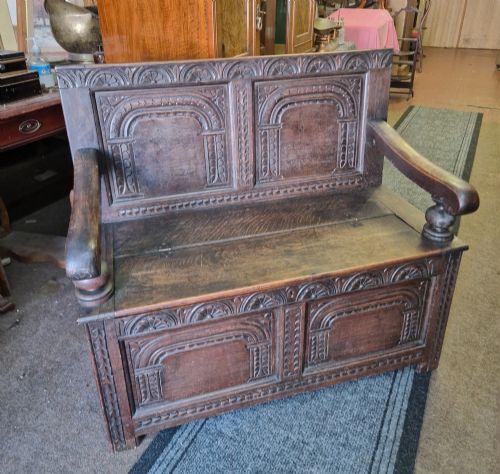
A carved storage bench satisfies the domestic requirement for dual-purpose furniture by combining a seat with a trunk, box, or cabinet base. When you examine a carved storage bench on this page, you will most frequently encounter heavy oak examples spanning the seventeenth century through to the Edwardian period and the nineteen-twenties.
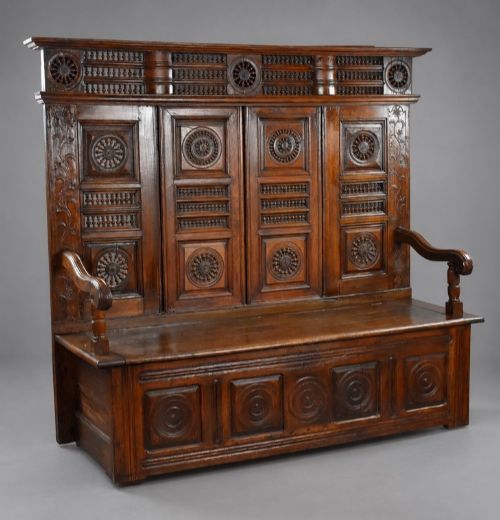
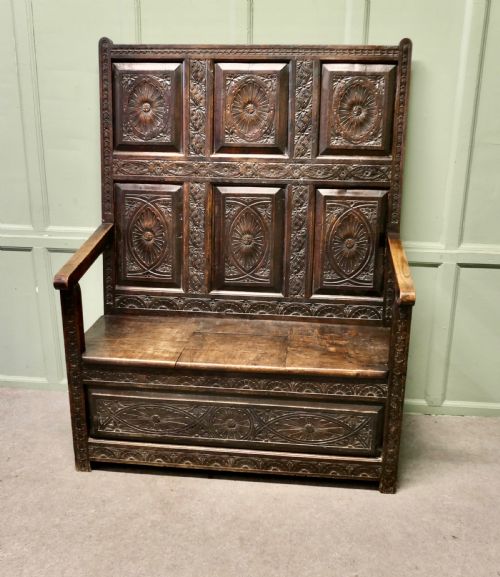
The inventory encompasses regional forms such as high-back settles, monk's benches with fold-over tops, hall seats, and blanket boxes. These pieces originated in farmhouses, country houses, and civic reception spaces where space economy and durable timber construction mattered most.
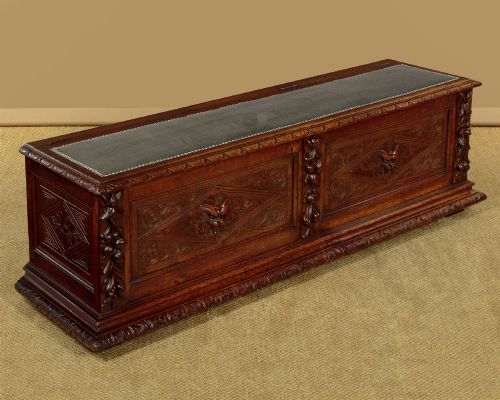
Origins stretch across British workshops, French and Flemish joinery, and Italian walnut cassapanca benches. Stylistic revivals dominate, notably Jacobean, Gothic, and Renaissance movements, alongside occasional Art Nouveau flourishes.
Materials and construction
Solid oak serves as the primary structural timber, supported by occasional instances of mahogany, walnut, and painted pine. Joinery relies on traditional pegged mortise and tenon frames, panelled construction, and hinged lids or lift-up seats providing access to the under-seat well.
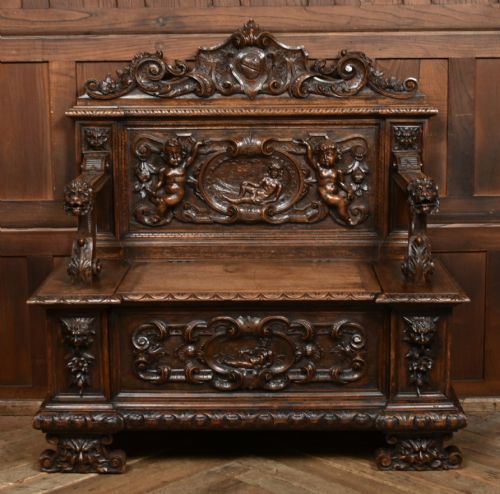
Carving techniques involve relief work executed directly into the timber panels, displaying foliage, geometric strapwork, linenfold motifs, and figural carvings such as Green Man masks. Surfaces are finished with wax, polish, or historic stripping that reveals the grain of the solid wood.
Distinctions in standard
The standard of a carved storage bench rests upon the depth and crispness of the timber carving and the architectural ambition of the frame. Pieces featuring canopy tops, high panelled backs, and figural ornamentation demonstrate superior joinery compared to plain utility boxes.
Proportion and structural integrity define the upper tier, where original hinges, uncompromised internal timber wells, and heavy solid planks remain intact. Alterations to historic box settles or marriage of later carvings to older chests alter the internal consistency of a piece.
The Carved Storage Bench Glossary
- Settle
- A wooden bench with a high back, solid arms, and a box seat compartment beneath. This form sheltered inhabitants from draughts in entrance halls and large rooms.
- Monk's bench
- A multipurpose seat featuring a hinged back that folds down flat over the armrests to form a table top. This clever dual design maximised utility in compact historic interiors.
- Cassapanca
- An Italian chest bench featuring a backrest and armrests, often carved from walnut. These substantial pieces served as seating and storage for linens and valuables in grand palazzos.
- Linenfold
- A style of relief carving applied to wooden panels, imitating the appearance of folded linen fabric. It appears frequently on Tudor and Jacobean revival oak furniture.
- Strapwork
- A decorative carving motif resembling interlaced bands or leather straps, popular in Elizabethan and Jacobean design. It frames panels and friezes on many regional box settles.
Carved Storage Bench: Frequently Asked Questions
How were monk's benches used historically?
Monk's benches served dual domestic functions by acting as a comfortable hallway seat during the day and converting into a dining or work table by folding the panelled back forward over the arms.
The enclosed box beneath the seat provided secure storage for household textiles, garments, or firewood in rooms that required multi-use furniture configurations.
How do I identify seventeenth-century oak furniture?
Seventeenth-century pieces display heavy solid oak construction joined with wooden pegs rather than modern metal fixings, showing hand-planed surfaces and irregular grain patterns.
The carving tends to be deeper and more geometric, featuring chip-carved strapwork, punch-work backgrounds, and panelled box construction built to withstand centuries of domestic use.
Where should I place a storage bench at home?
A storage bench fits naturally in an entrance hallway, providing an immediate surface for sitting and a concealed compartment for shoes, bags, and winter accessories.
Alternatively, placing one at the foot of a bed or beneath a living room window offers generous interior capacity for spare blankets and cushions while anchoring the room's proportions.