


Carved Oak Table Seat
These pieces for a carved oak table seat unite sturdy timber and ingenious dual-purpose forms for everyday use.
Carved Oak Table Seat
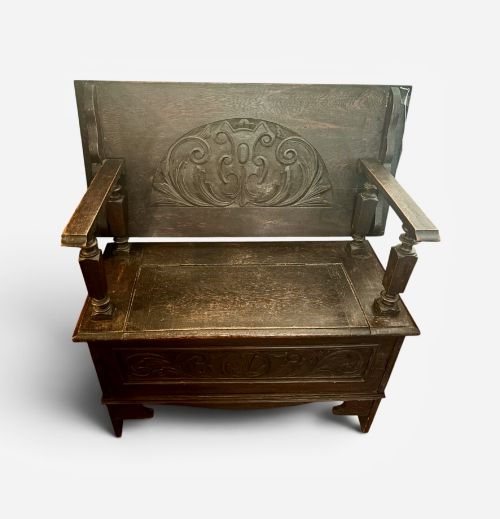
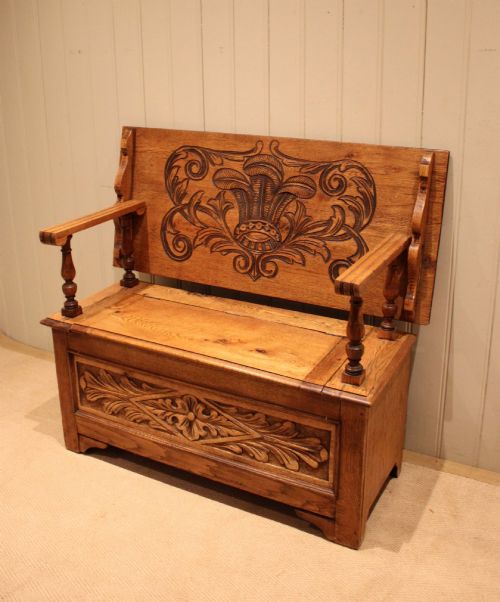
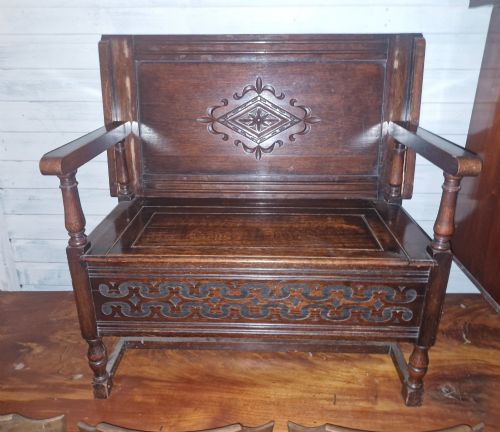
A carved oak table seat most frequently takes the form of a monk's bench, a clever hybrid design featuring a lift-up seat and a fold-over top that transforms from a chair into a small table. These versatile furnishings appear in styles ranging from Jacobean Revival and Gothic Revival to Arts and Crafts, spanning periods from the mid-nineteenth century through the nineteen-thirties.
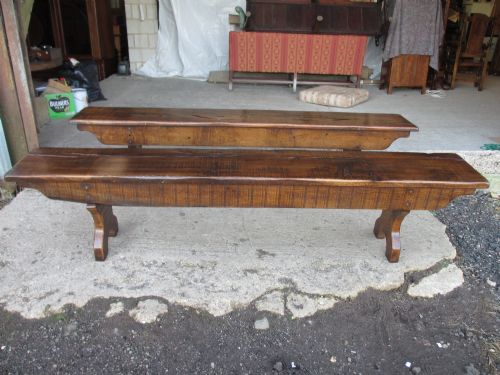
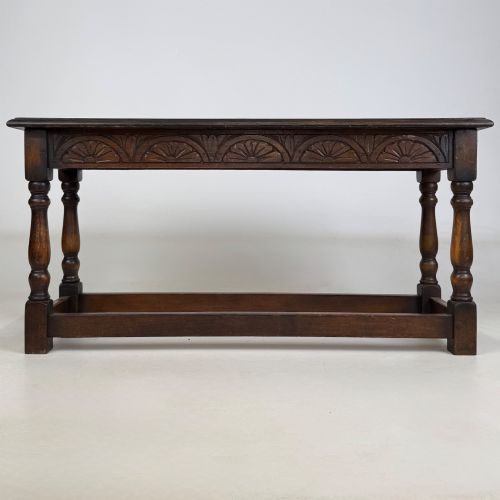
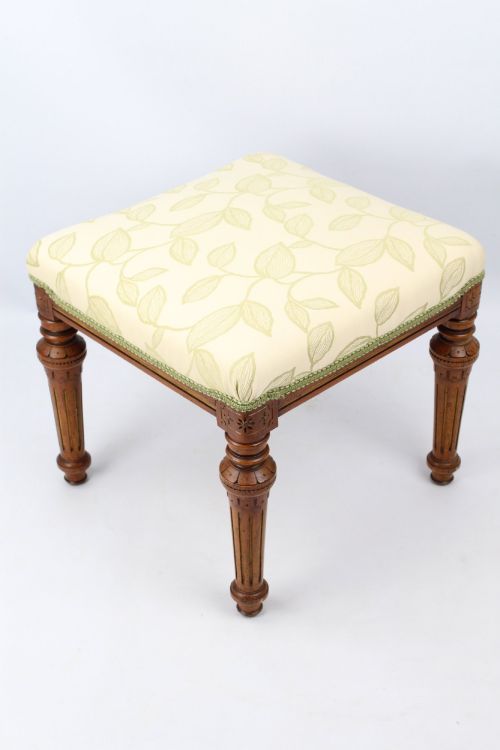
Beyond monk's benches, the selection includes hall benches, box stools, and settles designed for hallways and living spaces. Makers constructed these items primarily in solid oak, occasionally applying parcel gilt or incorporating fabric, iron, and rush elements.
Dating ranges from Victorian and Edwardian eras up to the nineteen-thirties, reflecting durable domestic craftsmanship that endured across decades of family life.
Materials and Technique
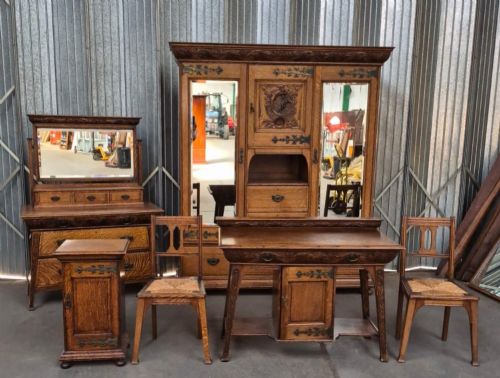
Craftsmen utilised solid English and dark oak, relying on traditional panelled construction and robust joints to support the dual-function mechanisms of folding tabletops and hinged seats. Woodcarvers embellished surfaces with relief patterns, shaped trestle ends, and bulbous supports.
Secondary materials such as iron fixings, metal hinges, and occasional fabric or rush upholstery complemented the heavy timber frames. Finishes ranged from dark polished tones to golden oak wax applications that highlighted the natural grain of the wood.
Listings feature oak material predominantly, spanning Victorian, Edwardian, and nineteen-thirties periods through forms like benches, stools, and dining tables.
Assessing the Pieces
The degree of carving depth and execution distinguishes finer examples from simpler utilitarian pieces, with deeply undercut relief work and balanced proportions indicating higher workshop standards. Mechanism integration also plays a role, as smooth movement in the fold-over top and well-fitted box compartments reflect superior carpentry.
Material selection determines longevity, with dense solid oak maintaining structural integrity better than mixed-timber constructions. The crispness of revival detailing and the harmony of period hardware contribute to the overall character of each seat.
Waring
The Carved Oak Table Seat Glossary
- Monk's bench
- A multi-functional item of furniture combining a seat with a backrest that folds down horizontally to form a table top. This clever conversion made efficient use of space in smaller historical rooms.
- Settle
- A wooden bench with high backrests, solid arms, and often a storage compartment beneath the hinged seat. They kept draughts away from sitters in domestic halls.
- Refectory table
- A long dining table traditionally associated with communal dining halls, constructed from sturdy timber with substantial legs and stretchers. These tables provide stable surfaces for large gatherings.
- Parcel gilt
- A decorative technique where specific carved details receive a thin application of gold leaf while the surrounding oak remains exposed. This contrast accentuates ornamental motifs.
- Joint stool
- A low wooden stool constructed with mortise and tenon joints using wooden pegs rather than metal nails. They served multiple seating and utility roles in historic households.
Carved Oak Table Seat: Frequently Asked Questions
What is a monk's bench?
A monk's bench is a dual-purpose furniture piece featuring a hinged seat box and a backrest that folds flat over the arms to create a tabletop. This design allowed one object to serve for both seating and dining or writing.
Craftsmen produced these mostly in oak during the Victorian and Edwardian periods, adapting historic Jacobean and Gothic revival styles for contemporary homes.
How do I date a carved oak bench?
Dating relies on examining the combination of decorative styles, construction methods, and hardware. Victorian and nineteenth-century examples often feature heavy Gothic or dark oak finishes with deep relief carving.
Later Edwardian and nineteen-thirties pieces tend toward lighter golden tones or simplified panel work while maintaining traditional solid oak construction.
Where were hall benches placed?
Hall benches and settles stood in entrance hallways and corridors of larger homes to provide seating for visitors removing boots and outerwear. The lift-up seat or box compartment underneath stored gloves, scarves, and walking sticks.
Their narrow profiles allowed them to sit flush against walls without obstructing passageways.
Can I use a monk's bench as a dining table?
With the backrest folded down into the horizontal position, the top forms a compact surface suitable for casual meals or writing. The height matches standard chair seating when the top is locked flat.
Because the surface area is generally limited to the width of the seat back, they suit smaller spaces rather than large family dinners.