
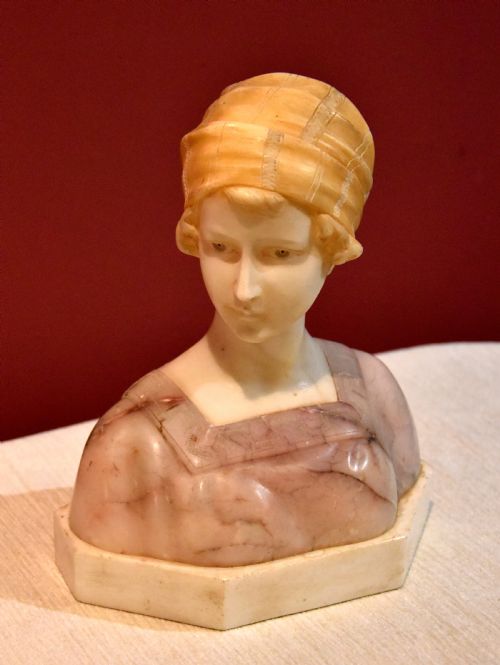
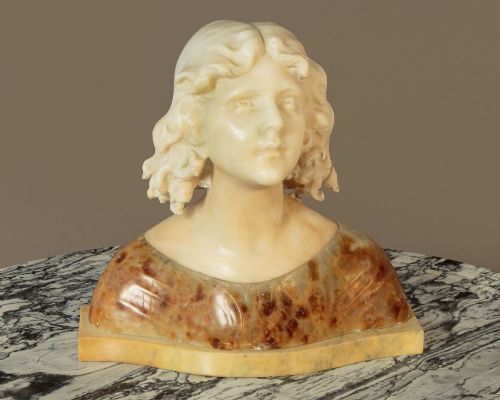


Carved Stone Maiden Statue
A carved stone maiden statue brings classical grace and finely worked detail into a room, offering the enduring beauty of carved alabaster and marble.

Carved Stone Maiden Statue
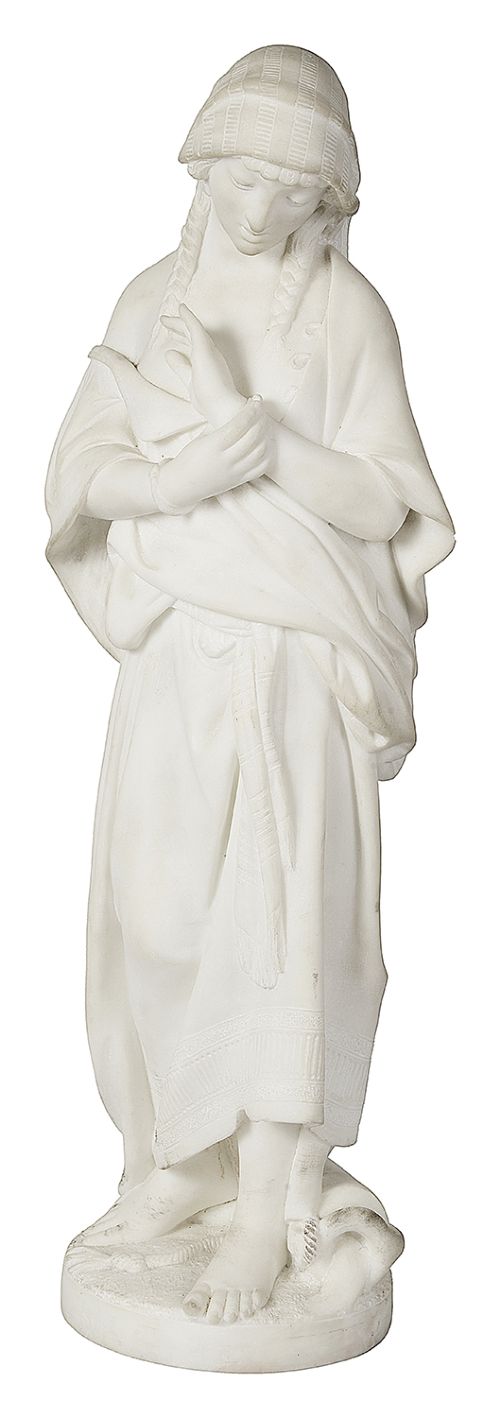
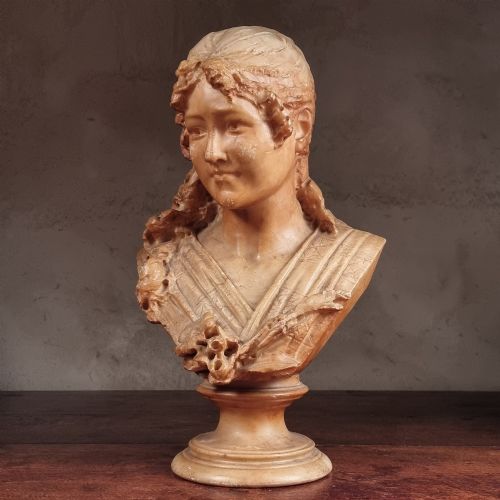
A carved stone maiden statue represents female figures carved from alabaster, marble, and soapstone, appearing as both full-length statues and portrait busts. These pieces take form across various historical periods, including the nineteenth century and the early twentieth century.
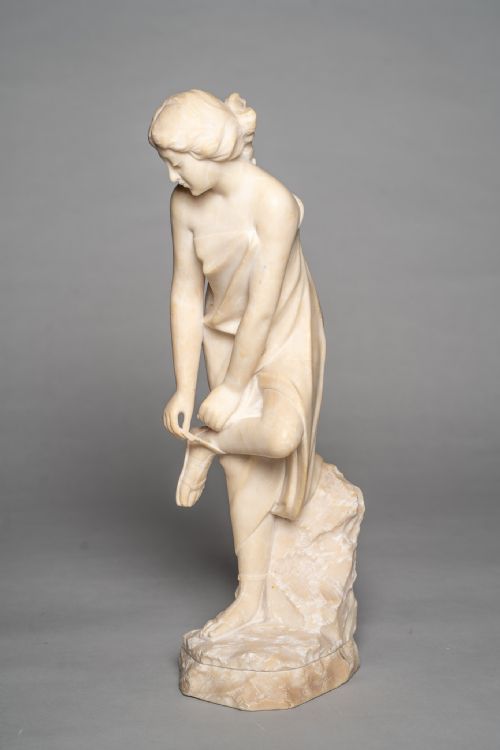
Buyers frequently encounter Italian school works, French classical revival pieces, and Victorian neoclassical interpretations on this page. Many examples portray young women holding items such as mandolins, wheatsheaves, or flowers, while others depict subjects standing in pools.
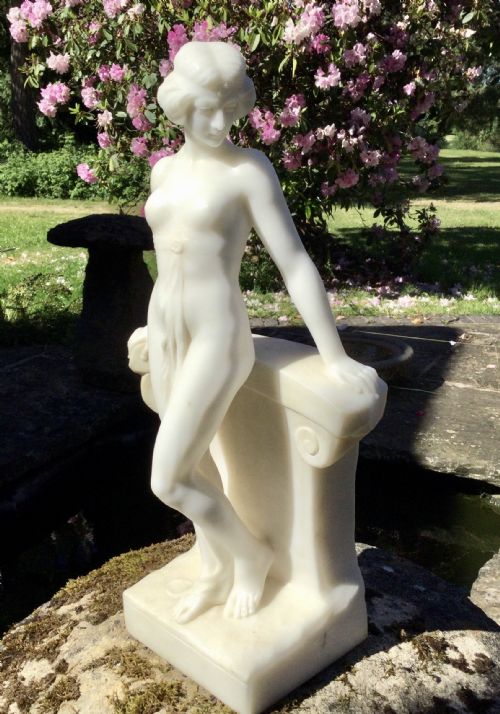
Originating largely from European studios and Italian workshops, these sculptures showcase diverse artistic movements like Art Nouveau alongside traditional classical styling. The selection spans from intimate cabinet busts to large floor statues carved with great attention to drapery and expression.
What varies in quality
The finesse of the carving dictates the distinction between standard works and exceptional pieces, particularly in the rendering of facial expressions, hands, and falling drapery. Superior sculptures display subtle depth and lifelike texture that elevate the stone beyond simple decoration.
The choice and purity of the material also influence the standard of the work, with flawless Carrara marble and translucent alabaster demanding greater mastery from the sculptor. Signed pieces by established artists often exhibit a higher degree of anatomical precision and compositional balance.
At least one young woman stands frozen in a pool, forever pondering her next step in alabaster.
Barranti Florence·A.Gamay·Auguste Henri Carli·Eduardo Giolli·Gugielmo Pugi·Auguste Moreau·A.Cipriani
The Carved Stone Maiden Statue Glossary
- Alabaster
- A fine-grained, soft stone often prized for its warm translucency and suitability for detailed portrait busts.
- Carrara marble
- A type of white or blue-grey marble quarried in Italy, known since antiquity for its purity and use in classical sculpture.
- Bust
- A sculpted representation of a person's head, shoulders, and upper chest, commonly carved in stone or marble.
- Art Nouveau
- An international style of art and architecture prominent around nineteen hundred, characterised by intricate linear designs and flowing organic forms.
- Grand Tour
- A traditional trip through Europe undertaken by upper-class young men and women in the nineteenth century, resulting in the acquisition of classical souvenirs like marble statues.
Carved Stone Maiden Statue: Frequently Asked Questions
What is a carved stone maiden statue?
These pieces are sculptural representations of women, carved from materials such as alabaster and marble during the nineteenth and early twentieth centuries. They range from bust portraits to full statues reflecting classical and Art Nouveau aesthetics.
Created across European workshops, particularly in Italy and France, these statues capture subjects ranging from classical maidens to modern young women with musical instruments or flowers.
How were these stone sculptures made?
Artisans shaped the figures by hand using blocks of stone, employing chisels and rasps to define the human form and intricate drapery. The choice of material often determined the finishing technique, allowing stone such as alabaster to retain a soft glow.
Many works incorporate fine polishing on the flesh areas while leaving bases or hair with contrasting textures. Signatures carved directly into the material often record the hand of the individual sculptor.
Where should I place a marble bust?
Marble and alabaster busts require stable placement on sturdy surfaces like console tables, pedestals, or heavy sideboards capable of supporting considerable weight. Positioning them away from direct sunlight and heavy foot traffic helps protect the carved details.
Interior settings with consistent temperature and humidity prevent the stone from experiencing thermal stress. Placing a statue at eye level allows the viewer to appreciate the subtlety of the facial expression and carving.
How do I identify Art Nouveau statues?
Art Nouveau statues typically feature flowing lines, natural motifs such as water pools or floral elements, and hair styled in soft, organic waves. These works often date from around nineteen hundred and embrace graceful, dynamic postures.
Unlike strict neoclassical pieces, Art Nouveau sculptures prioritize lyrical movement and decorative harmony. The integration of the maiden with elements like lily ponds or wheatsheaves points toward this specific turn-of-the-century aesthetic.