
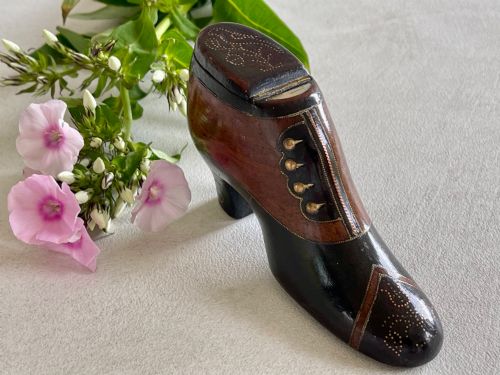
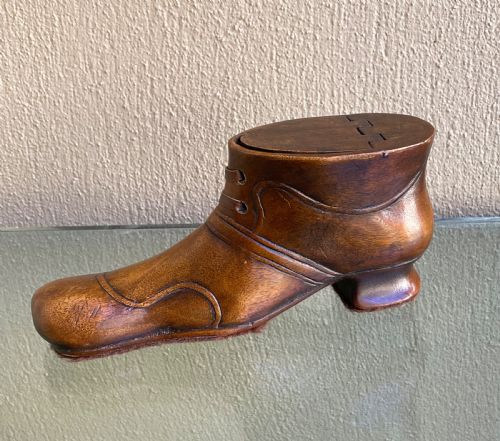


Carved Shoe Novelty Box
These carved shoe novelty box pieces are miniature wooden wonders that double as functional snuff boxes, prized by collectors for their intricate folk art details.
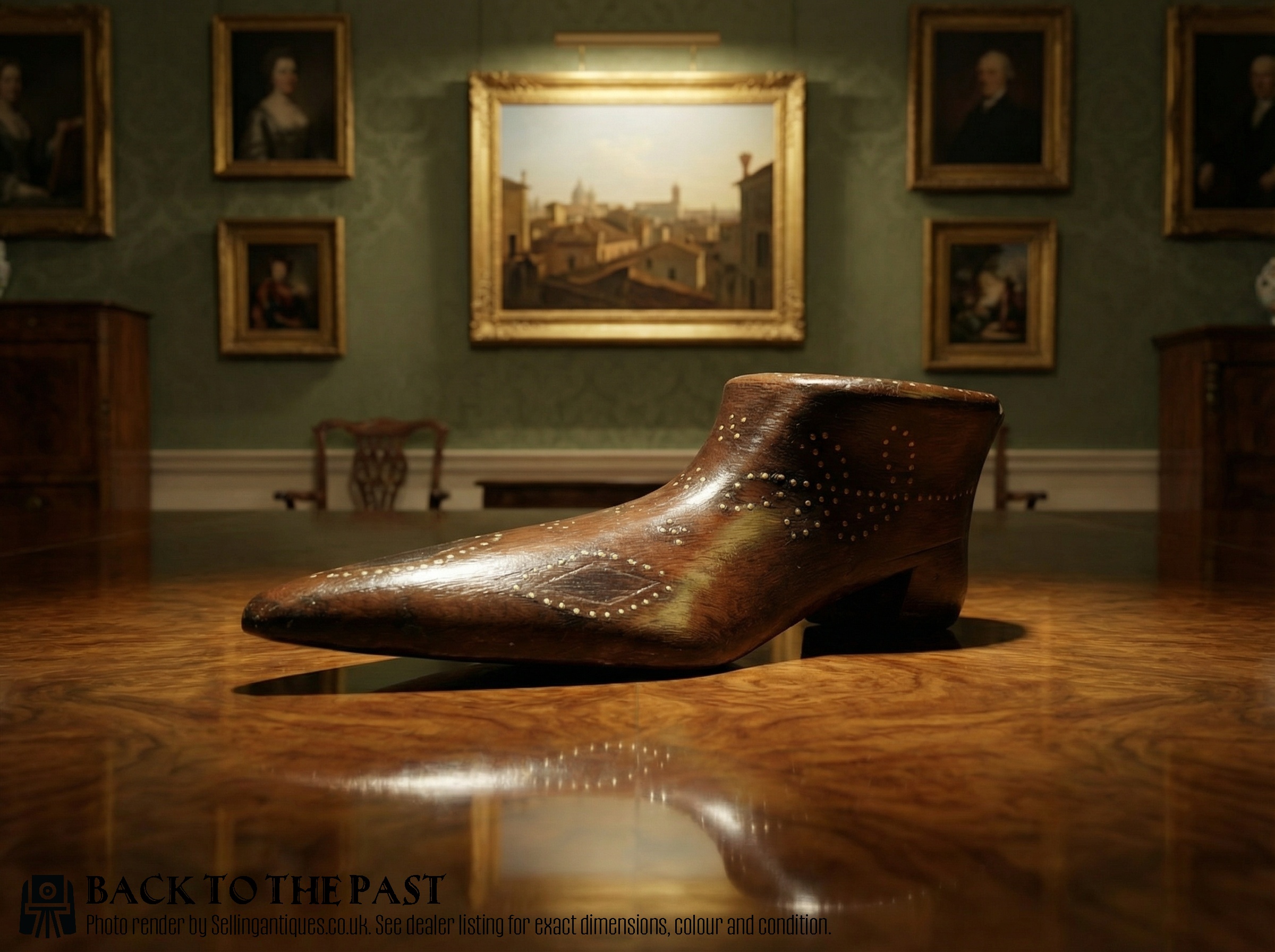
Carved Shoe Novelty Box
A carved shoe novelty box takes the form of a gentleman's or lady's shoe and serves primarily as a snuff box. You encounter these most frequently as nineteenth-century treen pieces originating from the Georgian and Victorian eras.
The objects span single and double opening forms, sometimes styled as ladies feet in open toed shoes. Makers shaped these items from various woods to sit upon a table or travel in a pocket.
Examples on this page draw from Georgian and Victorian folk art traditions, offering a tangible connection to nineteenth-century social habits. The primary function remains holding snuff, housed within a cleverly hollowed wooden sole.
How they were made
Carvers shaped these boxes from fruitwood, mahogany, and general hardwood, relying on hand chisels and gouges to form the hollow interior. The wooden surface often acquired a rich deep patina from handling and age.
Decoration relied on applied embellishments rather than plain carving alone, incorporating brass pique work foliage, flowers, and inlaid diamonds. Some iterations also featured small pictures or inset glass elements to catch the eye.
Makers utilised brass wire for structural detail or decorative edging, while bone provided contrast for inlay work. Double opening designs required precise carpentry to align two compartments within a single carved wooden foot.
Materials across these listings span hardwood, fruitwood, mahogany, bone, brass, brass wire, and glass.
What varies in quality
The standard of carving defines the division between ordinary pieces and superior examples, particularly in the rendering of toes, heels, and laces. A well carved hardwood box displays crisp contours and a convincing anatomical shape rather than a blocky outline.
Surface embellishment elevates certain pieces above standard work, especially when brass pique work, inlaid diamonds, and inset pictures are present. The depth and warmth of the patina further separate well-kept items from duller specimens.
The Carved Shoe Novelty Box Glossary
- Treen
- Small domestic wooden objects made by hand or on a lathe. This term covers everything from small boxes to kitchen utensils.
- Pique work
- A method of decoration using tiny pins or wire inlaid in patterns on a surface. It frequently appears in brass on these wooden boxes.
- Snuff box
- A small container designed to hold ground tobacco. These receptacles often took whimsical shapes like shoes to amuse companions.
- Patina
- The deep sheen developed on wood over decades of handling and exposure to air. A rich patina indicates age and regular use.
Carved Shoe Novelty Box: Frequently Asked Questions
What are carved shoe novelty boxes?
These items are small wooden containers carved in the precise shape of footwear, primarily utilised as snuff boxes during the eighteenth and nineteenth centuries.
They combine practical storage with decorative folk art, often featuring intricate details like brass wire, inlay, or painted pictures beneath glass.
How were snuff shoes used?
Owners kept powdered tobacco inside the hollowed body of the shoe, accessing the contents through a sliding or hinged lid.
They served as portable accessories for gentlemen and ladies, or as tabletop conversation pieces during social gatherings.
How do I date a wooden shoe box?
Dating relies on stylistic clues such as the silhouette of the shoe, the type of wood used, and decorative methods like brass pique work.
Pieces originating in the Georgian or Victorian eras typically exhibit specific hand-carving techniques and material choices recorded in historical records.
What materials are common in these boxes?
Wood forms the primary body, with fruitwood, mahogany, and general hardwood appearing frequently across different examples.
Decorations incorporate secondary materials including brass, bone, wire, glass, and occasional framed miniature pictures.