
Carved Serpentine Drawers
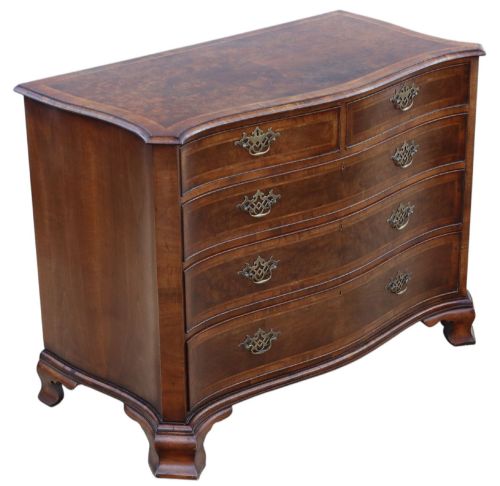
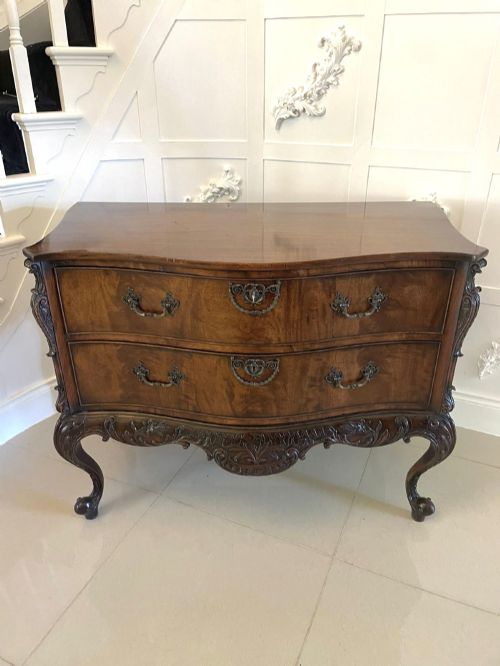
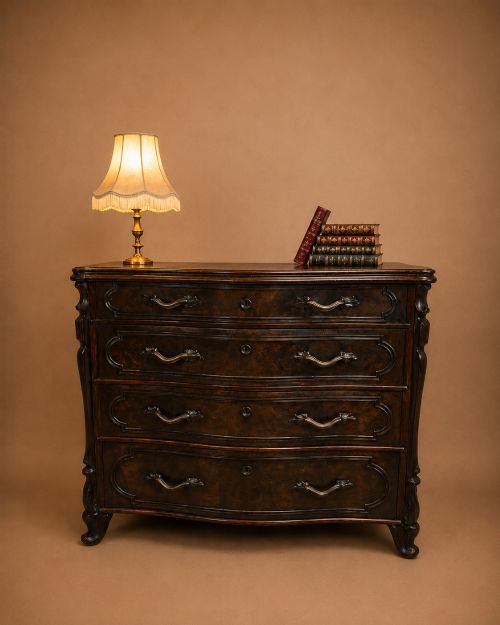
When you handle carved serpentine drawers, you find pieces shaped with sweeping front curves and figured woods that demand space.
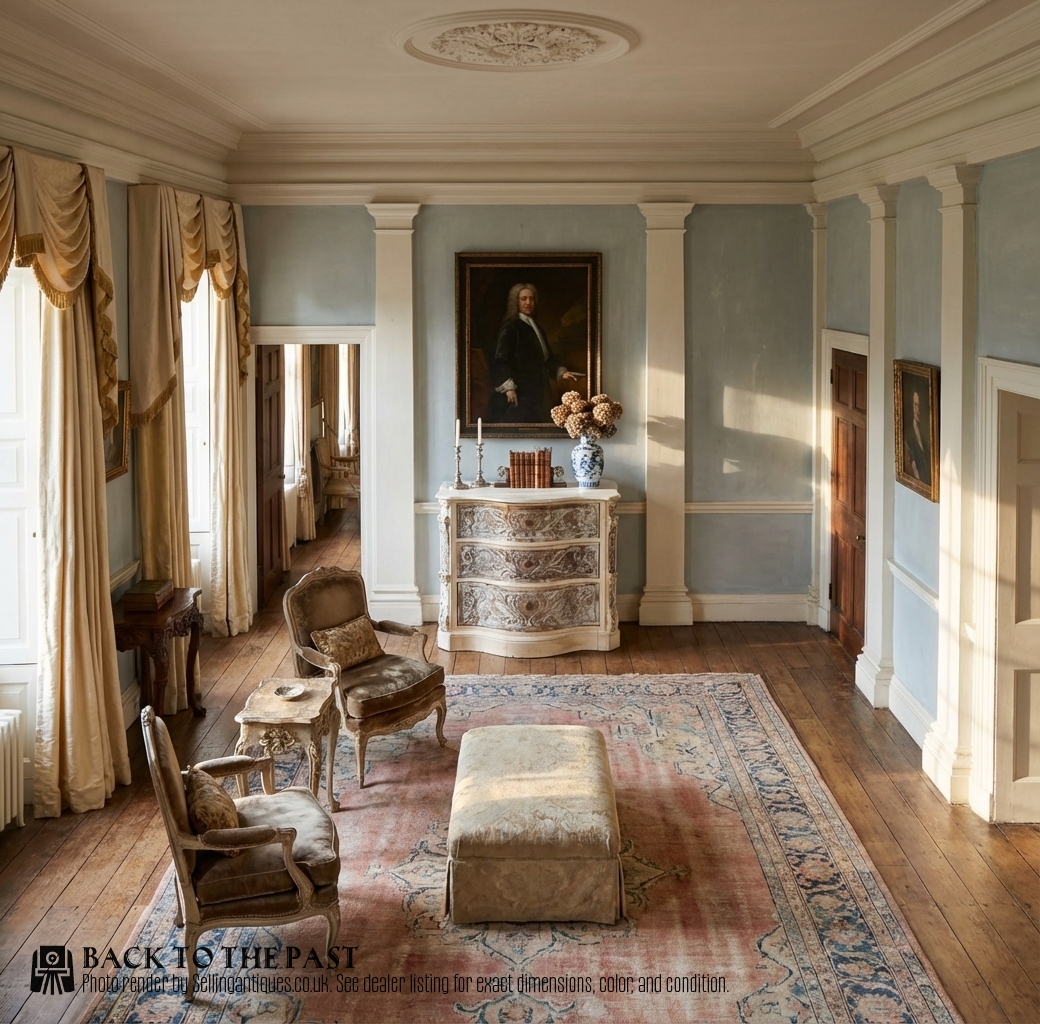
Carved Serpentine Drawers
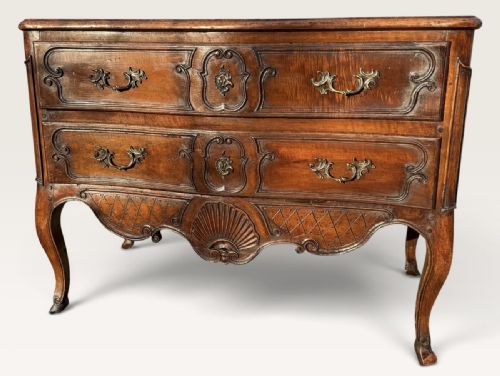
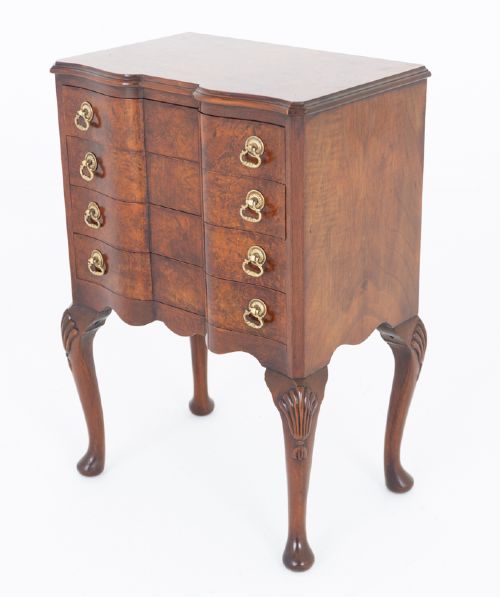
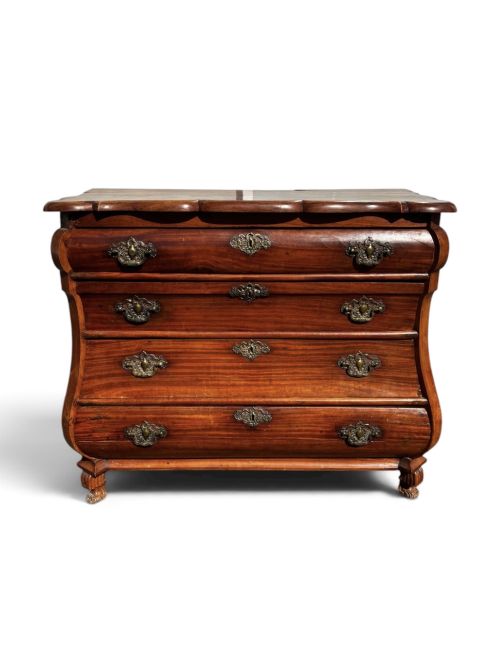
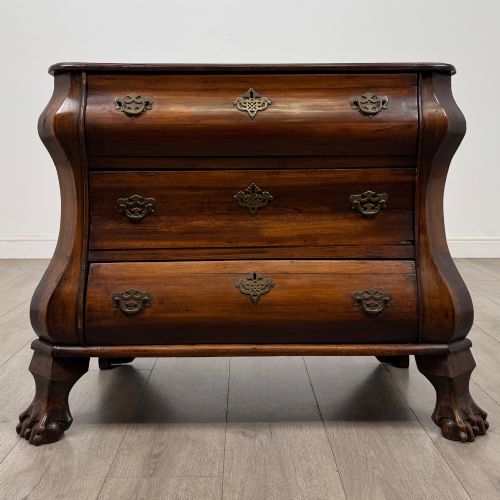
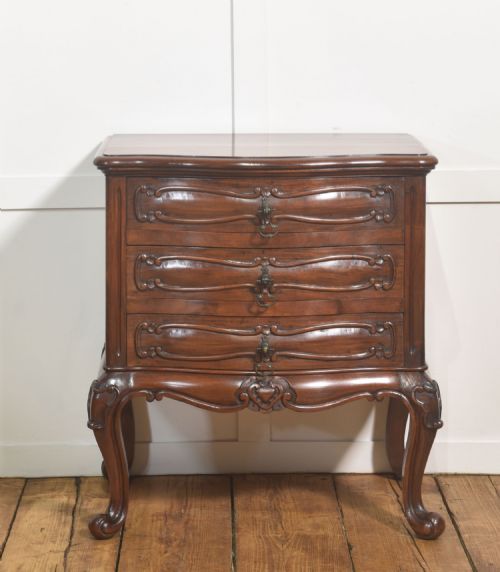
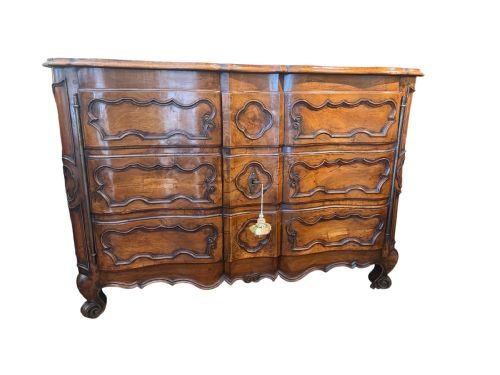
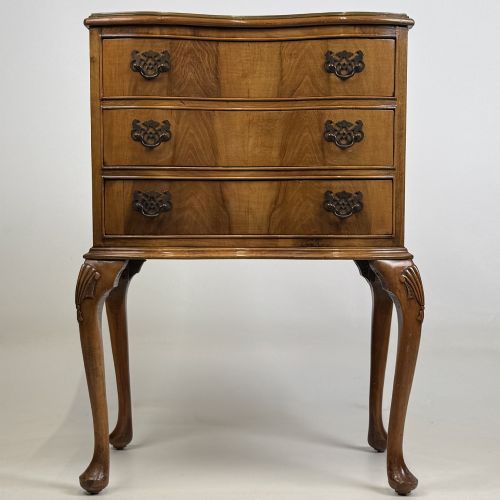
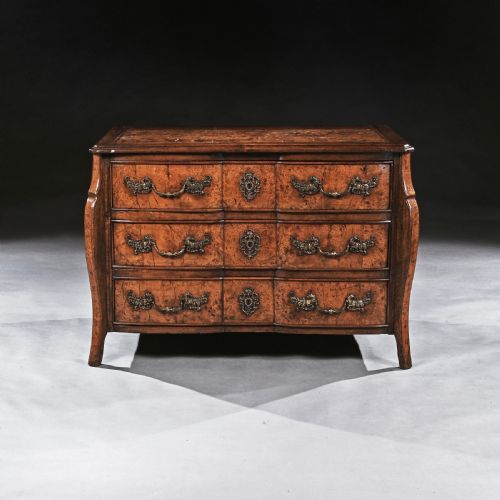
Carved serpentine drawers take the form of commodes, chests of drawers, and bedside tables with distinctive undulating fronts. These pieces span from the 18th century through the Victorian period and into the 20th century, emerging in French Provincial, Georgian, and Queen Anne styles.
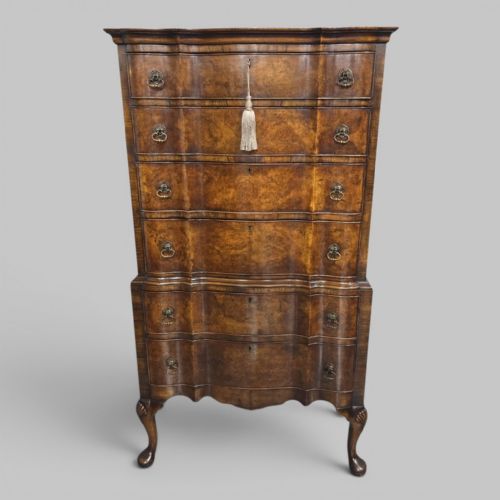
The walnut and mahogany examples dominate this selection, frequently featuring burr veneers and shaped surfaces. Buyers encounter both substantial commodes of large proportions and smaller bedside or side tables.
Makers and workshops across Britain, France, Sweden, and the Netherlands produced these forms, applying carved details and brass hardware to storage furniture.
How they were made
Cabinetmakers constructed these pieces using solid timbers such as mahogany, oak, and walnut, often applying burr walnut or satinwood veneers over secondary woods. The undulating serpentine fronts required precise cutting and shaping of both the timber and the drawer frames.
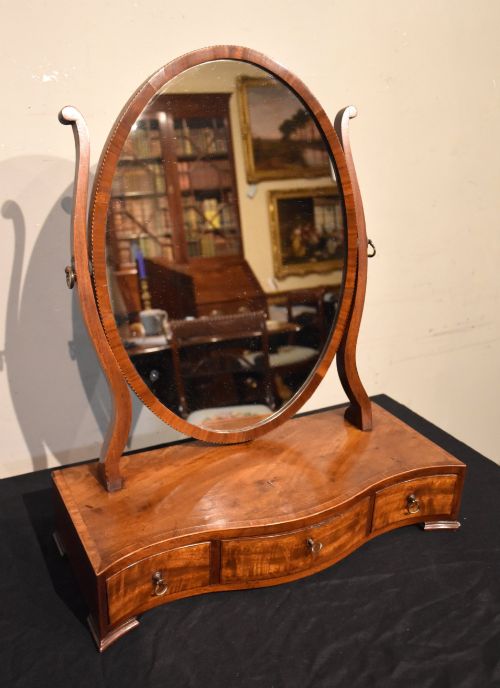
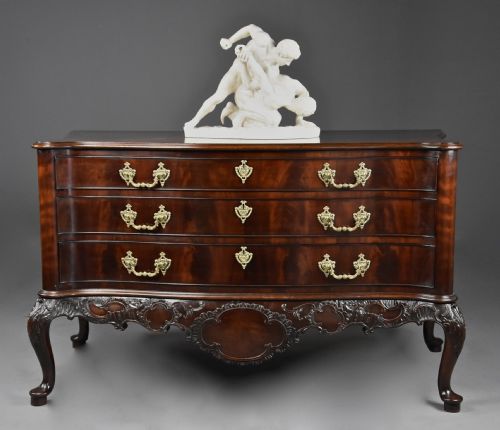
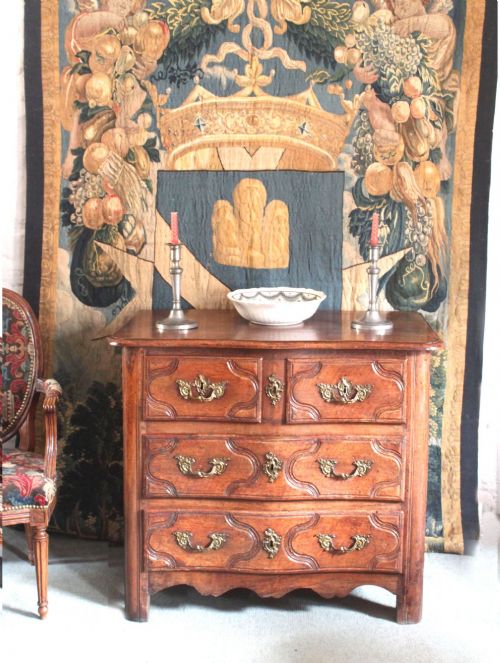
Carving was executed by hand directly onto the solid wood elements, particularly on drawer rails, aprons, and legs. Brass handles and escutcheons were fitted to complete the drawer fronts, alongside glass where mirrors form part of the inventory.
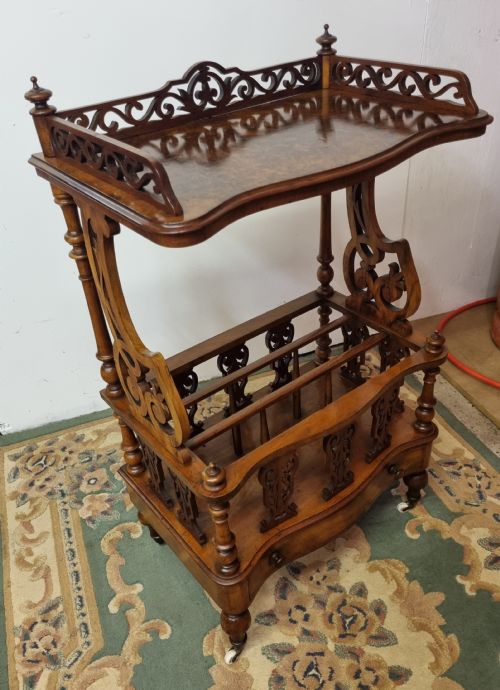
One music stand sits quietly among the heavy commodes and dressing mirrors.
What varies in quality
Quality rests in the selection of the timber grain, visible in the matching of burr walnut veneers and the figure of the mahogany. The depth and crispness of the hand carving dictate the refinement of the piece.
Construction standards appear in the smoothness of the serpentine drawer movement and the integration of the shaped sides with the top and base. Finer examples display meticulous attention to proportion across both large commodes and smaller side tables.
Epstein and Co
The Carved Serpentine Drawers Glossary
- Serpentine
- A front profile curving outward in the centre and inward at the sides, creating a wave-like shape. This contour requires skilled cabinetmaking to execute correctly across multiple drawers.
- Commode
- A low chest of drawers or cabinet, frequently of French or continental origin. These pieces often feature prominent grain patterns and shaped aprons.
- Burr walnut
- Wood taken from the burl growth of a walnut tree, yielding complex, swirling grain patterns. Cabinetmakers prize this material for high-status veneer work.
- Bombe
- A swelling, bulging furniture shape with convex curves on the front and sides. This form appears on continental commodes from the 18th century onwards.
- Crossbanded
- A border technique where veneer strips are laid perpendicular to the grain of the main surface. This frames the top or drawer fronts of finer tables and chests.
Carved Serpentine Drawers: Frequently Asked Questions
What is a serpentine front?
A serpentine front curves outward in the middle and curves inward toward the edges. This distinctive shape creates movement across the face of the furniture.
Cabinetmakers shaped the timber specifically to achieve this undulating profile on commodes and chests of drawers.
Where were these chests made?
These pieces originated in workshops across Britain, France, Sweden, and the Netherlands. Different regional traditions influenced the choice of woods and carving styles.
French and Dutch examples often take the form of commodes with bombe profiles, while British makers favoured mahogany and walnut.
How do I style a serpentine commode?
These chests require space to allow the curved front and figured grain to be seen properly. They function well as principal storage pieces in bedrooms or living areas.
Pairing them with simple walls lets the carved details and wood patterns remain the focus of the room.
Are these pieces made of solid wood?
Construction involves a mix of solid timbers and veneers applied to secondary woods. Walnut, mahogany, and oak form the structural basis of the pieces.
Burr walnut and satinwood veneers were chosen for their decorative grain on the exterior surfaces.