
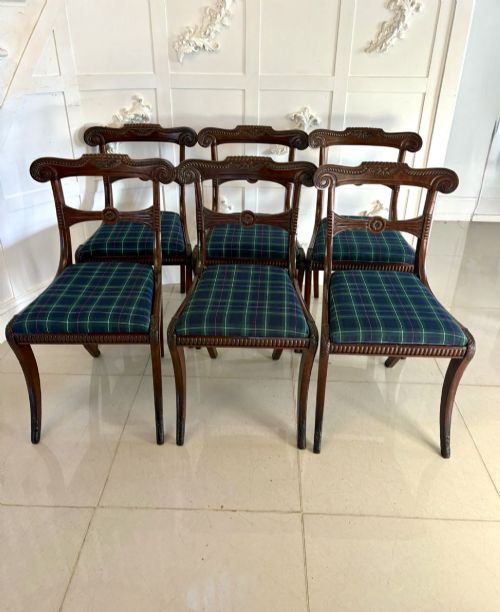
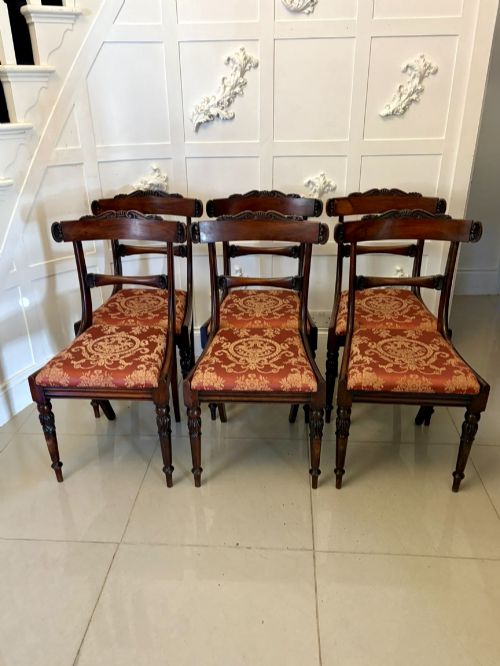

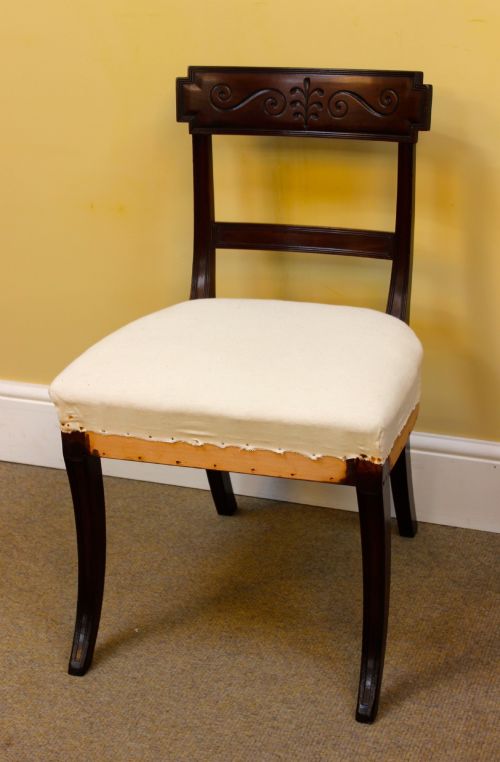
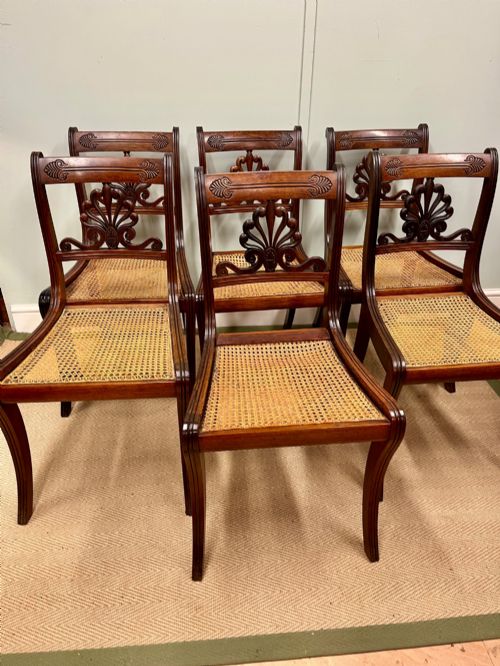


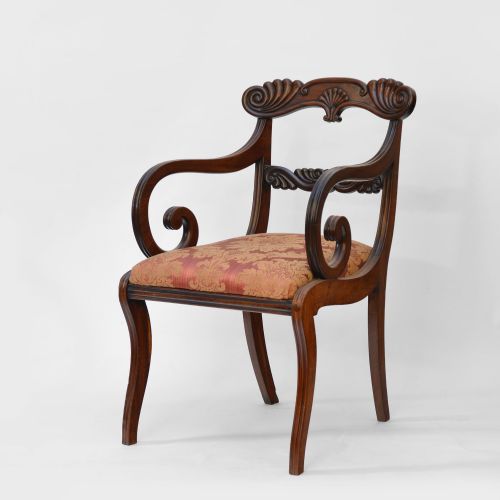


Carved Sabre Leg Chair
A carved sabre leg chair offers the distinct outward-curving lines characteristic of early nineteenth-century seating, built to support upright dining and parlour use.
Carved Sabre Leg Chair
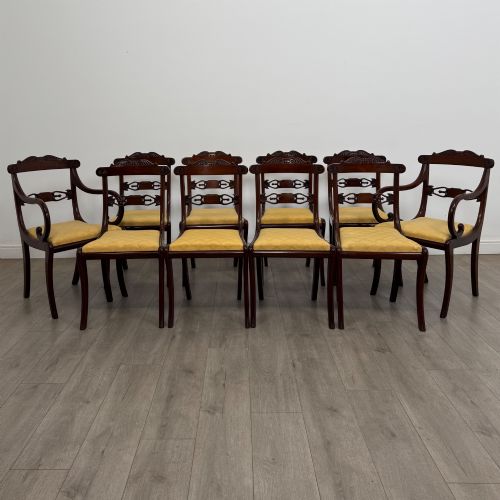
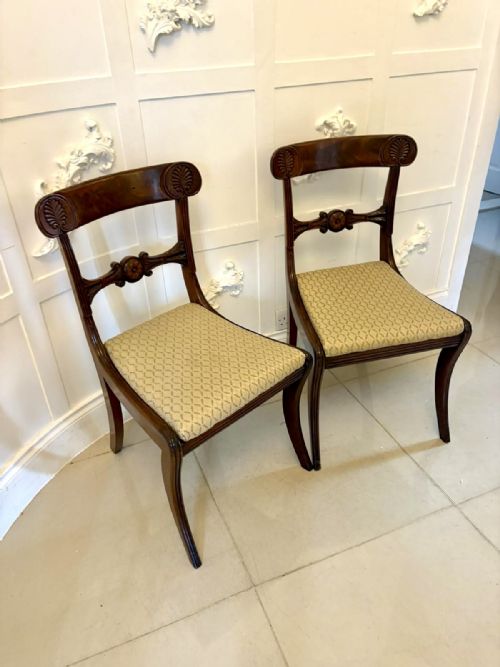
A carved sabre leg chair represents a distinct form of seating originating predominantly from the Regency period, though found in later nineteenth-century revivals. The listings show these pieces appearing as dining chairs, side chairs, armchairs, hall chairs, and carvers.
The most common examples encountered on this page date from the early nineteenth century and the wider Regency era, alongside Edwardian and later revival interpretations. Buyers select these for formal dining sets or as individual accent seating in drawing rooms and studies.
The evidence demonstrates varied configurations, from single hall chairs and pairs of side chairs to large dining sets numbering up to ten pieces. Woods such as mahogany dominate, complemented by occasional pollard oak, elm, and ebonised finishes.
Materials and construction methods
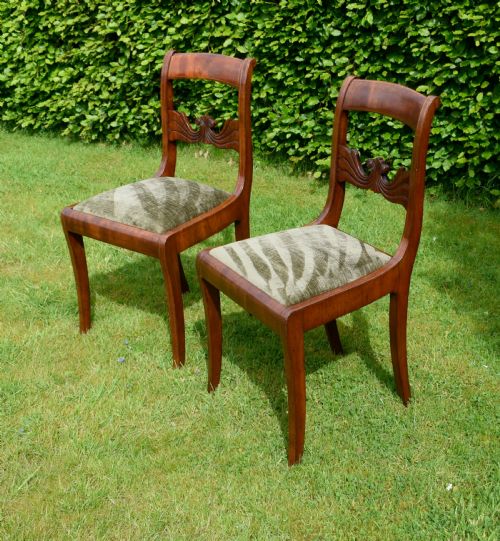
Construction relies heavily on solid wood, with mahogany appearing as the primary medium, supported by regional timbers like elm and pollard oak. Cabinetmakers shaped the distinct rearward-sweeping legs from sturdy stock to ensure stability despite the slender profile.
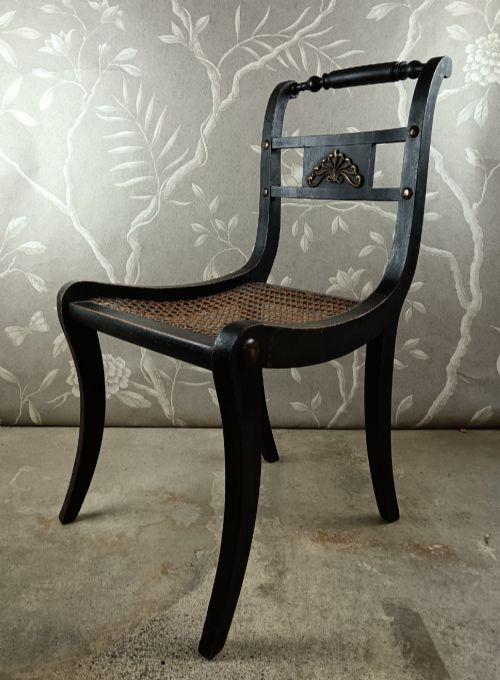
Surface ornamentation integrates applied brass inlay, carved bar backs, and simulated rosewood finishes alongside ebonisation. Seats incorporate traditional methods using cane, wood, or upholstered pads finished in fabric, velvet, and silk cotton.
Some dining chairs arrive disguised in simulated rosewood finishes, proving the Regency era loved a clever disguise as much as a sweeping curve.
Assessing quality in construction and detail
Quality rests upon the crispness of the carved details along the back rail and the integrity of the joinery where the sweeping sabre legs meet the seat frame. Finer examples display meticulous brass inlay and well-figured mahogany grain rather than plain surfaces.
The consistency across a matched set elevates the standing of dining chairs, particularly when surviving in large numbers such as sets of six, eight, or ten. Original elements, including early cane work or brasses, separate exceptional specimens from later assembled groupings.
Gillows
The Carved Sabre Leg Chair Glossary
- Sabre leg
- A chair leg that curves outward and backward in a concave sweep reminiscent of a cavalry sabre. This form provides structural strength while maintaining a light, classical silhouette.
- Carver chair
- An armchair designed to match a set of smaller dining chairs, typically positioned at the head of a dining table. These pieces often feature open elbow arms.
- Ebonised
- Wood treated with a dark finish or stain to imitate expensive ebony. This technique appears frequently on Regency and revival seating.
- Bar back
- A horizontal wooden splat across the upper back of a chair, frequently carved or reeded. It provides ergonomic back support in dining seats.
- Pollard oak
- Timber taken from trees that have been pollarded, producing dense wood with highly decorative growth rings. It was utilised for high-status cabinet work and seating.
Carved Sabre Leg Chair: Frequently Asked Questions
What is a sabre leg?
A sabre leg is a rearward-curving support shaped to mimic the sweep of a cavalry sword. It tapers toward the foot, offering both elegance and stability.
This form defines Regency seating design, replacing the straight square or cabriole legs of earlier Georgian periods.
Are these chairs comfortable for dining?
These chairs are built with upright proportions intended for formal dining and parlour use. Their open armchairs and side chairs support an erect posture.
Upholstered pads and cane inserts provide the primary seating comfort across the listed examples.
How do I spot a Regency revival piece?
Revival pieces date to later periods like the Edwardian era or around eighteen-eighty, echoing earlier Regency forms. They utilise similar mahogany and styling but exhibit different timber conditioning and secondary woods.
Examining the construction methods and wear patterns helps distinguish nineteenth-century originals from later copies.
What wood was most commonly used?
Mahogany is the predominant timber found across these listings, valued for its strength and rich grain. Cabinetmakers also utilised pollard oak, elm, and ebonised finishes.
Faux rosewood graining frequently appears on simulated surfaces alongside brass inlay.