

Carved Round Occasional Table
A carved round occasional table brings useful surface space and period character to a room, appearing most often in nineteenth-century mahogany, walnut, and oak.
Carved Round Occasional Table
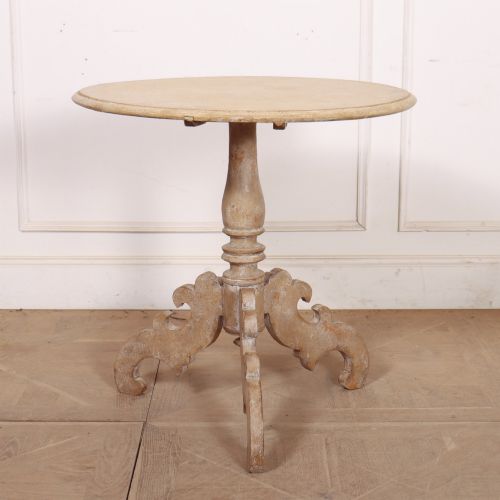
When searching for a carved round occasional table, buyers encounter a diverse selection of small tables designed for specific domestic tasks such as holding lamps, wine glasses, or books. The pieces on this page span the nineteenth century and the early twentieth century, including Victorian, Edwardian, and earlier revival styles.
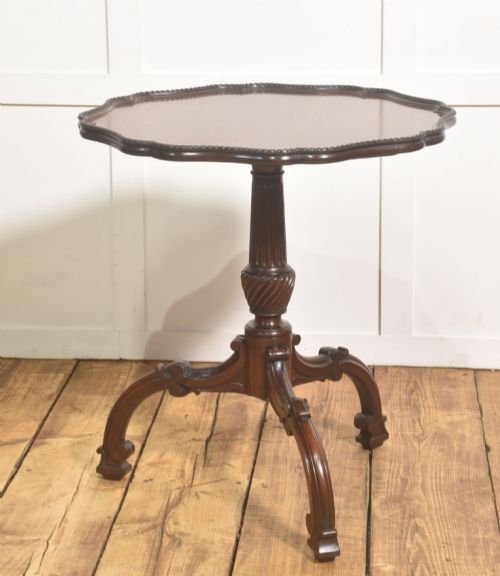
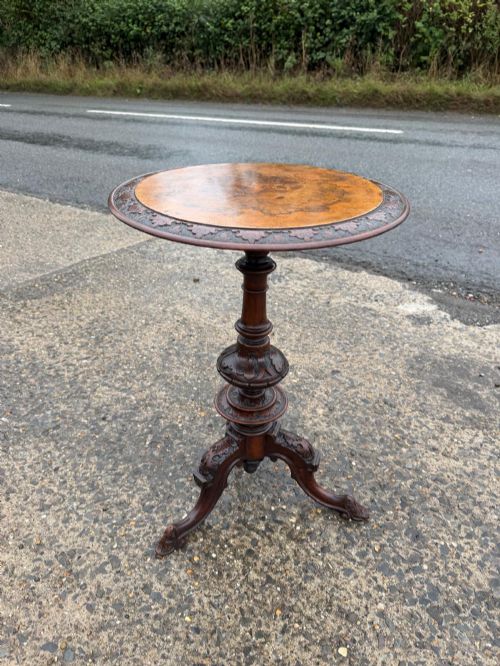
Mahogany and walnut dominate the offerings, frequently shaped into tripod wine tables, tilt-top designs, and pedestal forms. Alongside standard British and European pieces, the selection includes Anglo-Indian, Chinese, and Japanese items that incorporate distinct carving and inlay techniques.
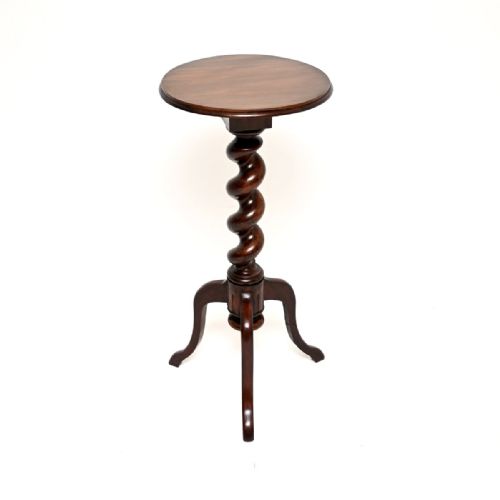
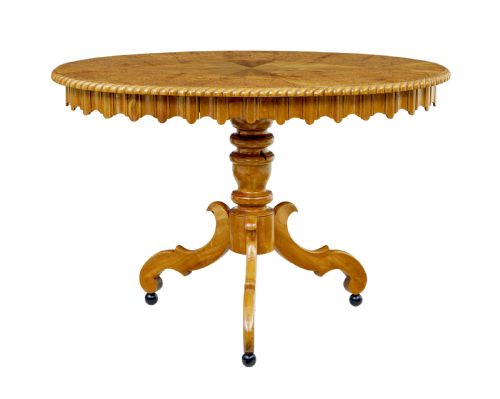
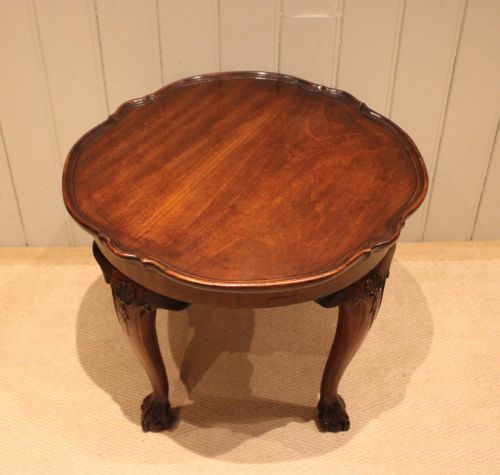
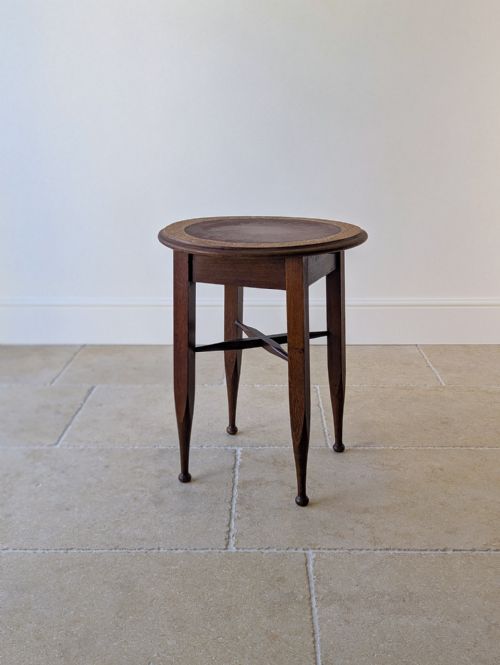
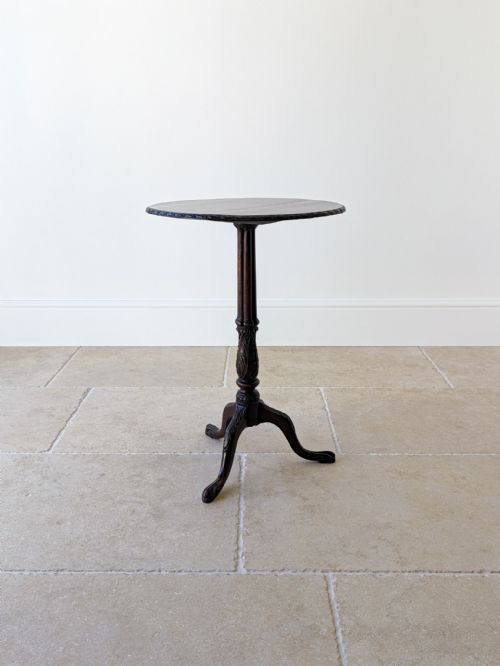
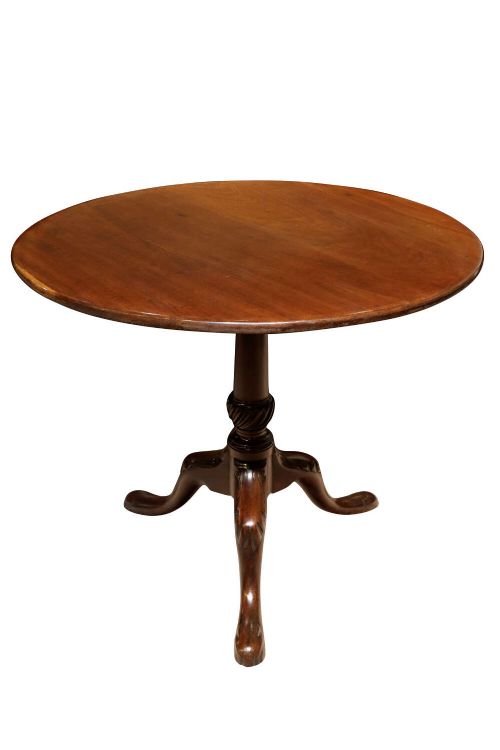
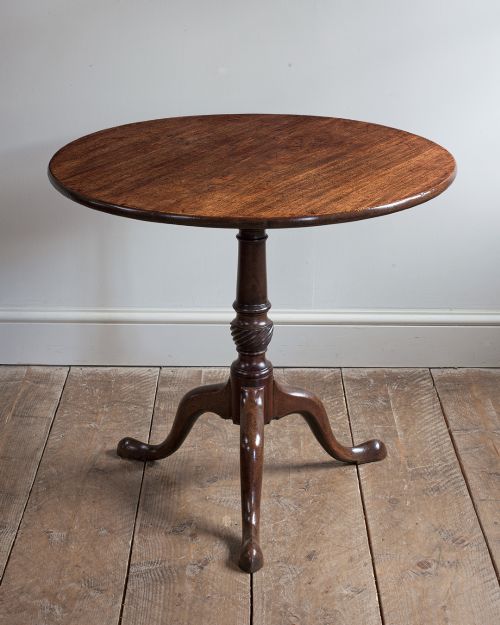
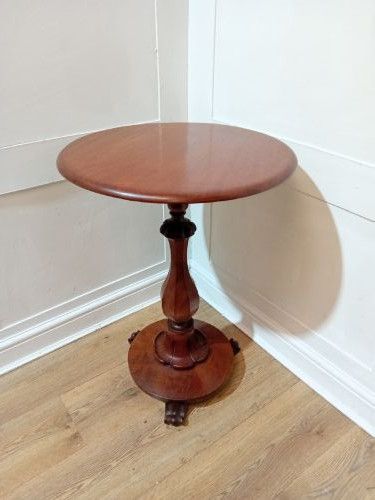
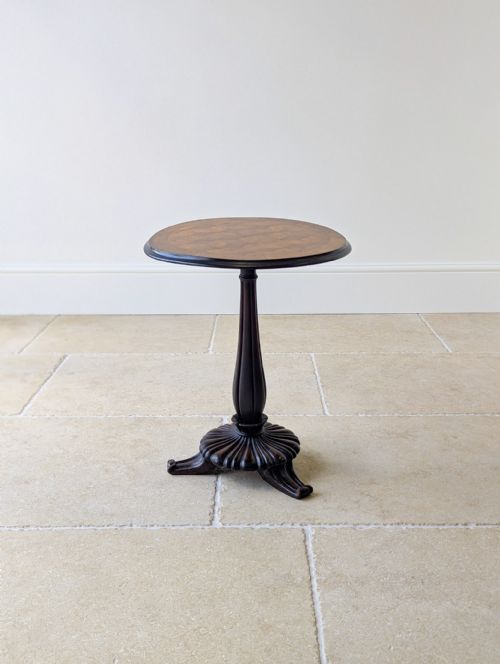
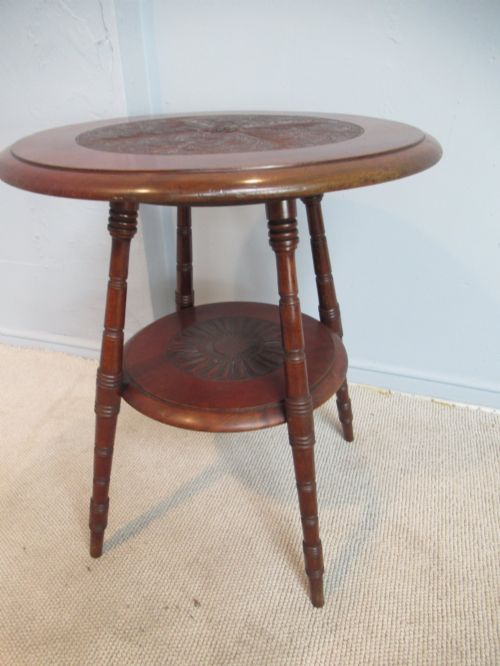
The most common formats feature a circular top supported by a central pillar on three legs, or four-legged side tables with carved ornamentation. These versatile items function easily in modern interiors as lamp tables or small coffee tables.
How they were made
Cabinetmakers constructed these tables primarily using hardwoods such as mahogany, oak, walnut, and burr walnut, occasionally applying paint or gilt wood finishes. Tops were often fashioned from solid timber or faced with burr veneers to highlight the natural grain patterns.
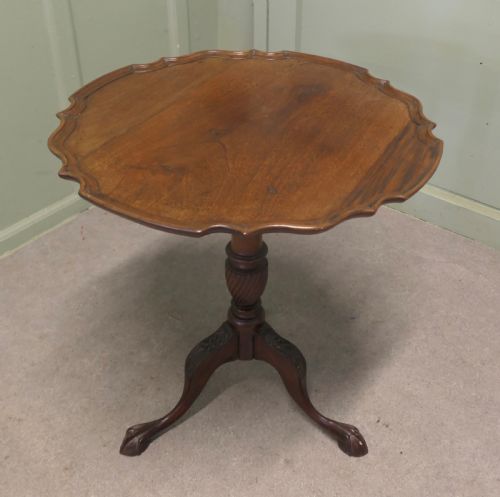
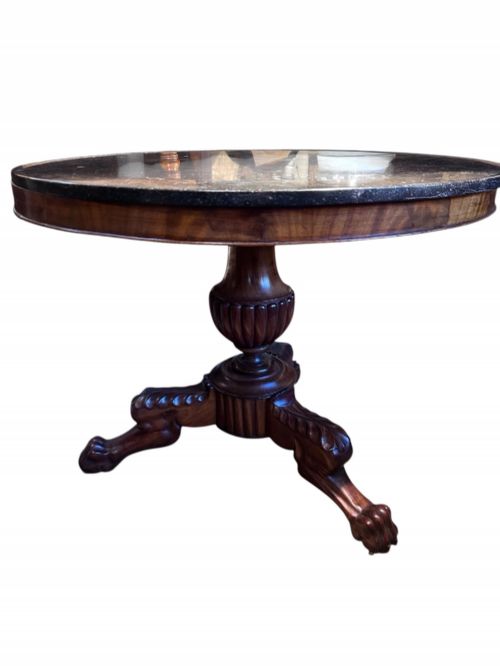
Carving and turning techniques defined the supports, ranging from barley twist stems and fluted pedestals to intricate tripod legs with claw and ball feet. Many nineteenth-century examples incorporated tilt-top mechanisms with brass catches, allowing the surfaces to fold away when not in use.
What varies in quality
The distinction between standard utility pieces and finer examples rests on the depth and crispness of the carving, the selection of timber figures, and the structural integrity of the joints. Tables with well-figured burr walnut or mahogany tops demonstrate a higher grade of material selection by the maker.
Construction methods also dictate quality, particularly in the stability of the central column and the tight fit of the tripod legs. Superior pieces retain original tilt mechanisms and balanced proportions that prevent wobbling during daily use.
Liberty of London·Waring and Gillow
The Carved Round Occasional Table Glossary
- Tripod table
- A small circular table supported by a central pillar and three legs. These became popular during the eighteenth century and remained common throughout the Victorian period.
- Tilt-top
- A hinged table top that can be rotated to a vertical position. This clever mechanism allowed the table to be stored flat against a wall.
- Gueridon
- A small French table, often circular with a marble top and a single pedestal or three legs. They originated in the seventeenth century and continued into the nineteenth century.
- Burr walnut
- A highly prized wood veneer obtained from the knot growths of walnut trees. It displays swirling patterns and rich tones that appealed to nineteenth-century cabinetmakers.
Carved Round Occasional Table: Frequently Asked Questions
Where should I place a wine table?
A wine table fits easily beside an armchair, sofa, or in an empty corner where a larger surface would crowd the room.
Its compact round top provides just enough space for a drink, a small lamp, or a book.
How do I date an occasional table?
Dating relies on observing the timber species, construction joints, carving styles, and the specific turning of the central pedestal or legs.
Victorian pieces often display heavier proportions and machine-assisted turnings, whereas earlier examples show hand-cut joinery.
Are these tables sturdy enough for daily use?
Most solid hardwood tables withstand normal daily use quite well, provided the central column and leg joints remain secure and stable.
Tripod formats require flat flooring to prevent rocking, as three-legged designs can pivot if placed on uneven surfaces.