



Dark Hardwood Elephant Table
A dark hardwood elephant table brings a distinctive carved presence into a room, joining practical support with traditional craftsmanship.
Dark Hardwood Elephant Table
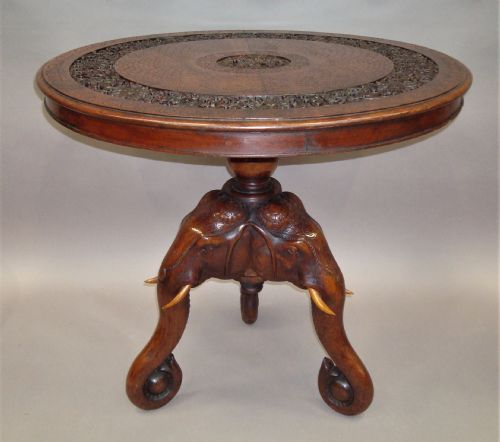
A dark hardwood elephant table takes the form of occasional tables, side tables, plant stands, and pedestals that incorporate elephant figures into their structure. The pieces appearing here span from the nineteenth century into the Edwardian period, with Anglo-Indian and Qing Dynasty styles represented.
The form relies on carved hardwood, teak, rosewood, and ebonised timber, frequently featuring elephant heads or legs as the primary structural support. Smaller circular occasional tables from the Bombay presidency sit alongside larger stands and sculptures.
Buyers will most commonly encounter side tables and plant stands dating from around 1880 to 1920. These tables function effectively as display surfaces while maintaining a sculptural character rooted in colonial and oriental designs.
Materials and Construction
Detailing often incorporates bone inlay set into the timber surface alongside small brass elements. These contrasting materials highlight the carved motifs on the table tops and borders.
Surface finishing utilises ebonising on selected hardwoods to achieve a uniform black sheen, contrasting with the natural grain visible in the teak and rosewood examples.
Materials recorded across the inventory include bone, hardwood, teak, ebonised hardwood, brass, rosewood, and carved hardwood.
Assessing Quality and Execution
Depth and precision in the hand carving distinguish finer examples from simpler production. The anatomical accuracy of the elephant heads, ears, and trunks reveals the skill of the original carver.
The choice and stability of the timber affect the longevity and visual weight of the piece. Well-seasoned teak and rosewood maintain their structural integrity better than softer substitutes while displaying richer grain patterns.
Integration of secondary materials such as bone inlay demonstrates higher workshop standards. Precise fitting indicates careful execution by the maker.
The Dark Hardwood Elephant Table Glossary
- Anglo-Indian
- A style of furniture produced in India during the British colonial period, combining traditional Indian motifs with European forms. These pieces often feature dense surface carving and exotic timbers.
- Bone inlay
- A decorative technique where small pieces of shaped bone are embedded into recesses within the timber surface. This creates contrasting geometric or floral patterns.
- Ebonised
- Wood that has been treated chemically or stained to resemble ebony, achieving a deep black finish. It was popular for Victorian and Edwardian occasional furniture.
- Pedestal
- A structural support or stand designed to elevate an object such as a plant or sculpture. They share similar decorative carving with side tables in this category.
- Teak
- A durable tropical hardwood known for its resistance to moisture and rich brown colour. It provides a stable base for detailed carving.
Dark Hardwood Elephant Table: Frequently Asked Questions
What rooms suit an elephant table?
These tables function well as side tables in a living room or as plant stands in a hallway. Their compact footprint allows them to occupy corners or spaces beside seating.
The sculptural elephant supports ensure the pieces serve as decorative focal points even when left bare.
How do I care for carved hardwood?
Dust the intricate carvings regularly with a soft brush to prevent buildup in the recessed areas. Avoid placing the timber in direct sunlight or near heat sources to prevent splitting.
Apply suitable beeswax sparingly to maintain the natural lustre of the teak or rosewood.
How are Anglo-Indian pieces dated?
Dating relies on timber selection, tool marks, and stylistic indicators typical of nineteenth and early twentieth-century workshops. Regional variations, such as those from the Bombay presidency, provide further context.
Comparative analysis with documented examples helps establish the likely period of manufacture.
What is the difference between a stand and a table?
Stands and pedestals typically feature narrower tops intended for displaying plants or sculptures rather than general use. Side and occasional tables offer broader surfaces suited for holding everyday items.
Both forms frequently employ the same elephant leg motifs and carved hardwood construction.