

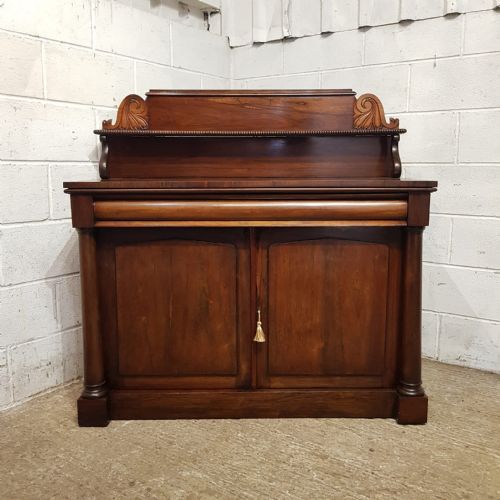
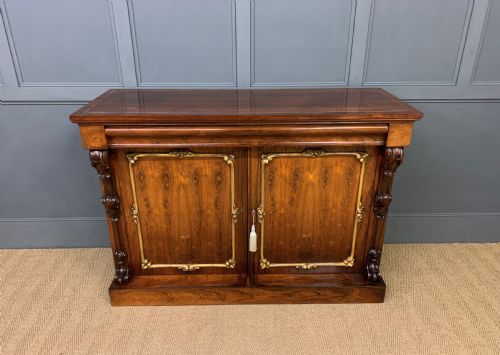
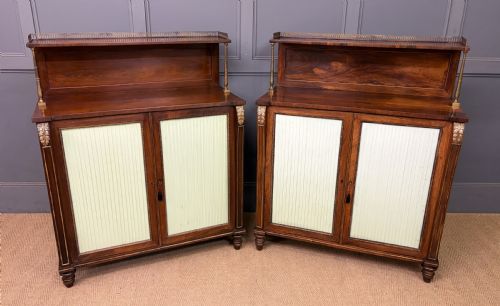
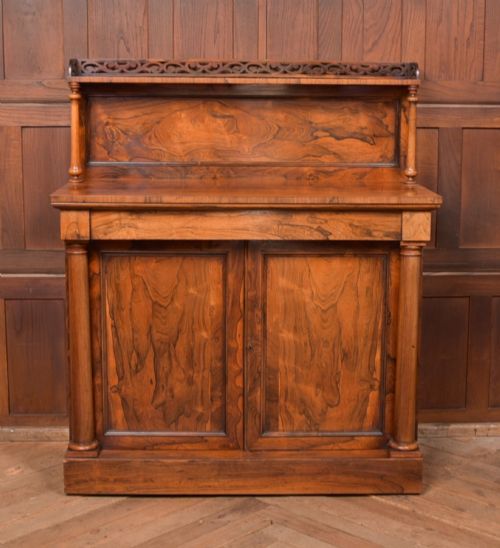


Carved Rosewood Sideboard
A carved rosewood sideboard brings rich grain, deep colour, and confident storage to a room.
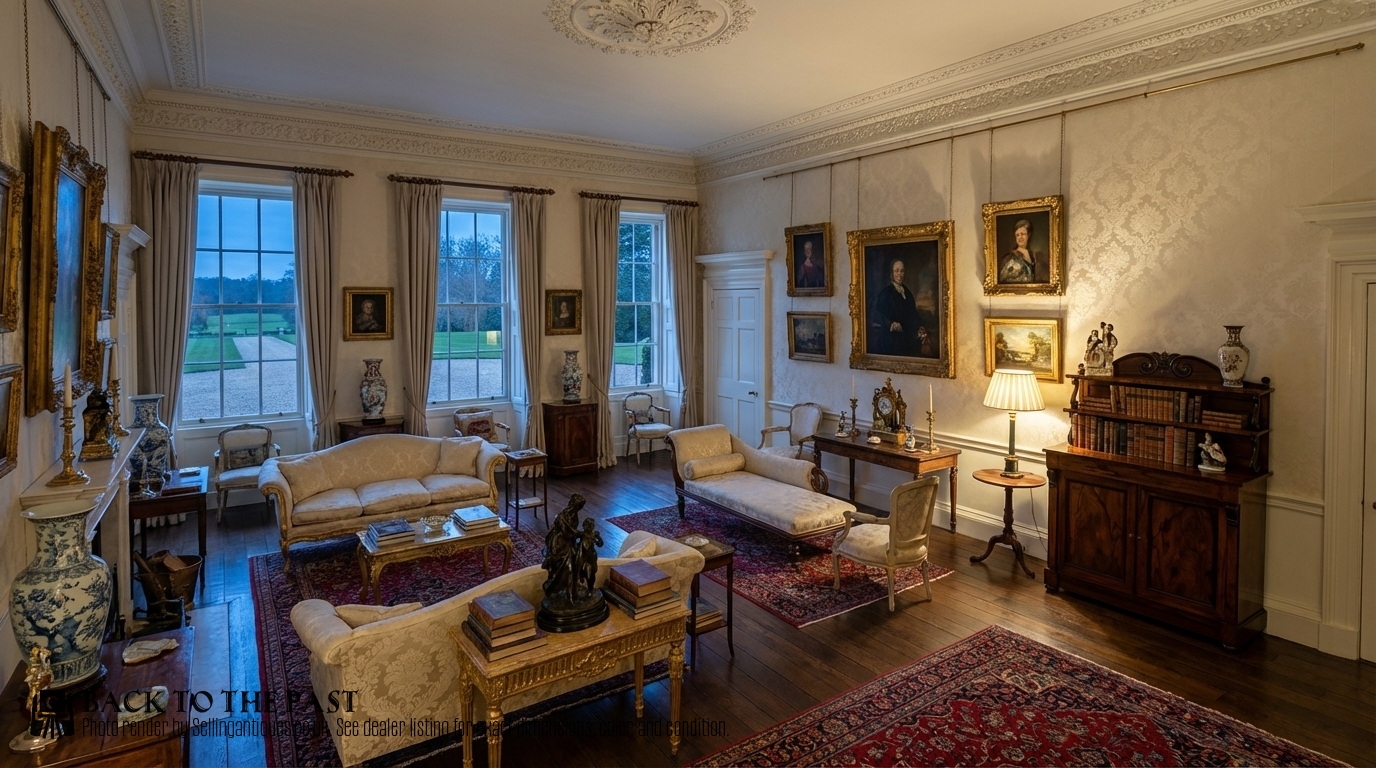
Carved Rosewood Sideboard
A carved rosewood sideboard sits at the heavier, more formal end of nineteenth-century dining and drawing room furniture. When you search for a carved rosewood sideboard, you meet pieces that span the Regency, William IV, and Victorian periods, often taking the form of chiffoniers, credenzas, or low side cabinets.
The versions most common on this page are low cabinets fitted with doors, shelves, and occasionally mirrored backs or marble tops. They serve primarily as display surfaces and closed storage for silver, glass, or dining linen.
Origins stretch from British workshops to Anglo-Indian studios and continental makers. The proportions remain solid and architectural, designed to anchor a dining room or formal hallway.
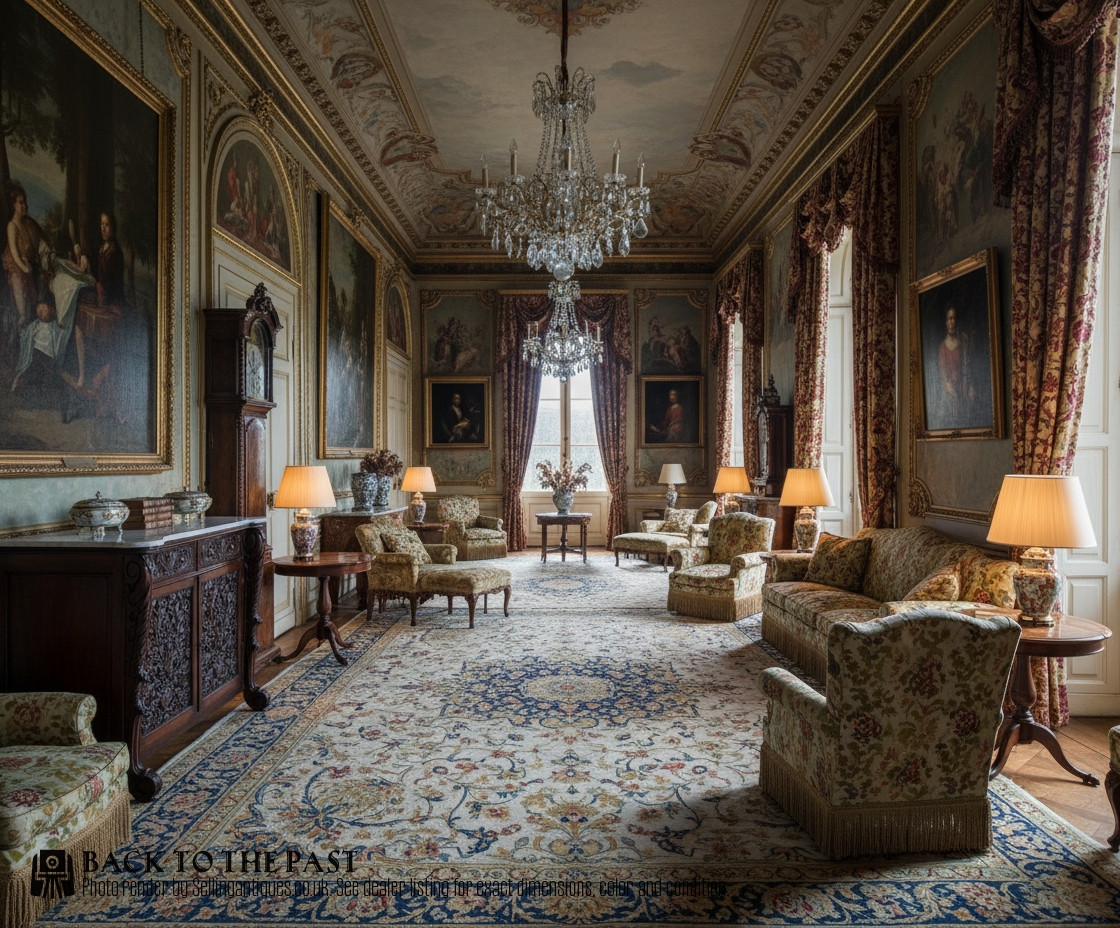
Materials and Construction
Makers built these pieces using dense tropical hardwoods, predominantly rosewood and palisander, chosen for their striking dark grain and heavy weight. Carving was executed directly into the solid timber or onto applied mouldings.
Secondary materials such as brass, marble, mirror glass, and ebony detail mounts appear frequently. Marble tops provide a cold, durable surface for serving, while mirrored backs reflect light and objects placed upon the shelf.
Inlaid details in boxwood or contrasting woods often punctuate the dark rosewood ground. Construction relies on traditional joinery housed within sturdy carcases designed to support heavy stone tops.
Listings feature pieces spanning the Regency, William IV, and Victorian eras, alongside Anglo-Indian and French designs.
Judging Quality
The standard of a carved rosewood sideboard depends on the crispness of the timber carving and the selection of the wood veneer. Strong, symmetrical figuring in the grain separates superior examples from plainer stock.
The integration of secondary materials dictates the ambition of the piece. Finely cast brass mounts, thick marble slabs, and original bevelled mirror glass indicate workshops of higher standing.
Proportion and restraint in the ornamental carving mark the distinction between provincial work and pieces produced by prominent metropolitan cabinet makers.
Gillow·Sigmund Jaray, Wien·Howard and Sons·James Plunckett
The Carved Rosewood Sideboard Glossary
- Chiffonier
- A low cabinet with doors enclosing shelves, typically topped by a raised superstructure with a shelf supported by pillars. This form evolved during the Regency period into a staple of Victorian parlours.
- Credenza
- A sideboard or low cabinet lacking legs, sitting flush to the floor or on a plinth base. These pieces often feature curved serpentine fronts and glazed or panelled doors.
- Palisander
- A dense, dark timber allied to rosewood, prized for its dramatic violet-black grain patterns. Makers utilised this wood extensively for high-status cabinet work across the nineteenth century.
- Breakfront
- A piece of furniture whose central section projects forward from the flanking wings. This architectural device creates varied depths and catches light across the timber.
Carved Rosewood Sideboard: Frequently Asked Questions
What is the difference between a chiffonier and a sideboard?
A chiffonier is typically smaller, featuring a low cabinet base with a raised shelf back, designed for smaller rooms or parlours. A sideboard is larger and longer, built specifically for the dining room to store heavy tableware.
Both use rosewood timber in the listings here, but the chiffonier often includes enclosed shelving rather than wide drawer arrangements.
How do I date a rosewood sideboard?
Dating relies on stylistic markers such as the presence of classical Regency columns, William IV scroll feet, or Victorian mirrored backs and heavy carving. Wood choice also guides the timeline, moving from early Regency solids to later Victorian veneers.
Examine the backboards and interior construction for hand-tool marks which indicate nineteenth-century production methods.
Where should I place a mirrored rosewood cabinet?
These cabinets suit dining rooms, high-ceilinged hallways, or drawing rooms where they function as focal points. Position them against a solid wall away from direct sunlight to protect the rosewood finish.
The mirror back helps bounce ambient light around darker spaces while displaying decorative objects on the upper shelf.
Are marble tops original to these sideboards?
White or grey marble slabs were fitted to many Regency and Victorian side cabinets and credenzas to provide a durable, heat-resistant surface. They sit loose or bedded on the wooden carcase.
Inspect the seating of the stone to ensure it sits flush with the rosewood mouldings surrounding it.