


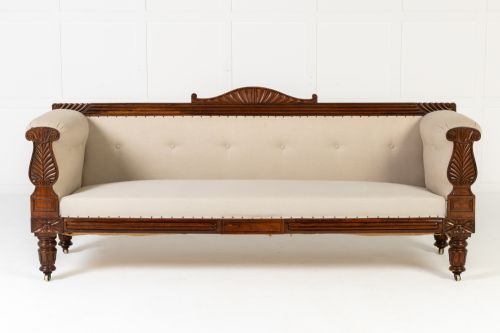


Carved Rosewood Settee
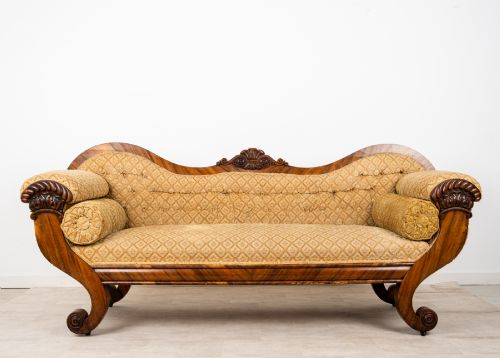
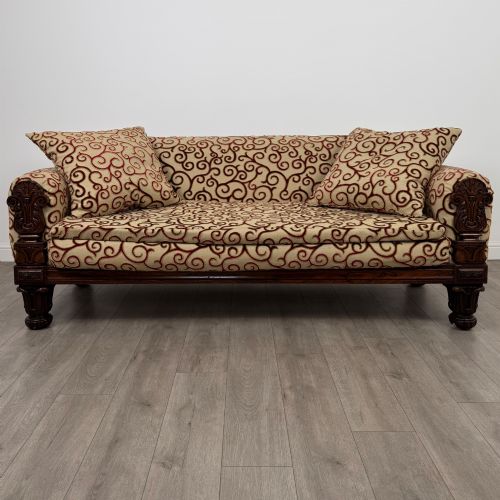
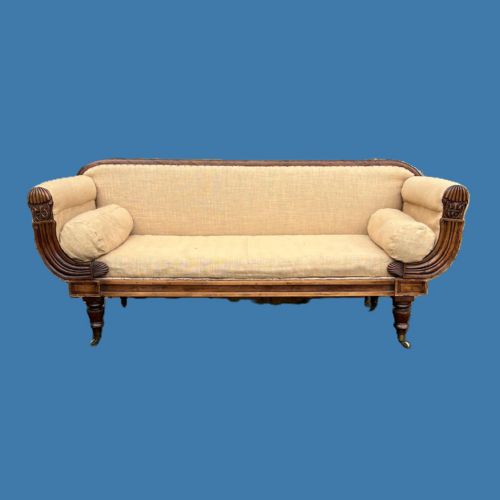
A carved rosewood settee brings dense grain and sculptural frames into a room, and you are most likely to meet an ornate Victorian or Anglo-Indian example here.
Identifying a carved rosewood settee
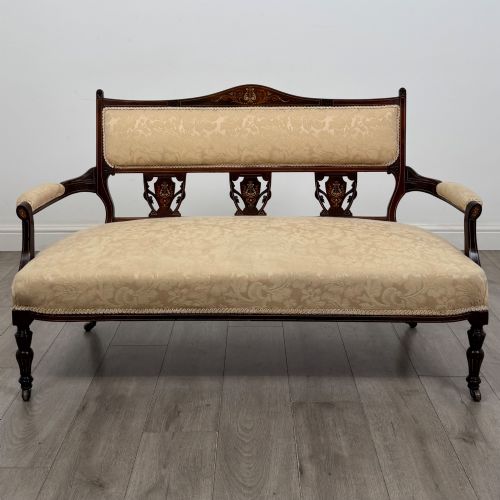
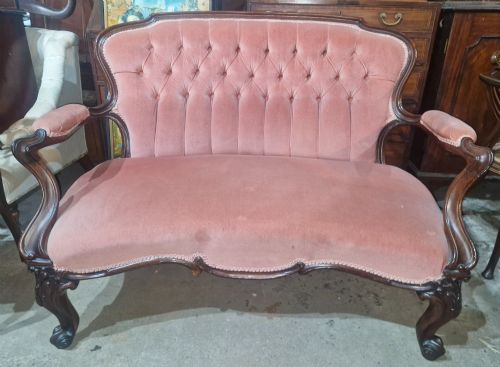
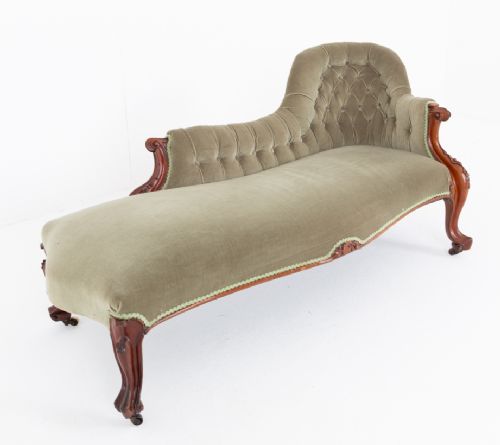
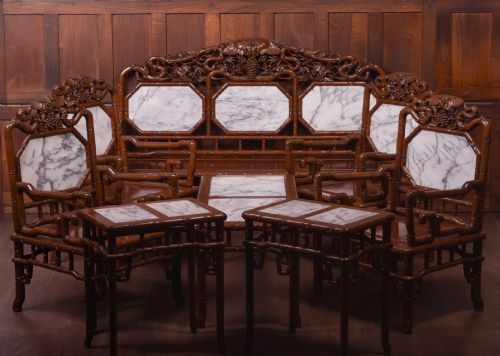
A carved rosewood settee is a substantial seating form spanning the eighteenth century through to the end of the nineteenth century, taking shapes from French Rococo Revival curves to Anglo-Indian colonial lines. The pieces here encompass formal sofas, day beds, chaise longues, and multi-piece furniture suites that include armchairs alongside the main seat.
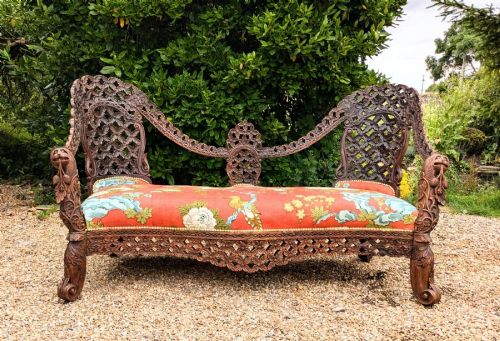
Victorian and William IV examples dominate the selection, often featuring deep upholstery in damask, velvet, or plain fabric, while Asian export workshops contribute hardwood and padauk wood constructions. You will find both compact settees and large couches designed for grand nineteenth-century drawing rooms.
Materials and construction
Makers utilised dense rosewood, padauk wood, and teak, shaping the heavy timbers through intricate hand-carving to create elaborate crest rails and cabriole legs. Inlaid details using contrasting light woods or brass often accent the dark, polished surfaces.
Frames support various upholstery textiles, including silk damask and rich velvet, held in place by traditional stuffing and tension methods beneath the fabric layers.
Retail Price Guide 2026
Typical UK retail prices for carved rosewood settee, calculated from the Sellingantiques database of over a million retail prices indexed since 2003. This retail price guide relies exclusively on Sellingantiques data; no external sources or auction records are used, so the figures do not describe the wider market.
The listings here span the eighteenth, nineteenth, and early twentieth centuries, featuring rosewood, teak, and padauk wood across seven distinct design styles.
Assessing quality and craftsmanship
The distinction between standard production and exceptional work lies in the depth and crispness of the hand-carving on the rosewood frame, where sharper floral motifs and undercut details indicate superior artisan skill. Timber selection also dictates the visual weight, with tightly figured grain and rich natural colour drawing the eye.
Structural integrity depends on the rigidity of the joinery beneath the upholstery, separating pieces that remain taut and solid from those that have suffered from loose joints over generations of use.
H. Goodall and Sons
The Carved Rosewood Settee Glossary
- Rosewood
- A dense, heavily grained hardwood prized for its dark purple-brown colour and ability to take a high polish. It forms the primary structural and decorative material for these nineteenth-century seats.
- Chaise longue
- An elongated upholstered chair or day bed designed for reclining, combining the backrest of a settee with the extended seat of a couch. These pieces often feature a single scrolled end.
- Damask
- A reversible figured fabric traditionally woven on a jacquard loom, frequently utilised for the rich upholstery found on Victorian and Edwardian settees. The pattern shows through contrasting matte and glossy surfaces.
- Padauk wood
- A heavy reddish-brown tropical timber resembling rosewood, utilised in colonial and export furniture workshops for its durability and resistance to humidity. It accepts intricate carving with exceptional clarity.
- Rococo Revival
- A nineteenth-century design style drawing on eighteenth-century French motifs, characterised by asymmetrical C-scrolls, naturalistic flower carving, and curved cabriole legs.
Frequently Asked Questions
What is the difference between a settee and a chaise longue?
A settee provides a wide, symmetrical seat with a backrest designed for multiple people to sit upright together. A chaise longue extends on one end to allow a single person to recline fully.
Both forms appear frequently in nineteenth-century rosewood, often sharing similar carved wooden frames and upholstered treatments.
How do I care for rosewood furniture?
Keep rosewood frames away from direct sunlight and strong heat sources to prevent the dense timber from drying out and splitting. Dust the carved surfaces regularly with a soft, dry cloth.
Avoid silicone-based polishes, which build up on the polished wood and attract dust over time.
Where were Anglo-Indian settees made?
Anglo-Indian and colonial furniture was produced in workshops across the Indian subcontinent during the nineteenth century, specifically for British residents and export markets. These pieces combined traditional local carving skills with European furniture forms.
The makers utilised native timbers such as padauk wood and dense rosewood alongside imported designs.
Are these settees comfortable for daily use?
Nineteenth-century upholstery tends to be firmer and more upright than modern lounging sofas, reflecting the formal posture of the period. Many surviving pieces retain their traditional sprung or stuffed interiors.
Seat comfort can vary depending on whether the upholstery has been restored using period-appropriate materials.