





Carved Rosewood Ottoman
A carved rosewood ottoman offers substantial seating and storage, bringing dense timber and rich upholstery to period interiors.
Carved Rosewood Ottoman
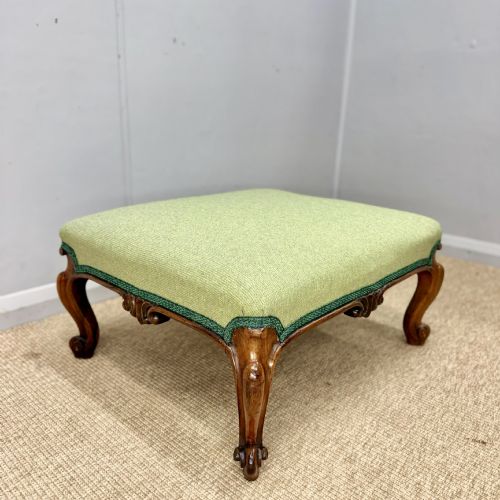
When you search for a carved rosewood ottoman, you are looking at substantial seating pieces designed for nineteenth-century drawing rooms and parlours. These items frequently appear as large footstools, box seat stools, and centre stools constructed from dense tropical timber. The Victorian period supplies the majority of these examples, alongside pieces from the Regency and Georgian eras.
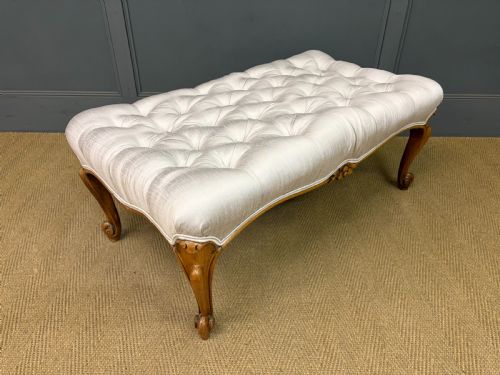
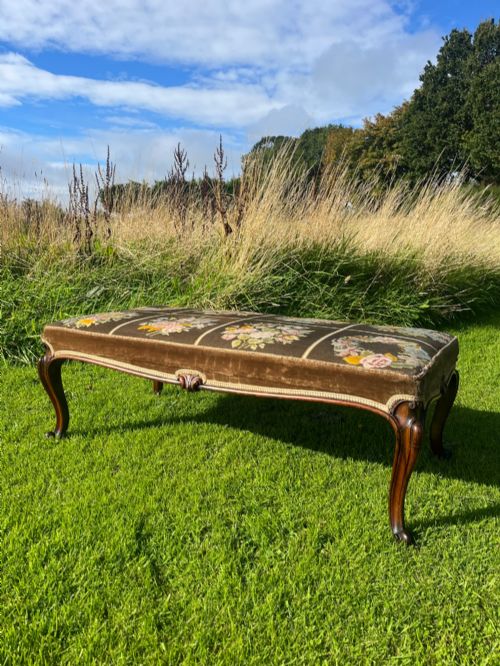
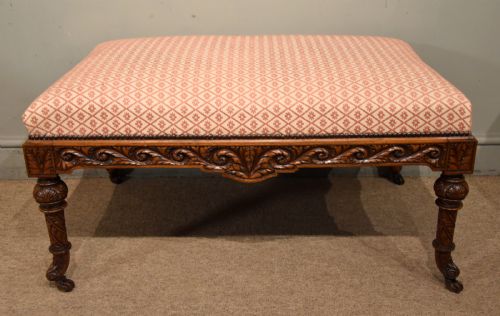
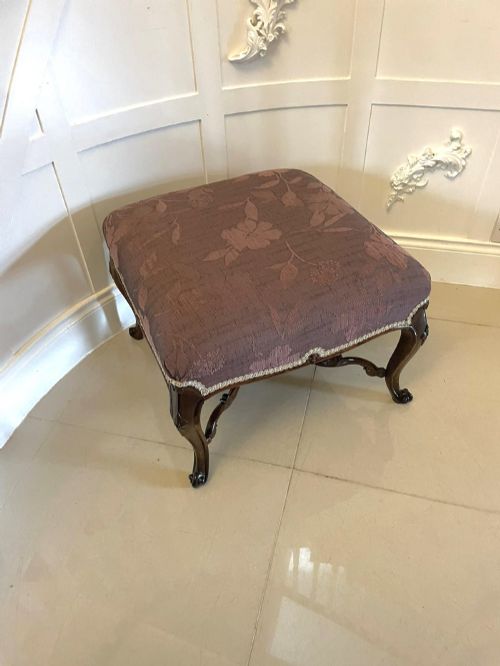
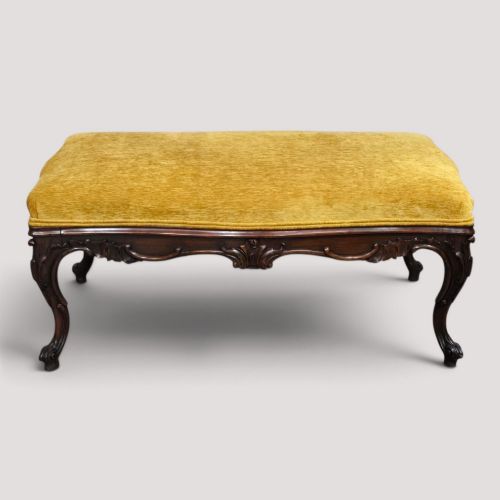
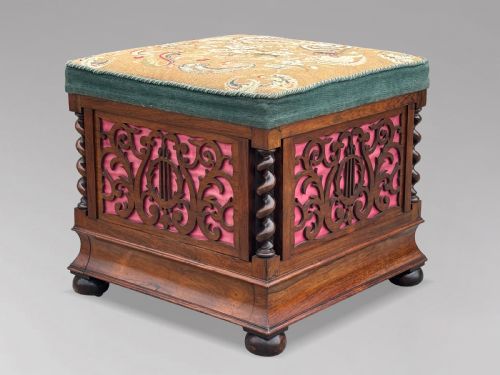
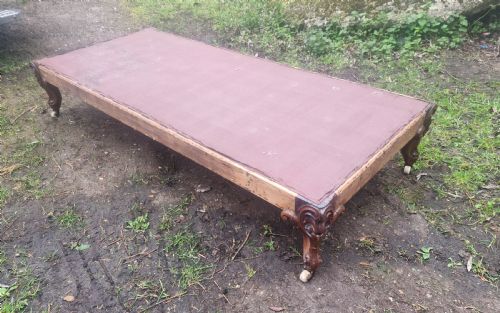
You will most commonly encounter Victorian and Anglo-Indian variants on this page, reflecting the popularity of heavy carved woodwork during the nineteenth century. Forms range from oblong box seats with lift-out upholstered sections to large footstools raised on cabriole legs. Many examples arrive ready for reupholstering or retain period textiles such as tapestry, velvet, and buttoned fabric.
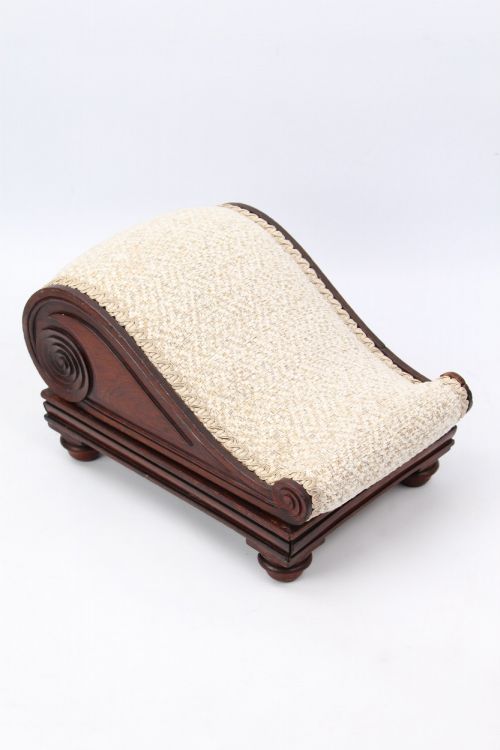
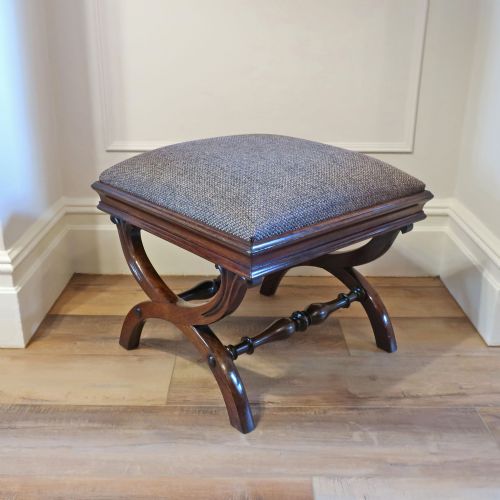
The cataloguing encompasses diverse seating forms including piano stools, armchairs with matching stools, and X-framed designs. Rosewood remains the defining material across these items, often paired with brass fittings and textile coverings. Craftsmanship spans standard domestic British workshops and distinct Anglo-Indian production.
How they were made
Maker workshops utilised dense rosewood and hardwood timber as the primary structural material for framing these ottomans and stools. Carved ornamentation was applied directly to the solid wood, shaping cabriole legs, decorative borders, and structural frames by hand. Selected pieces incorporate bone inlay alongside the carved timber surfaces.
Upholstery techniques involved textile coverings such as tapestry, velvet, and general fabric fixed over internal stuffing. Brass components appear on functional elements like castors and hinges, particularly on box seat variants with lift-out or hinged lids. Timber frames were joined to support heavy daily sitting and footrest use.
Carved Rosewood Ottoman Retail Price Guide 2026
Typical asking prices for carved rosewood ottoman among the pieces listed under this phrase on Sellingantiques today, from the lower quarter to the upper quarter. They describe what is for sale here now, not the wider market.
Listings feature items spanning the Georgian, Regency, and Victorian periods, constructed from rosewood, hardwood, and upholstered textiles.
What varies in quality
The depth and execution of the carved ornamentation on the rosewood frame separate standard production from superior examples. Crisp detailing in floral or foliate carving indicates skilled hand-working by nineteenth-century cabinet makers. Plain or shallow timber framing sits at the simpler end of the range.
Proportion and scale distinguish larger grand salon stools and ottomans from smaller domestic footstools. The integrity of the underlying hardwood timber and the presence of original structural elements such as X-frames or cabriole legs dictate the piece's architectural merit.
The Carved Rosewood Ottoman Glossary
- Ottoman
- A low upholstered seat or bench without arms or a back, frequently configured with a box seat for storage. These pieces served as movable seating in Victorian reception rooms.
- Rosewood
- A heavy, dense tropical timber prized for its dark grain and durable qualities. Cabinet makers utilised this material extensively for high-end nineteenth-century seating.
- Cabriole leg
- A furniture leg that curves outward and then tapers inward to a foot, popular during Victorian and earlier revival periods. This form appears frequently on the stools listed here.
- X-framed
- A structural furniture design where intersecting diagonal supports form an X shape beneath the seat. This configuration provides distinct architectural stability to nineteenth-century stools.
- Anglo-Indian
- A descriptive term for items produced in India under British colonial rule, combining traditional local carving with European furniture forms. These pieces often feature dense overall ornamentation.
Carved Rosewood Ottoman: Frequently Asked Questions
How do I use an ottoman in a modern room?
Place a large rosewood ottoman centrally as an alternative to a coffee table or position it before a sofa as a substantial footrest. The upholstered top provides functional softness while the timber frame introduces dark nineteenth-century contrast.
Ensure the scale of the stool matches surrounding seating heights and room proportions. Box seat variants offer concealed storage for textiles or books while maintaining a formal period appearance.
What is the difference between a footstool and an ottoman?
Footstools are generally smaller low supports intended solely for resting feet, whereas ottomans provide broader surfaces and frequently incorporate internal storage boxes. Nineteenth-century makers blurred these definitions by producing large footstools with deep upholstered lids.
Examining the internal construction reveals whether a piece functions strictly as a frame or includes a compartment beneath the removable seat. Both forms utilise identical rosewood timbers and carved decorative vocabularies.
How do I date a Victorian rosewood stool?
Examine the stylistic markers such as cabriole legs, heavy floral carving, and X-shaped frames that characterise mid-nineteenth-century production. Pieces catalogued from 1850 to 1880 typically display the dense timber and upholstery styles of the high Victorian era.
Earlier Regency and Georgian examples exhibit more restrained classical proportions and distinct leg turnings. Checking for secondary woods and fastener types helps confirm the manufacturing era.
Should I reupholster a period rosewood stool?
Many nineteenth-century stools arrive with worn coverings or modern replacement fabric, making reupholstery a practical step for daily use. Selecting appropriate period textiles like velvet, tapestry, or buttoned fabric preserves the traditional aesthetic of the piece.
Retaining original historical upholstery is advisable only when the fabric remains intact and structurally sound. Otherwise, professional reupholstering protects the underlying wooden frame and allows integration into contemporary interiors.