


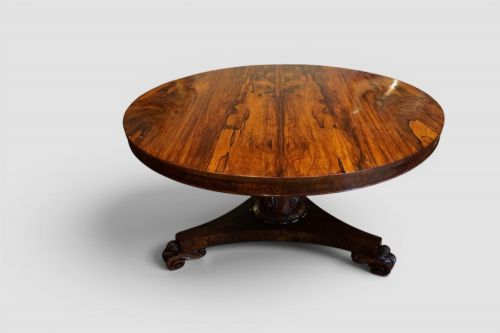
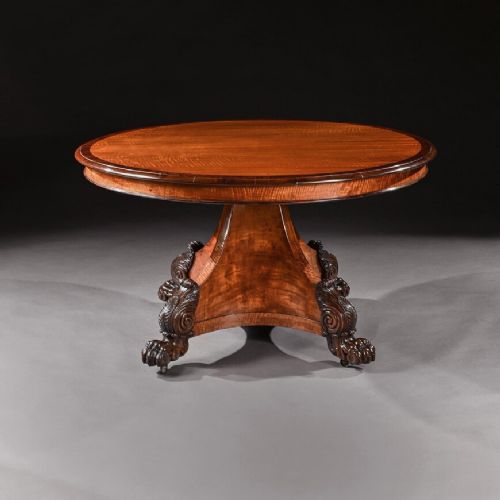
Carved Rosewood Dining Table
A carved rosewood dining table brings nineteenth-century warmth and rich grain to a room, offering sturdy charm for modern meals.
Carved Rosewood Dining Table
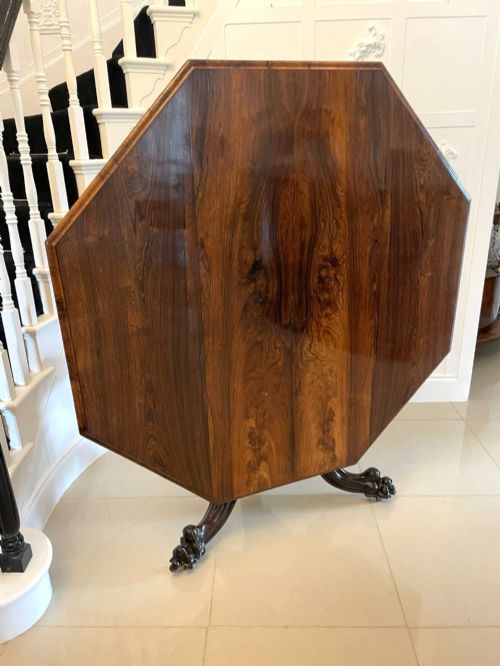
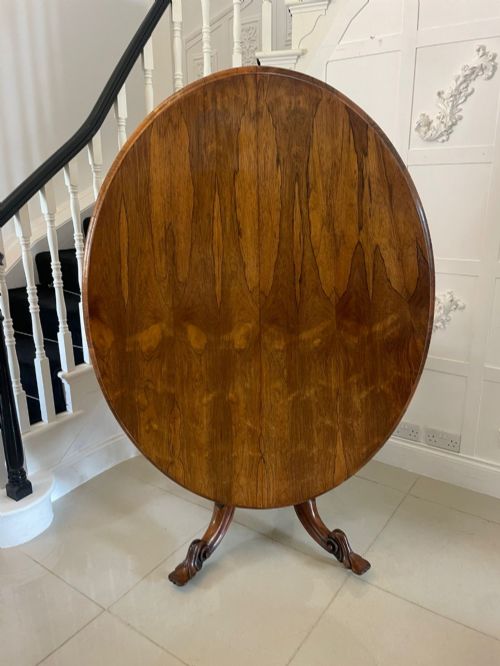
When searching for a carved rosewood dining table, buyers encounter nineteenth-century pieces spanning the Regency, William IV, and Victorian periods. These heavy tables often double as centre tables, breakfast tables, or loo tables, designed with round, oval, or serpentine tops.
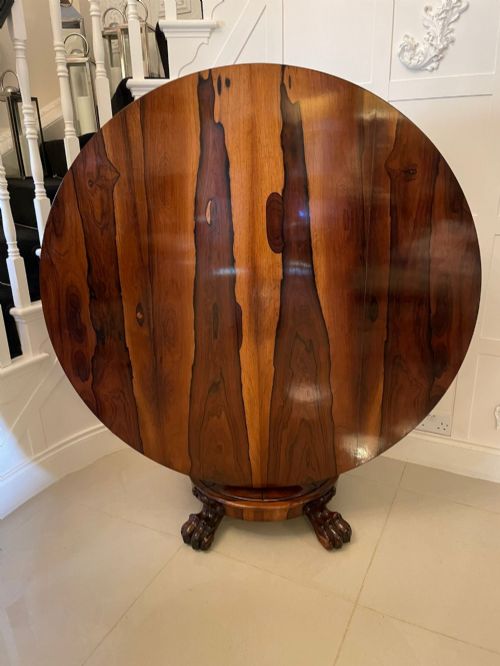
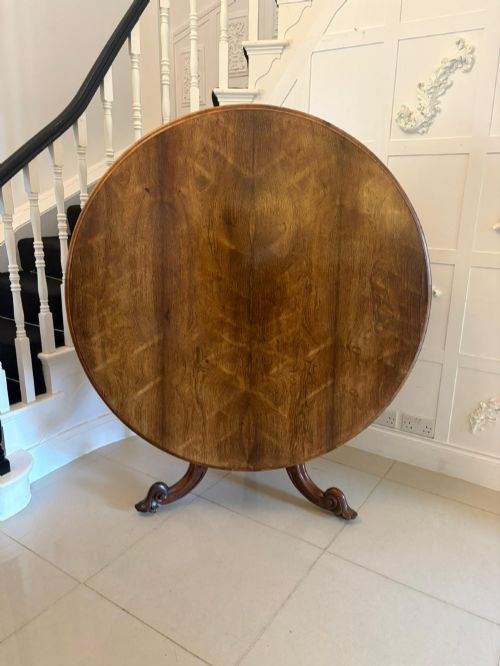
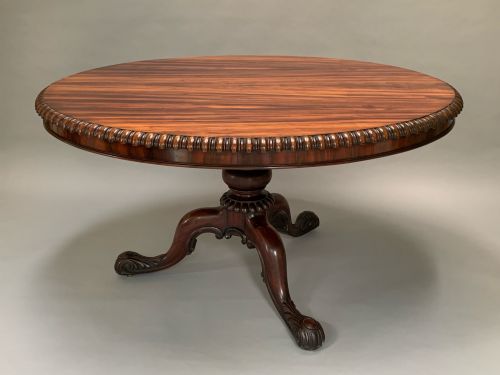
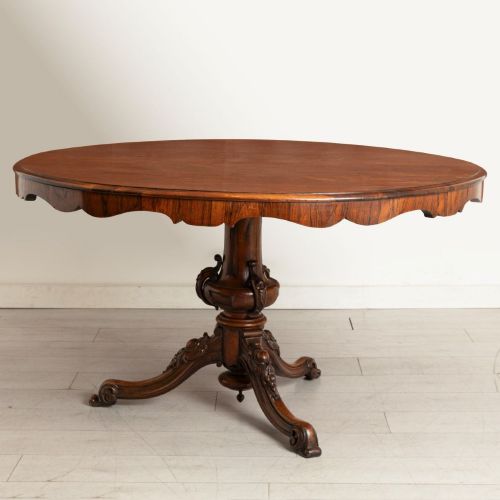
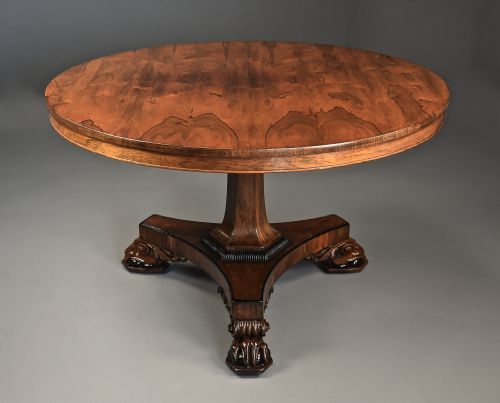
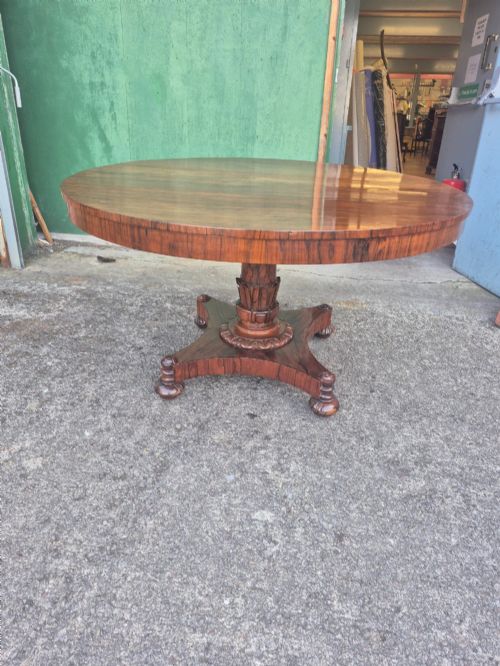
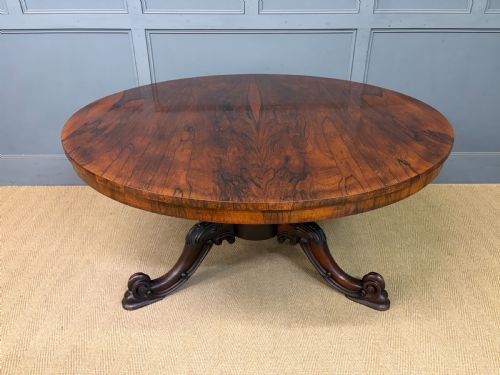
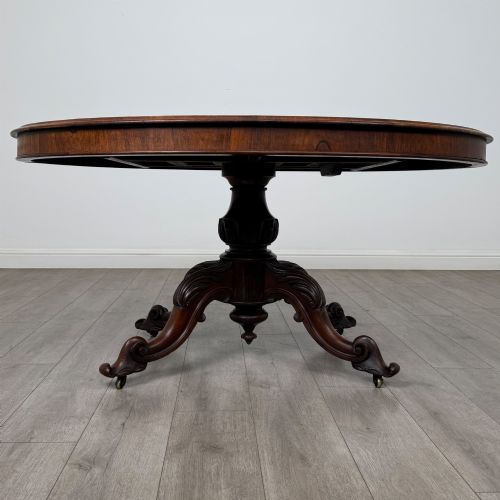
The most common examples on this page are circular pedestal tables from the William IV and Victorian eras, frequently featuring tilt-top or snap-top mechanisms supported by triform or turned and carved solid rosewood bases.
How They Were Made
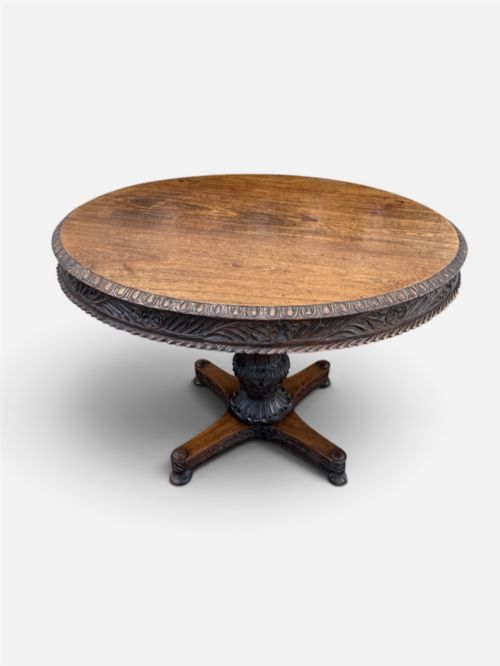
Cabinet makers utilised dense rosewood and rosewood veneer laid over secondary timbers, often accentuating the grain on circular table tops. Bases combined turned solid rosewood with intricate hand carving on pedestals and feet.
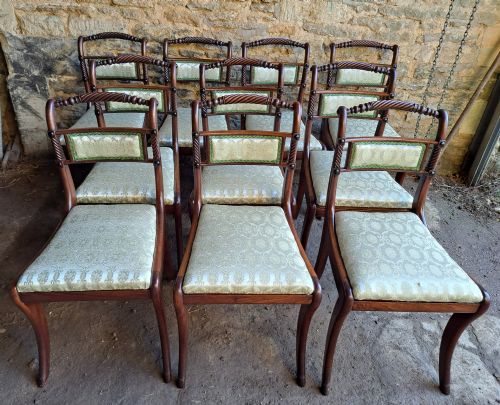
Internal construction frequently involved brass fittings for mechanisms, alongside supplementary materials such as satinwood and mahogany found in framing and related seating.
Listings span the nineteenth century, covering Regency, William IV, and Victorian periods using rosewood, mahogany, satinwood, and brass.
What Varies in Quality
The distinction between ordinary and superior pieces rests upon the crispness of the hand carving on the pedestal and the selection of figured rosewood veneer for the top. Heavy, stable pedestals and well-executed mechanical pivots separate finer examples from standard workshop production.
Maker attribution also elevates a piece, with documented works by firms such as Gillows demonstrating superior joinery, balanced proportions, and careful timber matching compared to unattributed country house tables.
Gillows·Peters of Genoa
The Carved Rosewood Dining Table Glossary
- Rosewood
- A dense, heavy timber prized for its dark grain and oily lustre. It takes a high polish and forms the primary surface of these tables.
- Tilt-top
- A hinged table mechanism allowing the top to pivot to a vertical position. This enabled tables to be stored against walls when not in use.
- Triform
- A three-sided base or pedestal support common on nineteenth-century centre tables. It provides stability for heavy pillar construction.
- Loo table
- A large round or oval nineteenth-century table used for the card game loo. These tables typically feature tilt mechanisms and substantial carved pedestals.
- Veneer
- A thin layer of figured wood applied over a stable secondary timber. This technique displayed rich grain patterns without risking structural warping.
Carved Rosewood Dining Table: Frequently Asked Questions
How do I use a tilt-top table?
Release the brass catch underneath the table top to pivot the surface into a vertical position. This allows the piece to be moved easily or placed against a wall to save floor space.
Ensure the safety catch is securely locked back into place before lowering the top horizontal again for dining or display.
What is a loo table?
A loo table is a nineteenth-century round or oval table originally designed for playing the card game loo. They feature central pedestals and often tilt tops for convenient storage.
Today, these versatile pieces function well as large centre tables or occasional dining surfaces in traditional settings.
How do I tell Regency from Victorian tables?
Regency and early William IV pieces often display classical restraint with architectural lines, parcel gilt, or bolder brass inlay. Victorian examples tend towards heavier proportions, elaborate floral carving, and serpentine top edges.
Examining the turning on the central pillar and the style of the base feet helps clarify the period of manufacture.
Can I use these tables daily?
These nineteenth-century tables were built from dense rosewood and solid timber designed for heavy domestic use. Normal daily dining requires only sensible precautions like using heat mats and coasters.
Applying quality wax polish periodically maintains the moisture and sheen of the polished rosewood surface over time.