




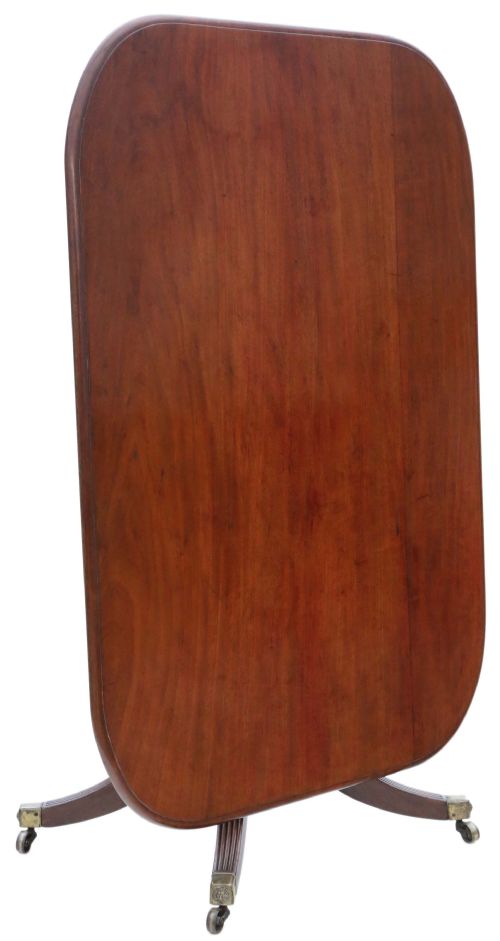


Regency Period Loo Table
A regency period loo table offers robust timber and tilting tops, combining practical dining utility with refined drawing room elegance.
Regency Period Loo Table
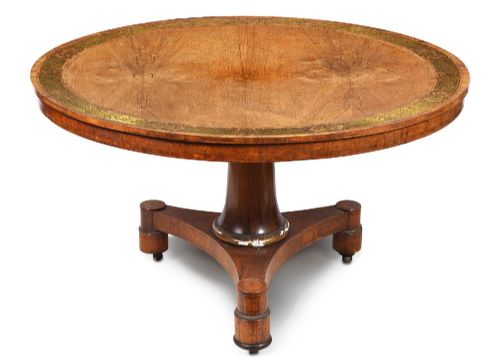
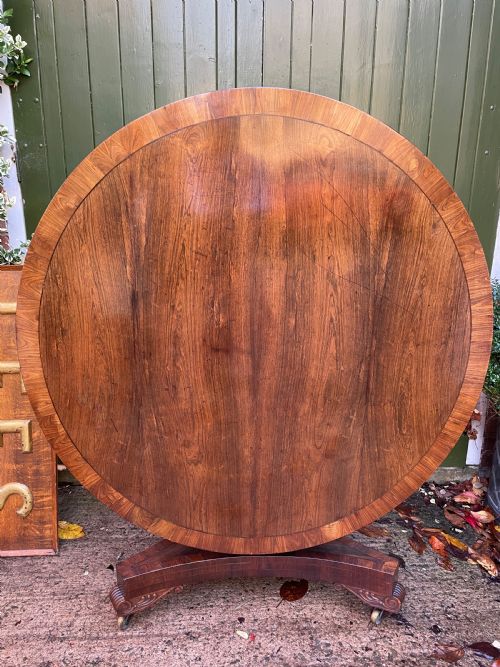
A regency period loo table is a circular or occasional table designed for games, breakfast, and informal dining, pivoting on a central column above a platform or robust feet. These tables date primarily from the nineteenth century and encompass William IV and Grand Regency iterations alongside standard Regency forms.
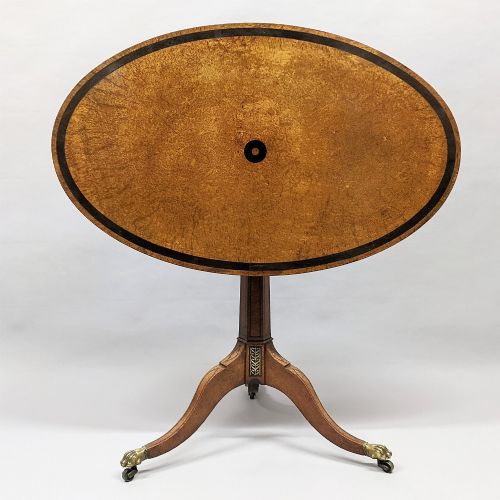
Buyers browsing this selection encounter timber surfaces executed in mahogany, rosewood, amboyna, coromandel wood, ebony, sycamore, and goncalo alves. Many examples feature tilt top mechanisms that allow the surface to pivot vertically when not in use.
Origins span standard Regency production through to Scottish Regency variants, with centre tables and dining tables sharing similar structural vocabularies. The pieces bridge formal entertaining and daily utility within period interiors.
How they were made
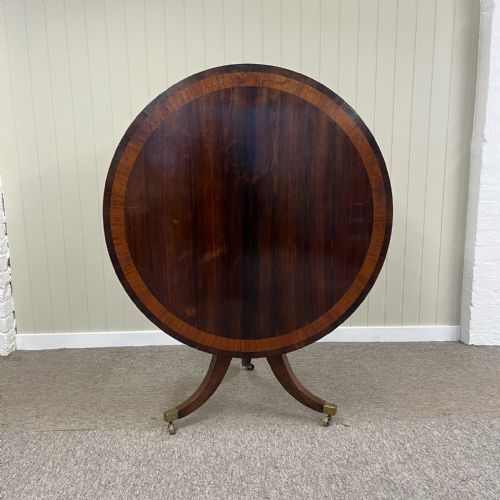
Cabinet makers constructed these tables using dense hardwoods such as mahogany and rosewood, often applying contrasting veneers of amboyna, ebony, and coromandel wood to create geometric borders and panels. Sycamore and paint also appear on specific decorative surfaces.
Brass inlay provides linear contrast along table tops and bases, embedded directly into the dark timber grounds. Tilt top mechanisms rely on iron catches and stable pivoting blocks housed beneath the circular top.
Tilt top tables were engineered to fold flat and vanish against the drawing room wall like polite wooden ghosts.
What varies in quality
Quality separates tables through the choice of timber figure, where richly grained rosewood or amboyna veneer elevates an ordinary construction into a striking decorative object. The precision of brass inlay and the integrity of crossbanding further distinguish finer workshop output.
Proportion and column turning dictate visual balance, with robust pedestal bases supporting heavy circular tops without sagging. Mechanisms function smoothly to secure the tilting top in a rigid horizontal position.
The Regency Period Loo Table Glossary
- Loo table
- A circular table designed for the nineteenth-century card game loo, featuring a tilting top for convenient storage.
- Tilt top
- A table mechanism allowing the surface to pivot ninety degrees, enabling the piece to stand flat against a wall.
- Crossbanding
- A border of veneer laid perpendicular to the grain of the main surface, framing the primary timber.
- Goncalo Alves
- A dense exotic hardwood with distinct contrasting figuring, utilised for prominent table surfaces.
- Amboyna
- A highly prized burr timber displaying intricate swirling patterns, applied as fine veneer.
Regency Period Loo Table: Frequently Asked Questions
What is a loo table?
A loo table is a circular nineteenth-century table originally used for the card game loo. The top tilts vertically on its pedestal for storage.
These pieces function well today as central tables or occasional dining tables in principal rooms.
How do I spot a tilt top?
A tilt top mechanism uses a hinged block beneath the table surface that releases to let the top pivot upward.
This design allows the table to save floor space when not actively in use for meals or gatherings.
What timbers were used?
Cabinet makers built these tables primarily in mahogany and rosewood, supplemented by decorative veneers like amboyna, coromandel, and ebony.
Some variants incorporate sycamore or painted finishes depending on the specific regional style.
Are these tables sturdy?
These tables rely on heavy central columns and solid platform bases to support large circular tops.
The dense hardwoods employed provide structural stability during everyday dining and entertaining.