

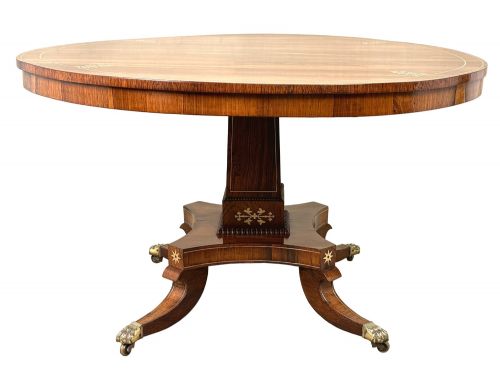
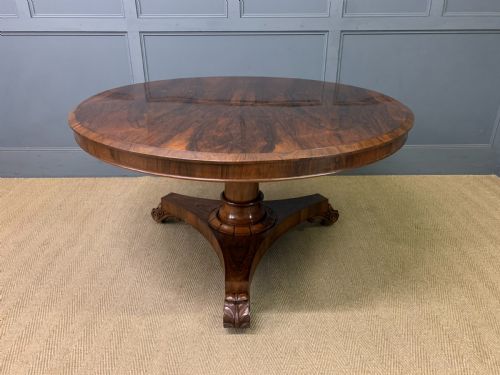
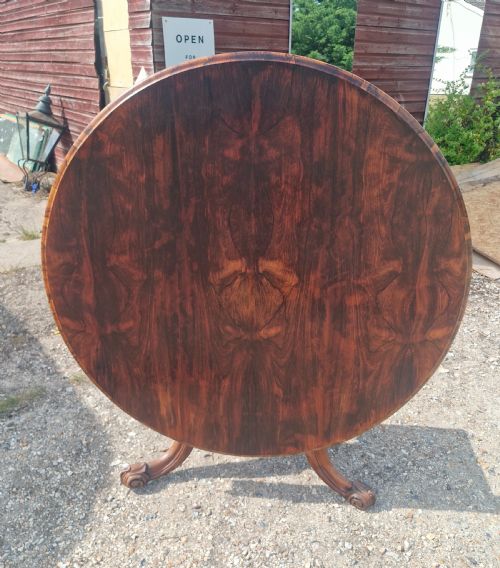

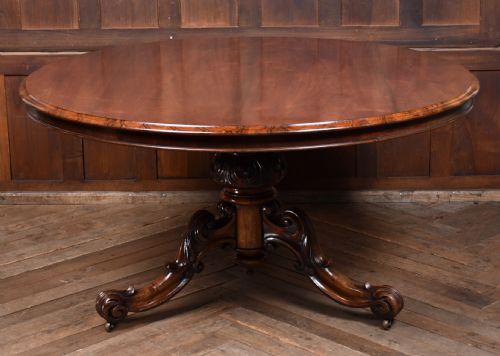
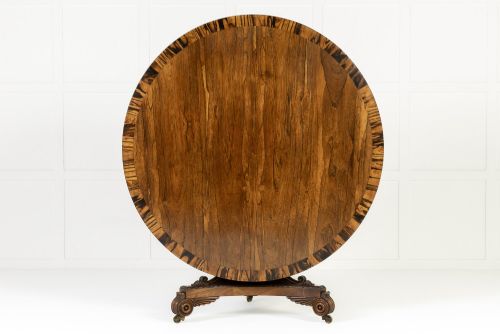

Dark Rosewood Loo Table
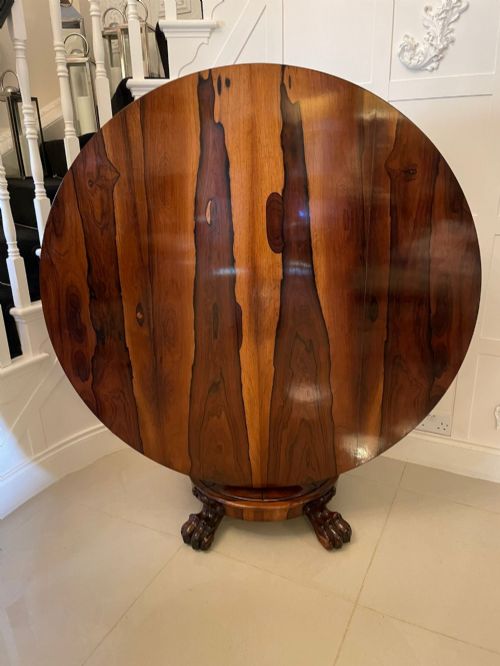
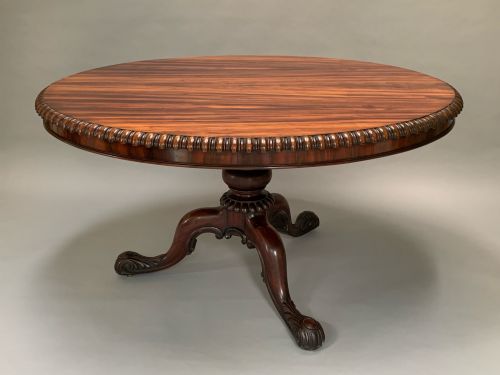
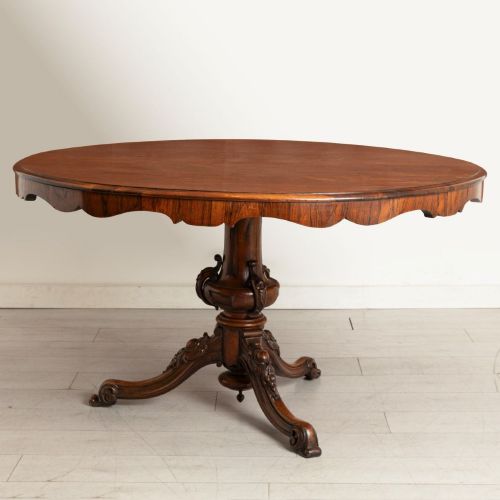
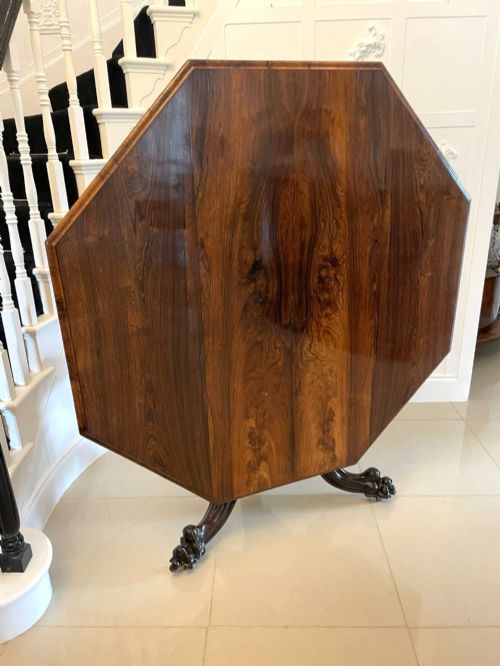
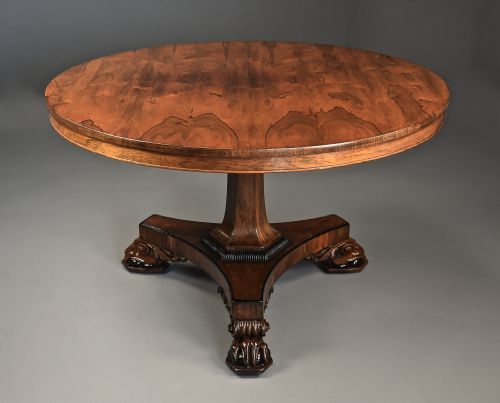
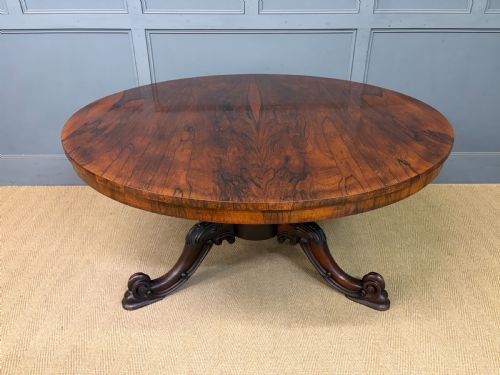
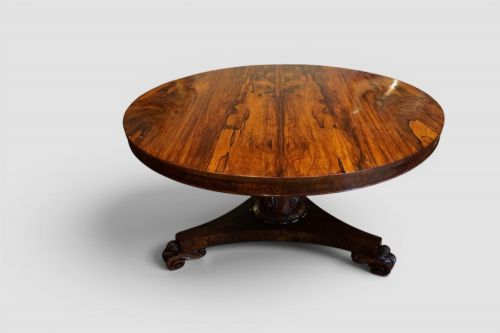
A dark rosewood loo table brings the heavy grain and warm reddish-brown depth of nineteenth-century timber directly to the middle of a room.
How they were made
Cabinet makers utilised dense tropical rosewood, often applied as fine veneer over solid timber foundations or combined with contrasting timbers such as satinwood, mahogany, and albuera wood. The natural figuring of the rosewood grain provided the primary visual decoration across the expansive circular or oval tops.
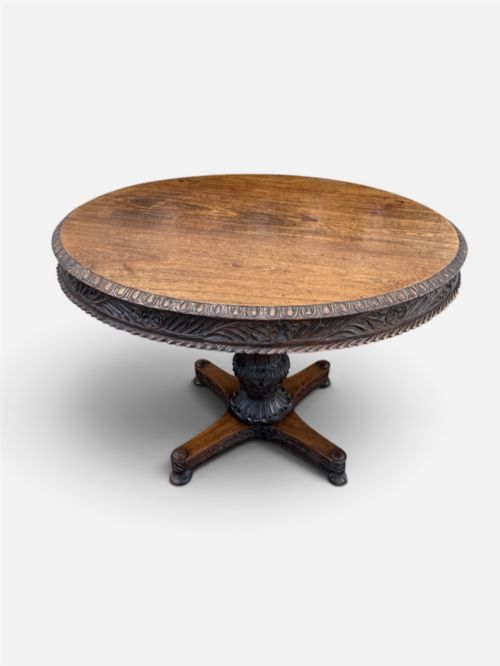
Structural stability relied upon heavy turned and carved solid rosewood pedestals, often reinforced with internal iron or brass mechanisms to support the weight of the tilting top. Brass inlay, marquetry, and delicate stringing were frequently embedded into the timber surfaces to articulate the geometric and floral borders.
What varies in quality
The standard of a dark rosewood loo table depends heavily on the crispness of the carving on the pedestal and the selection of the rosewood veneer. Richly figured timber with balanced grain patterns and substantial weight separates finer cabinet work from simpler vernacular pieces.
Mechanisms also dictate the standard of the piece, particularly the smooth operation of the tilt-top action and the integrity of the original brass fittings and castors. Furthermore, attribution to known workshops such as Gillows or James Winter elevates the standing of a table within the nineteenth-century corpus.
Listings feature pieces spanning the Regency, William IV, and Victorian periods, constructed primarily from rosewood with brass and satinwood inlay.
Gillows·James Winter
The Dark Rosewood Loo Table Glossary
- Loo table
- A large nineteenth-century round or oval table designed for the card game loo, featuring a tilting top to save space. These pieces doubled as centre or breakfast tables during daylight hours.
- Tilt-top
- A hinged tabletop mechanism that pivots from horizontal to vertical. This allows the heavy table to be stored flat against a wall when not in active use.
- Veneer
- A thin slice of figured rosewood applied over a secondary timber base to create a decorative surface. This technique protected scarce hardwoods while displaying rich grain patterns.
- Marquetry
- The art of creating decorative patterns by fitting together small pieces of different coloured wood veneers. It appears frequently on Victorian examples alongside satinwood and brass inlay.
- Albuera wood
- An alternative exotic timber utilised by cabinet makers during the nineteenth century. It shares warm reddish tones with rosewood.
Dark Rosewood Loo Table: Frequently Asked Questions
What is a loo table used for?
Originally constructed for the popular nineteenth-century card game called loo, these large tables served multiple domestic purposes. Households utilised them for breakfast, dining, and general assembly in the centre of principal rooms.
Because the tops tilted vertically, the tables could be pushed aside against the wall when the room required open space. This dual functionality made them central pieces in Victorian and Regency interiors.
How do I tell a Regency table from a Victorian one?
Regency tables, dating from the early nineteenth century, frequently incorporate clean classical proportions, brass inlay, and geometric stringing. The pedestals tend to show restrained architectural influence, such as reeded columns or sabre legs.
Victorian examples from the mid-nineteenth century generally display heavier, more exuberant carving on the central pillar and base. They also embrace varied top shapes, including serpentine outlines and elaborate marquetry.
How do I care for a rosewood table?
Rosewood requires stable indoor humidity and protection from direct sunlight to prevent the timber and veneer from drying or fading. Regular dusting with a soft, dry cloth preserves the polished surface without moisture damage.
Avoid placing hot or wet items directly onto the polished wood. Using coasters and felt pads protects the antique finish from rings and marks.
What is a snap-top mechanism?
A snap-top mechanism locks the heavy tabletop securely into a horizontal position when in use. A simple catch releases the top, allowing it to pivot vertically.
This historical engineering feat allows heavy timber dining surfaces to be manoeuvred easily by a single person. It remains a defining functional characteristic of these tables.