




Regency Period Round Table
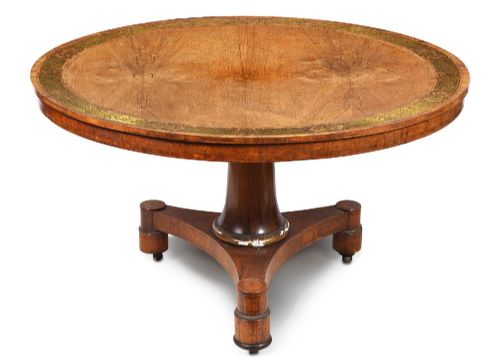
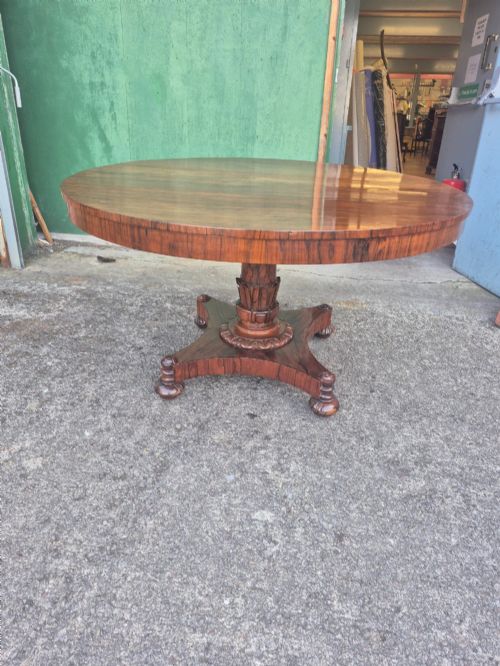
A regency period round table brings monumental proportion and rich tropical timbers directly into the principal rooms of the house.
Regency Period Round Table
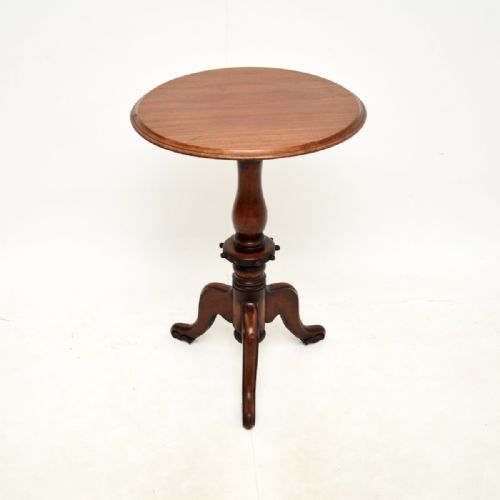
A regency period round table encompasses forms designed for dining, breakfast, libraries, and display, predominantly circular in plan. These pieces arrive in various scales, from intimate wine tables and occasional pieces to expansive breakfast and centre tables suited to larger spaces.
The materials and styles span Regency, William IV, and Georgian periods, incorporating rosewood, mahogany, and occasional exotic timbers like coromandel and goncalo alves. Craftsmanship of the era values prominent central pedestals, often supported by platform bases with brass paw feet or castors.
Examples on this page draw from British cabinet making traditions as well as regional variations such as Scottish and Anglo-Indian workshops. Surface treatments range from plain polished veneers to elaborate brass inlay, marquetry, and specimen marble tops.
What varies in quality
The distinction between standard examples and the finest items rests in the selection of timber veneers and the crispness of carved or inlaid decoration. Highly figured rosewood, goncalo alves, and intricate brass marquetry denote superior workshop output.
Structural integrity of the central pedestal and the seamless alignment of the circular top dictate the overall execution. Subtle details such as original brass castors and well-matched grain patterns elevate the standing of a piece.
Several examples include tilt-top mechanisms built for clearing the floor after breakfast.
The Regency Period Round Table Glossary
- Breakfast table
- A large circular dining or centre table featuring a tilt-top mechanism, designed to be stored against a wall when not in use.
- Drum table
- A deep circular library table containing frieze drawers around the circumference, typically standing on a single central pillar.
- Crossbanding
- A border of veneer laid with the grain running perpendicular to the main surface, framing the primary wood.
- Goncalo alves
- A dense exotic hardwood with distinct contrasting dark brown and golden-brown figuring, utilised for high-status furniture.
- Specimen marble
- A polished tabletop composed of various coloured marbles arranged in geometric patterns or pictorial mosaics.
Regency Period Round Table: Frequently Asked Questions
What is a breakfast table used for?
A breakfast table served multiple functions in nineteenth-century interiors, acting as a casual dining surface in private rooms or a central display piece in a hall.
Its tilt-top mechanism allowed the surface to be folded upright and pushed aside when floor space was required for other activities.
How do I distinguish a drum table?
A drum table is characterised by its thick, cylindrical body that incorporates a series of drawers running around the entire perimeter.
These pieces were typically used in libraries or studies to hold writing materials and documents within easy reach.
Where does coromandel wood come from?
Coromandel is a dense, heavily figured tropical hardwood imported from South East Asia, prized for its dark brown coloration and striking black stripes.
Cabinet makers used it selectively for luxury surfaces and crossbanding during the Regency and William IV periods.
What defines a centre table?
A centre table is finished on all sides so that it can stand independently in the middle of a room rather than against a wall.
These pieces often feature elaborate pedestal bases and decorative tops designed to be viewed from every angle.