
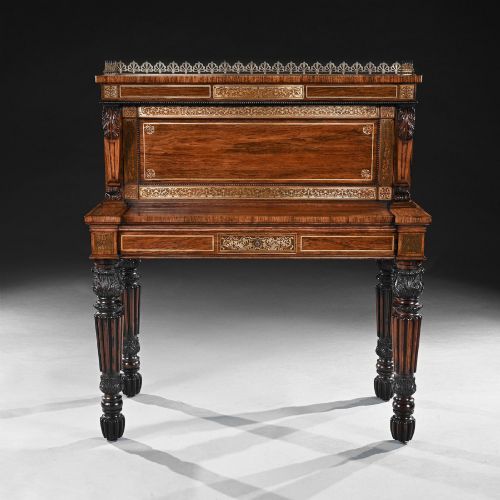
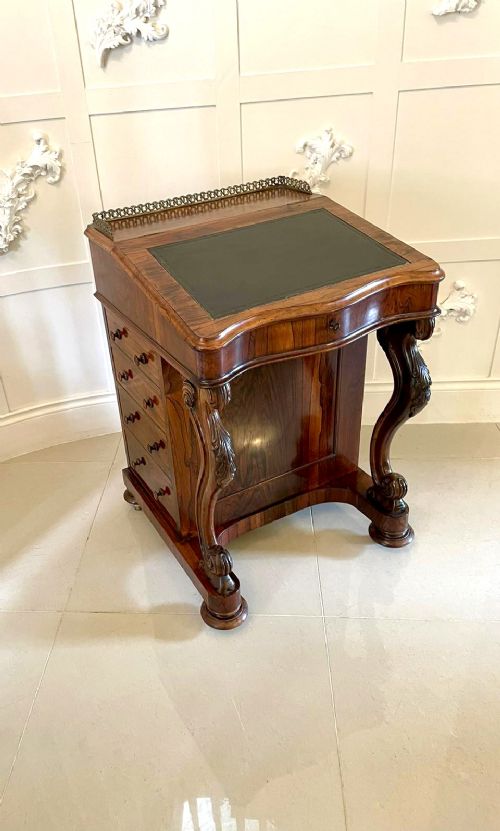
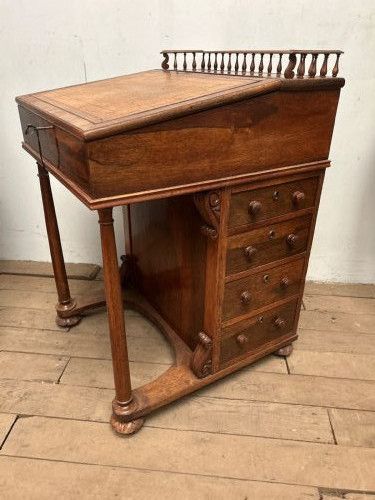


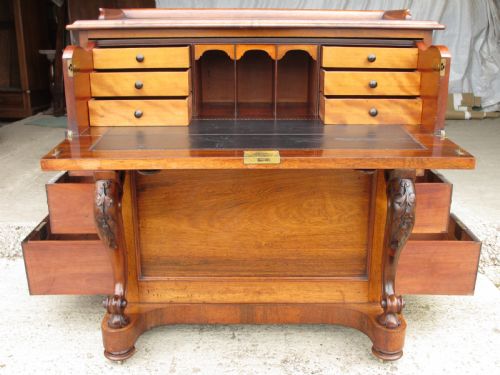

Carved Rosewood Davenport
These carved rosewood davenport desks are compact writing pieces prized for their clever storage and rich timber figures.
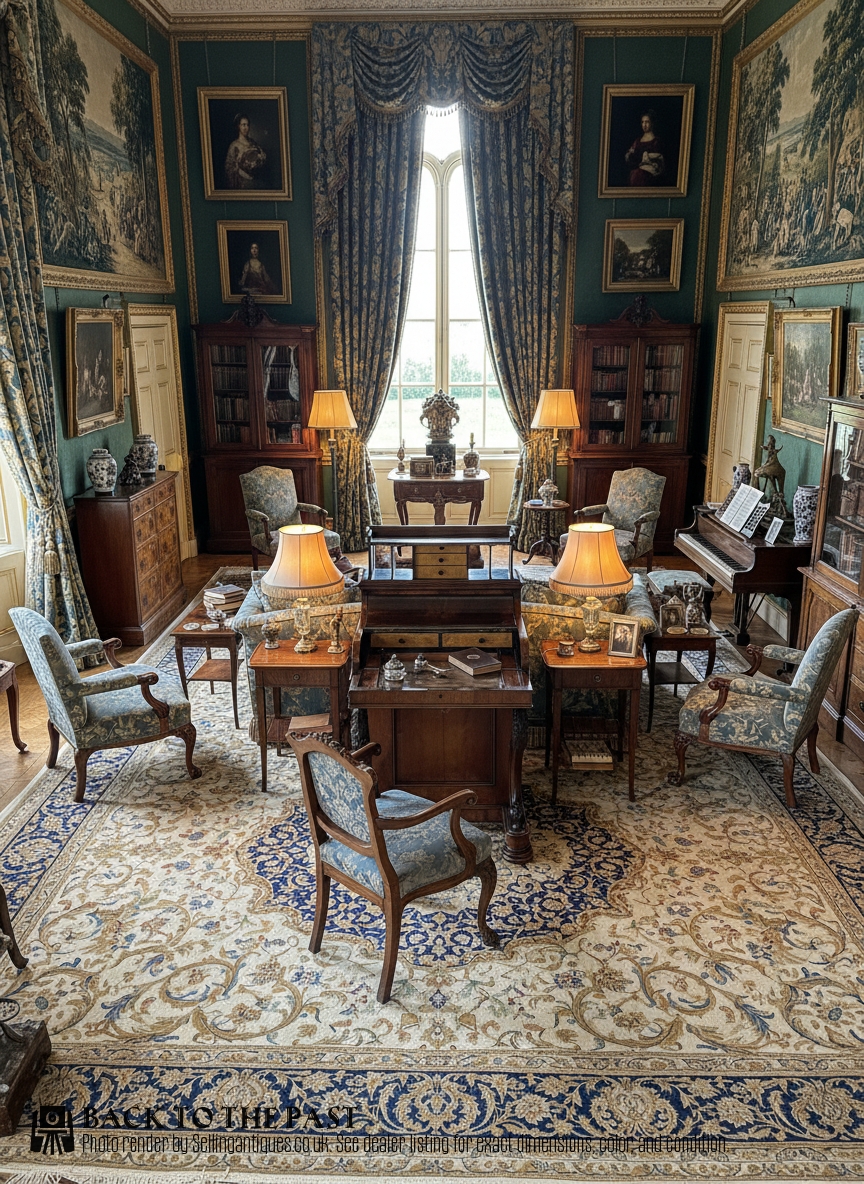
Carved Rosewood Davenport
A carved rosewood davenport is a compact writing desk designed with a sloping top and internal compartment storage. These pieces combine a functional workspace with a small footprint, making them ideal for domestic studies and drawing rooms.
Most examples encountered here date from the nineteenth century, spanning the Regency, William IV and Victorian eras. Makers utilised rich dark timbers and incorporated clever mechanisms such as slide tops and pop up compartments.
The form typically rests on a pedestal base housing a series of drawers, sometimes accompanied by brass inlays and maple interiors. Buyers often find freestanding models finished on all sides for placement away from the wall.
How they were made
Cabinet makers constructed these desks using solid rosewood and palisander veneers applied to secondary hardwoods. The dense grain of the timber provided a dark, lustrous surface capable of taking a high polish.
Writing surfaces were traditionally lined with leather to create a smooth platform for correspondence. Internal stationery fittings often featured light woods such as maple and birds eye maple to contrast with the dark exterior.
Brass fittings, hinges and castors added both structural strength and decorative contrast to the timber. Drawers were hand-dovetailed and fitted into pedestals beneath the sloping desk top.
Pop up compartments hidden within nineteenth century desks allowed owners to conceal secret correspondence from prying eyes.
What varies in quality
Quality in a carved rosewood davenport is determined by the crispness of the timber carving and the complexity of its internal mechanics. Superior examples feature well-executed brass inlay work and finely figured rosewood veneers.
The integrity of the internal mechanisms, such as pop up writing compartments and sliding desk sections, separates standard furniture from finer cabinet work. Drawer construction and the choice of secondary woods like birds eye maple also indicate high workshop standards.
Gillows Oxford Street Workshop
The Carved Rosewood Davenport Glossary
- Davenport desk
- A compact nineteenth century writing desk featuring a sloping lid above a pedestal of drawers. This form was originally commissioned for compact spaces.
- Rosewood
- A dense, heavily figured timber valued for its dark colour and distinct grain patterns. It forms the primary exterior material for these desks.
- Palisander
- A term frequently applied to heavy, dark tropical rosewoods utilised in high status nineteenth century furniture. It exhibits a pronounced grain.
- Birds eye maple
- A figured North American hardwood showing small circular patterns in the grain. Cabinet makers selected this timber for interior stationery drawers.
- Slide top
- A mechanism allowing the upper writing surface to extend forward for increased legroom. This feature appears on specific nineteenth century variants.
Carved Rosewood Davenport: Frequently Asked Questions
What is a davenport desk?
A davenport desk is a small nineteenth century writing cabinet with a sloped top. It typically incorporates a pedestal of drawers beneath the writing surface.
Cabinet makers designed these compact pieces to occupy minimal floor space while offering secure internal storage for correspondence and stationery.
How were these desks used?
These pieces served as personal writing desks in drawing rooms and boudoirs. The sloping top provided a comfortable angle for letter writing.
Internal compartments and side drawers held inkwells, paper and personal documents, keeping writing materials organised and out of sight.
What timber is used?
Most examples utilise rosewood or palisander for the exterior surfaces. These dense tropical hardwoods provide a rich, dark background with pronounced grain figures.
Internal elements often contrast with the dark exterior through the use of lighter secondary timbers such as maple and birds eye maple.