
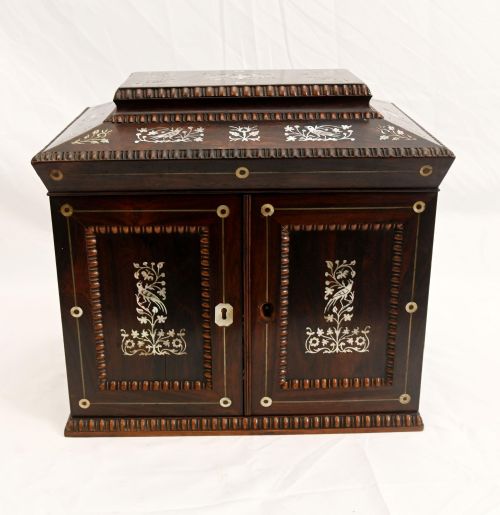


Carved Rosewood Chest
A carved rosewood chest is a dense, deeply grained storage piece that brings rich dark timber and intricate carving to a room.
Carved Rosewood Chest
A carved rosewood chest encompasses smaller table boxes, tea caddies, and larger storage units created across the eighteenth, nineteenth, and early twentieth centuries. These pieces appear in Regency, Victorian, and colonial styles, reflecting global trade routes and domestic storage needs.
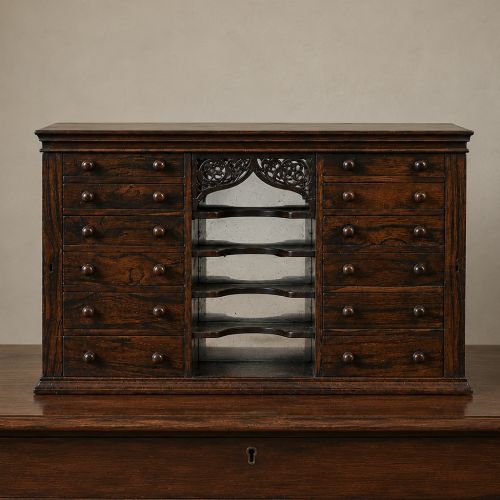
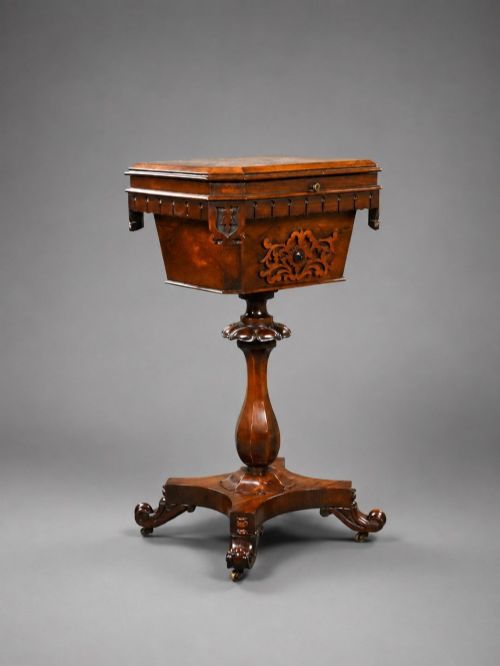
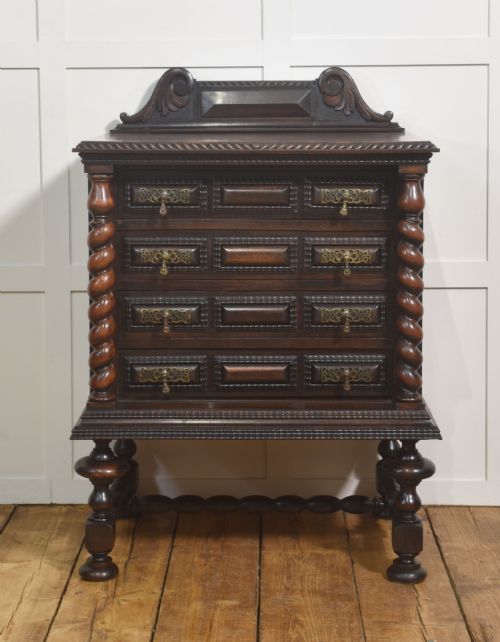
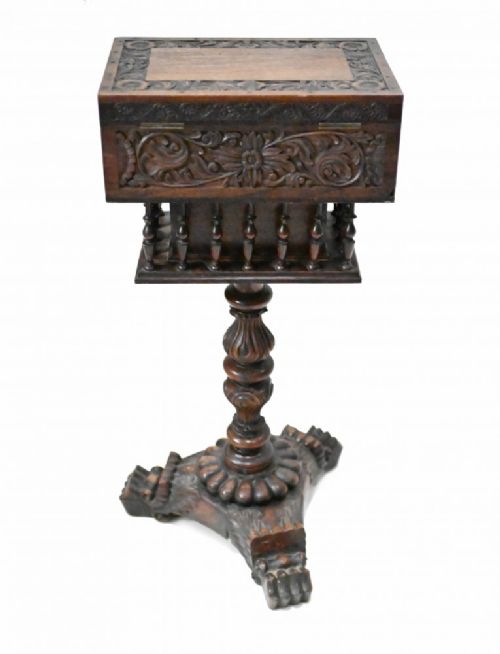
The most common forms on this page include tea caddies, jewellery chests, collectors cabinets, and larger chests on stands, often originating from British colonial workshops or European makers. Their function ranges from housing precious tea leaves to storing letters and small valuables.
Materials and construction methods
Makers utilised dense rosewood and padouk timbers, valued for their deep colour and ability to hold fine relief carving. These surfaces are frequently enhanced with contrasting inlays of brass, mother of pearl, and bone.
Joinery methods combine traditional framing with intricate hand-carved detailing, occasionally incorporating mirror glass, fabric linings, and marble tops depending on the specific form and period.
The listings on this page span the 18th, 19th, and early 20th centuries, featuring British, colonial, and Chinese manufacturing origins.
Distinguishing quality in carved rosewood chest examples
The standard of a carved rosewood chest rests on the crispness of the hand-carved detail and the precise fit of any inlaid brass or mother of pearl. Superior pieces exhibit seamless timber matching and stable structural joints.
Finer examples retain original interior fittings, such as compartmentalised trays in tea caddies or fitted drawers in collectors cabinets, whereas altered pieces show signs of later modification to their linings or hardware.
The Carved Rosewood Chest Glossary
- Rosewood
- A dense, heavy hardwood prized for its dark grain and oily lustre. It takes a high polish and responds exceptionally well to detailed carving.
- Tea Poy
- A small stand or table designed to hold tea caddies, typically featuring a lidded compartment atop a pedestal base or legs.
- Wellington Chest
- A tall, slender chest of drawers secured by a locking hinged side pilaster. This form maximises vertical storage space efficiently.
- Tunbridge Ware
- Small wooden items decorated with mosaic patterns created from thousands of tiny tinted wood blocks. This technique produced intricate geometric and pictorial designs.
Carved Rosewood Chest: Frequently Asked Questions
What is a tea poy?
A tea poy is a pedestal table or stand designed to hold tea caddies in the drawing room. They often include internal compartments for storing loose leaf tea.
During the nineteenth century, these pieces became fashionable additions to polite reception rooms where hosts prepared tea for guests.
How do I date a rosewood chest?
Dating relies on examining the construction methods, secondary timbers used inside, and stylistic markers such as Regency brass inlay or Victorian sarcophagus shapes.
Hardware like locks, hinges, and escutcheons also provide reliable clues to the exact period of manufacture.
Can I use a tea caddy for jewellery?
Many tea caddies and small cabinets transition easily into storage for modern trinkets and jewellery. Their internal compartments and lidded sections suit small accessories.
Buyers often line these older compartments with soft modern fabrics to protect delicate items.