
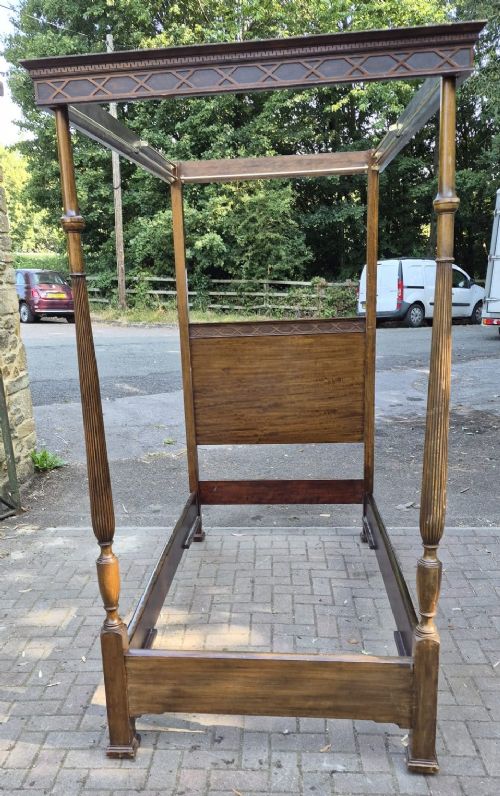
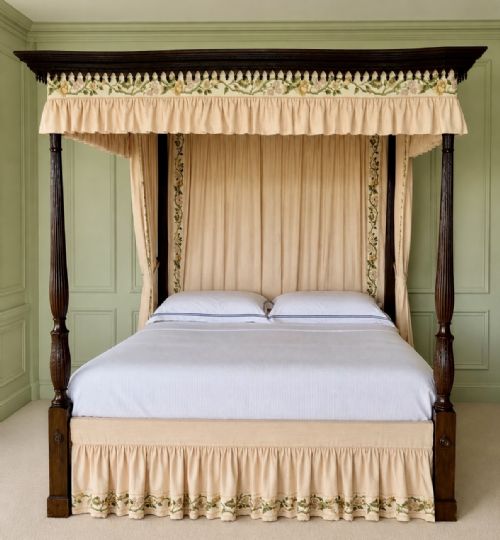


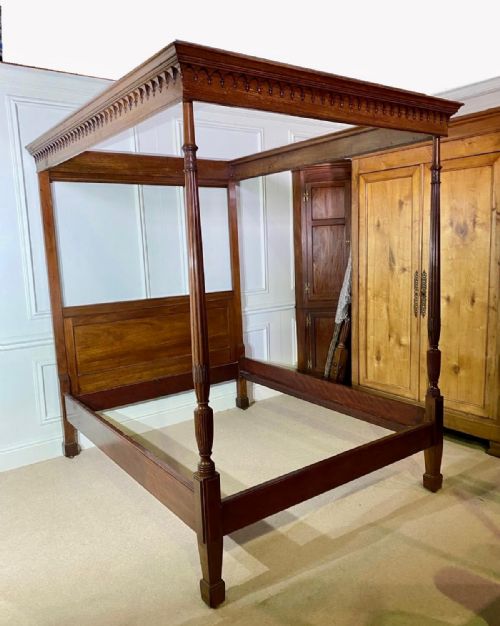


Carved Post Canopy Bed
A carved post canopy bed anchors a room with towering timber columns and sweeping testers, offering traditional craftsmanship and grandeur.
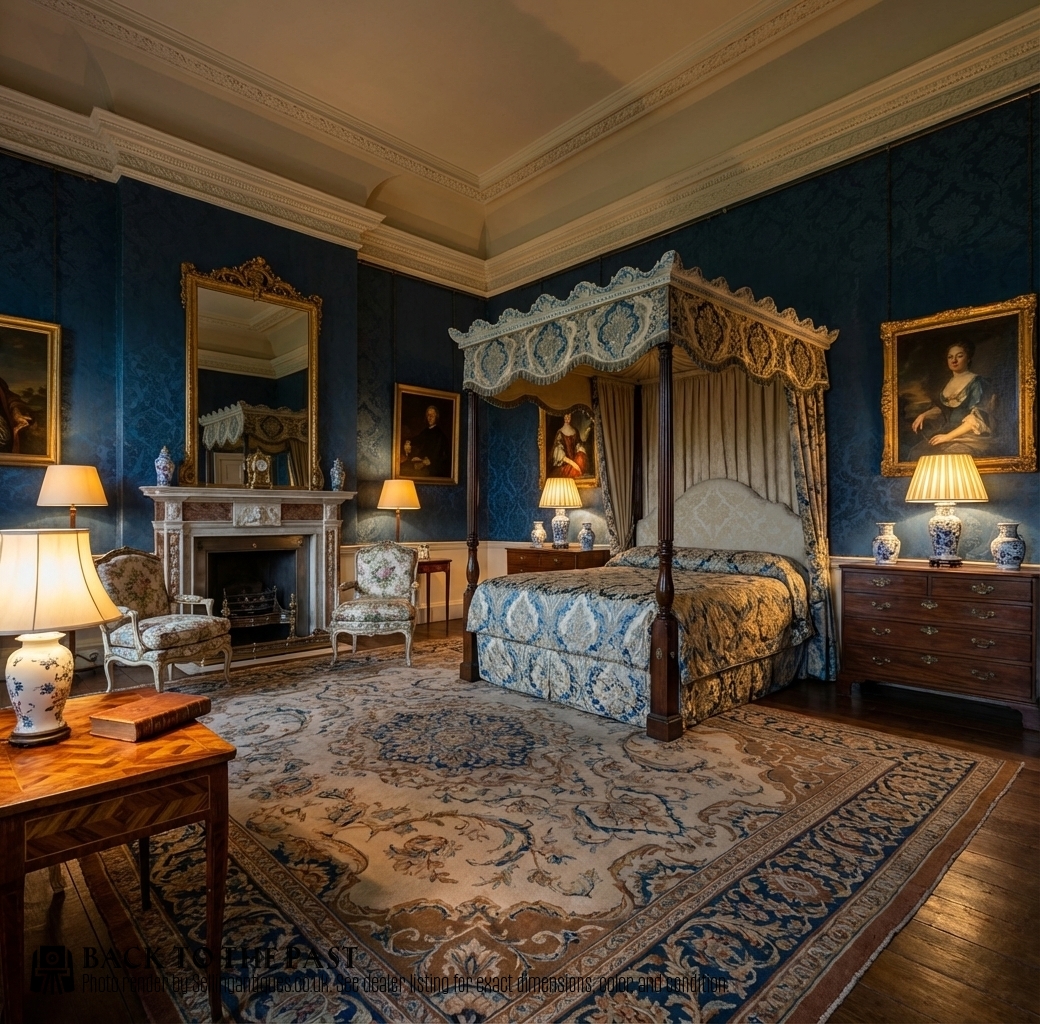
Carved Post Canopy Bed
When buyers search for a carved post canopy bed, they want substantial timber framing that brings architectural presence to a bedroom. These grand sleeping quarters include tester frames suspended above, supported by heavily carved structural posts at each corner.
The most common examples on this page date from the nineteenth century and the Edwardian era, often channelling earlier Regency or Georgian Revival aesthetics. Mahogany is the predominant timber found across these listings, providing a rich, dark ground for classical ornamentation.
Regional variations also appear, including Anglo-Indian colonial interpretations that bring distinct proportions and turning work to the classic four poster format. Whether built in solid mahogany or lighter painted finishes, these frames transform the bedroom into a formal chamber.
Construction and Materials
Makers utilised dense timbers such as mahogany and teak for structural integrity, allowing slender turning and deep relief carving on the principal posts without compromising strength. Secondary timbers like pine often form the internal rails and hidden framing.
Surface treatment ranges from polished mahogany displaying natural grain to painted and gilt wood finishes applied to Regency and revival pieces. Fabric forms the tester linings and drapery, softening the architectural timber work above.
Some nineteenth-century testers included hidden hooks originally intended for suspending heavy linen drapes to keep out nocturnal drafts.
Assessing Quality and Execution
The quality of a carved post canopy bed rests in the depth and crispness of the post ornamentation, where hand-chiselled acanthus leaves or fluting show the hand of a skilled carver. Finer examples maintain proportional harmony between the massive corner posts and the upper tester frame.
Construction methods also dictate value, with superior frames employing robust jointing that supports the heavy canopy securely. The choice of timber grain and the depth of the original polish distinguish standard regional workshop production from master cabinet work.
Howard & Sons
The Carved Post Canopy Bed Glossary
- Tester
- The wooden canopy frame positioned above the bed, which traditionally supported fabric hangings and curtains. It connects the upper sections of the four posts.
- Four poster bed
- A bed featuring four vertical columns at each corner that support an upper canopy or tester. This form dates back centuries and signifies formal sleeping quarters.
- Regency style
- An aesthetic reflecting the British Regency period, characterised by classical restraint, scrollwork, and inspiration from ancient Greece and Rome. Many Edwardian revivals adopt these specific lines.
- Chippendale
- A style named after cabinetmaker Thomas Chippendale, known for elaborate carved ornamentation, ball and claw feet, and rococo influence. Pieces in this manner exhibit high sculptural detail on the posts.
Carved Post Canopy Bed: Frequently Asked Questions
How do I fit a modern mattress?
Most antique frames require bespoke mattress sizing or careful adaptation of the internal wooden rails to accommodate standard contemporary widths and lengths. Consulting a specialist framer ensures the mattress sits securely without damaging the antique timber sides.
Take precise internal measurements between the four corner posts before ordering any new mattress. Older frames often vary slightly from modern standard dimensions due to historical sizing conventions.
How do I hang tester curtains?
Tester curtains typically hang from iron or wooden rods integrated into the underside of the upper canopy frame using traditional rings and fabric ties. Historic examples often utilised elaborate pelmets and valances pinned directly to the wooden cornice.
Ensure the ceiling height of your room accommodates both the total height of the bed and the sweeping drop of the fabric. Heavy textiles require sturdy fixings attached securely to the internal frame of the tester.
How do I date a four poster bed?
Dating relies on examining the turning style of the posts, the joinery methods used on the frame, and the prevailing wood species. Regency and Victorian examples show distinct post proportions and carving motifs compared to earlier Georgian pieces.
Look for tool marks on hidden structural elements and compare the decorative vocabulary to known period styles. Edwardian revivals often utilise machine assistance alongside hand finishing, which helps differentiate them from genuine older frames.
Are these beds easy to dismantle?
These large structures were built to be taken apart using traditional bed bolts and pegged tenons, allowing them to be moved between rooms. Modern assembly requires at least two people and careful handling of heavy timber posts and testers.
Keep all original iron bolts and hardware together during any relocation to preserve the structural integrity of the joints. Professional installation is recommended to ensure the upper canopy remains level and secure.