


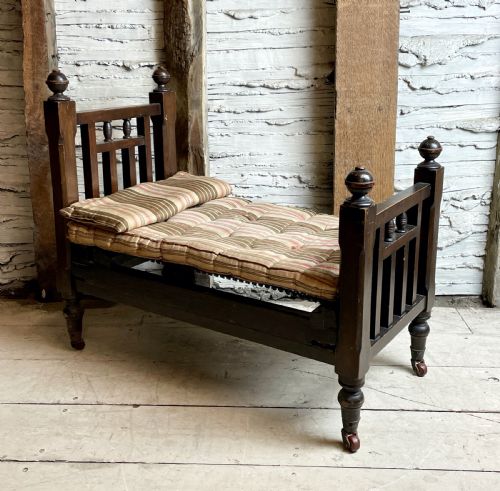

Edwardian Four Poster Bedstead
These edwardian four poster bedstead examples offer grand vertical presence and period character, bringing traditional sleeping architecture into a modern bedroom scheme.
Edwardian Four Poster Bedstead
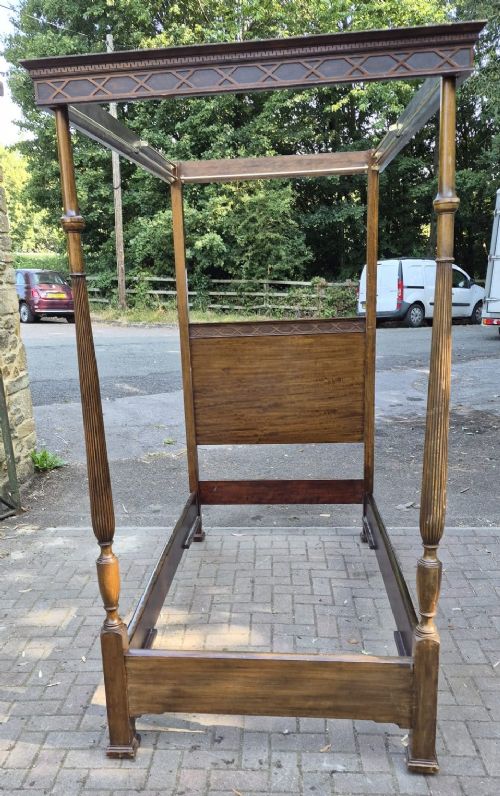
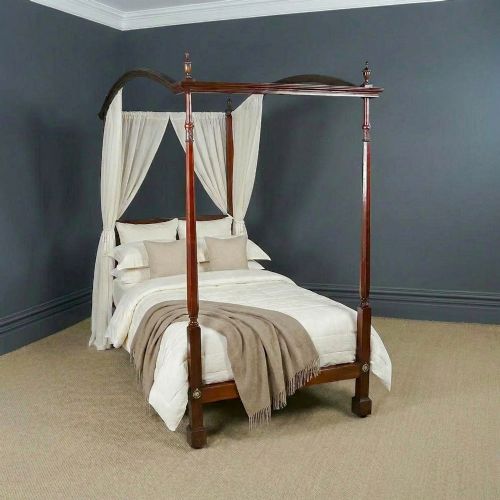
When you search for an edwardian four poster bedstead, you are looking at substantial structural sleeping furniture defined by four vertical corner posts that support an upper tester frame. The pieces on this page span the late nineteenth century through to the early twentieth century, alongside specific revival periods.
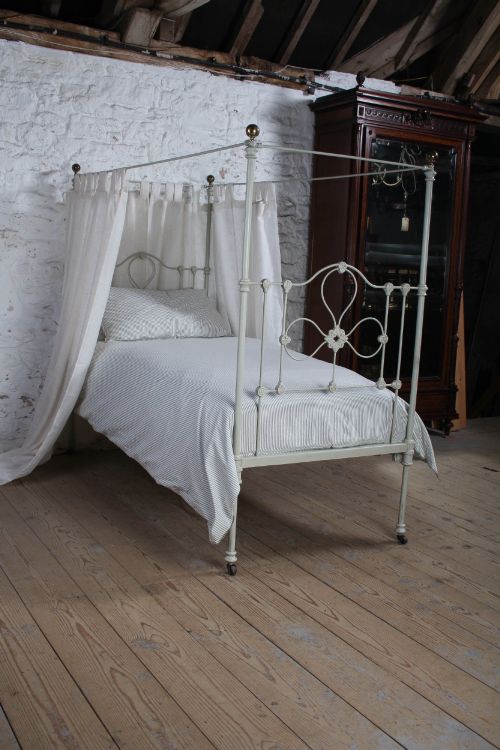
The most typical full-size examples are constructed from timbers such as mahogany or oak, while alternative variations appear in iron and brass or painted finishes. You will also encounter scaled-down forms including single beds, narrow large single widths, and even miniature doll furniture.
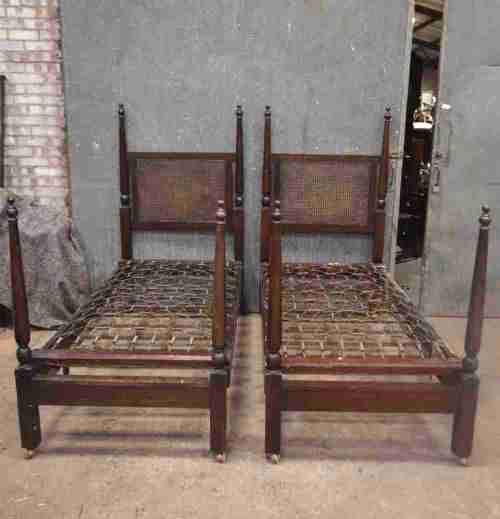
Stylistic influences across the selection draw heavily upon Georgian revivalism, colonial revivalism, and arts and crafts principles. Certain specimens incorporate decorative panel work such as cane bergere inserts or fine chinoiserie detailing.
Materials and construction methods
Construction relies upon solid cabinet timbers like oak and mahogany, shaped into heavy posts and framing rails using traditional joinery. Metal versions utilise structural iron frames combined with polished brass components for decorative contrast and corner mounts.
Surface treatments range from polished wood grains to painted finishes and gilt wood highlights. Details such as woven cane panels are integrated into headboards and footboards to provide texture and visual lightness against the heavier framing timbers.
The listings demonstrate a material palette spanning native oak and mahogany alongside utilitarian iron, brass, and delicate cane inserts.
Judging quality in four poster furniture
Quality reveals itself in the proportion of the timber and the crispness of any applied revival carving. Finer examples maintain architectural balance across the tester and posts without appearing overly heavy or clumsy in their joinery.
Material selection dictates the grade of the piece, with dense figured mahogany and quarter-sawn oak representing more substantial manufacturing investment than painted or secondary softwood carcasses.
Heals of London
The Edwardian Four Poster Bedstead Glossary
- Tester
- The upper horizontal frame supported by the four vertical posts of a bedstead. It sometimes carries a fabric canopy or cornice.
- Bergere
- A closed-arm upholstered armchair style, though in these listings the term describes woven cane panels set into wooden bed frames.
- Chinoiserie
- A decorative style reflecting European interpretations of Chinese artistic traditions, appearing here as painted surface ornamentation.
- Arts and Crafts
- A design movement valuing handcraftsmanship, simple structural honesty, and visible joinery over elaborate machine-made ornament.
Edwardian Four Poster Bedstead: Frequently Asked Questions
Will a standard modern mattress fit these beds?
Many older bedframes were built to nineteenth and early twentieth century sizing standards rather than contemporary metric dimensions. It is important to check the internal length and width measurements against your preferred mattress before purchase.
Custom or bespoke mattress makers can usually supply standard depths tailored to fit historical frames safely within the side rails.
How do I assemble an antique four poster?
Most traditional bedsteads utilise heavy iron bed bolts or interlocking timber joints to secure the side rails to the headboard, footboard, and posts. Two people are typically required to support the vertical posts and upper tester while tightening the fixings.
Care should be taken to ensure the frame remains square during assembly so that the overhead tester sits level.
Can these beds be used in rooms with low ceilings?
Four poster frames require careful ceiling height calculations, particularly if the tester includes an upper cornice or decorative finials. Measuring your room clearance beforehand prevents installation difficulties.
Some variations are built with shorter post heights or open testers that reduce the vertical dominance in compact bedrooms.
How do I clean polished mahogany and oak?
Routine maintenance requires only a soft, dry lint-free cloth to remove dust from carved mouldings and flat surfaces. Avoid modern silicone-based polishes that can build up a sticky residue over historical finishes.
Wax finishes benefit from occasional application of traditional beeswax to nourish the timber grain and preserve the surface sheen.