




Carved Mahogany Tester Bed
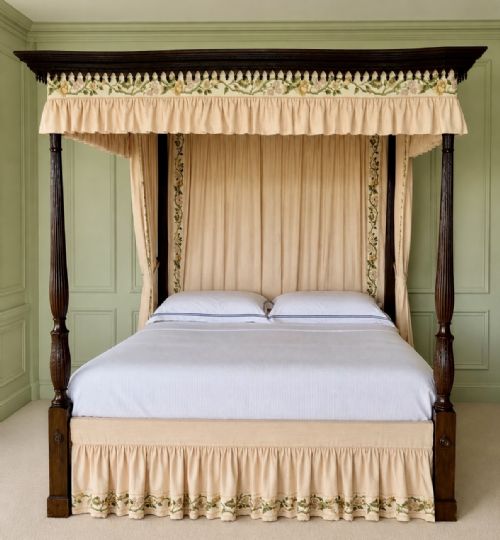
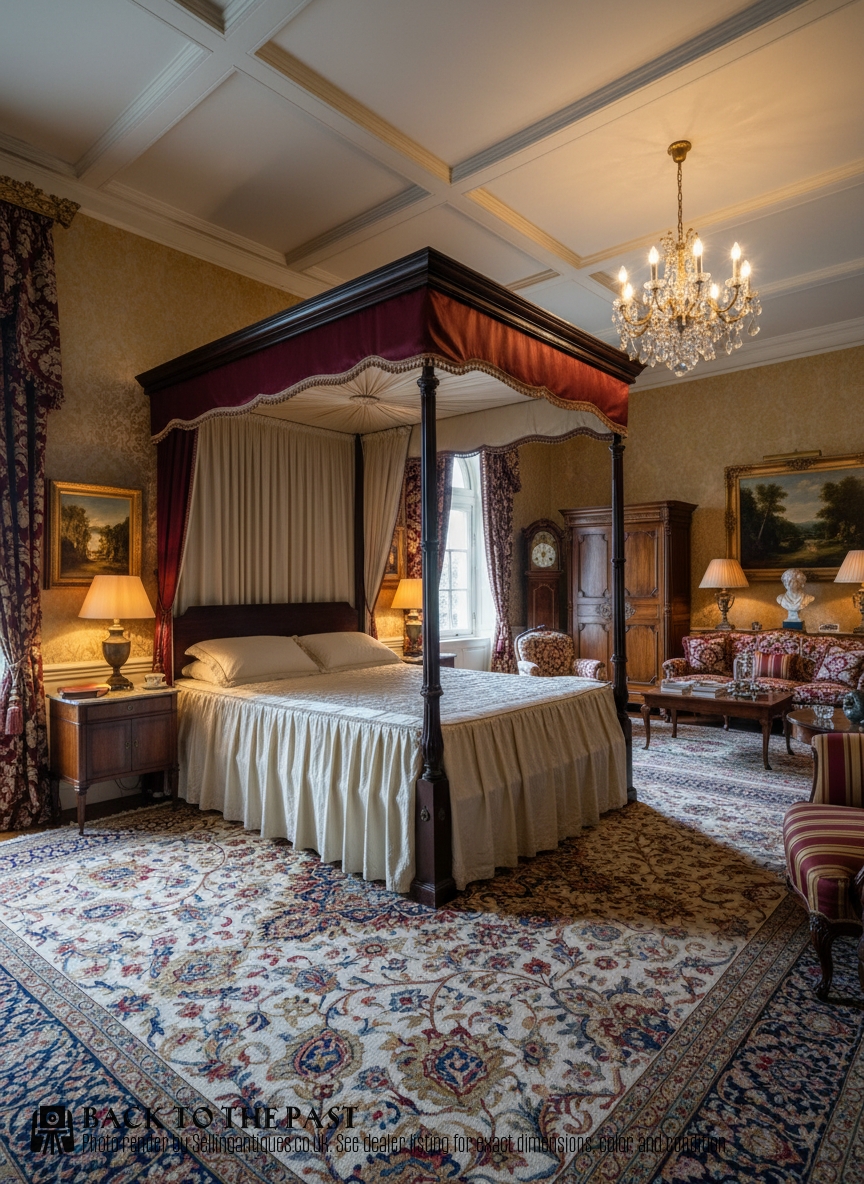
A carved mahogany tester bed brings architectural presence to a room through towering posts and deep timber grain.
Carved Mahogany Tester Bed
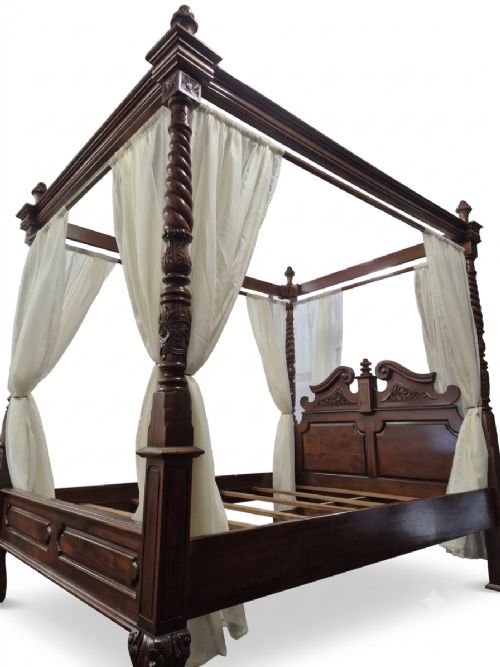
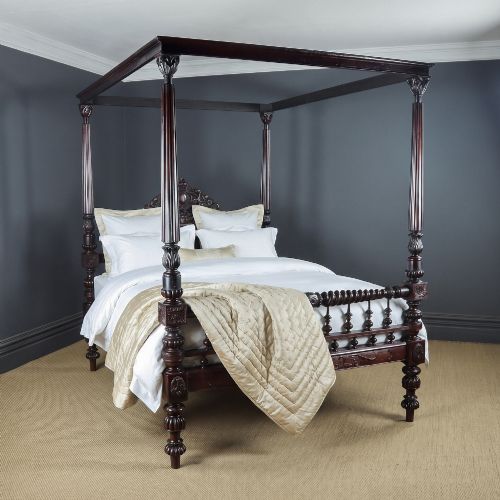
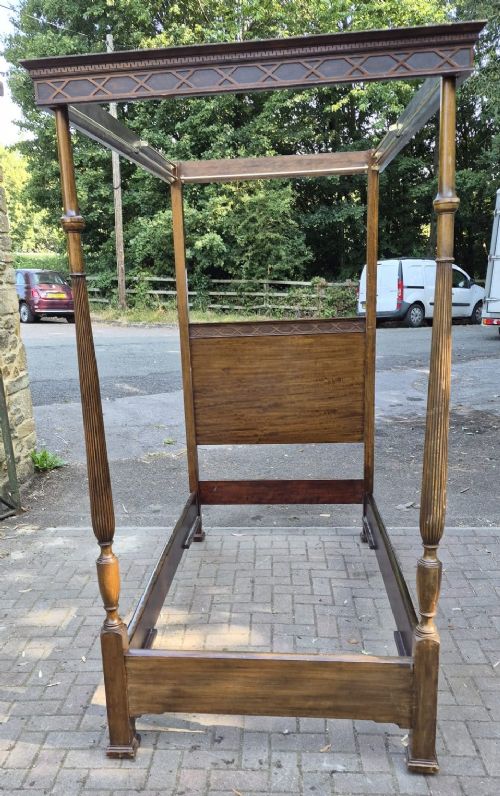
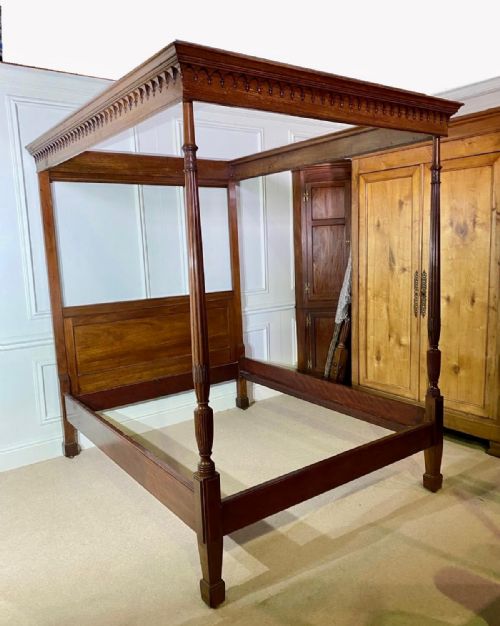
A carved mahogany tester bed is a substantial piece of furniture defined by four vertical posts supporting an overhead canopy frame, known as a tester. When you search for this phrase, you encounter grand sleeping frames spanning the eighteenth century, the Regency period, the Victorian era, and the Edwardian years.
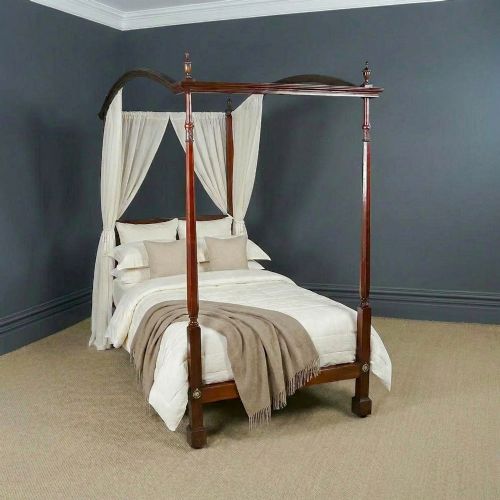
The pieces appearing on this page encompass traditional full tester frames, half tester variations, and Anglo-Indian colonial designs. Styles range from Georgian Revival and Chippendale interpretations to elaborate Victorian craftsmanship.
Most examples you meet here are constructed from rich mahogany and heavy hardwood timber, often featuring intricate hand-carved elements on the posts and headboards.
Timber and Construction
These beds rely on dense mahogany and structural hardwood, sometimes supplemented with pine, teak, and timber framing for internal support. Artisans shaped these heavy materials using traditional hand-carving techniques to decorate the posts and cornices.
Decoration occasionally extends to gilt wood accents or painted highlights, while surviving textile elements or modern fabric additions complete the overhead tester canopy. The structural integrity depends on heavy joinery designed to support the weight of the massive wooden framework.
The furniture includes standard four poster beds, half testers, and Anglo-Indian colonial designs.
Proportion and Carving Depth
The finest examples display deep, crisp hand-carved relief work on the posts, where the artisan has worked the mahogany with precision and control. Lesser pieces show shallower, mechanical detailing that lacks the crisp shadows and three-dimensional presence of master carvers.
Proportion and scale also separate the exceptional frames from standard production. Superior beds maintain balanced architectural lines across the tester and headboard, whereas ordinary pieces can appear heavy or awkwardly proportioned.
Heals of London·Howard and Sons
The Carved Mahogany Tester Bed Glossary
- Half Tester
- A wall-mounted or post-supported canopy that covers only the head portion of the bed rather than the entire length. This configuration was popular during the mid-nineteenth century.
- Chippendale
- A style originating from the mid-eighteenth-century design vocabulary of Thomas Chippendale. It is characterised by ornate carved mahogany details and classical proportions.
- Anglo-Indian
- Furniture made in the Indian subcontinent during the British colonial period, typically utilising dense local timbers adapted to traditional British room forms.
Carved Mahogany Tester Bed: Frequently Asked Questions
How do I fit a modern mattress?
Many historic frames require bespoke mattress sizing to fit properly between the fixed corner posts. Internal dimensions vary considerably compared to modern standard retail sizing.
Consult the specific measurements of each bed frame before sourcing a mattress. Custom pocket-sprung bases can be constructed to drop securely onto the internal wooden laths.
Are these beds difficult to assemble?
These large structures utilise traditional bolt-and-tenon joints that require two or more people to assemble safely. The weight of solid mahogany posts and tester cornices demands careful handling during setup.
Professional installation is recommended to ensure the canopy aligns correctly with the vertical posts. Proper alignment prevents structural strain on the antique timber joints.
Can I hang curtains from the tester?
The overhead wooden frame is built to support fabric draperies and curtains. Many period examples retain original hanging rails or slots designed for textile installation.
Adding curtains helps recreate the traditional enclosed sleeping environment characteristic of these beds. Choose medium to heavy fabrics that complement the dark tones of the mahogany timber.
How do I clean mahogany wood?
Dust the carved surfaces regularly using a soft, dry lint-free cloth to prevent particulate buildup in the recessed carvings. Avoid using modern silicone-based sprays that can damage the antique finish.
Apply a traditional beeswax polish sparingly to nourish the timber and maintain its natural lustre. Buff gently after application to preserve the deep reddish-brown patina of the wood.