


Antique King Four Poster
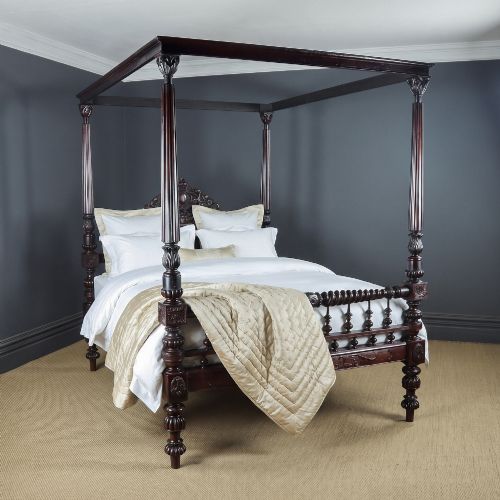
An antique king four poster provides serious scale and commanding presence, anchoring a bedroom with timber columns and grand testers.
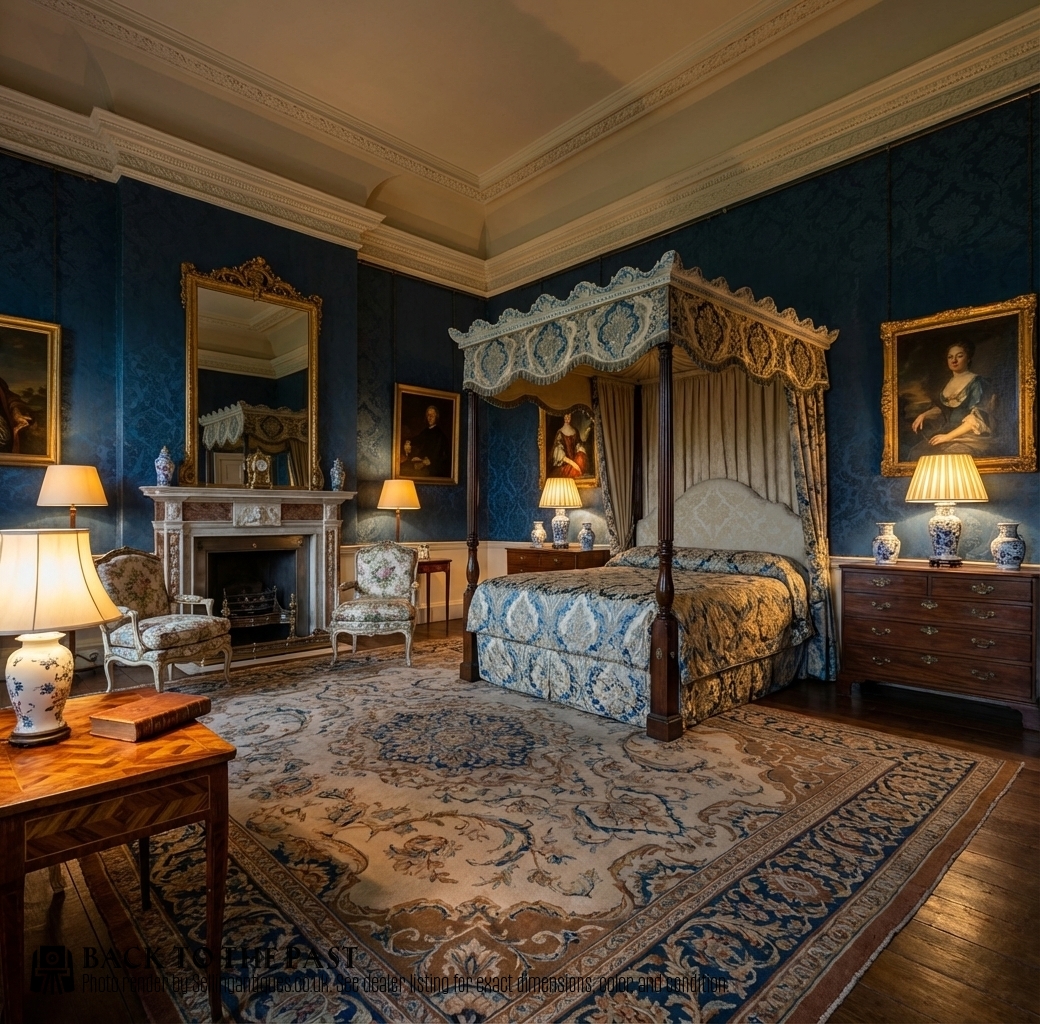
Antique King Four Poster
An antique king four poster brings substantial proportions and architectural framing to a sleeping space, utilising large timber posts and overhead testers. When exploring this selection, buyers encounter impressive bedframes, tester beds, and bedsteads spanning several centuries of craftsmanship.
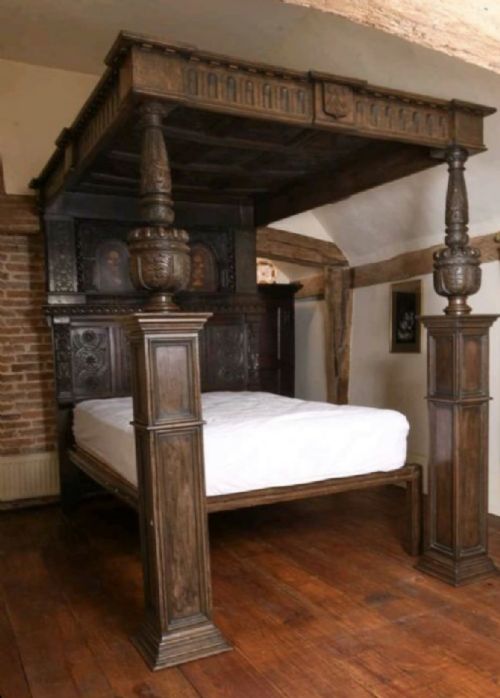
The pieces appearing on this page draw from periods ranging through the seventeenth, eighteenth, and nineteenth centuries, alongside Victorian interpretations. Regional variants such as Anglo-Indian Colonial and Raj designs sit alongside classic British styles like Chippendale, Sheraton, and George III.
How they were made
Makers relied on dense hardwoods such as mahogany, oak, teak, and flame mahogany veneer to construct the heavy posts and headboards. Selected sections often display rich grain patterns, while supplementary elements utilise softer hardwoods.
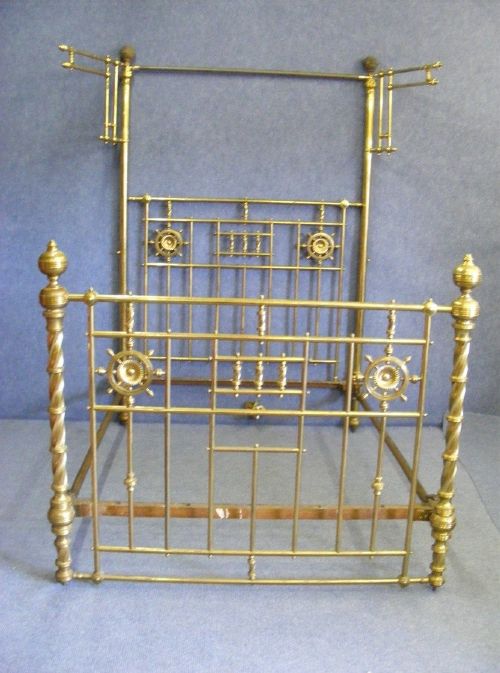
Structural integrity relied on sturdy joinery, deep carving, and applied mouldings, occasionally supplemented by brass or iron components. Metal bedsteads incorporate tubular brass and iron frames to support half tester canopies.
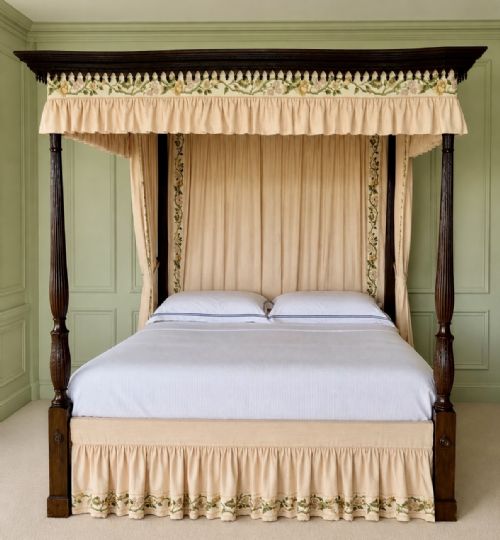
Fabrics play a traditional role in dressing the tester and framing the bed, suspended from the overhead canopy structure to complete the enclosure.
Some nineteenth-century brass frames proudly bear the stamp of RW Winfield, reminding us that industrial inventors wanted us to sleep beneath gleaming metal.
What varies in quality
The depth and crispness of carved detail across the headboard and posts separate standard workshop output from exceptional cabinet work. Sharply defined mouldings and balanced proportions indicate a higher tier of design and execution.
Timber selection dictates overall character, with figured flame mahogany veneer or richly patinated oak commanding greater visual depth. The integration of period appropriate fixtures and the preservation of original framing influence the integrity of the piece.
RW Winfield
The Antique King Four Poster Glossary
- Tester
- The canopy frame suspended above a bed, supported by the four upright posts. It often holds fabric drapery or carved wooden panels.
- Half tester
- A wall-mounted or post-supported canopy that covers only the head end of the bed rather than the entire span. This configuration was common in nineteenth-century brass and iron bedsteads.
- Chippendale
- A style of eighteenth-century English furniture characterised by carved mahogany, classical motifs, and flowing lines. Pieces bearing this influence display refined joinery and decorative detailing.
- Sheraton
- A neoclassical furniture style originating in the late eighteenth century, known for geometric restraint and elegant proportions. It frequently incorporates finely figured mahogany veneers.
- Anglo-Indian
- Furniture made in the Indian subcontinent during the colonial period, typically utilising native hardwoods like teak and mahogany. These pieces blend British cabinet forms with intricate local carving traditions.
Antique King Four Poster: Frequently Asked Questions
How do I choose the right size?
Measure your bedroom height and floor space carefully to ensure the posts and tester clear ceilings and architectural obstructions. Consider standard mattress widths like five or six feet when matching frames to modern requirements.
Verify whether the listed dimensions account for external cornices or protruding footboards, as four posters occupy significantly more visual and physical space than standard beds.
Are modern mattresses compatible?
Many antique frames accommodate contemporary king and super king mattresses, though older dimensions can vary slightly from modern standards. Adjustments to internal slat systems may be necessary to support modern pocket-sprung units safely.
Consult the specific width and length measurements provided in each listing to confirm how a standard mattress will sit within the antique rails.
How do I care for the wood?
Protect timber surfaces by maintaining stable room humidity and avoiding direct placement near heat sources or strong sunlight. Regular dusting with a soft, dry cloth preserves the finish and natural patina of mahogany and oak.
Avoid silicone-based polishes that build up over time, opting instead for traditional wax applications where appropriate for the specific finish.