

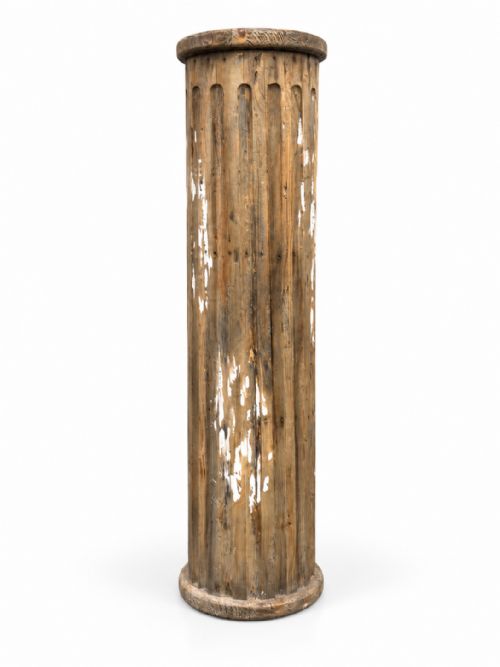
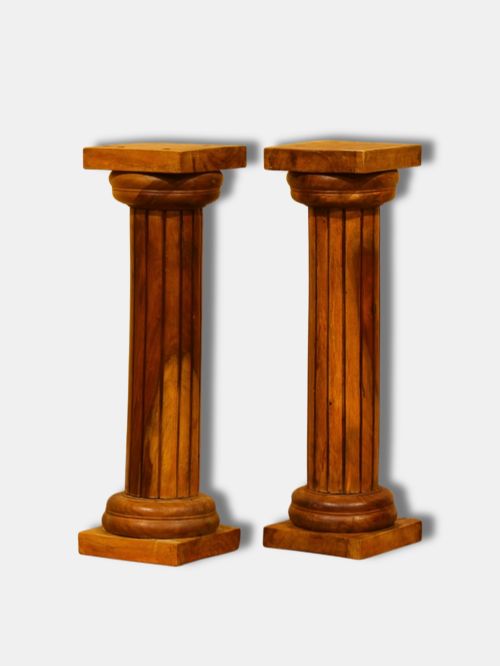
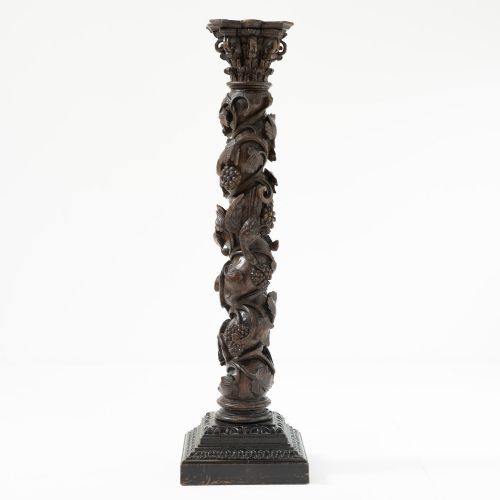
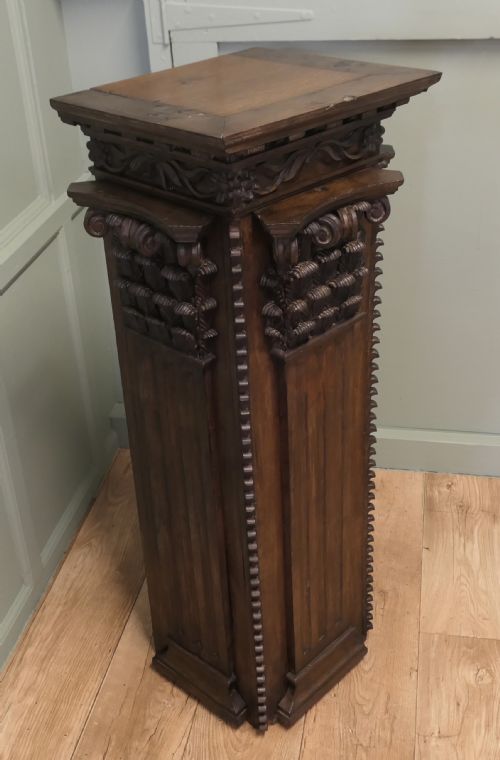
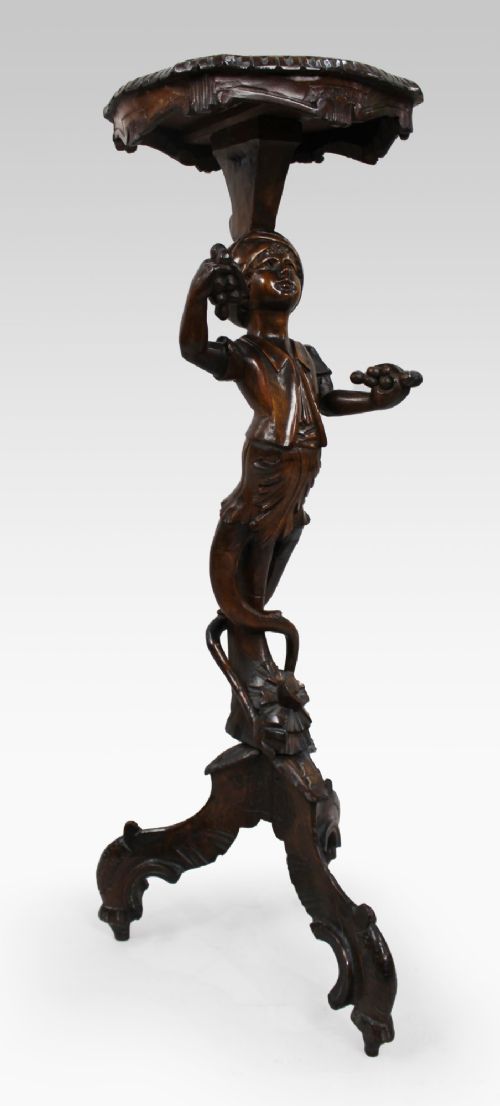
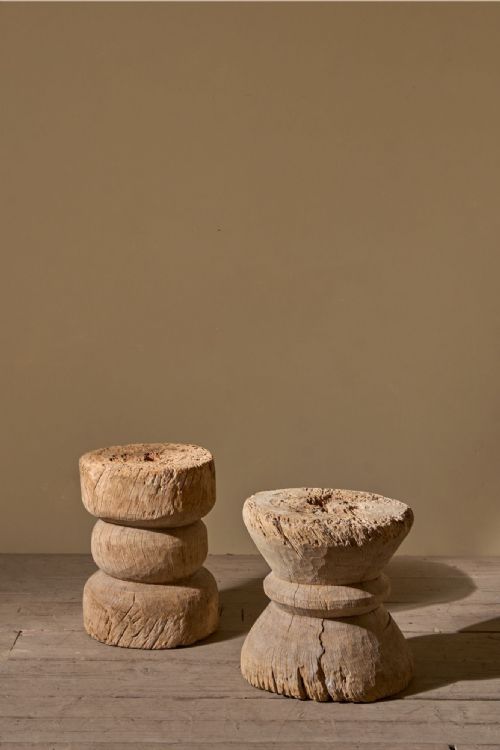


Carved Plant Plinth
A carved plant plinth lifts greenery into the light, bringing architectural presence to a room.
Carved Plant Plinth
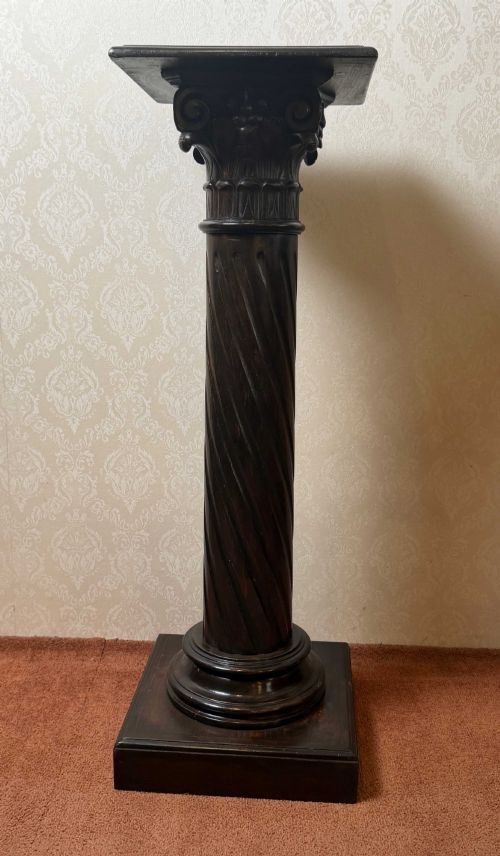
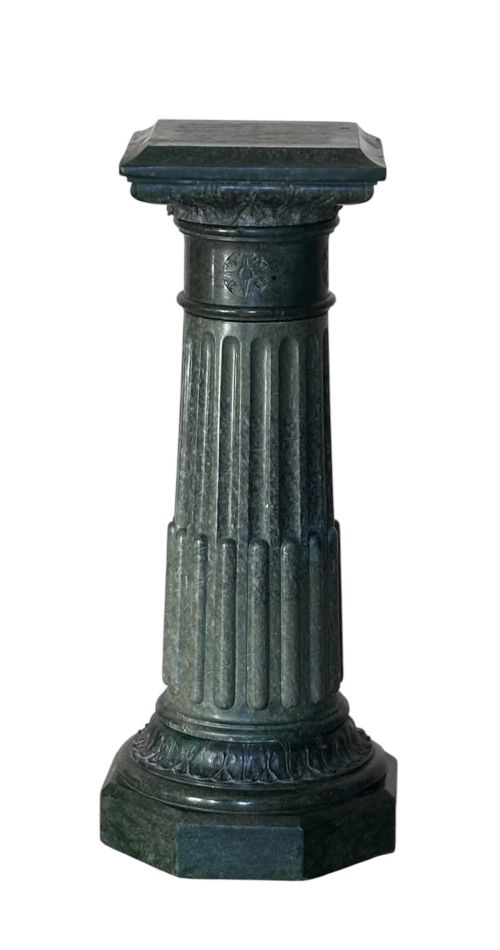
A carved plant plinth serves to elevate sculpture, urns, and botanical specimens within domestic interiors. These supports appear in forms such as classical columns, fluted pillars, and cylindrical sculpture stands.
Examples on this page span from the eighteenth century through the 1930s, encompassing Victorian, Edwardian, and Neoclassical designs. Buyers frequently encounter French and English pieces configured as display pedestals and torcheres.
Makers utilised various timber species alongside stone to construct these display columns. Architectural influences range from Gothic Revival to Louis XVI styles, reflecting changing interior tastes over two centuries.
Materials and construction
Carved plant plinths are constructed from dense timbers like mahogany, oak, walnut, and stained birch, often shaped into spiral pillars or fluted columns. Artisans also employed gesso, scagliola, and ormolu mounts to enrich the wooden and stone structures.
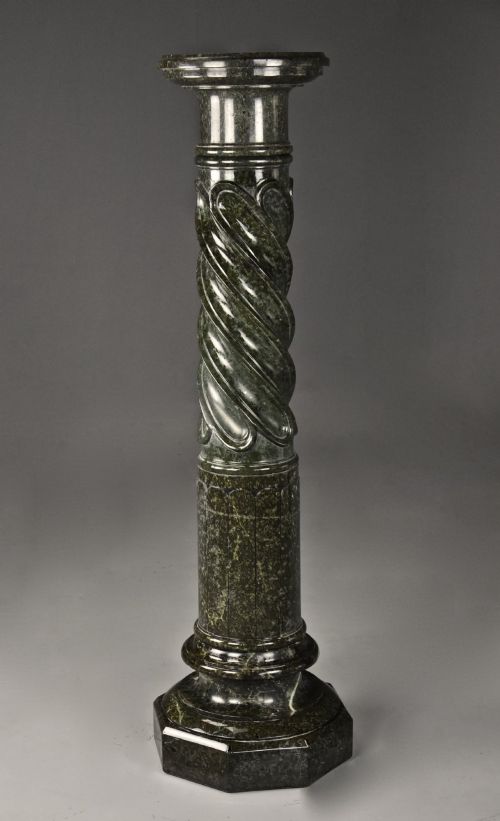
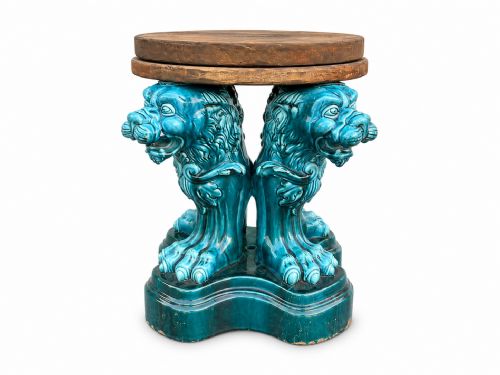
Stone variants utilise marbles including serpentine, verde antico, arabescato, and alabaster, alongside salt-glazed ceramics and stone. These geological materials are shaped into smooth cylindrical stands or substantial architectural columns.
Joinery methods combine traditional carpentry for wooden stands with stonemasonry techniques for monolithic and sectioned marble columns. Surface finishes range from natural polished timber grains to painted and gilt coatings.
Carved Plant Plinth Retail Price Guide 2026
Typical asking prices for carved plant plinth among the pieces listed under this phrase on Sellingantiques today, from the lower quarter to the upper quarter. They describe what is for sale here now, not the wider market.
Listings feature periods from the 18th century to 1930, alongside materials including serpentine marble, alabaster, oak, and ormolu.
Evaluating the pieces
The distinction between ordinary and superior carved plant plinths lies in the depth and crispness of the carving. Deeply undercut foliage, precise fluting, and finely detailed figural elements demonstrate skilled execution by the maker.
Material selection significantly influences the standing of a piece, particularly the choice of variegated marbles, rich ormolu mounts, or select hardwoods. Consistency in the grain and the absence of clumsy repairs mark out better examples.
The Carved Plant Plinth Glossary
- Serpentine marble
- A green-hued decorative stone characterised by mottled or cloud-like patterns resembling reptile skin. It was frequently utilised for 19th-century French columns.
- Solomonic
- A column type featuring a helical twist along its shaft, creating a dynamic spiral pillar. Examples appear in carved oak from the 18th century.
- Scagliola
- A composite material made from selenite, glue, and pigments, mimicking marble and other fine stones. It allows artisans to create large decorative pedestals.
- Torchere
- A tall stand designed to support a light source or plant, often taking the form of a slender column or pedestal. These pieces elevate displays above floor level.
- Ormolu
- Gilded bronze mounts applied to furniture and pedestals for decorative accent. This technique is prominent in French Rococo and Louis XVI style works.
Carved Plant Plinth: Frequently Asked Questions
What is a carved plant plinth used for?
These pieces serve as elevated stages for heavy ceramic urns, trailing plants, and sculptural objects. They draw the eye upward and introduce vertical lines to interior spaces.
Historically, they occupied corners and hallways of country houses to display botanical specimens or art pieces. Today, they fulfil the same decorative function in modern rooms.
How do I date a carved plant plinth?
Dating relies on identifying the prevailing design style, such as Neoclassical, Gothic Revival, or Arts and Crafts. Material choices, such as Victorian green marble or 18th-century carved oak, also indicate the period of origin.
Tool marks and construction methods provide further clues. Machine-sawn timber points to later periods, whereas hand-finished surfaces suggest earlier manufacture.
Are marble columns heavy?
Natural stone columns and pedestals possess considerable weight due to their dense composition. Solid marble and alabaster require careful placement to ensure stability on domestic flooring.
Many heavier examples feature modular construction, separating the capital, shaft, and base for transport. This design assists with moving the components safely.
Where should I place a pedestal?
Pedestals suit corners, entrance halls, and flanking spaces beside fireplaces or windows. Their slender footprint allows them to occupy unused vertical space effectively.
Positioning them away from high-traffic walkways protects fragile stone or polished wood from accidental knocks. Adequate lighting enhances the carved details of the timber or marble.