
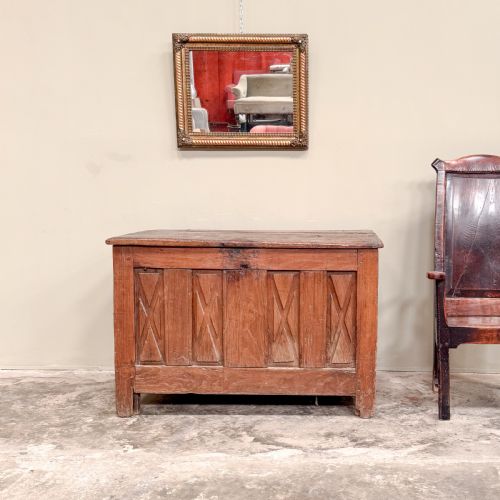
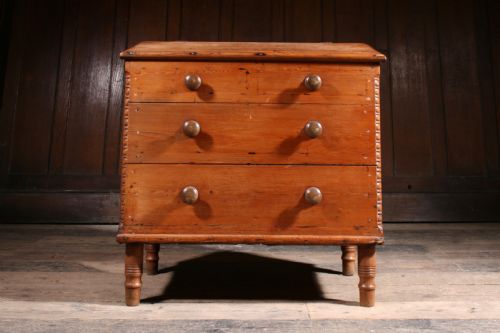


Carved Pine Coffer
A carved pine coffer is a robust storage piece offering rustic character and heritage appeal for modern interiors.

Carved Pine Coffer
When you search for a carved pine coffer, you encounter utilitarian storage chests and blanket boxes designed for domestic utility across European and British traditions. These objects encompass functional furniture types such as mule chests, dowry chests, and hall benches.
The versions most frequently met on this page span the eighteenth and nineteenth centuries, originating from regional workshops in France, Britain, Hungary, Spain, and Italy. Examples range from primitive shepherds coffers to grand panelled variants with integrated seating.
Makers utilised resilient softwood timbers alongside occasional hardwood accents, decorating surfaces with traditional carving or mineral pigment paint finishes. The resulting forms serve equally as practical linen storage and decorative architectural seating.
How they were made
Joiners constructed these storage vessels primarily using solid pine boards assembled with traditional panelled framing techniques. Structural integrity relied on durable joinery supplemented by hand-forged iron or wrought iron hardware such as strap hinges and latches.
Surface decoration frequently involved direct carving into the timber substrate or the application of paint finishes and mineral pigments. Regional folk traditions dictated whether a piece received intricate geometric carving or colourful painted ornamentation.
The documented periods span the eighteenth and nineteenth centuries, including specific dates from seventeen-fifty to eighteen-ninety.
What varies in quality
The distinction between standard domestic utility pieces and finer regional examples lies in the ambition of the construction and the retention of original surface treatments. Pieces featuring sophisticated panelled assembly and intact early pigment display greater artisan investment.
Proportion and scale also dictate distinction, with large-scale storage chests and dual-purpose hall benches requiring more complex structural planning by the original carpenter. The presence of untouched forged iron fittings further elevates the integrity of an antique box.
The Carved Pine Coffer Glossary
- Coffer
- A large wooden chest traditionally used for holding valuables, linen, or documents. These sturdy containers formed the backbone of early domestic storage before fitted wardrobes became common.
- Mule chest
- A storage chest featuring one or more drawers beneath the main lift-top compartment. This hybrid form bridges the traditional coffer and the modern chest of drawers.
- Dowry chest
- A decorative box commissioned to hold a bride's household linen and possessions upon marriage. They often featured specific painted motifs or carved initials denoting family alliances.
- Settle
- A wooden bench with a high solid back and enclosed arms designed to block cold drafts. Many incorporate a storage box beneath the hinged seat, similar to a coffer.
- Mineral pigment
- A natural earth or mineral-derived substance used to colour paints historically. These compounds create the matte, chalky finishes observed on antique painted furniture.
Carved Pine Coffer: Frequently Asked Questions
What is the difference between a coffer and a mule chest?
A traditional coffer consists of a simple chest with a lid opening from the top for general storage.
A mule chest incorporates one or more drawers built into the base beneath the primary compartment, offering easier access to stored textiles.
How do I date an antique pine chest?
Dating relies upon examining construction marks, joint types, and the style of any surface carving or hardware. Hand-forged iron hinges and early panel construction typically indicate eighteenth or nineteenth-century origins.
Secondary materials and pigment analysis can also help narrow down the regional workshop and period of production.
Were these chests used for sitting on?
Many larger examples, particularly those designated as hall benches or settles, were specifically constructed to function as both seating and storage. The flat, sturdy lids and high backs supported daily domestic use in farmhouse hallways and kitchens.
Pure storage coffers occasionally doubled as seating, though their primary function remained the containment of textiles.
How do I care for a painted pine coffer?
Protect antique painted surfaces by keeping them away from direct sunlight and maintaining stable indoor humidity levels. Avoid harsh chemical cleaners, using only a soft, dry cloth for routine dust removal to preserve fragile original pigments.