
Carved Piecrust Wine Table
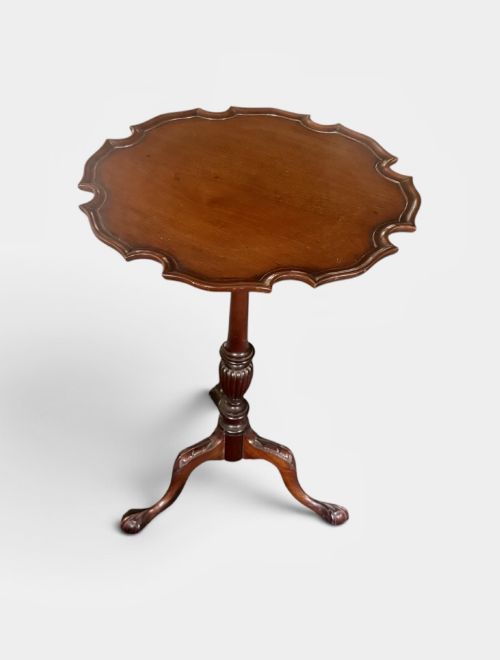
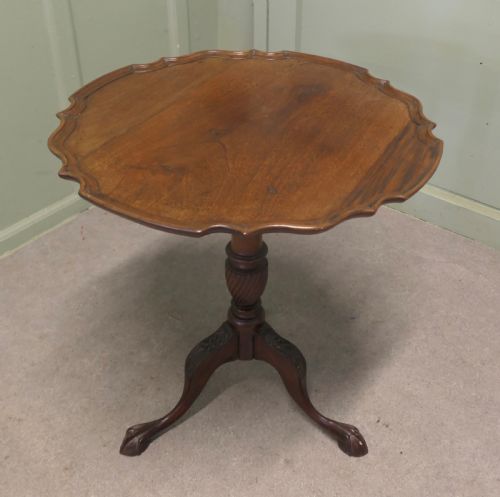
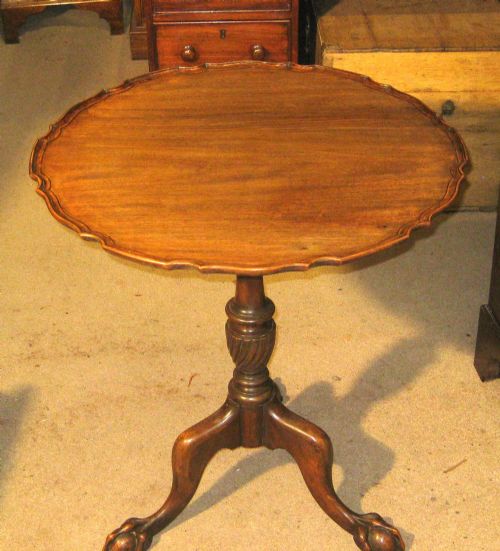
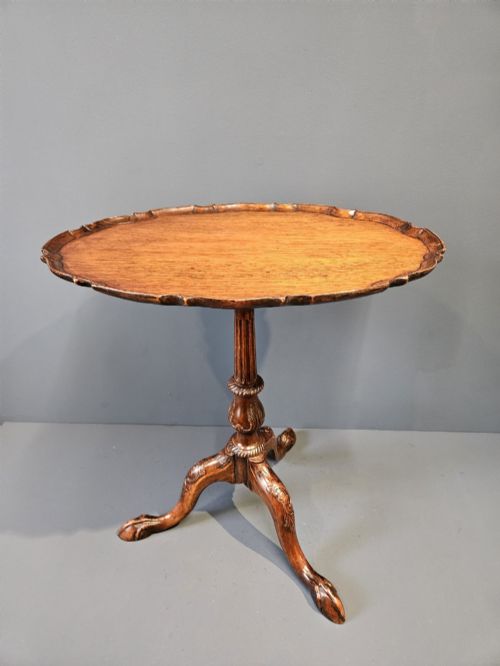
A carved piecrust wine table brings a sculptural moulded edge and a compact tripod base to a corner or beside a chair.
Carved Piecrust Wine Table
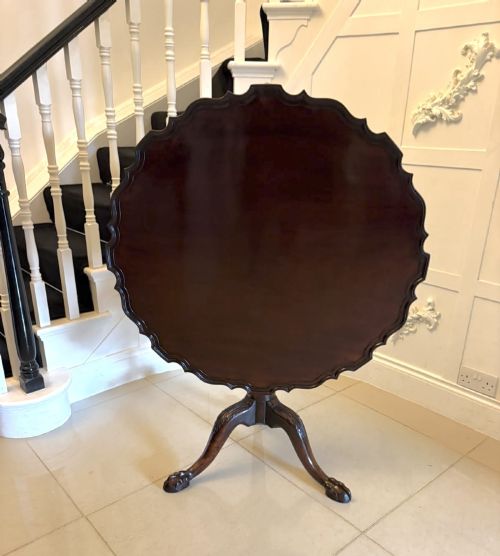
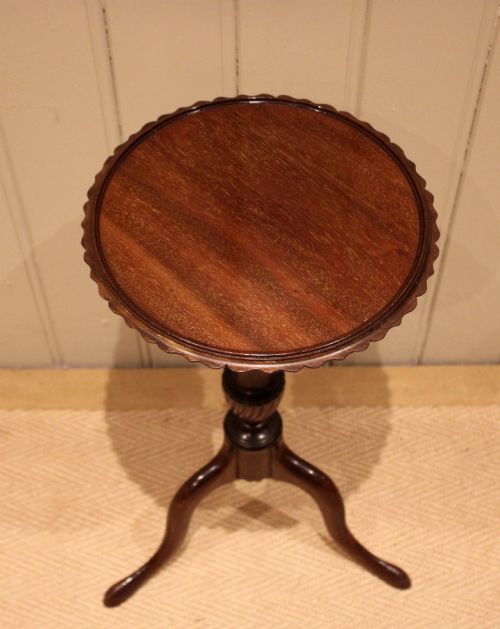
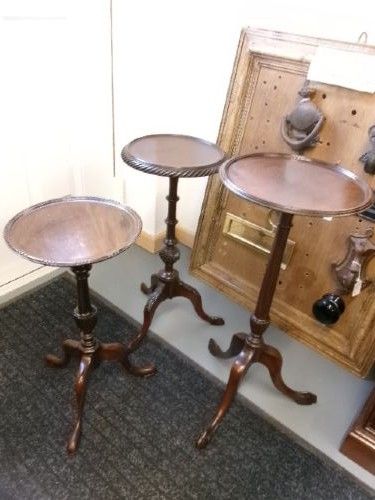
A carved piecrust wine table is primarily a small occasional piece designed for holding a glass or a lamp, supported by a central pillar and three legs. These tables appear frequently from the eighteenth century onwards, with George III examples and later Chippendale style revivals forming the core of the selection.
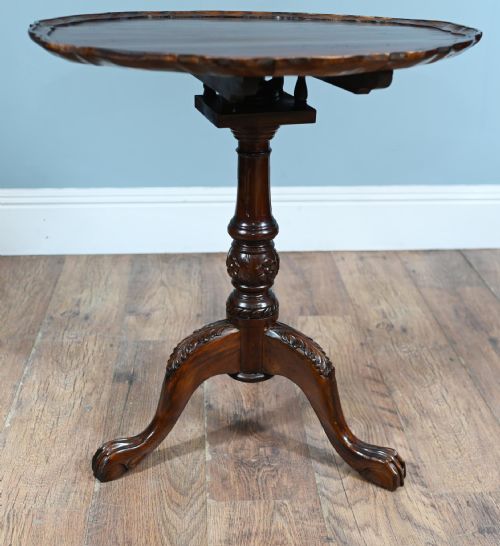
Most pieces on this page utilise a tilt top mechanism, allowing the surface to tip vertically when not in use. Some examples incorporate a birdcage mechanism beneath the top, permitting the surface to rotate as well as tilt.
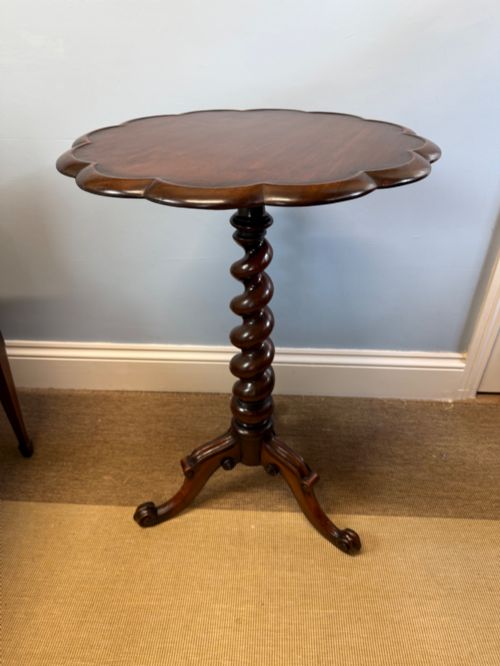
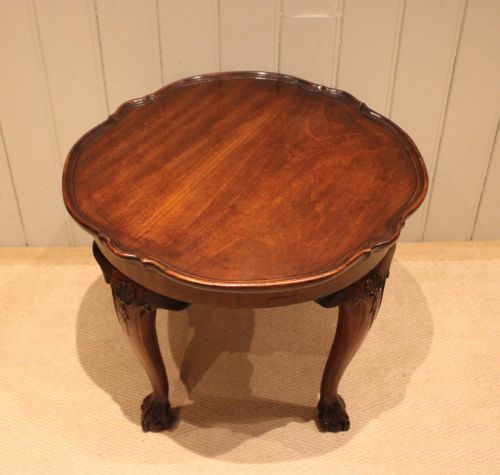
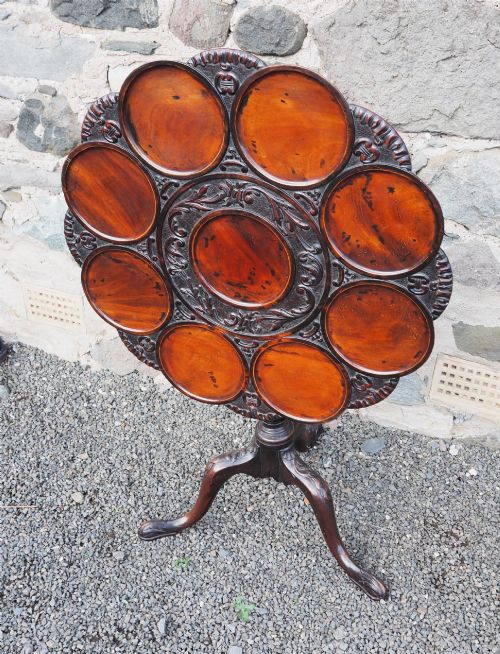
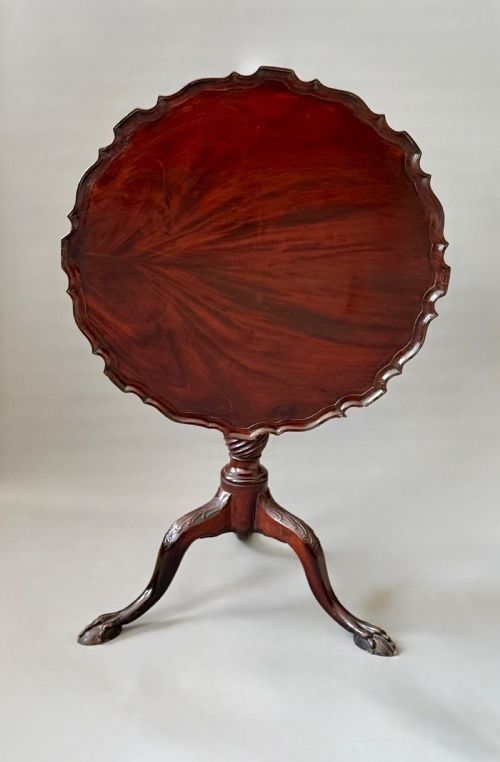
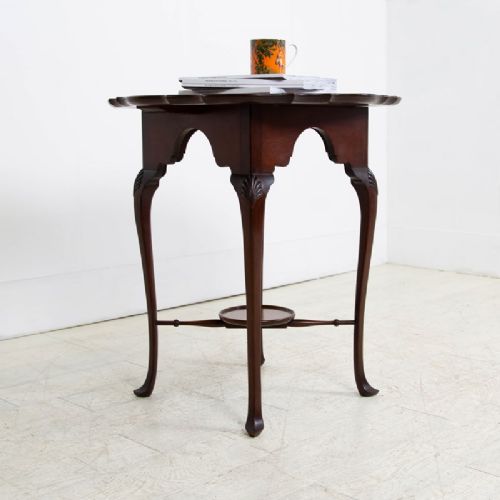
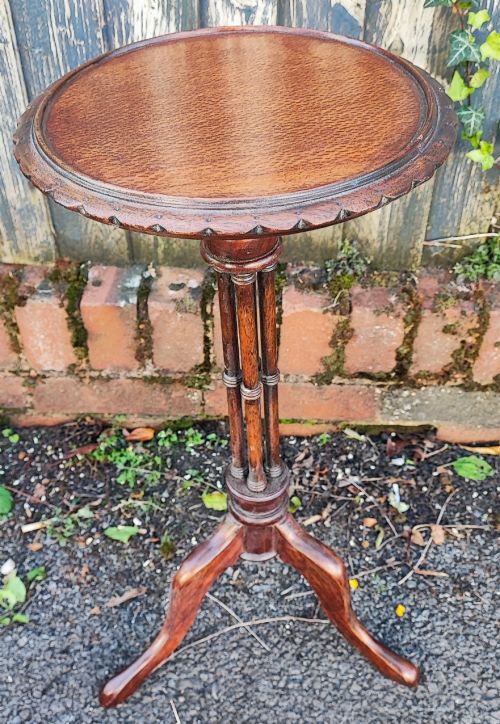
While many take a circular form with the signature raised scalloped rim, variations include oval tops and occasional side tables bearing shaped edges. Mahogany remains the dominant timber, though walnut and oak also occur.
Materials and construction
Makers relied principally upon solid mahogany and mahogany veneers, shaping the distinctive raised rim directly from the solid timber of the top or applying the moulded edge carefully around the circumference. The characteristic tripod base typically joins a turned central pillar via tenoned or dovetailed legs.
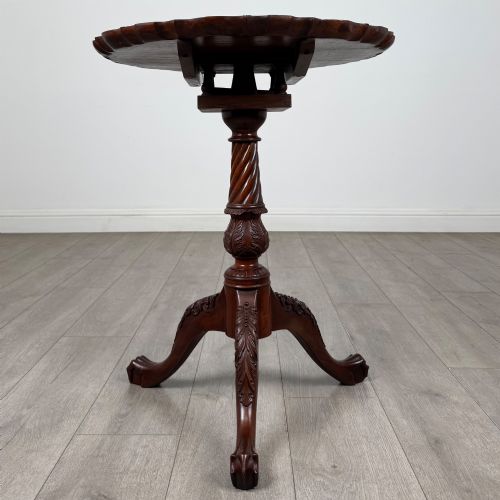
Tilt top actions utilise precision-fitted wooden catches and rule joints, while sophisticated examples employ a rotating birdcage block atop the column. Hand-carving defines the knees and ball and claw feet of pieces executed in the Chippendale taste.
Listings span the eighteenth century through the Edwardian period, featuring both solid mahogany and burr walnut timbers.
What separates the grades
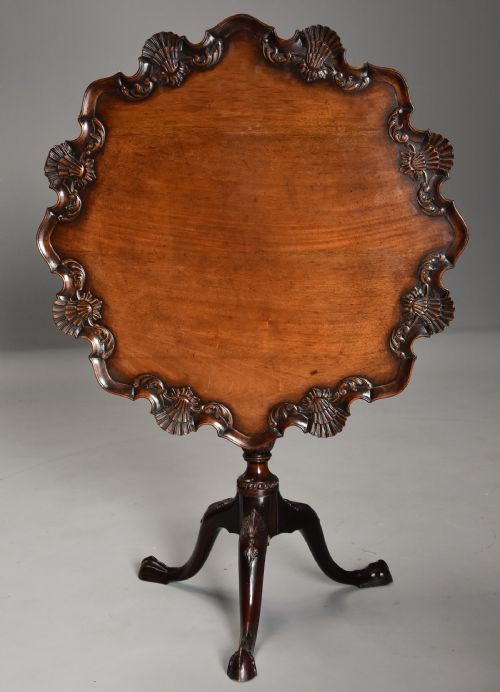
Quality rests significantly upon the crispness of the carved rim and the proportion between the top and the supporting pillar. Tables boasting deeply sculpted scalloping and finely detailed acanthus carving on the tripod legs represent the upper tier of cabinet work.
The integrity of the tilt top mechanism and the presence of a stable, original birdcage pivot influence the structural merit of an example. Timbers displaying rich grain patterns and deep patination elevate a piece far above simpler, plain-turned utilitarian versions.
Gillows·Shapland and Petter
The Carved Piecrust Wine Table Glossary
- Piecrust edge
- A raised, decoratively carved rim resembling the fluted crust of a pastry pie. This feature requires considerable skill to carve directly from the solid wood of the tabletop.
- Tilt top
- A hinged tabletop mechanism that enables the surface to fold flat against the central pillar. This ingenious space-saving design allowed tables to stand against walls when not in use.
- Birdcage
- A wooden framework situated beneath the tabletop that permits the surface to rotate and tilt independently. It adds mechanical complexity and height to a tripod table.
- Tripod base
- A supporting structure consisting of three curved legs radiating from a central column. This design ensures stability on uneven historical floorboards.
- Patina
- The surface sheen and deep coloration developed by timber over decades of handling, polishing, and exposure to light. Original patination is highly valued by collectors.
Carved Piecrust Wine Table: Frequently Asked Questions
How were wine tables used historically?
These small tables were moved easily around a reception room to hold glasses, bottles, or small lamps beside seating areas. Their portability made them versatile furniture for entertaining guests in Georgian homes.
Because they could tilt vertically, servants stored them compactly against the walls when the room needed to be cleared for other activities.
How do I identify a George III table?
George III pieces typically date from the latter half of the eighteenth century and feature dense, heavy mahogany with a rich natural patina. Look for hand-cut dovetails, traditional joinery, and crisp, spirited carving on the knees of the tripod legs.
Later Victorian and Edwardian revivals often exhibit slightly different timber finishing or machine-assisted shaping that distinguishes them from eighteenth-century originals.
What is a birdcage mechanism?
A birdcage is a small wooden cage-like construction placed between the top of the pillar and the tabletop. It allows the table surface to revolve smoothly in a complete circle as well as tilt.
This feature is often found on finer eighteenth-century tripod tables and adds both height and mechanical interest to the piece.
Where should I place a wine table?
A wine table fits naturally beside an armchair, in a dark corner, or between two windows where a full-sized table would prove too bulky. The small footprint allows it to function as a convenient surface for a drink or a book.
Avoid placing antique mahogany directly against intense heat sources or in harsh sunlight to protect the polished timber surface and historic finish.