



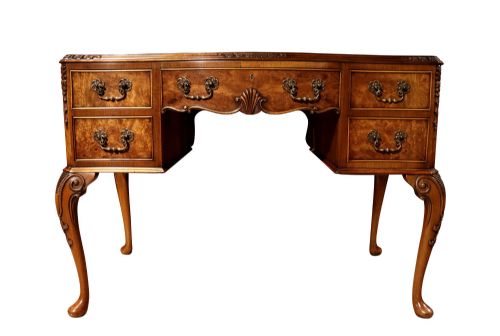


Carved Pedestal Dressing Table
A carved pedestal dressing table is a solid timber vanity designed for grooming, combining useful drawers with a central kneehole space.
Carved Pedestal Dressing Table
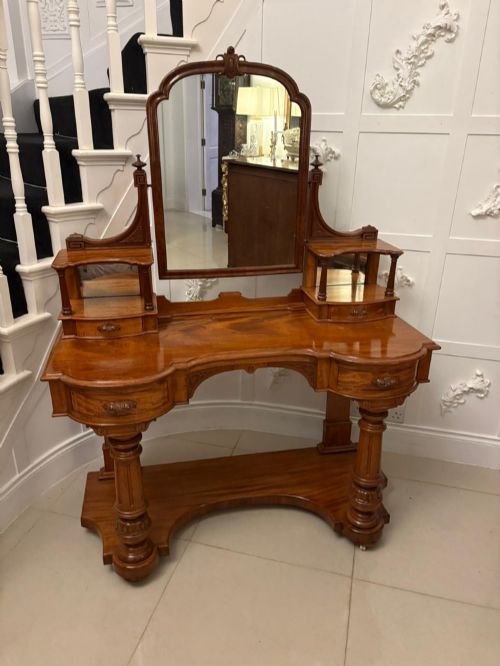
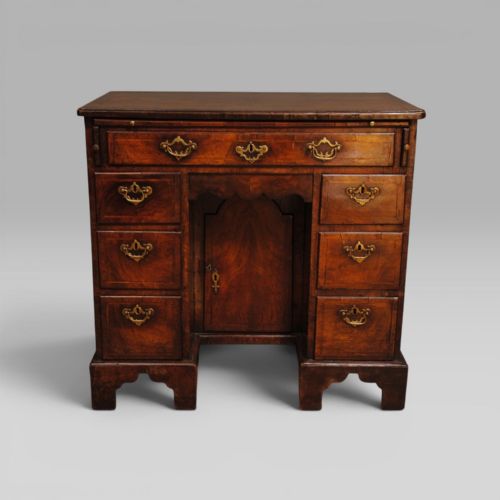
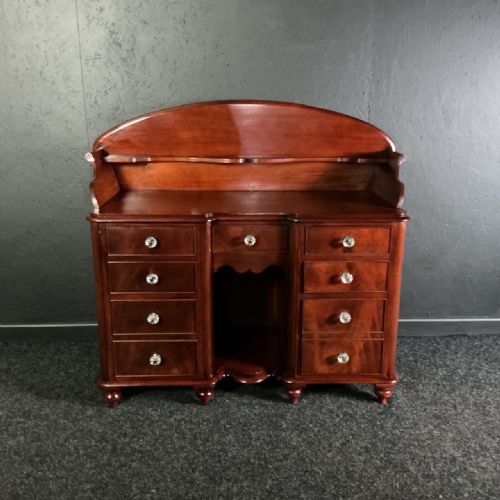
A carved pedestal dressing table unites the storage of a chest with the dedicated surface needed for daily toilette and personal preparation. Most examples you will encounter date from the Victorian and Georgian eras, often constructed with flanking sets of small drawers.
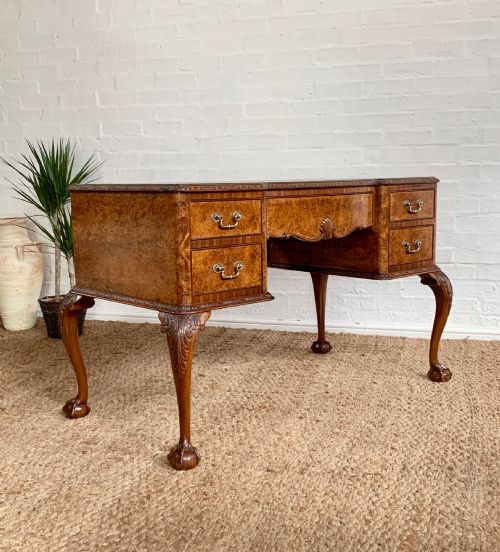
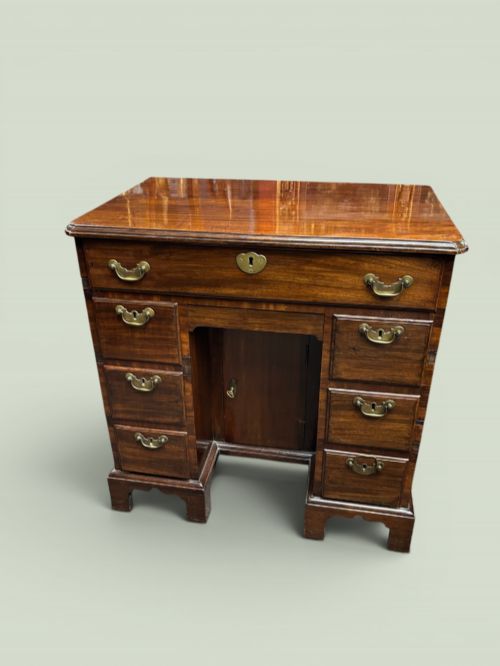
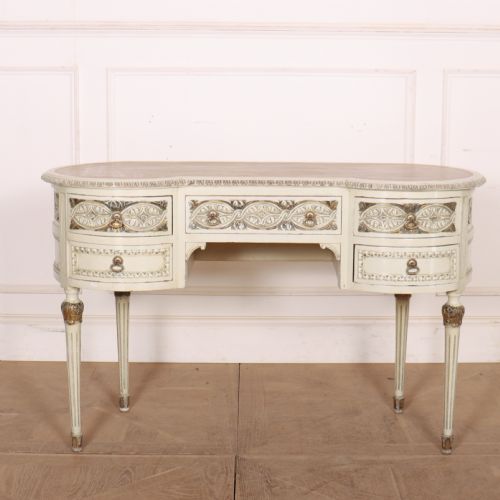
The form frequently overlaps with kneehole desks, writing tables, and washstands due to their similar pedestal footprints and multi-drawer arrangements. You will find variations ranging from serpentine George II designs to kidney-shaped Edwardian pieces.
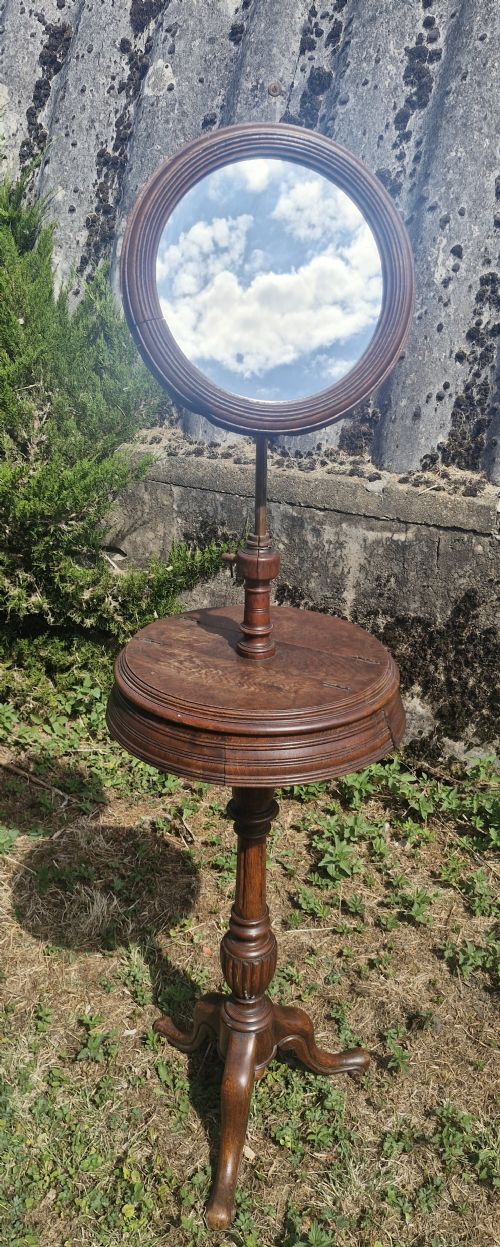
Makers utilised rich hardwoods, occasionally incorporating mirrors or adjustable stands into the dressing furniture. Their primary purpose remained domestic, offering a stable surface for grooming items while keeping personal papers or cosmetics neatly ordered.
How they were made
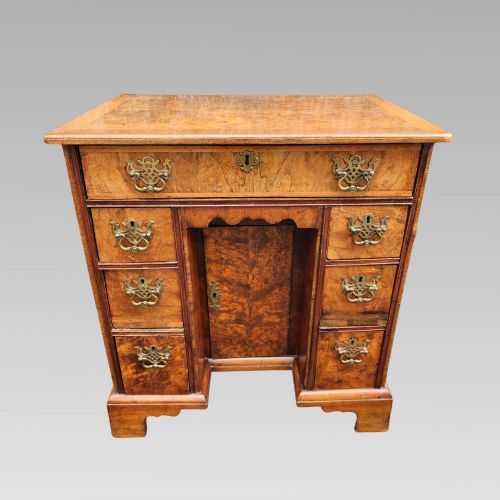
Makers relied heavily on solid mahogany, walnut, and burr walnut veneers applied over secondary timbers like pine, shaping panels to create smooth curves. Brass hardware, green tooled leather writing surfaces, and glass components were integrated to complete the functional hardware of each piece.
Cabinetmakers employed traditional joinery techniques such as dovetailed drawer construction to ensure durability across pedestal structures. Carving was executed by hand, defining the styles seen from the George II period through to Edwardian interpretations.
Listings feature woods including mahogany, walnut, burr walnut, oak, satinbirch, and pine, paired with brass and leather.
What varies in quality
The distinction between standard domestic items and superior examples rests on the crispness of the hand carving and the selection of timber veneers. Burr walnut and figured mahogany show greater depth when the timber is carefully chosen and matched across the drawer fronts.
Construction details like thick drawer linings, original brass pulls, and well-fitted internal partitions separate workshop production from ordinary output. Well-executed proportions in kidney-shaped or serpentine forms also indicate a higher grade of craftsmanship.
Shapland and Petter·Waring and Gillows·John Gregory London
The Carved Pedestal Dressing Table Glossary
- Pedestal
- A structural support base containing tiers of small drawers flanking a central recess or kneehole space. This layout defines the storage capacity of dressing tables and writing desks.
- Kneehole
- The central recessed opening beneath the top surface of a desk or dressing table designed to accommodate the user's legs. It is typically flanked by vertical stacks of drawers.
- Veneer
- A thin layer of highly figured wood, such as walnut or burr walnut, applied over a stable secondary timber base. This technique creates decorative patterned surfaces across drawer fronts and tops.
- Serpentine
- A furniture front or top shaped with a curving contour that flows outward in the centre and inward at the sides. It requires precise woodworking skill to execute cleanly.
- Shaving stand
- A specialist piece of furniture equipped with an adjustable mirror and small surface areas designed for personal grooming. They frequently appear alongside traditional dressing tables.
Carved Pedestal Dressing Table: Frequently Asked Questions
What is a pedestal dressing table?
A pedestal dressing table is a timber furniture piece featuring two banks of drawers supporting a central tabletop used for grooming and personal preparation.
These pieces often include fitted top drawers with compartments for small items, mirrors, and kneehole recesses for comfortable seating.
Were these tables used for writing?
Many pedestal dressing tables and kneehole desks shared dual purposes in historic homes, serving equally well for correspondence and grooming. The inclusion of tooled leather inserts on certain examples points directly to writing use.
Their multi-drawer layouts made them adaptable for storing papers, inks, and personal accessories alongside cosmetic items.
What woods were used for these pieces?
Makers predominantly worked with mahogany and walnut, frequently selecting burr walnut veneers for rich grain patterns on decorative surfaces. Oak and pine also appear frequently as structural timbers inside drawers and internal framing.
Accents of brass hardware and glass mirrors completed the material composition of Victorian and Georgian dressing furniture.