



Antique Coiffeuse Mirror
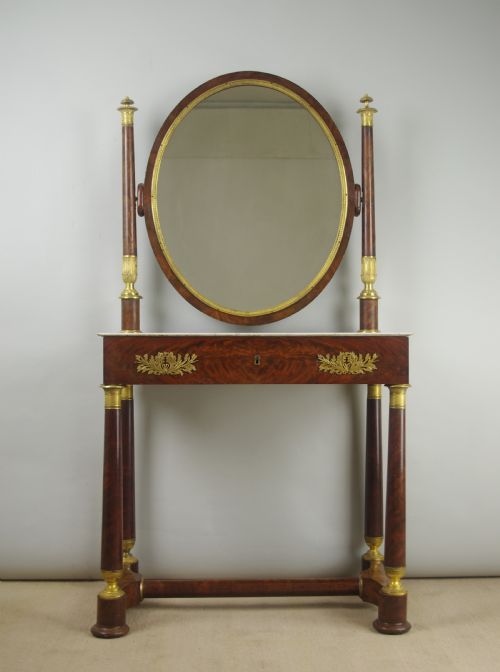
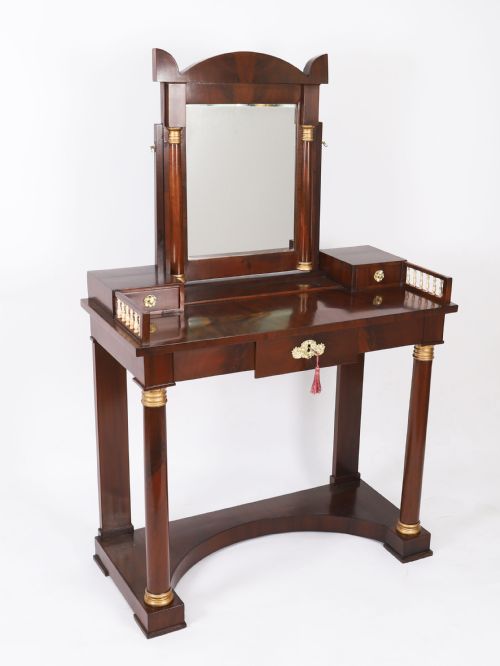
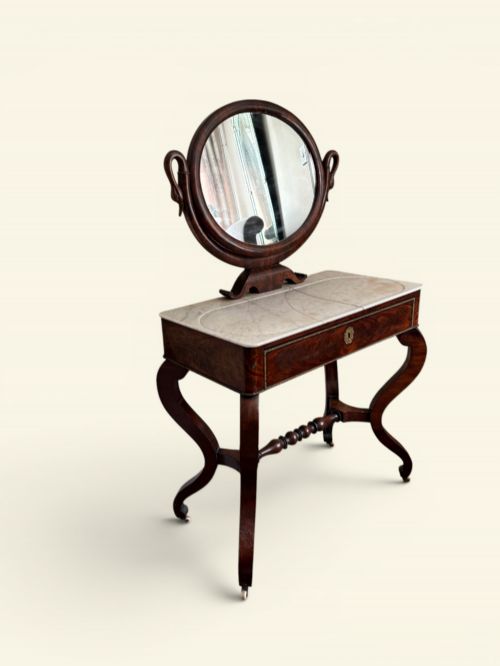
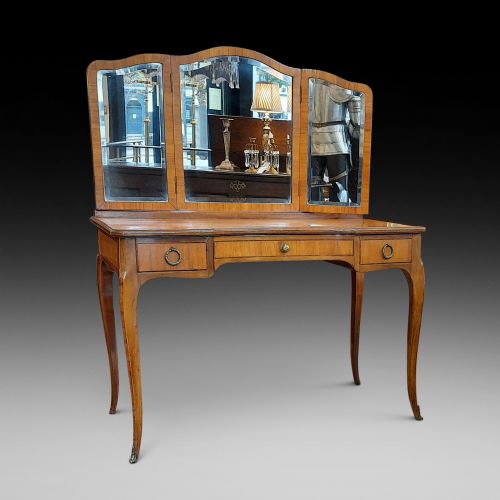
These antique coiffeuse mirrors and dressing tables bring architectural French elegance and practical surface space into a modern bedroom.
Antique Coiffeuse Mirror
An antique coiffeuse mirror is typically encountered as part of a dressing table designed for personal grooming and cosmetic storage. The listings here span several distinct periods, with nineteenth-century examples forming the core of the selection alongside eighteenth-century predecessors and early twentieth-century interpretations.
The dominant forms draw heavily on continental aesthetics, particularly French Empire, Louis XV Revival, and French Rococo Revival styles. Buyers will frequently encounter mahogany and walnut timbers embellished with gilt bronze, ormolu mounts, and integrated glass mirrors.
Materials and construction methods
Cabinetmakers utilised dense hardwoods such as mahogany, walnut, kingwood, and rosewood, often applying crossbanding to accentuate the grain. Carved oak and marble tops also appear in the evidence, providing durable and weighty surfaces for daily use.
Metalwork played a defining role in ornamentation, with cast ormolu, gilt bronze, and brass mounts applied to frame mirrors and highlight structural lines. Original glass mirror plates were silvered by hand, yielding softer reflections than modern float glass.
Listings incorporate timber varieties such as mahogany, walnut, kingwood, rosewood, and oak, alongside marble and brass.
Discerning quality in period dressing tables
Quality rests in the harmony of the timber selection and the crispness of the cast metal mounts. Finer examples display meticulously chased ormolu and integrated porcelain plaques rather than mass-produced brass stampings.
Structural integrity and the retention of original mirror glass and hardware separate standard items from superior pieces. The precision of the joinery and the depth of the wood patina indicate the skill of the original workshop.
Harry and Lou Epstein
The Antique Coiffeuse Mirror Glossary
- Coiffeuse
- A French dressing table or vanity equipped with a mirror. It serves as the primary furniture piece for hair arrangement and cosmetic application.
- Ormolu
- Gilt bronze mounted onto furniture or decorative objects. The technique involves applying a finely ground mercury and gold amalgam to bronze before firing.
- Crossbanding
- A decorative border of veneer laid across the grain of the primary wood. This technique creates a distinct visual framing effect on tabletops and drawer fronts.
- French Empire
- A neoclassical design style spanning the late eighteenth and early nineteenth centuries. It draws inspiration from ancient Roman and Greek motifs.
Antique Coiffeuse Mirror: Frequently Asked Questions
What is a coiffeuse mirror?
A coiffeuse mirror is a pivoting or stationary looking glass integrated into a French dressing table. These fixtures were designed for personal grooming.
They often feature adjustable side plates or tilt mechanisms to direct light effectively.
How do I date an antique dressing table?
Dating relies on examining the timber species, joinery techniques, and stylistic ornamentations like ormolu mounts. Eighteenth-century pieces differ significantly in carcass construction from 1930s Art Deco examples.
Hardware styles and mirror plate characteristics also provide reliable chronological markers.
Where should I place a dressing table?
These tables function best in bedrooms or dressing rooms against a wall with natural light from the side. Positioning near a window ensures the mirror captures optimal illumination.
Ensure adequate clearance for any attached swivel mirrors and matching seating.
Are marble top dressing tables original?
Marble tops appear frequently on period French dressing tables, particularly those designed for rigorous daily use. They provide a durable, heat-resistant surface for cosmetics and basins.
Inspect the seating rebate to confirm the marble sits flush within the timber frame.