
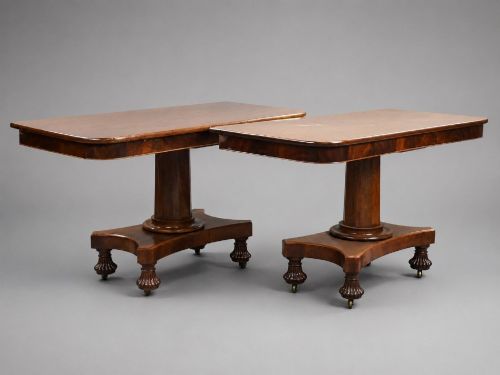
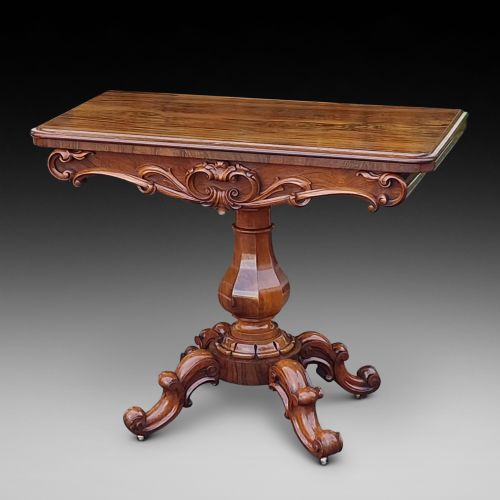
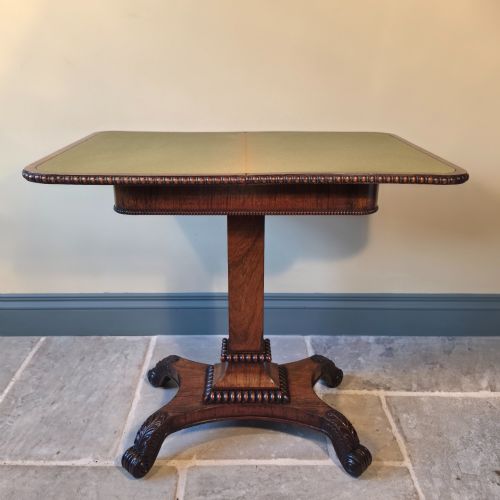
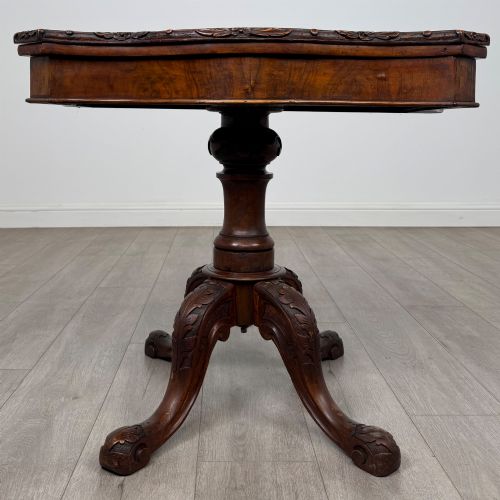
Carved Pedestal Console Table
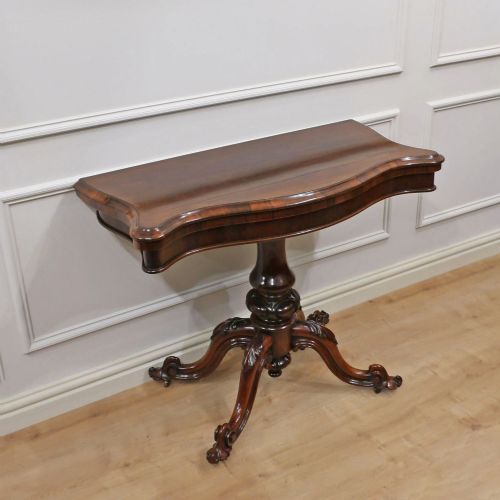
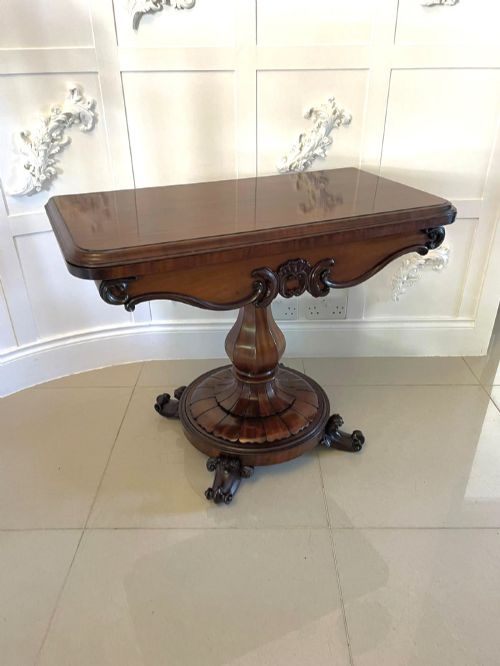
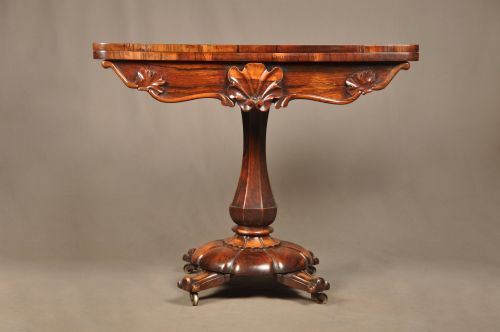
A carved pedestal console table delivers grand architectural presence to an interior, most frequently appearing in rich rosewood or mahogany from the Regency and Victorian periods.
Carved Pedestal Console Table
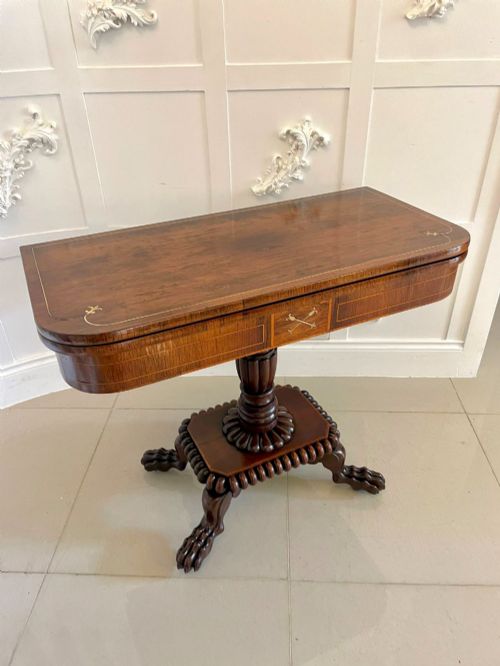
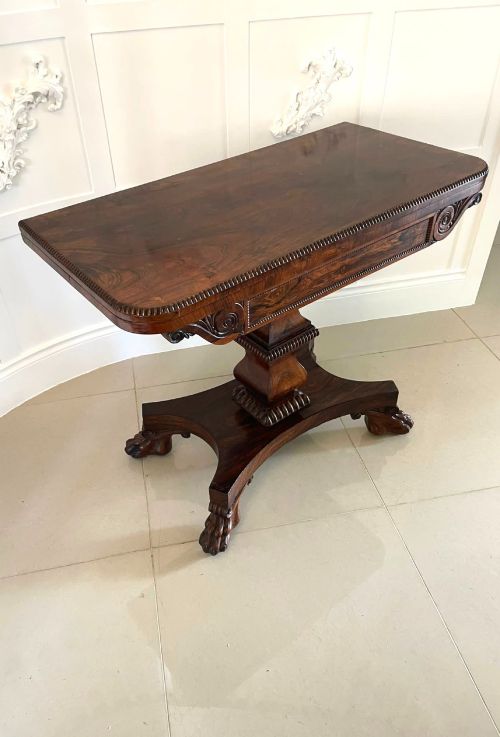
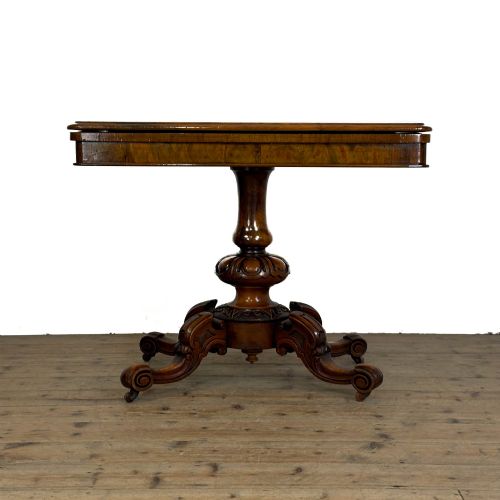
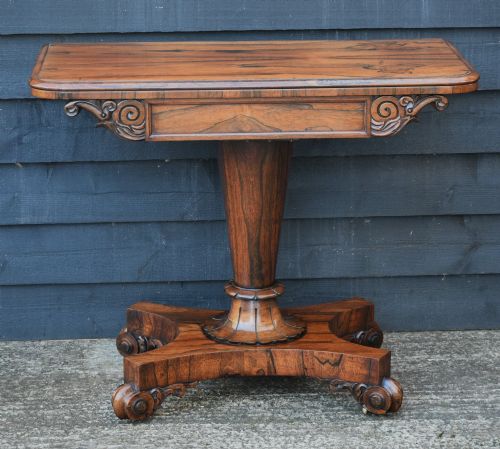
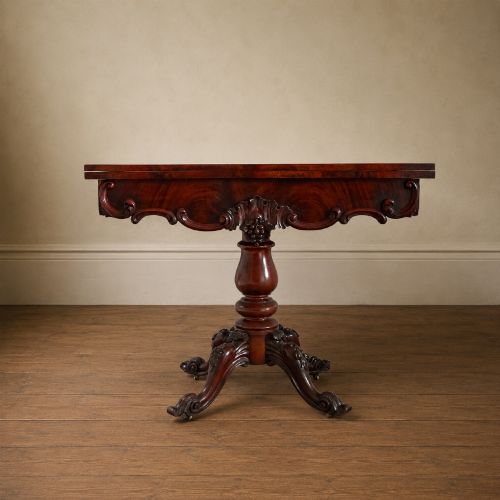
A carved pedestal console table serves primarily as a stately wall-mounted or freestanding surface, frequently doubling in historical formats as a fold-over card table, tea table, or games table. These pieces emerge predominantly from the Regency, William IV, and Victorian eras, carrying deep historical utility within domestic entertaining spaces.
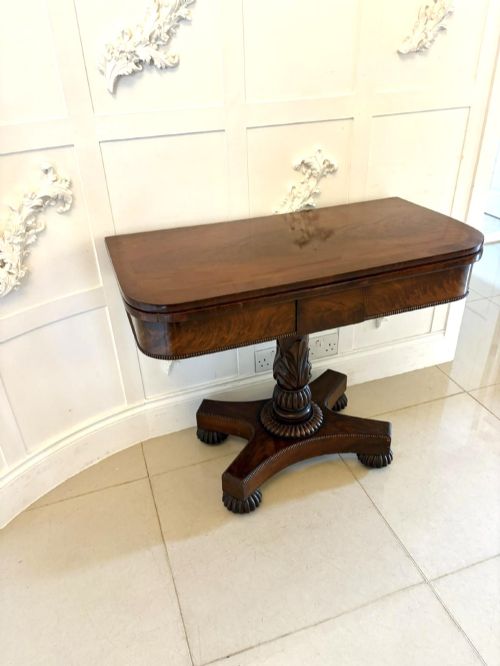
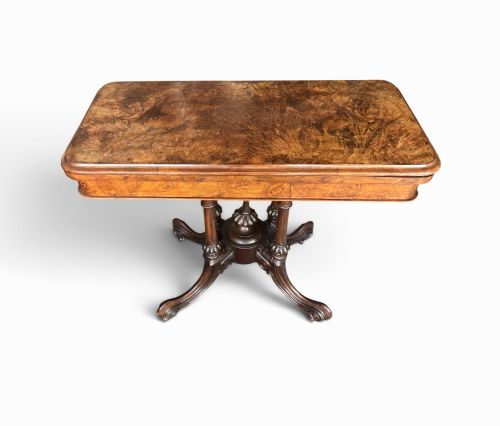
The versions most commonly met on this page combine timber pedestals with substantial central pillars and carved supports, often featuring folding tops lined with baize. They bridge the gap between architectural console design and versatile living room furniture.
Makers designed these forms to anchor hallways and principal reception rooms, utilising robust timber frames to support heavy marble tops or elaborate folded surfaces. Their structural layout reflects the shifting social habits of nineteenth-century households.
How they were made
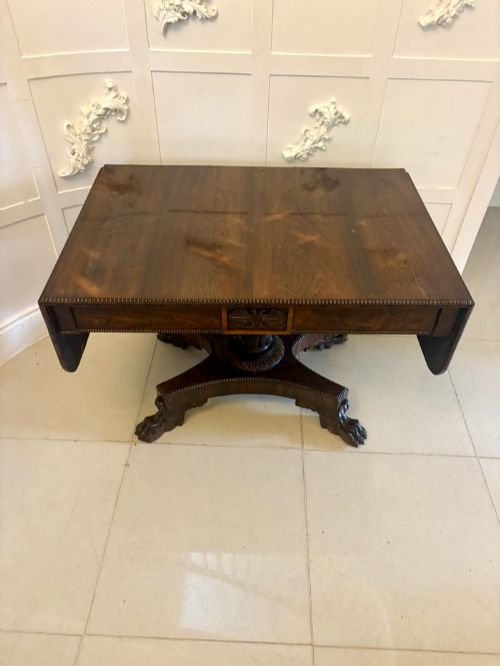
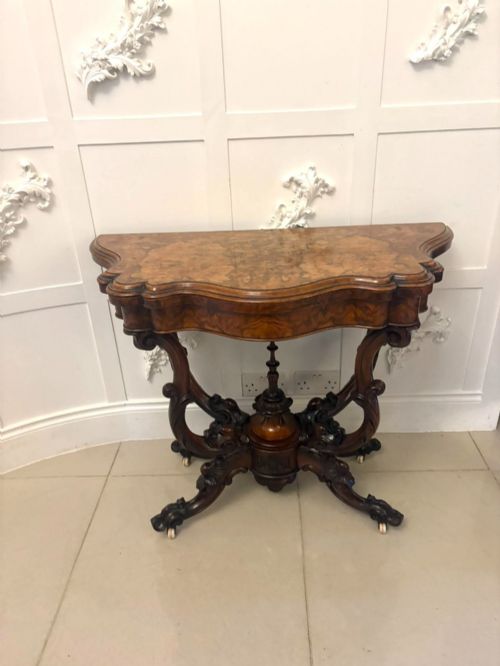
Cabinet makers constructed these tables using dense hardwoods such as rosewood, mahogany, and walnut, frequently applying figured veneers or burr walnut to display striking grain patterns. Brass inlay and delicate stringing occasionally augment the primary timber surfaces on Regency examples.
Carving formed a central element of the production process, manifesting as robust paw feet, dolphin bases, or intricate basket supports carved directly from solid wood blocks. Workshops employed traditional joinery to secure the heavy central pedestals to stable plinth bases.
Carved wooden dolphins occasionally support the pedestals, letting marine life silently hold up the evening tea.
What varies in quality
The standard of carving distinguishes superior examples from simpler production pieces, with crisply undercut foliage and detailed animal motifs showing the hand of a skilled artisan. Heavy, well-proportioned pillar supports and solid mahogany or rosewood framing indicate deliberate, high-grade construction.
The choice of timber figure significantly elevates a piece, where symmetrical burr walnut or heavily figured mahogany veneers demonstrate careful material selection by the maker. Subtle details such as precise brass inlay and tightly fitting fold-over mechanisms mark out the better workshops.
Gillows·Epstein
The Carved Pedestal Console Table Glossary
- Console table
- A table designed to stand against a wall, historically supported by brackets or a central pedestal rather than four standard legs.
- Baize
- A coarse woolen fabric, often green, traditionally used to line the playing surfaces of card and games tables.
- Fold-over top
- A hinged tabletop that doubles the surface area when opened, frequently concealing a storage well or gaming surface beneath.
- Figured wood
- Timber possessing an attractive, irregular grain pattern, such as burr walnut or flame mahogany, prized for decorative surfaces.
- Plinth base
- A heavy, flat block or platform at the base of a pedestal that provides structural stability to the entire table.
Carved Pedestal Console Table: Frequently Asked Questions
What is a carved pedestal console table used for?
These tables functioned originally as grand serving or display surfaces against walls, while many variants incorporated folding leaves to serve guests during card games or tea.
Today, they suit entrance halls or living rooms as statement furniture pieces that retain their historical versatility.
How do I identify a Regency table?
Regency pieces often display classical architectural influences, featuring rosewood veneers, brass inlay, and carved motifs like dolphins or bold scrollwork.
They generally date from the early nineteenth century and exhibit restrained yet sophisticated proportions compared to later Victorian iterations.
How should I care for a rosewood table?
Keep the timber away from direct sunlight and sudden temperature changes to prevent the delicate rosewood or walnut veneers from drying and cracking.
Apply occasional traditional wax polish and buff gently with a soft cloth to maintain the natural lustre of the polished surface.