
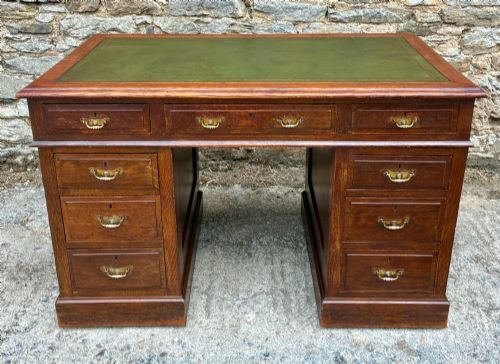
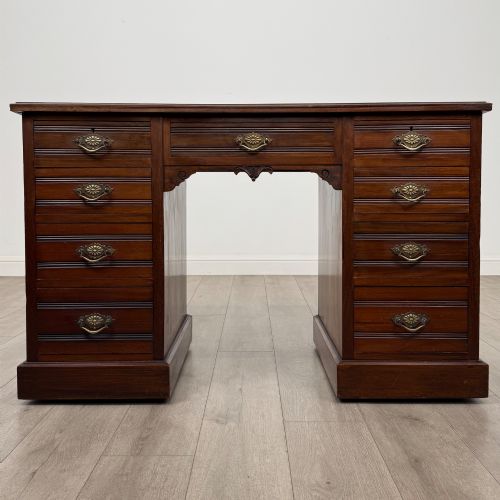

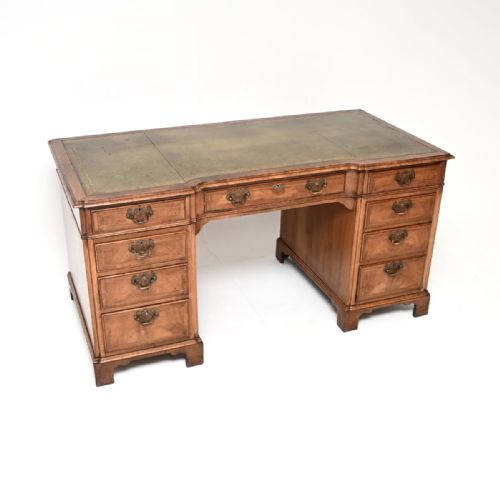
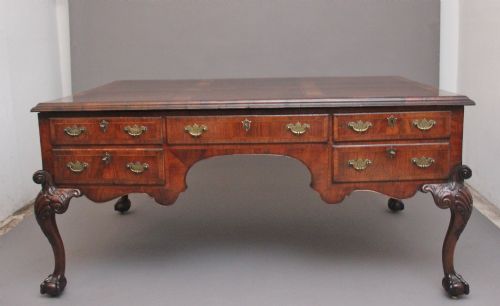
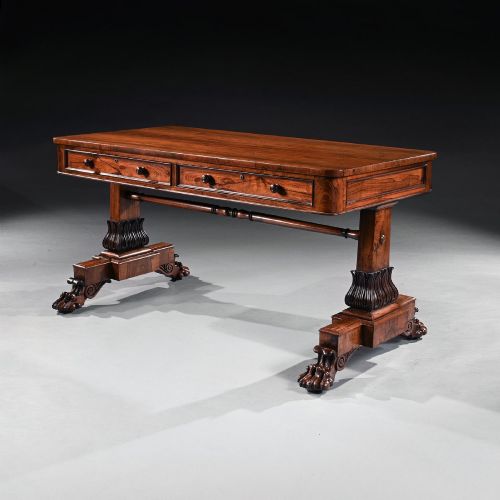
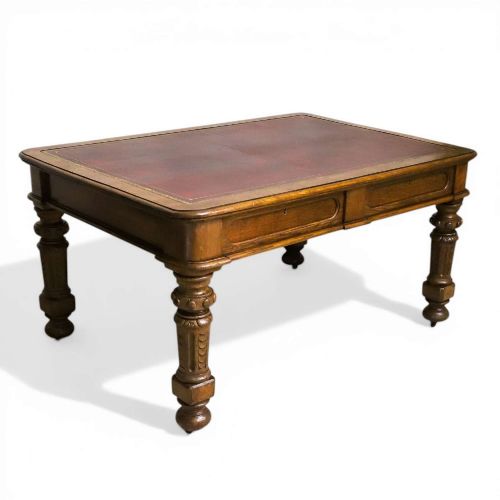
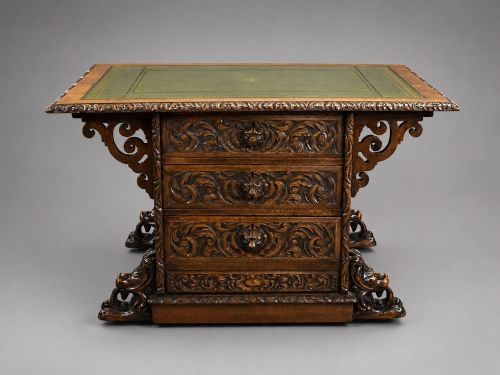
Carved Partners Desk
A carved partners desk is a substantial double-sided workspace designed for two people to face one another, combining functional surface area with decorative woodwork.
Carved Partners Desk
A carved partners desk provides two opposing seated positions with drawers and cupboards arranged on both sides of the pedestals or table base. These pieces originate primarily from the nineteenth and early twentieth centuries, spanning Victorian, Edwardian, and Georgian eras.
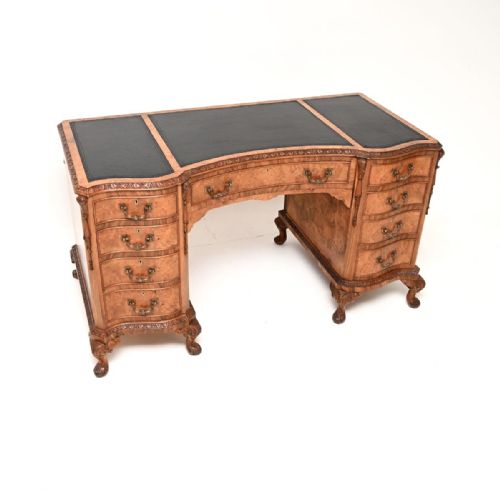
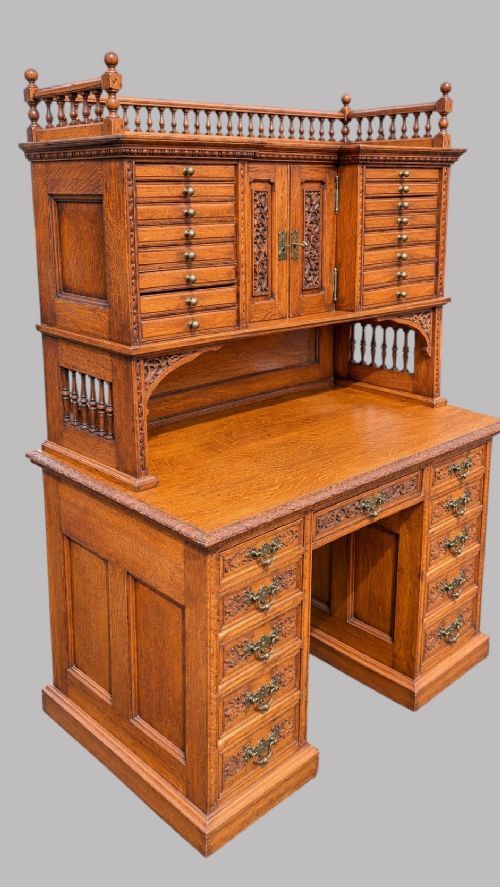
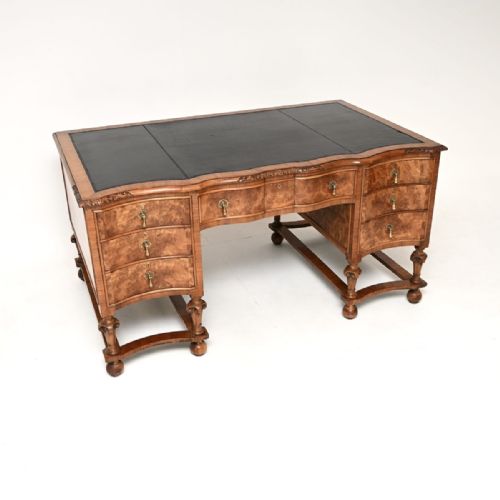
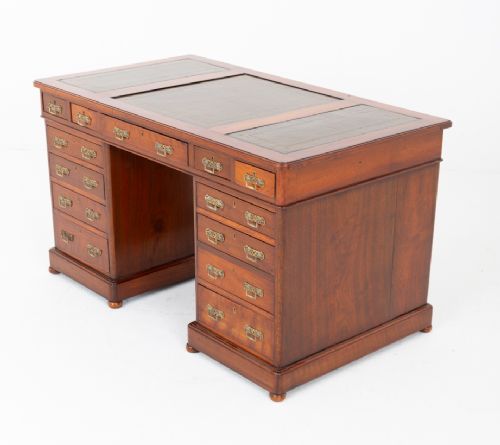
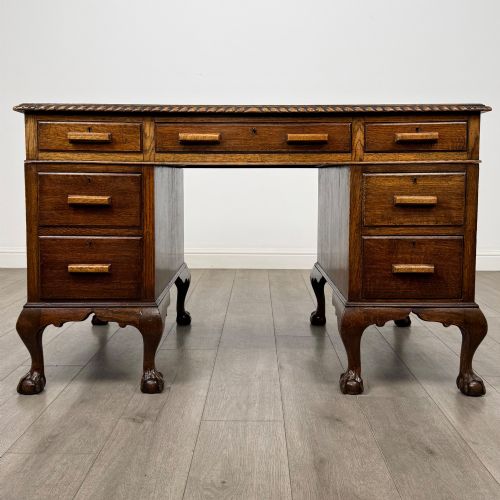
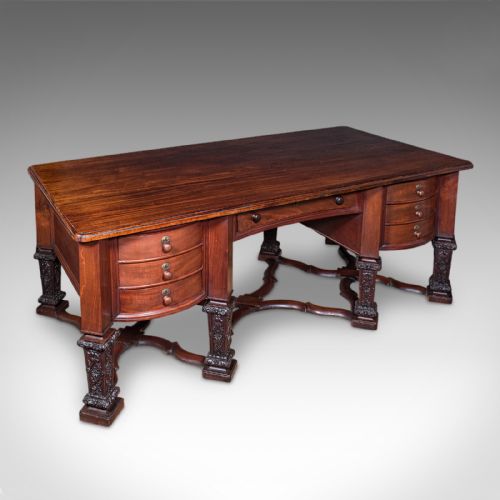
The versions most commonly met on this page are constructed from oak, mahogany, and walnut, frequently featuring detailed surface carving and inset leather writing surfaces. Forms range from heavy pedestal desks with banks of drawers to lighter library tables standing on four legs.
How they were made
Cabinet makers utilised dense hardwoods such as oak, mahogany, walnut, and padauk for the structural frames and exterior surfaces. Timber panels were often selected for prominent grain patterns like burr walnut or figured oak.
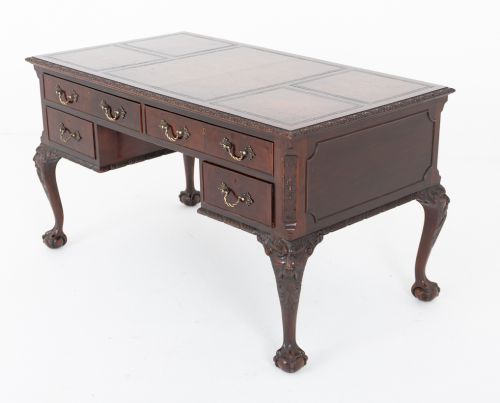
Surfaces were completed with inset leather writing panels, frequently tooled with blind or gilt decoration. Brass hardware, including handles, key escutcheon plates, and occasionally bun feet, completed the fittings.
Period styles span Victorian, Edwardian, Georgian, Regency, Gothic Revival, and Chippendale Revival.
What varies in quality
The depth and crispness of the timber carving separate standard production pieces from more ambitious commissions. Relief work involving figures, foliage, or lion motifs demands skilled hand execution rather than mechanical repetition.
The choice of primary timber and secondary framing woods influences overall durability and presence. Selected veneers such as burr walnut or figured mahogany indicate higher status manufacture, as does the integration of panelled backs on both sides.
Maple and Co·Whytock and Reid·Gillows Lancaster·Edwards and Roberts·Drude and Co
The Carved Partners Desk Glossary
- Partners desk
- A large double-sided desk designed to accommodate two users sitting opposite each other. These tables typically feature matching drawers and cupboards on both long sides.
- Pedestal desk
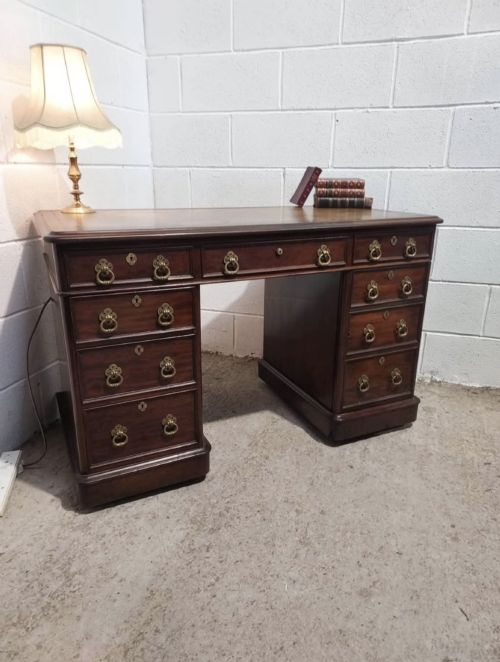
- A desk comprising a writing surface supported by two independent banks of drawers or columns. This form provides substantial storage beneath the main top.
- Library table
- A large freestanding table used primarily for reading and writing rather than storage. Examples in this category often stand on four legs or trestle supports instead of pedestals.
- Kneehole desk
- A compact desk featuring a central recess for the user's legs, flanked by smaller drawers. They generally stand against a wall rather than functioning from both sides.
- Green Man
- A decorative architectural and furniture motif representing a human face entwined with foliage, leaves, or vines. It appears frequently on nineteenth century carved oak furniture.
Carved Partners Desk: Frequently Asked Questions
What is a carved partners desk?
A carved partners desk is a large double-sided table or pedestal desk designed for two people to work opposite one another. They incorporate drawers and cupboards accessible from both faces.
These pieces were traditionally utilised in studies, libraries, and administrative offices by business partners or banking colleagues.
How were partners desks used?
They served as shared workspaces where two individuals could review documents, write correspondence, and store paperwork simultaneously. The double-sided configuration allowed both users equal access to drawers and surface space.
In domestic settings, they functioned as central library tables for reading and family administration.
How do I live with a partners desk?
A partners desk requires a substantial room layout because it is designed to stand freestanding in the centre of a space rather than against a wall. Adequate clearance around all sides is necessary to access the drawers.
Maintenance involves regular polishing of the timber and careful cleaning of the leather writing surface using appropriate conservation products.
How can I tell periods apart?
Periods are identified through a combination of timber selection, construction methods, and decorative styles. Georgian and Regency pieces often feature simpler classical lines in mahogany, whereas Victorian and Edwardian examples frequently display heavier oak construction and elaborate relief carving.
Revival styles from the late nineteenth century consciously emulate earlier eras such as Chippendale or Gothic architecture.