
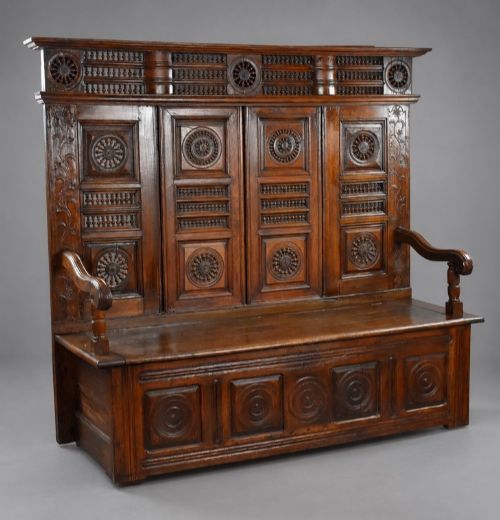
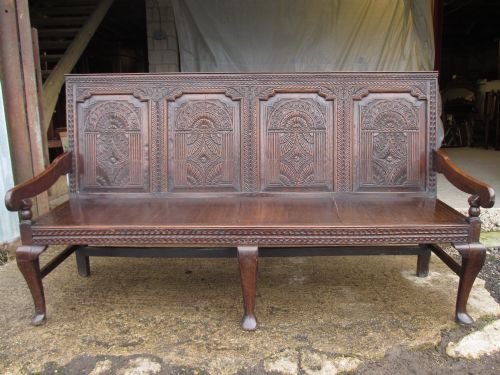
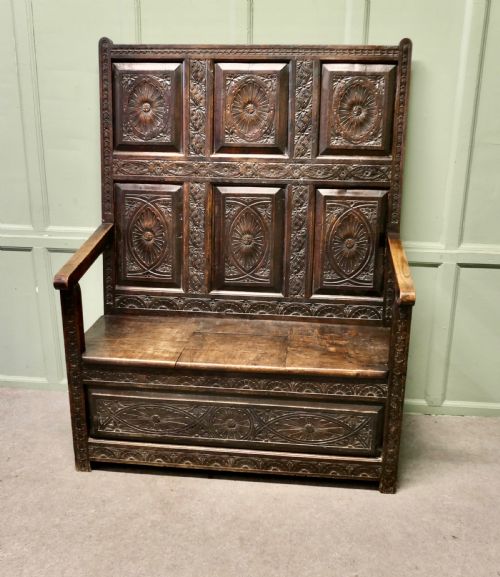
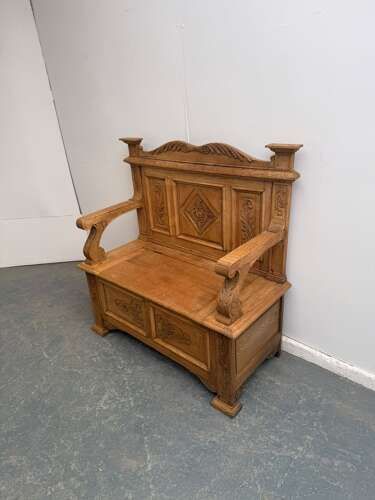
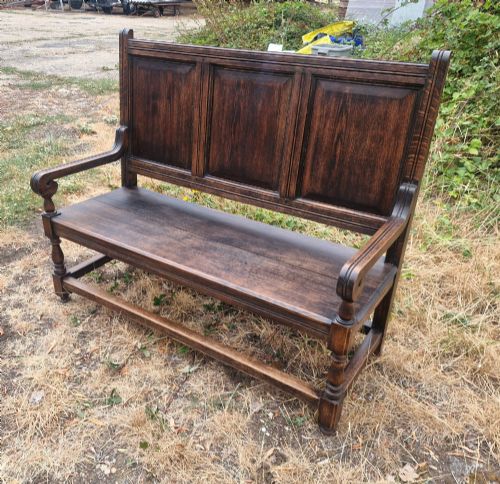
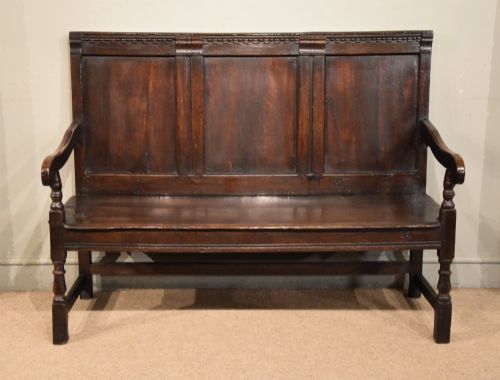
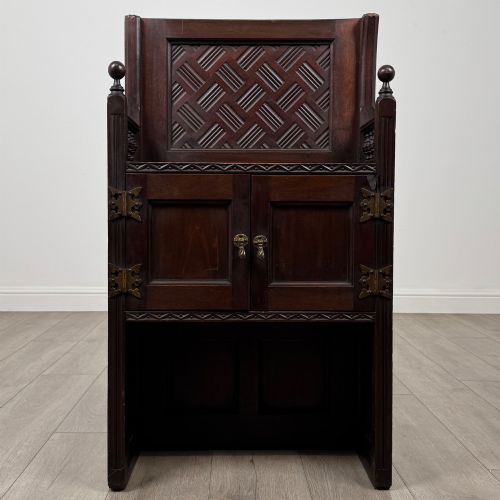
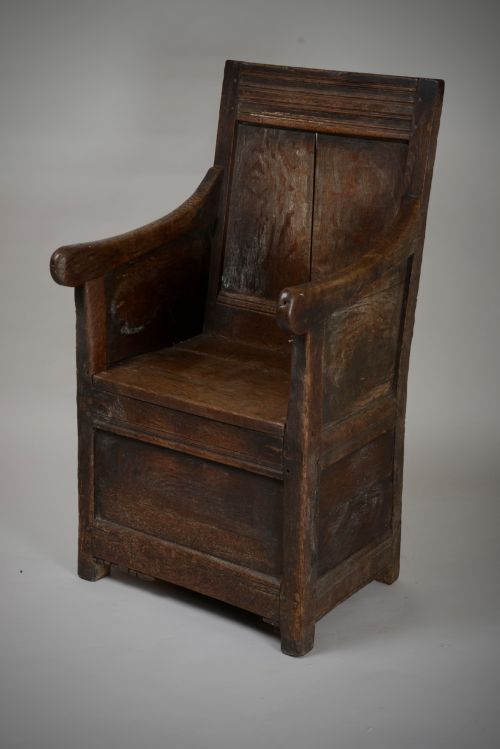
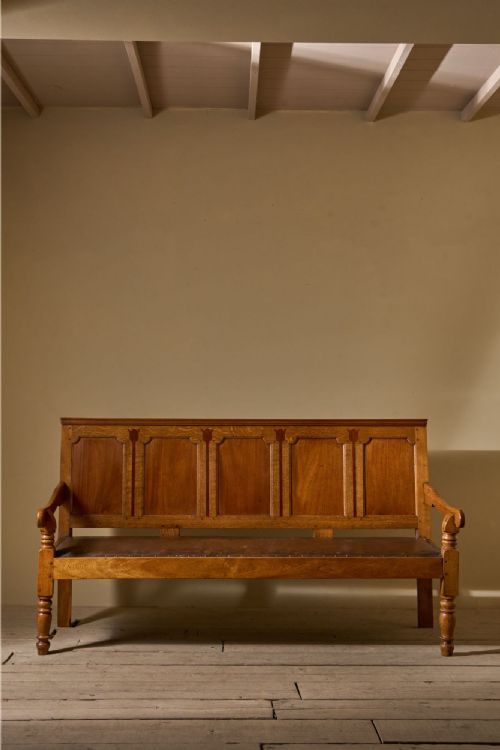
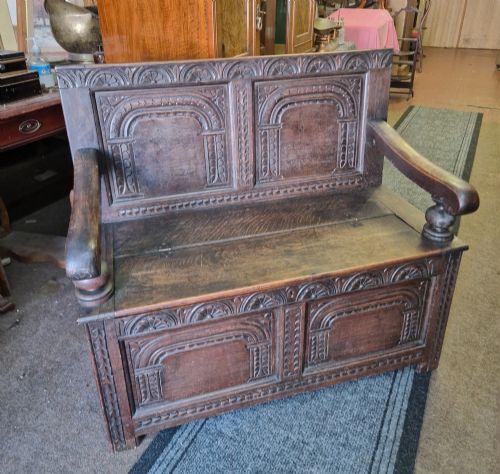
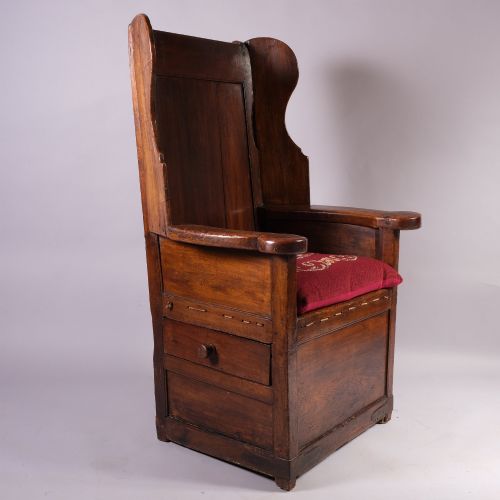
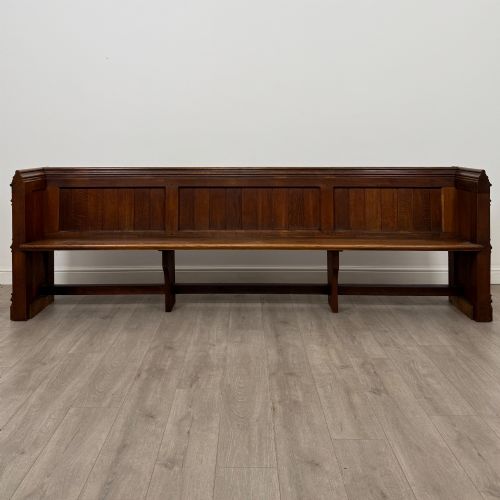


Carved Panel Wooden Settle
A carved panel wooden settle is a substantial seat offering both family comfort and hallway presence.
Carved Panel Wooden Settle
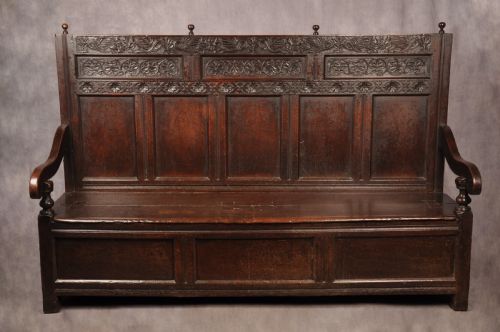
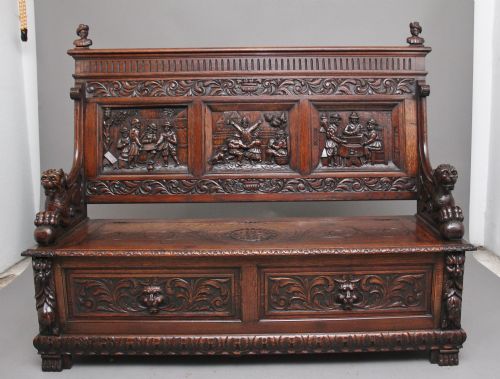
A carved panel wooden settle provides a high-backed seating option historically placed near hearths or in entrance halls to block cold drafts. When you search for a carved panel wooden settle, you encounter substantial seating forms constructed predominantly from timber.
The versions most frequently met on this page span several centuries, notably the seventeenth, eighteenth and nineteenth centuries. These pieces appear under various designations including hall benches, high-back pews and box settles with integrated storage compartments beneath the seat.
Regional variations emerge across the selection, encompassing English country pieces alongside Welsh and North Country examples. Structural formats range from straight-back benches to enclosed box designs intended to retain heat in large rooms.
Assessing quality and proportion
Quality in these benches depends on the depth and crispness of the timber carving alongside the integrity of the original construction. Superior examples display balanced proportions between the high backrest and the seat base, without heavy alterations to the framework.
The condition of the timber surface and the presence of original fixings distinguish standard utility seating from finer decorative pieces. Finer items retain their early patination and structural cohesion across the arms, panels and base.
Several settles double as hidden cupboards, proving that ancestors valued a secret storage box beneath their Sunday sitting space.
The Carved Panel Wooden Settle Glossary
- Box settle
- A form featuring a closed wooden storage compartment beneath the seat boards. This design kept contents dry and added weight to the base.
- High back
- An elevated timber backrest constructed to shield sitters from draughts in large rooms. It often serves as the primary canvas for carved decoration.
- Panel
- A framed section of wood fitted within grooves in the surrounding stiles and rails. Panels allow timber to expand and contract safely with humidity changes.
- Stile
- The upright vertical member forming the outer edge of a frame or panelled back. Stiles provide the main vertical structural support for the settle.
Carved Panel Wooden Settle: Frequently Asked Questions
What is a carved panel wooden settle?
A carved panel wooden settle is a long wooden bench featuring a high panelled back and solid arms. These pieces were traditionally designed to seat multiple people while blocking draughts in domestic interiors.
Today they function as statement hallway seating or living room benches that offer practical timber construction and historic character.
Where were settles used historically?
Settles were traditionally positioned near hearths in large communal rooms to trap heat and shelter occupants from cold air currents. They also served in church porches, farmhouses and entrance halls for daily seating.
In modern settings, they fit well in spacious hallways, large kitchens and dining areas where a substantial wooden bench is required.
How do I date an old settle?
Dating relies on examining the construction methods, tool marks and timber characteristics visible on the piece. Earlier examples from the seventeenth century often show pegged mortise and tenon joinery and simpler, heavier proportions.
Later Victorian and Edwardian interpretations frequently display revivalist carving styles and machine-finished timber components alongside traditional forms.
How do I care for wooden settles?
Wooden settles require placement away from direct heat sources and sudden temperature fluctuations to prevent timber splitting. Regular dusting and occasional application of appropriate wax help maintain the finish of the wood.
Avoid excessive moisture on unsealed surfaces and check structural joints periodically to ensure the frame remains stable.