
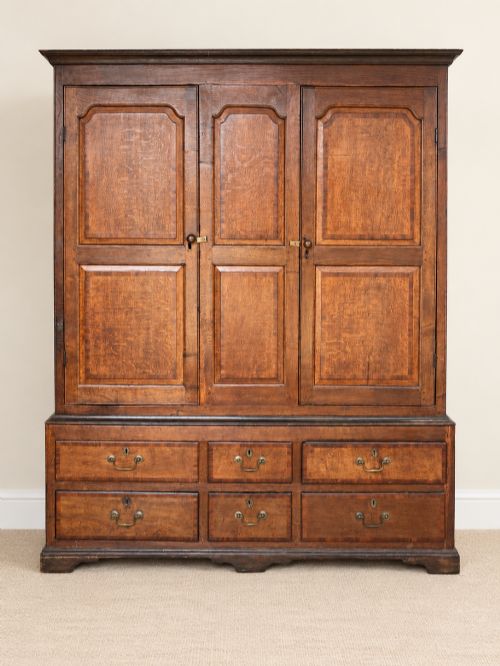
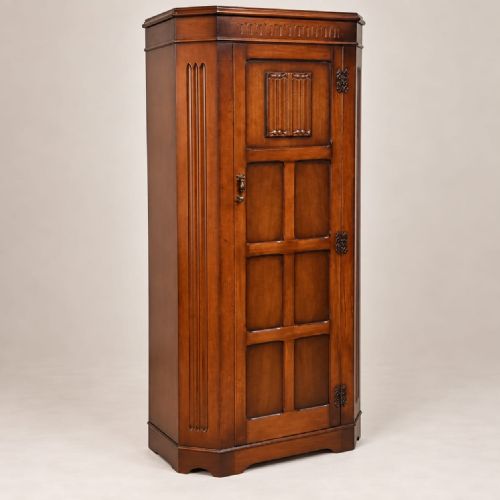
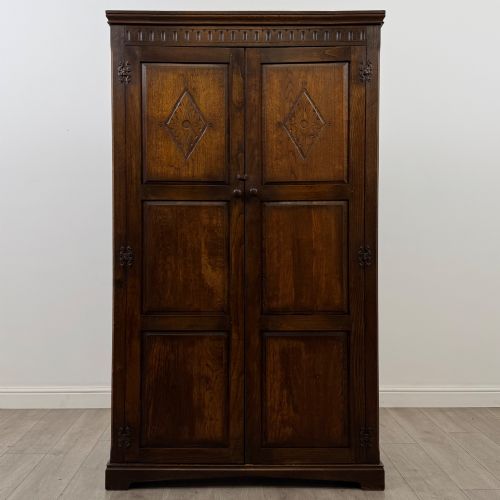
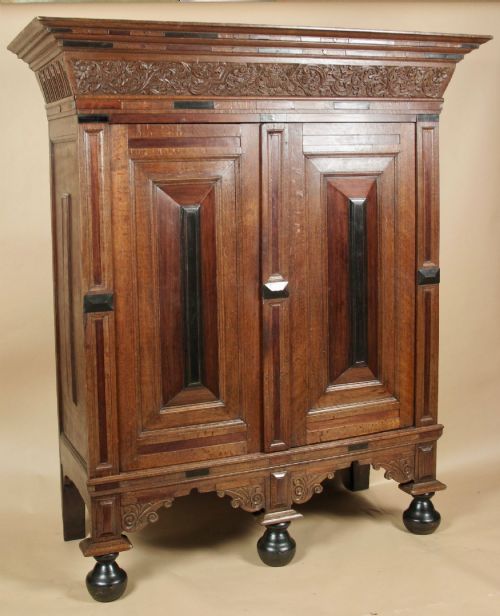

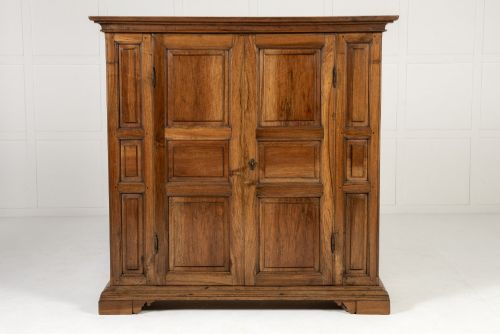
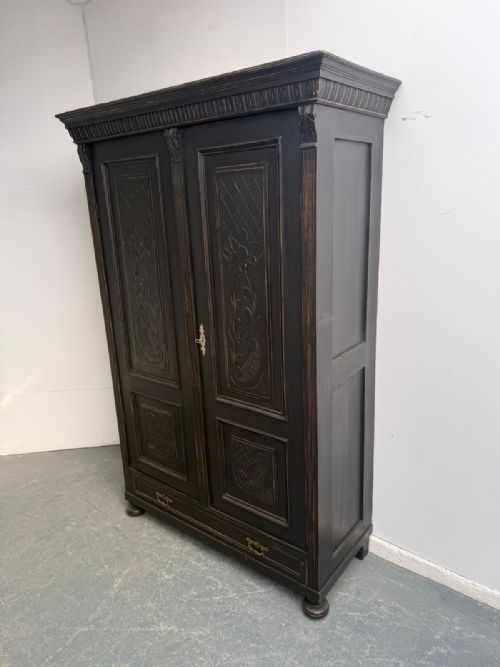

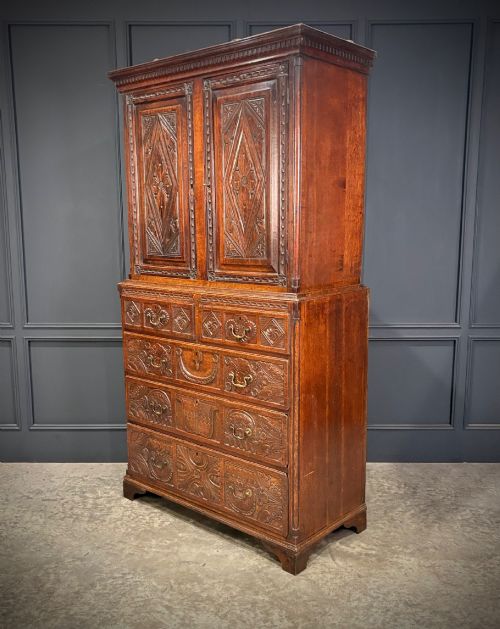
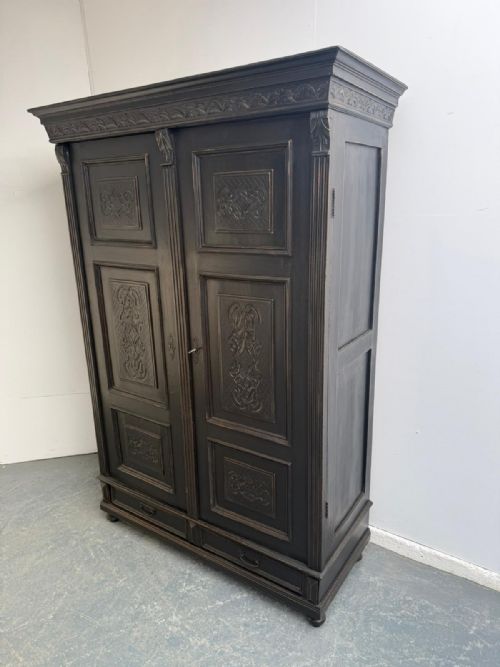

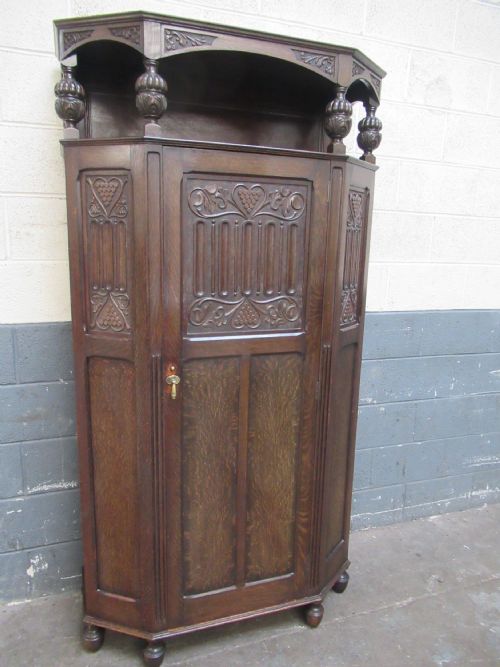
Carved Panel Wardrobe
These carved panel wardrobe examples offer generous storage wrapped in rich historic timber, bringing genuine presence to a bedroom or hall.
What They Are
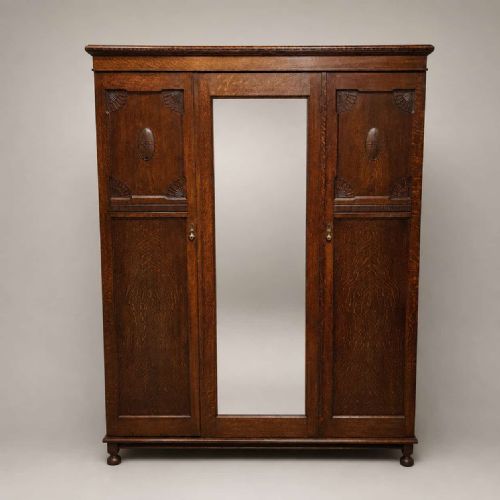
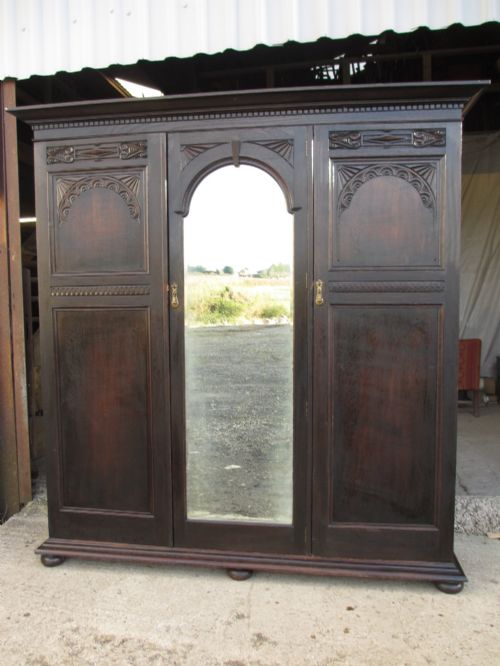
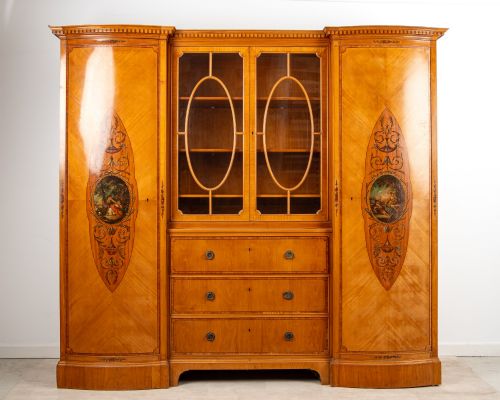
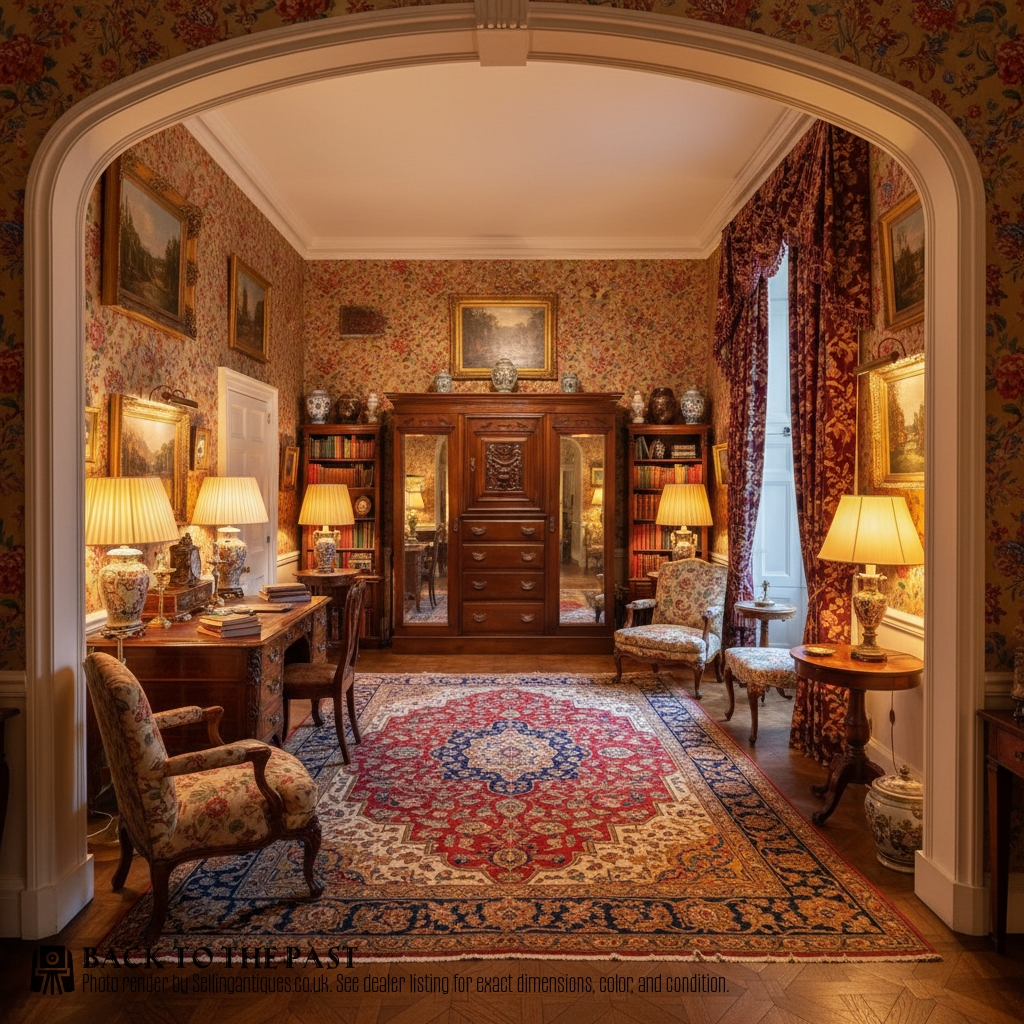
A carved panel wardrobe provides substantial clothes storage while displaying traditional woodworking skills across large wooden surfaces. These pieces appear in forms such as hall wardrobes, single piece cupboards, and grand triple door designs.
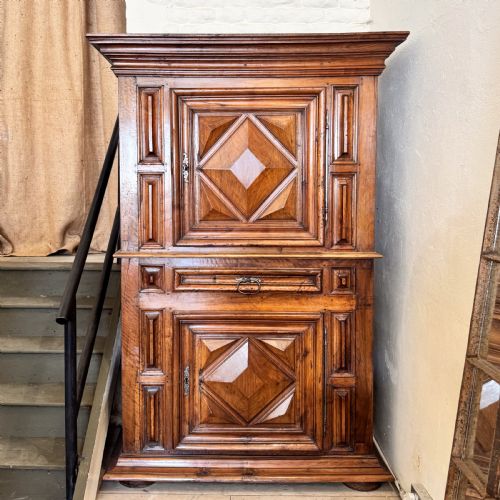
The selections span several distinct periods, with Victorian, Edwardian, and nineteen-twenties items forming the core of the available pieces. Styles range from Jacobean Revival and European Folk Art to Continental Country and Late Victorian aesthetics.
Oak dominates the material record, accompanied by walnut, mahogany, and painted pine. Buyers frequently encounter hall wardrobes alongside larger triple door configurations fitted with mirror glass and brass hardware.
How They Were Made
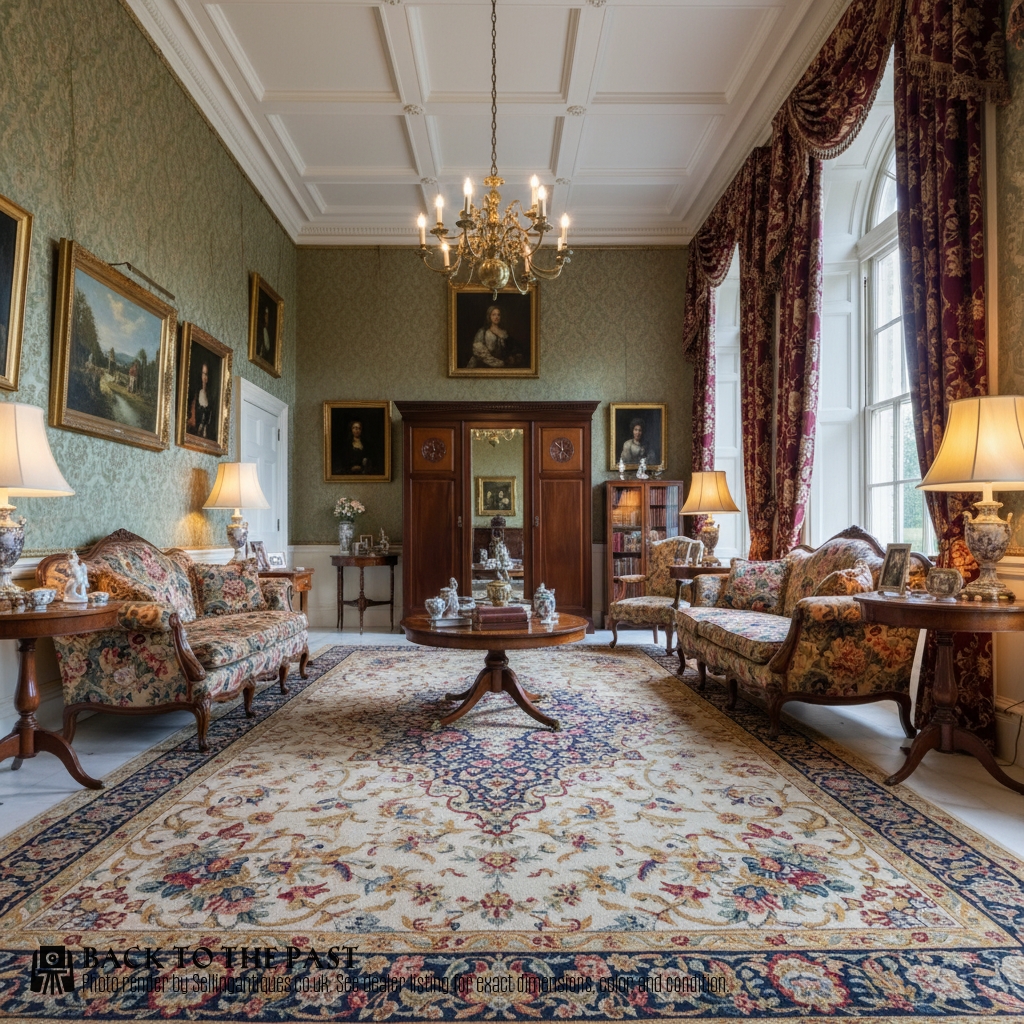
Constructed primarily from solid hardwoods like oak, walnut, and mahogany, these wardrobes utilise durable timber frames built to withstand decades of domestic use. Pine and mixed timber frameworks also appear, sometimes finished with black paint or decorative surfaces.
Panels feature hand-carved ornamentation, executed to create depth and texture across the doors and structural framing. Additional elements include fitted brass handles and large mirror glass panels set securely into wooden frames.
Retail Price Guide 2026
Typical UK retail prices for carved panel wardrobe, calculated from the Sellingantiques database of over a million retail prices indexed since 2003. This retail price guide relies exclusively on Sellingantiques data; no external sources or auction records are used, so the figures do not describe the wider market.
The listings span Victorian, Edwardian, and nineteen-twenties periods, featuring oak, walnut, mahogany, and painted pine.
What Varies in Quality
The distinction between standard examples and finer pieces rests on the depth and ambition of the carving work across the panels. Crisp, deeply incised motifs show greater hand skill than repetitive or shallow surface scoring.
Timber selection and construction weight dictate the longevity and overall character of the piece. Dense oak and figured walnut provide a substantial architectural presence that lighter pine or simpler assemblies do not match.
The Carved Panel Wardrobe Glossary
- Hall wardrobe
- A narrow wardrobe designed originally for entranceways and lobbies to hold outerwear and hats. These pieces have shallower depths than bedroom variants.
- Triple wardrobe
- A large three-section clothes press, frequently featuring central mirror doors flanked by hanging compartments. They provide maximum storage capacity.
- Jacobean revival
- A decorative style popular in later periods that copies seventeenth-century English motifs. It relies heavily on geometric mouldings and heavy oak construction.
- Burr walnut
- A prized timber veneer taken from the growth growths of walnut trees. It yields swirling, highly decorative grain patterns used on feature panels.
Frequently Asked Questions
What is a hall wardrobe?
A hall wardrobe is a compact variant built with a shallower depth than standard bedroom cupboards. It was designed to stand in entrance spaces for coats and hats.
These pieces offer useful storage in tighter domestic layouts while retaining traditional carved wooden detailing.
How do I date a wardrobe?
Dating relies on observing timber choices, hardware types, and stylistic indicators such as Jacobean Revival motifs or Edwardian lines. Structural construction methods also offer clues to the era of manufacture.
Most items span the Victorian, Edwardian, and nineteen-twenties periods, reflecting the prevailing furniture tastes of those times.
Are these wardrobes dismantling pieces?
Many larger multi-section wardrobes are designed to be taken apart for transport and installation. This engineering helped builders manoeuvre heavy timber frames up staircases and through doorways.
Checking the construction reveals whether the sides and cornices separate from the main base.
What wood is most common?
Oak is the most frequently recorded timber across these listings, appearing in both dark finishes and natural tones. Walnut and mahogany also feature prominently in grander designs.
Pine appears as a base material, sometimes paired with oak or finished with black paint in continental folk styles.