
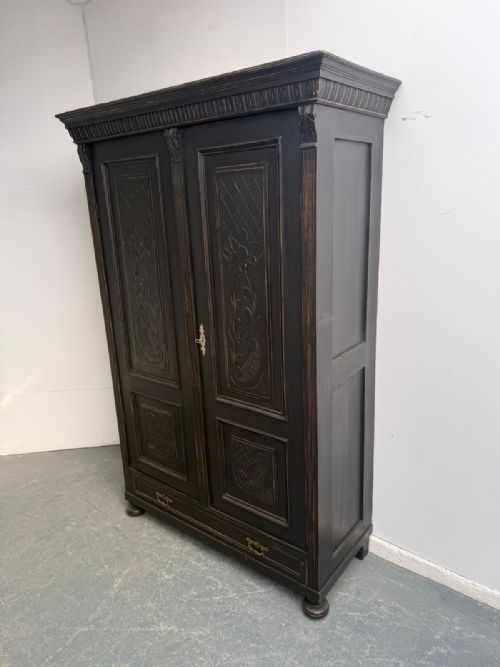


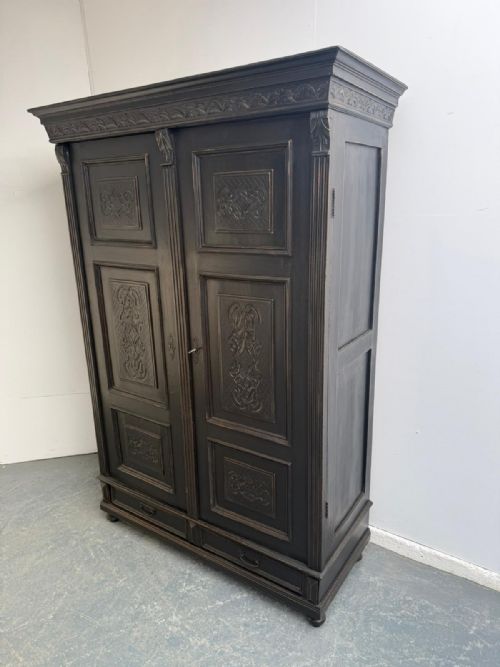


Black Wooden Cupboard
A black wooden cupboard brings deep tone and practical storage to a room, ranging from country pine to ebonised Victorian side cabinets.
Black Wooden Cupboard
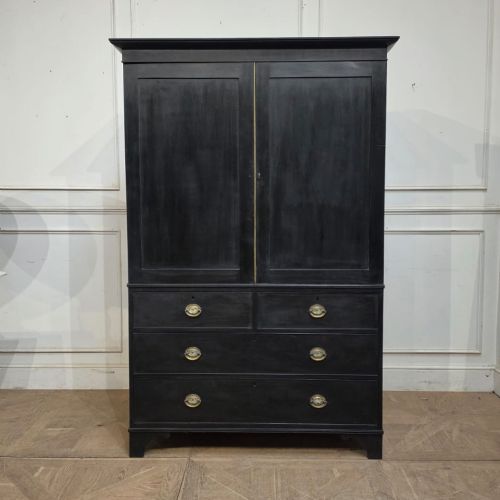
A black wooden cupboard covers a broad family of storage furniture, from eighteenth-century painted country dressers and linen presses to nineteenth-century ebonised side cabinets and step chests. When searching for a black wooden cupboard, you encounter diverse forms such as wardrobes, haberdashery shop cabinets, and tall larder cupboards spanning the Georgian, Victorian, and later periods.
The versions most common on this page lean towards nineteenth-century painted pine and oak pieces, alongside ebonised English examples and continental country furniture. They serve as functional storage units that double as strong visual anchors in an interior, utilising dark surfaces to ground a room.
How they were made
These pieces rely on traditional timber construction using woods like oak, pine, walnut, and exotic hardwoods such as ebony, often joined with pegged mortise and tenon joints in earlier periods. Surfaces are finished with black paint, ebonising, or traditional lacquer work, sometimes paired with brass or iron hardware and hinges.
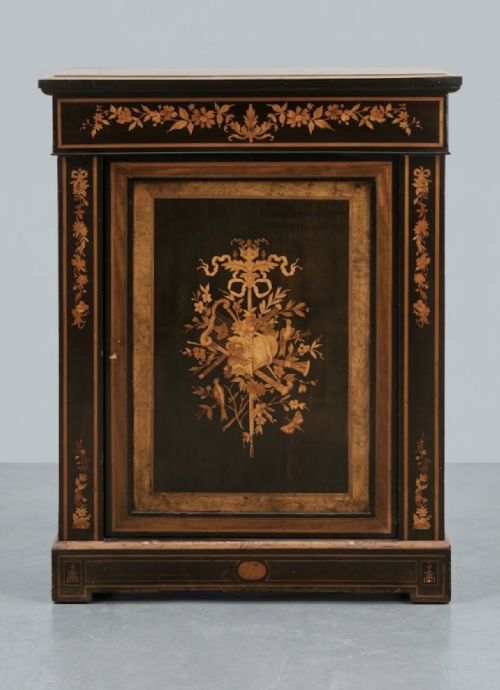
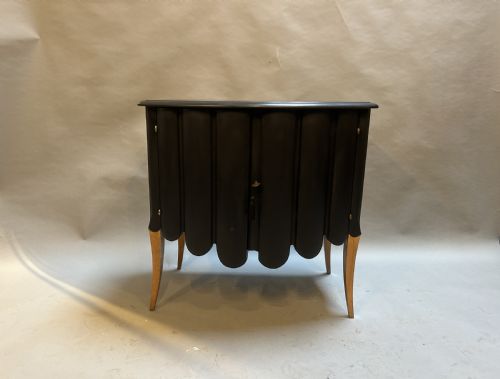
Decorative techniques include hand-painting, carving, inlay work, and japanning, reflecting regional workshops from English country to French Art Deco and Asian lacquer traditions. Structural integrity comes from solid timber carcasses, heavy drawer linings, and panelled doors built to withstand decades of daily use.
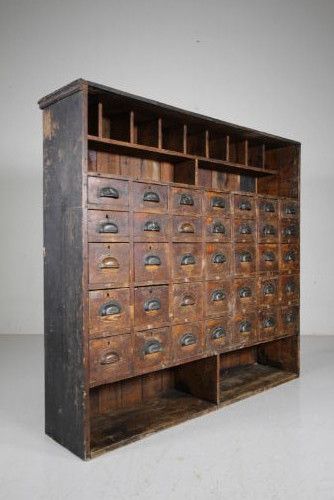
Musicians and haberdashers get their own dedicated storage here, proving that nineteenth-century artisans loved a very specific niche.
What varies in quality
Quality rests in the integrity of the original timber frame, the skill of the surface finish - whether original paint, period ebonising, or lacquer - and the retention of authentic brass or iron hardware. Pieces retaining their undisturbed original painted or lacquered surfaces command greater interest than later repainted examples.
Construction details such as hand-cut dovetail joints in drawers, panelled backs, and well-fitted doors distinguish finer workshop output from simpler utilitarian storage. The balance of proportions and subtlety of carved or inlaid details further separate standard utility cupboards from important regional or designer pieces.
Henry Ogden and Son·Melissa White
The Black Wooden Cupboard Glossary
- Ebonised
- Wood treated with stain or paint to imitate the dark, dense appearance of ebony. This finish became particularly popular during the nineteenth century for display and side cabinets.
- Japanning
- A European imitation of East London or Asian lacquer work, built up using layers of varnish and resin, often decorated with raised metallic motifs. It appears frequently on fine Regency and eighteenth-century furniture.
- Dresser base
- A low sideboard or cabinet featuring drawers and cupboards, traditionally used in kitchens or dining rooms for storing tableware. They appear in both oak and painted pine across eighteenth and nineteenth-century English and continental traditions.
- Kaidan tansu
- A traditional Japanese step chest designed for storage beneath stairs or as a freestanding staircase unit containing compartments and sliding doors. These pieces utilise sturdy joinery without nails.
- Haberdashery cabinet
- A shop display unit fitted with numerous small drawers or glass fronts, originally designed for storing ribbons, threads, and textiles. Their industrial aesthetic makes them popular for modern home storage.
Black Wooden Cupboard: Frequently Asked Questions
Where should I place a black wooden cupboard?
A black wooden cupboard works well as a grounding element in hallways, dining rooms, or living spaces, where dark tones contrast against lighter walls.
Larger wardrobe and dresser forms suit bedrooms or kitchens for substantial storage, while smaller table cabinets sit comfortably on desks or side tables.
How do I care for painted or ebonised wood?
Dust surfaces regularly with a soft, dry cloth and avoid placing wooden furniture in direct sunlight or near heat sources to prevent the timber from warping.
Keep moisture away from painted and lacquered finishes, using mild beeswax sparingly only where recommended for the specific surface type.
Are these cupboards suitable for modern homes?
These pieces integrate easily into contemporary interiors, providing practical enclosed storage that conceps clutter while adding historical character.
The neutral dark finish pairs well with minimalist decor, industrial spaces, and traditional country settings alike.
How can I tell an older painted finish from a recent one?
Original paint and ebonising show natural wear, fine craquelure, and integration with the underlying wood grain developed over generations of use.
Modern repaint jobs often lack this depth and may sit uniformly over corners and hardware without the accumulated patina of age.