

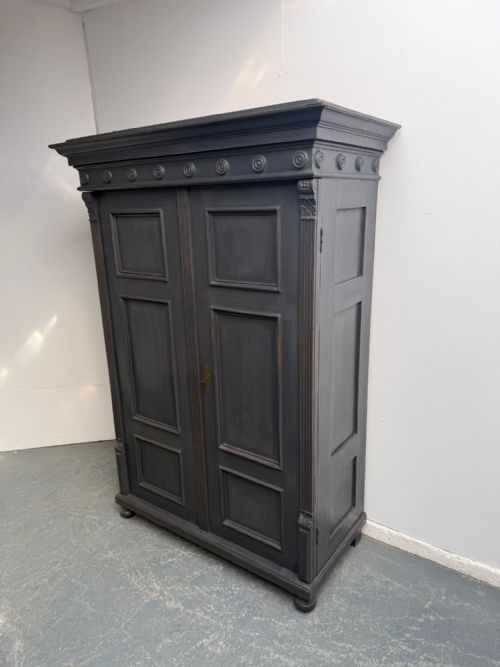


Continental Painted Armoire
A continental painted armoire brings historic regional character into a room, offering substantial storage behind decorated timber doors.
Continental Painted Armoire
A continental painted armoire is a large storage piece originating from various European regions, spanning styles from Italian provincial to Alpine folk art. These wardrobes and cupboards serve as bold focal points in a bedroom or hallway, combining practical utility with decorative surface work.
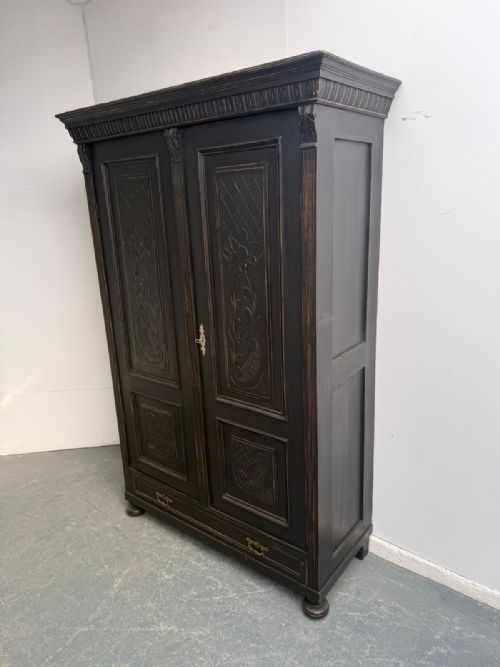
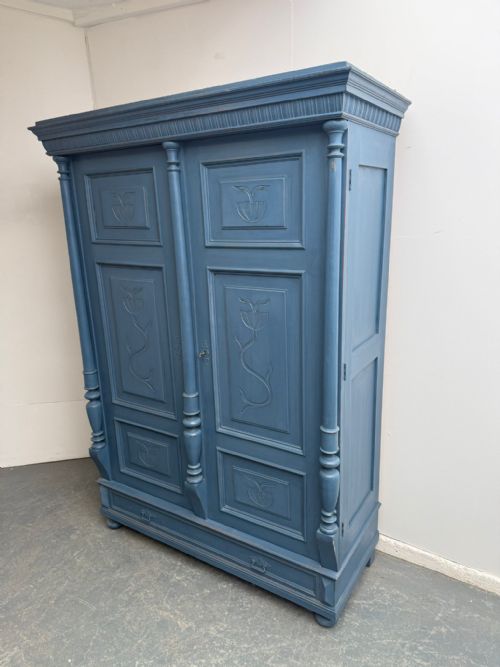
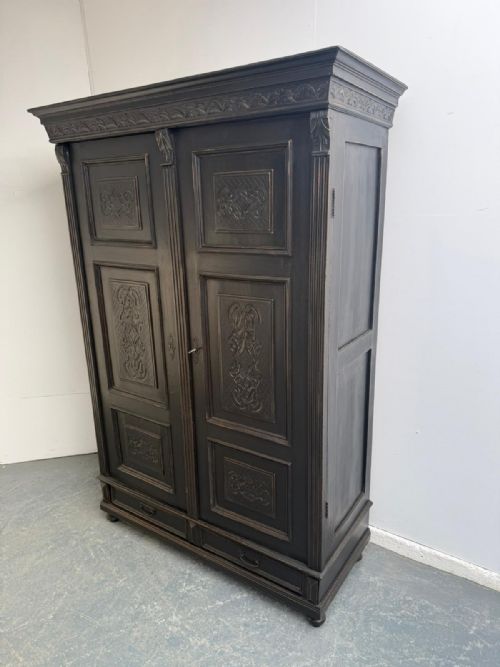
The selections available here lean heavily toward nineteenth-century examples, particularly Hungarian hall wardrobes and Italian marriage cupboards in pine and oak. Buyers will encounter both single-piece and double-door formats finished in black, blue, grey, and traditional painted schemes.
Rural workshops across Europe produced these armoires to hold garments and household textiles, often employing local softwood timbers. Their regional origins dictate the painted motifs and construction methods, distinguishing an alpine folk piece from an Italian provincial counterpart.
How they were made
Carpenters constructed these armoires primarily using solid pine and oak, relying on traditional panel-and-frame techniques to accommodate the seasonal movement of timber. Iron and metal hardware, including hinges and latches, secure the heavy doors and support the structural integrity of each cabinet.
Surfaces received a painted finish, ranging from plain functional coats to elaborate folk art designs and regional colour palettes like blue, grey, and black. Over decades and centuries, this paint layer has aged organically, acquiring distinct patination through daily use.
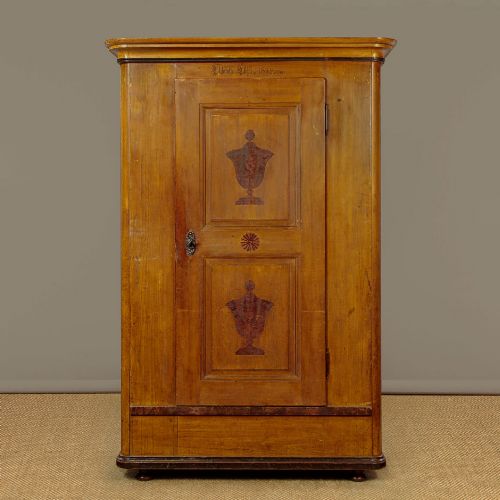
One listed Tyrolean wardrobe proudly bears the painted date of 1852, reminding us that someone marked the exact year their cupboard joined the household.
What varies in quality
The artistic merit of the painted surface largely dictates the distinction between standard utilitarian cupboards and finer examples of folk art. Original pigment layers that retain their authentic character hold greater visual appeal than later repainting efforts.
Structural honesty and the retention of original hardware, such as iron hinges and locks, separate well-preserved specimens from heavily altered pieces. The harmony of regional proportions and the crispness of any carved detailing also mark out the more accomplished cabinet work.
The Continental Painted Armoire Glossary
- Armoire
- A large freestanding cupboard or wardrobe used primarily for storing clothing. Traditional continental versions often feature deep interiors and substantial single or double doors.
- Marriage cupboard
- A specialised cabinet commissioned or gifted for a wedding, frequently decorated with specific regional motifs, dates, or initials. These Italian and European pieces hold significant symbolic value.
- Folk art
- Artistic work created within a traditional culture by self-taught or local artisans, utilising familiar regional motifs. Alpine and Hungarian examples showcase distinct local painting traditions.
- Provincial
- Describing furniture made in the regions rather than the capital, characterised by local materials and traditional vernacular designs. Italian provincial pieces often display softer, rustic interpretations of high-style furniture.
Continental Painted Armoire: Frequently Asked Questions
What is a continental painted armoire used for?
These large cabinets provide substantial hanging space and shelving for garments, linens, and household goods.
In modern interiors, they function as standalone wardrobes in bedrooms or statement storage pieces in spacious hallways.
How do I identify the regional origin?
Regional origins appear through specific paint colours, decorative motifs, and construction details characteristic of local workshops.
For instance, Tyrolean pieces and Hungarian folk items display distinct brushwork and timber choices unique to their respective areas.
Are the painted finishes original?
Surfaces span a spectrum from untouched original paint layers to later decorative coats applied over the centuries.
Examining the wear patterns, craquelure, and underlying timber helps determine the history of the painted finish.
How do I care for a painted wooden armoire?
Maintain these pieces by keeping them away from direct sunlight and steady humidity to protect the aged timber and paint.
Dust gently with a dry cloth and avoid harsh chemical cleaners that might damage the historic surface.