
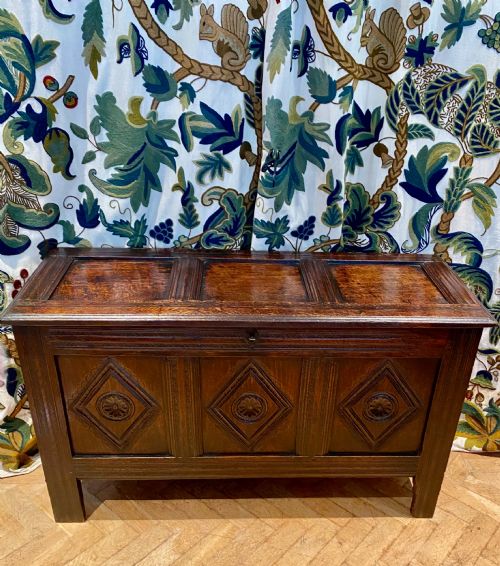
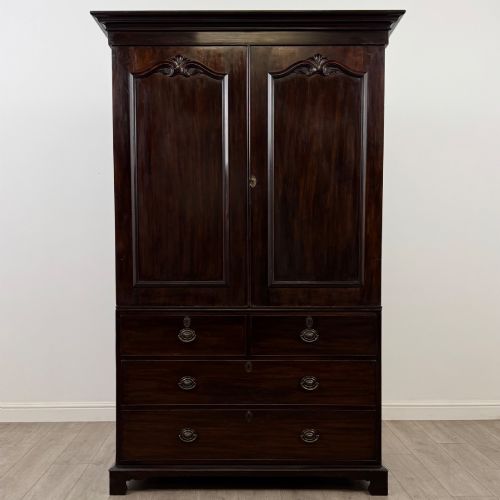
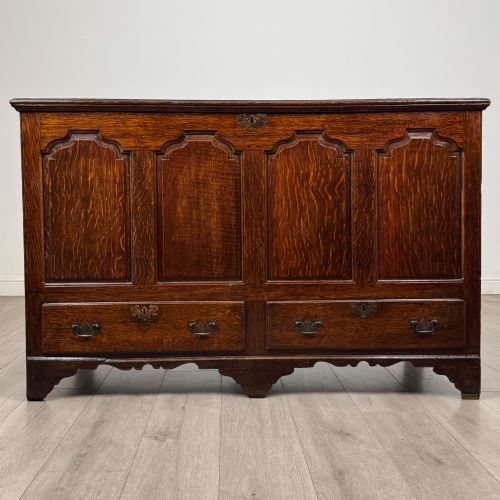
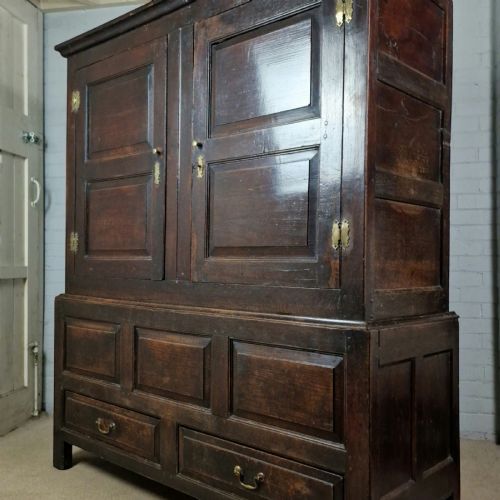
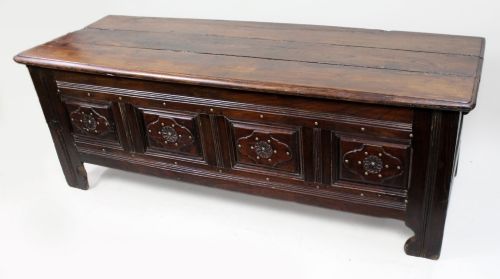
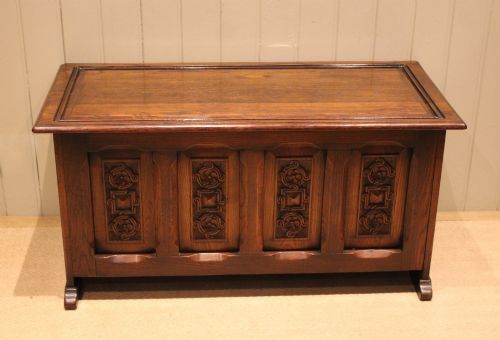
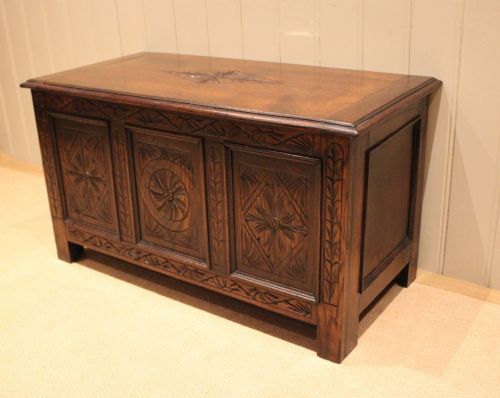
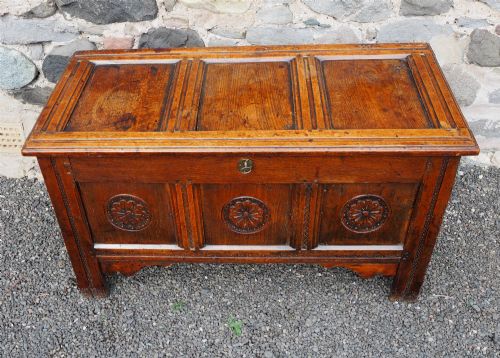


Carved Panel Storage Chest
A carved panel storage chest is a heavy wooden box built to hold household goods, offering practical space and deep historical character.
Carved Panel Storage Chest
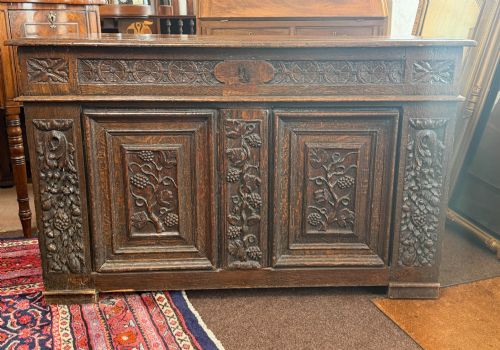
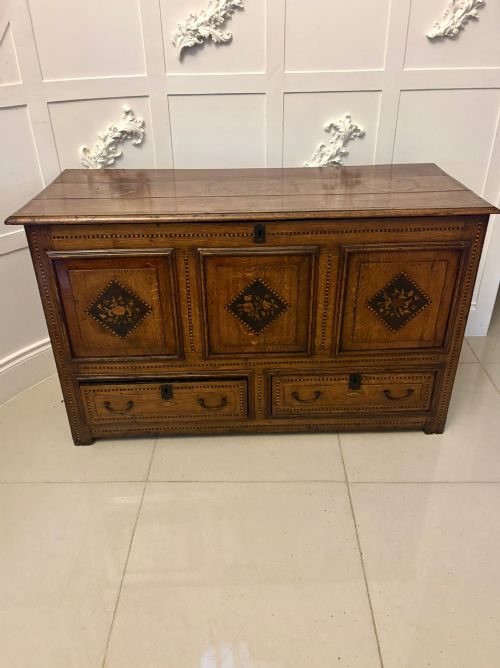
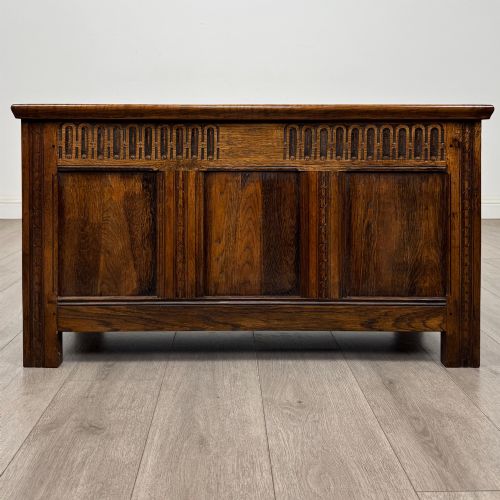
A carved panel storage chest is a utilitarian box designed for domestic storage, frequently appearing as a coffer, blanket box, or mule chest across various periods.
The pieces listed here span centuries of cabinet-making, with seventeenth-century and eighteenth-century examples standing alongside Georgian, Edwardian, and twentieth-century revivals.
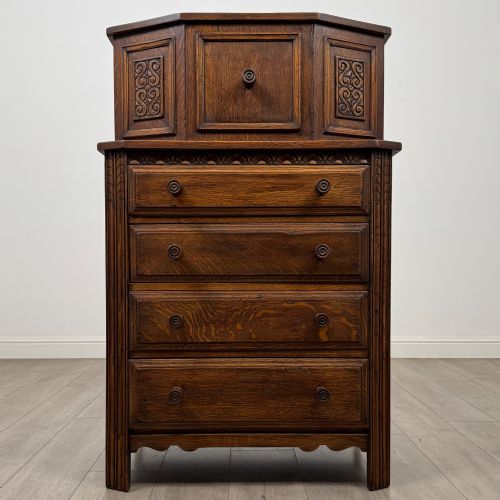
Oak forms the dominant timber across the selection, supplemented by mahogany, pine, and ebonised wood, reflecting provincial workshops and domestic traditions.
How they were made
Makers constructed these chests using solid oak framed with panels, joining joints by pegged mortise and tenon methods to handle the stresses of heavy storage.
Decoration relied on hand carving, applied mouldings, and occasional marquetry or wood inlay, paired with iron or brass hardware for hinges and locks.
Periods represented span from the Elizabethan era and seventeenth century through Georgian times to the Edwardian period and the 1930s.
What varies in quality
Quality rests upon the crispness of the hand carving, the thickness and selection of the timber, and the proportion of the assembled panels.
Early pieces display tighter joinery and more complex geometric or figural carving, whereas later revival versions show variations in mass production and finish.
The Carved Panel Storage Chest Glossary
- Coffer
- A traditional heavy storage chest with a hinged lid, used historically for valuables and textiles. These box forms form the core of the available items.
- Mule chest
- A storage chest fitted with one or more drawers at the base beneath the main compartment. This form bridges the traditional coffer and the chest of drawers.
- Marquetry inlay
- Decorative patterns formed by fitting contrasting pieces of wood veneer into the primary surface. It appears on select pieces to add visual depth.
- Panelling
- Framework construction where floating wooden panels sit within grooved stiles and rails to accommodate timber shrinkage. It defines the structure of seventeenth-century examples.
Carved Panel Storage Chest: Frequently Asked Questions
What is a carved panel storage chest?
A carved panel storage chest is a traditional lidded box utilised for holding blankets, clothes, and household goods. They range from early seventeenth-century coffers to later revival pieces.
Built primarily from solid timber, these chests combine structural joinery with surface carving to serve both practical and decorative roles in a room.
How were these chests used historically?
Historically, these chests served as secure storage for linens, documents, and valuable possessions before built-in closets became common. Their flat lids also allowed them to function as tables or window seats.
In domestic settings, they travelled easily and sat at the foot of beds or along hallways for daily household utility.
How do I tell early periods apart?
Early periods like the seventeenth century show pegged frame-and-panel construction with deep hand-carved geometric or floral motifs. Later revival pieces from the twentieth century often display lighter timber tones and machine-cut elements.
Examining the underside, hinges, and interior construction helps distinguish authentic early workmanship from later interpretations.
How do I live with an antique chest?
An antique chest works well as a blanket box at the end of a bed, a coffee table in a living room, or an entryway storage bench. Their robust timber construction handles daily interaction comfortably.
Keep them away from direct heat sources and dramatic humidity shifts to protect the antique wood and traditional joints.