

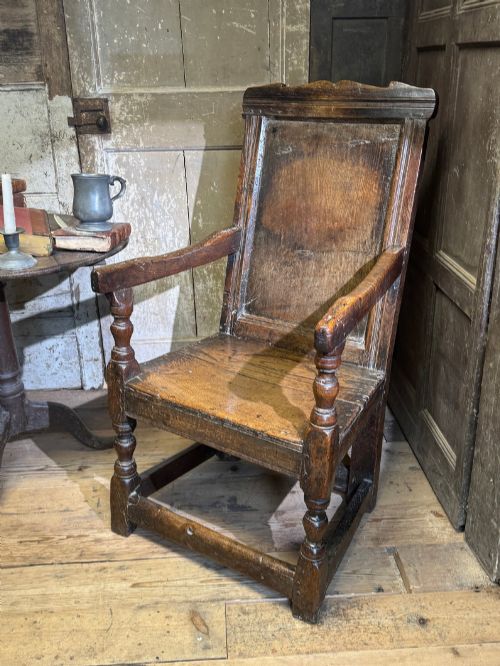


Carved Panel Open Armchair
A carved panel open armchair brings solid timber construction and centuries of craftsmanship directly into a room.
Carved Panel Open Armchair
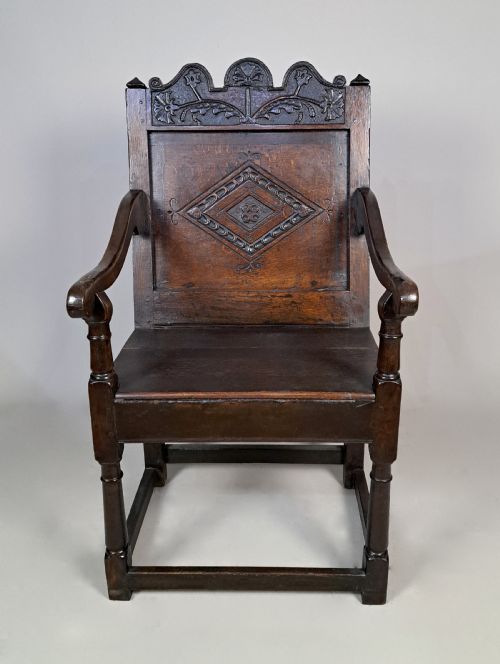
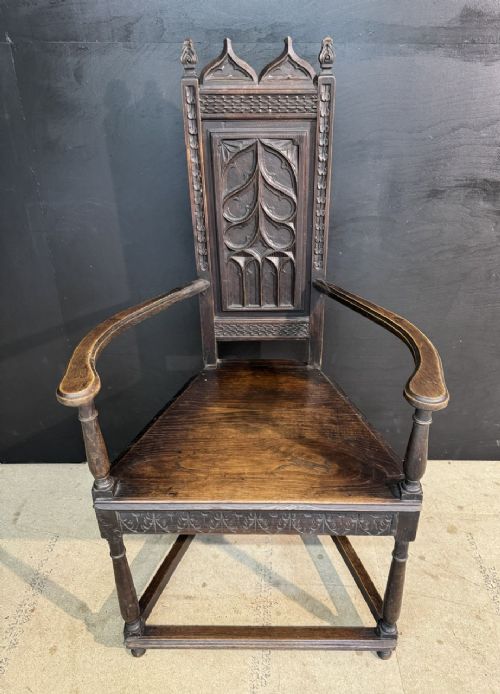
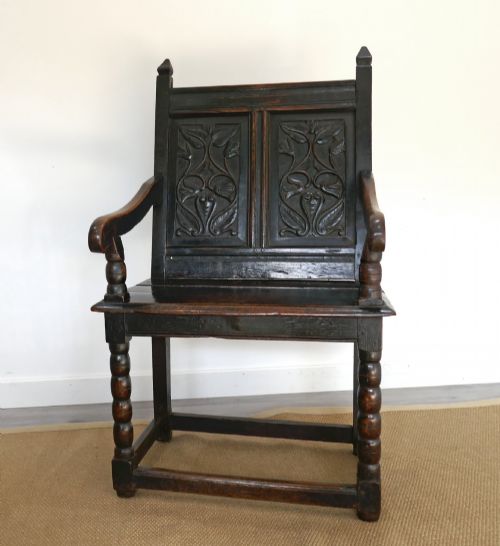
A carved panel open armchair is primarily represented here by sturdy oak wainscot chairs dating from the seventeenth century onward. These heavy timber seats feature solid panelled backs and open arms designed for domestic utility and status.
The selections span significant historical periods including seventeenth century Jacobean designs, eighteenth century regional variants, and later nineteenth century revivals. Examples range from Yorkshire and Lancashire origins to Welsh and Scottish pieces.
Alongside heavy timber wainscot forms, buyers encounter French open armchairs featuring painted finishes and wool needlepoint or tapestry panels. These lighter continental styles introduce softer textiles alongside the rigid wooden framework.
Materials and construction methods
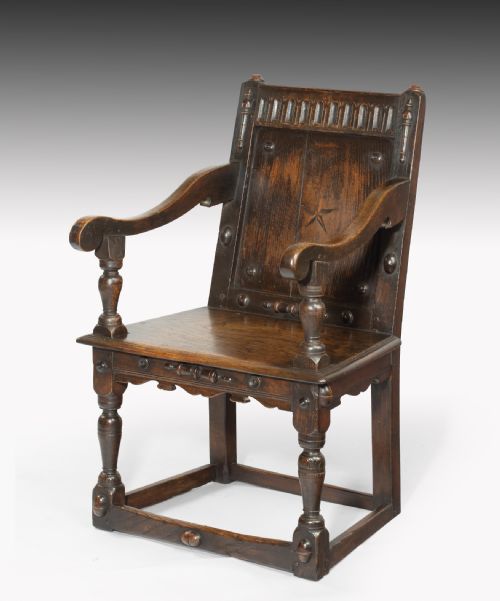
Oak serves as the primary material for the substantial wainscot pieces, complemented by walnut, brass fittings, and occasional wood inlay. Artisans shaped these dense timbers using traditional joinery methods to build rigid, durable frames.
Upholstered elements utilise wool needlepoint and tapestry panels, secured to French open armchairs alongside painted wooden surfaces. These textile panels introduce detailed needlework that contrasts with the carved structural woodwork.
Distinguishing quality in timber and carving
Quality rests in the crispness of the carved panel work and the depth of the natural timber colour achieved over centuries. Superior examples display sharp relief carving on the solid backrest and robust arm construction without excessive replacement timber.
The integration of secondary materials, such as intricate wood inlay or well-preserved wool needlepoint panels, separates standard regional pieces from finer master armchairs. Proportions also matter, with smaller child sizes and well-balanced proportions commanding particular attention.
The Carved Panel Open Armchair Glossary
- Wainscot chair
- A heavy wooden armchair characterised by a panelled wooden back and solid seat construction. These pieces typically date from the seventeenth century and were built using sturdy oak.
- Needlepoint
- A type of canvas work embroidery utilising wool yarn to create pictorial or geometric patterns. It appears frequently on the upholstered panels of French open armchairs.
- Jacobean
- A style associated with the early seventeenth century reign of James I, marked by heavy proportions and geometric or strapwork carving. Pieces from this era often show distinct regional English characteristics.
- Tapestry
- A form of heavy textile art woven on a loom, used for decorative wall hangings and upholstery panels. Surviving examples on these chairs add texture and colour to the wooden frames.
- Bobbin
- A turned furniture leg or stretcher shaped to resemble spools of thread. This decorative turning style appears on seventeenth and eighteenth century chair legs.
Carved Panel Open Armchair: Frequently Asked Questions
What is a wainscot armchair?
A wainscot armchair is a heavy wooden seat built with a panelled back and open arms, originating when solid timber furniture denoted status. These chairs rely on thick boards rather than upholstered padding for their back support.
Most surviving examples date from the seventeenth century and are constructed from sturdy oak with carved regional details. They served as primary seating in substantial homes before lighter upholstered furniture became common.
How do I date an oak armchair?
Dating relies on examining the joinery methods, tool marks, and wood patination visible across the frame. Seventeenth century pieces often display pegged mortise and tenon joints alongside chip carved or panelled backs.
Later nineteenth century revival pieces replicate these early styles but typically feature different wood seasoning and machine assistance. Comparing the timber colour and wear patterns helps distinguish genuine period construction from later interpretations.
Where were these chairs made?
The oak wainscot pieces originate from various British regions, with specific examples attributed to Yorkshire, Lancashire, Cheshire, Wales, and Scotland. Each region developed subtle variations in carving motifs and overall proportions.
In contrast, the lighter open armchairs with painted finishes and tapestry panels point to French origins. These continental pieces reflect eighteenth and nineteenth century Parisian seating traditions.
How should I care for antique oak?
Antique oak benefits from stable indoor humidity levels and protection from direct sunlight to prevent the timber from drying out or splitting. Applying traditional wax polish occasionally helps nourish the surface and preserve the historic colour.
Avoid using modern liquid cleaners or silicone sprays, which can penetrate open wood pores and alter the natural patina. Gentle dusting with a soft, dry cloth is sufficient for routine maintenance.