
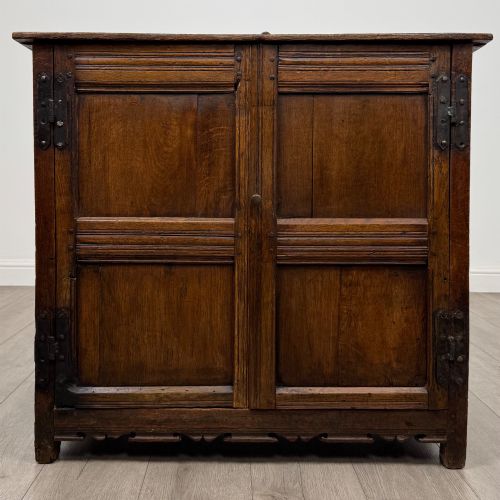
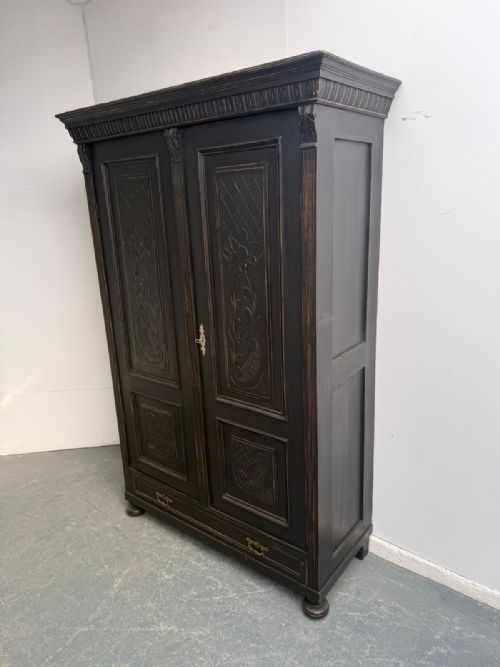

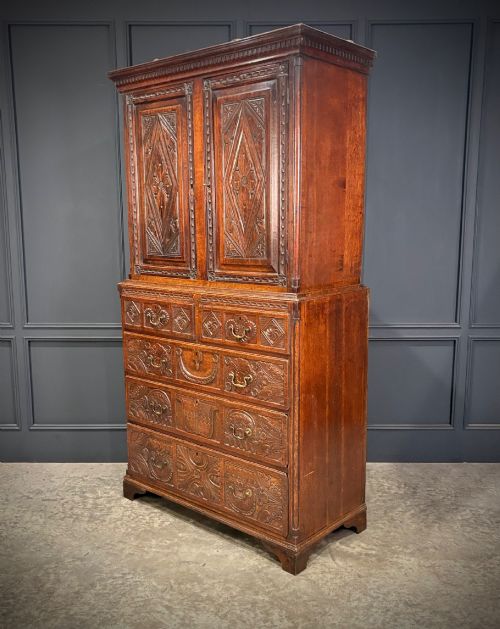
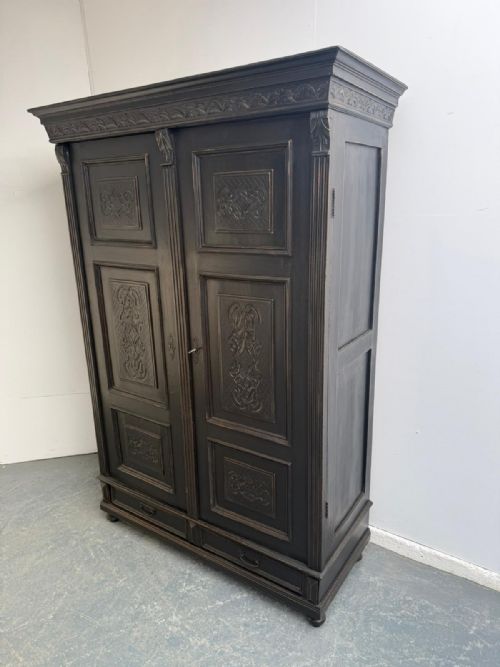
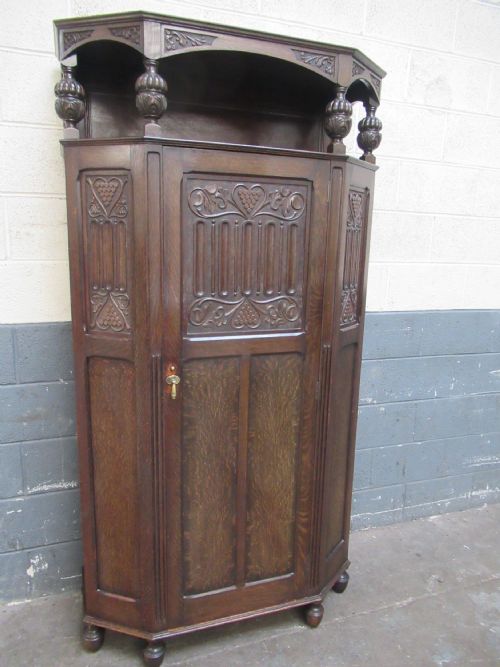


Carved Panel Oak Armoire
A carved panel oak armoire brings substantial storage and deep timber texture into a room, making it a foundational piece for traditional and country interiors.
Carved Panel Oak Armoire
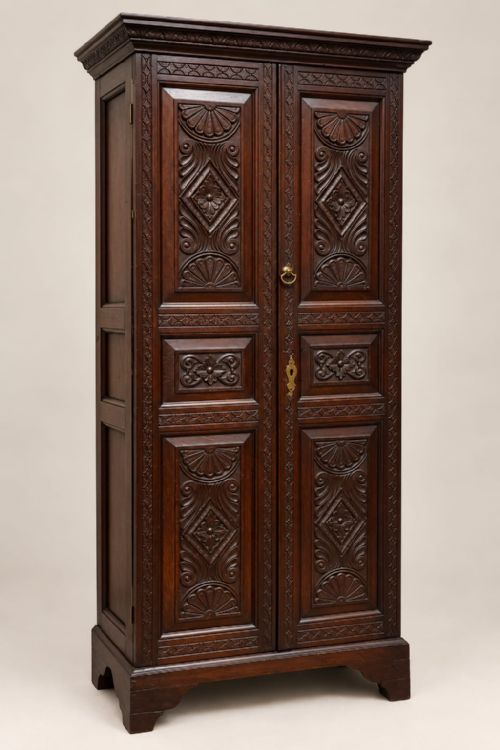
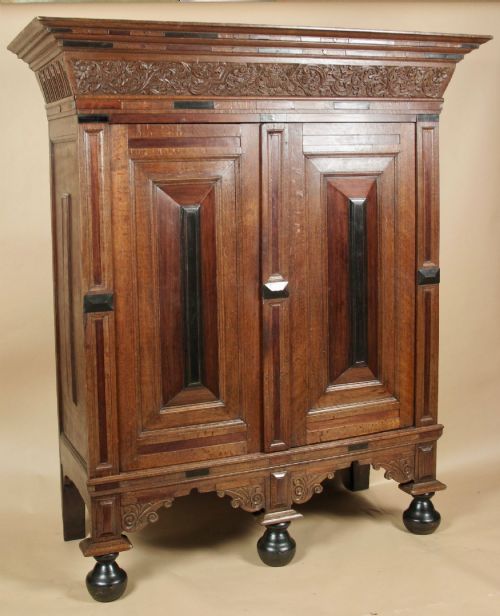
A carved panel oak armoire encompasses large storage furniture built primarily from oak, spanning utility forms like wardrobes, linen presses, press cupboards and court cupboards. When searching for a carved panel oak armoire, buyers encounter pieces originating from the seventeenth century through to the early twentieth century, including Georgian and Edwardian examples as well as continental forms such as Dutch Kasten.
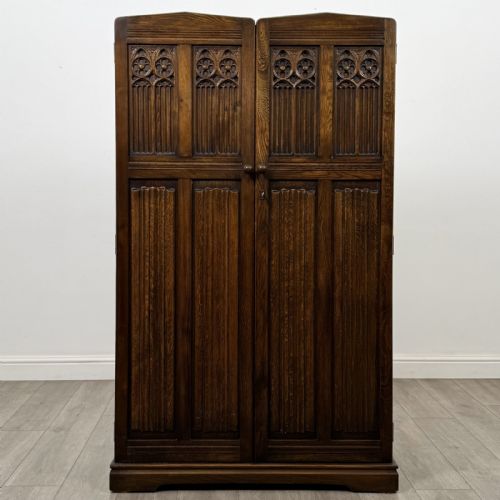
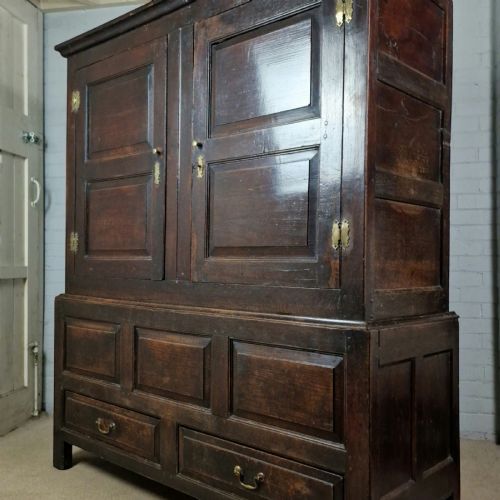
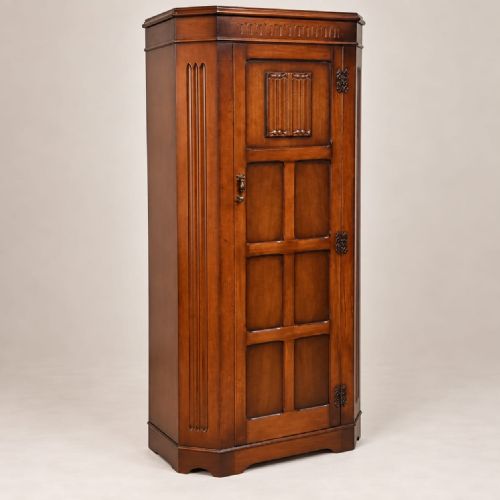
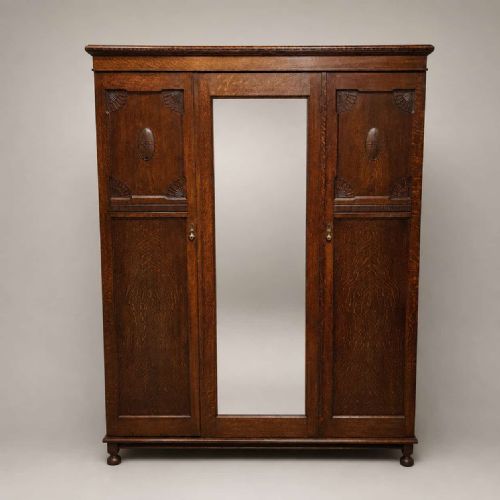
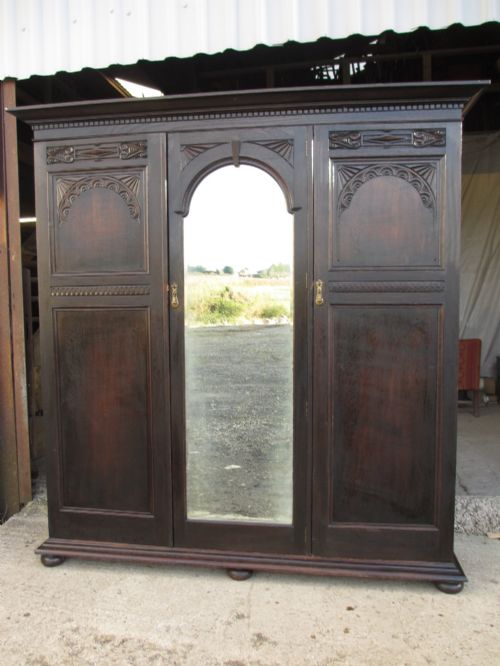
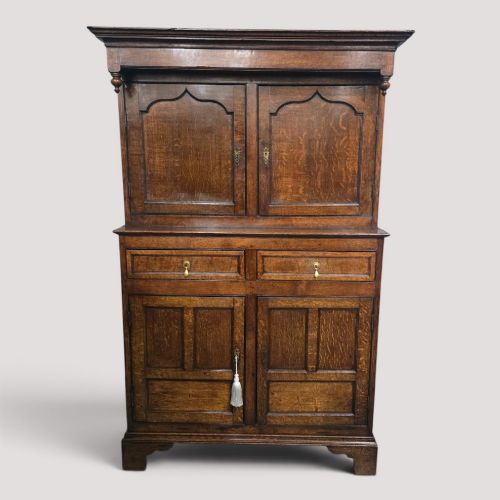
The selection on this page demonstrates significant variety in domestic storage furniture, ranging from heavy seventeenth-century Dutch and Flemish designs with rosewood and ebony accents to sturdy Welsh and English country cupboards. Wardrobes and hall wardrobes from the nineteen-twenties sit alongside eighteenth-century housekeeper cupboards, showing how domestic storage evolved over centuries.
Makers and regional workshops utilised local timber and traditional joinery to produce substantial carcasses fitted with panelled doors. Buyers will find pieces featuring deep relief carving, mirrored doors, and fitted interior shelving or hanging space suited to modern homes.
How they were made
Construction relies heavily on solid oak timbers, frequently combined with secondary woods such as pine in internal or lesser-seen sections. Seventeenth-century examples incorporate contrasting details in rosewood and ebony, while metal elements like brass and iron provide structural reinforcement and functional hardware.
Panel construction utilises traditional frame-and-panel techniques to accommodate seasonal wood movement. Carving is executed directly into the solid oak, ranging from geometric strapwork to elaborate floral and figural relief, finished with hand-planed surfaces and traditional wax or polish.
Listings feature oak storage pieces spanning the seventeenth century to the nineteen-twenties, incorporating brass, iron, ebony, and rosewood.
What varies in quality
Quality separates through the depth and crispness of the timber carving and the architectural proportion of the overall carcass. Superior pieces display harmonious proportions, dense grain patination, and intricate detailing without appearing cluttered or disproportionate.
The integrity of the original construction, including the survival of period brass or iron hardware and the condition of the heavy panelled doors, dictates the standing of an individual piece. Finer examples retain their original internal fittings and timber depth, reflecting the skill of the regional workshop or period maker.
The Carved Panel Oak Armoire Glossary
- Kast
- A large, architectural cupboard or wardrobe of Dutch or Flemish origin, often featuring substantial cornices and panelled doors. These pieces frequently incorporate rich timbers and geometric mouldings.
- Court Cupboard
- An early form of dining room or hall storage comprising stacked compartments, often supported on turned posts. They display characteristic strapwork carving and panelled construction.
- Linen Press
- A tall piece of furniture featuring upper cupboard doors enclosing sliding trays for textiles, positioned above a base of lower drawers. They provide structured storage for household linens.
- Housekeeper Cupboard
- A utilitarian dual-purpose storage unit traditionally used in large country houses for provisions and linens. They typically combine generous cupboard space with lower drawer arrangements.
- Strapwork
- A decorative carving motif resembling interlaced leather bands or ribbons, popular in seventeenth-century English and continental joinery. It adds linear texture to friezes and door panels.
Carved Panel Oak Armoire: Frequently Asked Questions
How do I date an oak armoire?
Dating relies on examining the construction methods, handle hardware, and regional carving styles visible across the piece. Earlier examples from the seventeenth century show hand-riven timbers and pegged joints, whereas Edwardian and later pieces use machine-sawn components and standard hinges.
Secondary woods and backboards also offer clues, as pine and deal became more common in interior framing during the nineteenth and twentieth centuries. Comparing the panel thickness and mouldings to documented regional pieces helps narrow down the decade of manufacture.
Will a large oak cupboard fit in a modern room?
These substantial storage pieces require careful measurement of ceiling height and doorway clearance prior to purchase. Many historic cupboards and wardrobes were designed to be dismantled or built in modular sections specifically to ease transport through tight spaces.
Checking whether the carcass separates into a cornice, middle section, and base ensures successful installation. Consulting the listed dimensions against your available floor space prevents placement issues.
How should I care for antique oak furniture?
Maintaining solid oak involves keeping the timber away from direct heat sources and sudden humidity fluctuations to prevent splitting. Regular dusting with a soft cloth and occasional application of traditional beeswax preserves the natural lustre of the grain.
Avoid silicone-based polishes, as they build up over time and dull the historic patination. Gentle cleaning allows the aged surface character to mature gracefully.
What is the difference between a press cupboard and a wardrobe?
A press cupboard traditionally houses sliding trays or shelves behind its upper doors for folded garments and linens. In contrast, a wardrobe is designed primarily with vertical hanging space for garments on hangers.
Over time, terminology blurred as regional makers adapted older forms to meet changing domestic fashions. Inspecting the interior layout clarifies the original intended domestic use of the piece.