

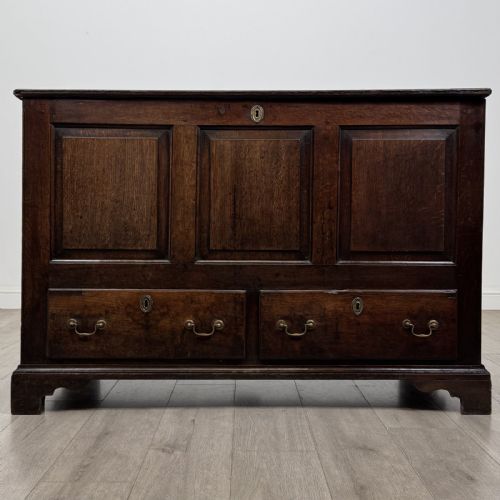
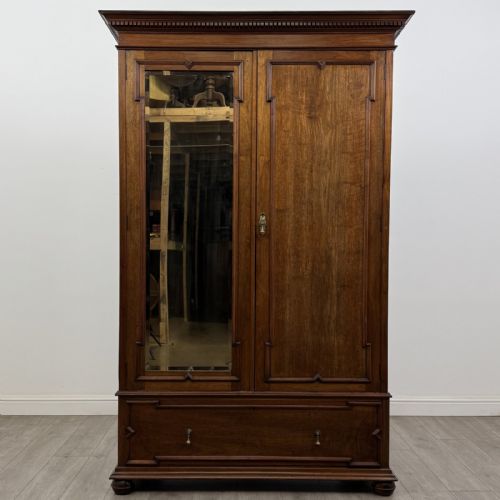
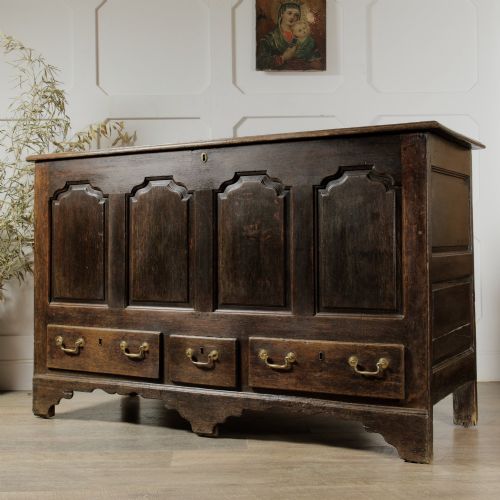
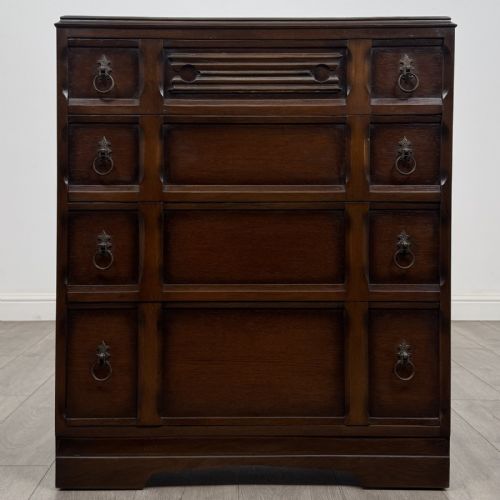
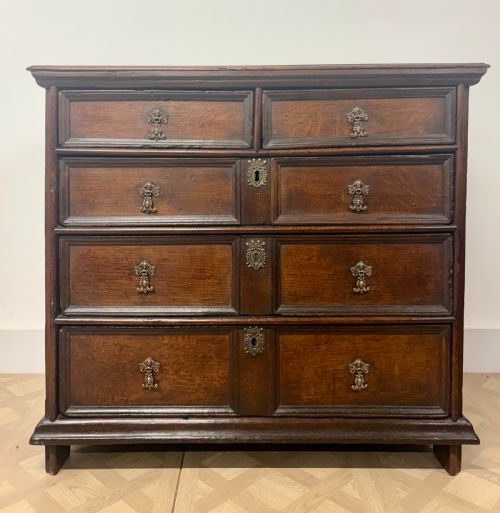
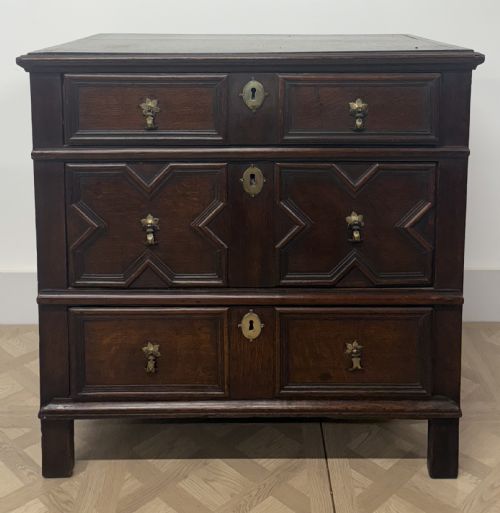
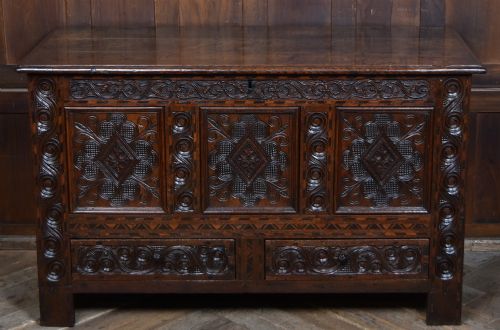
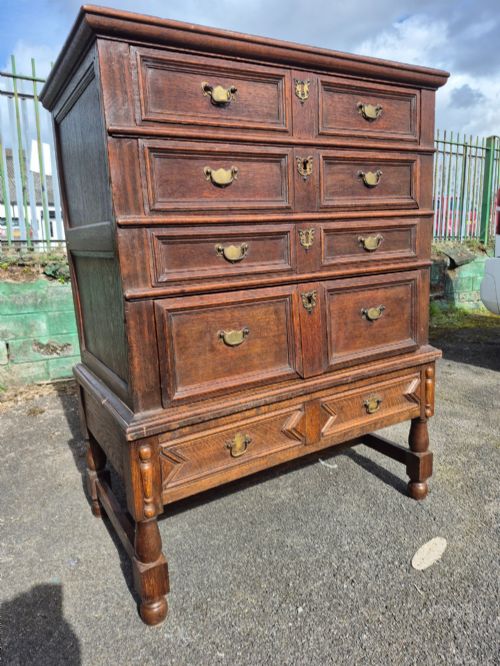
Carved Panel Drawers
Carved panel drawers bring sturdy seventeenth-century timber and deep relief work straight into everyday rooms.
Carved Panel Drawers
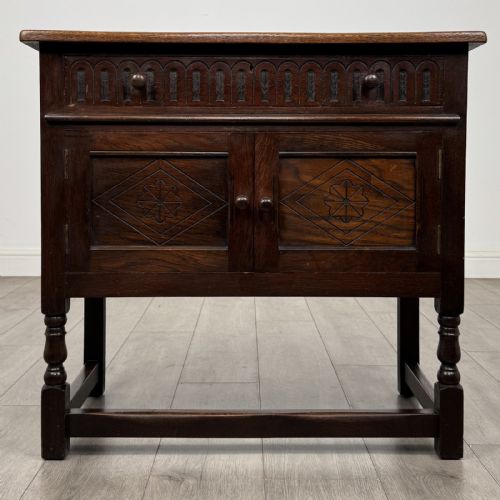
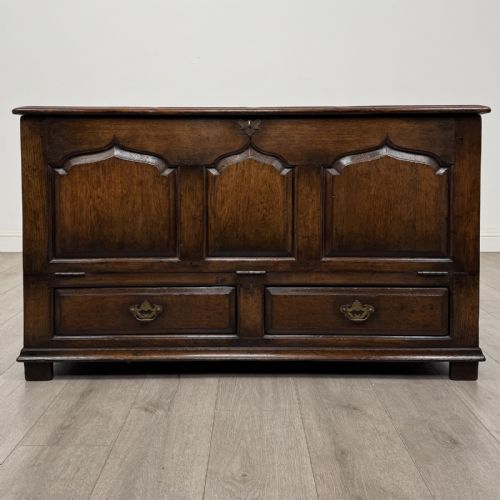
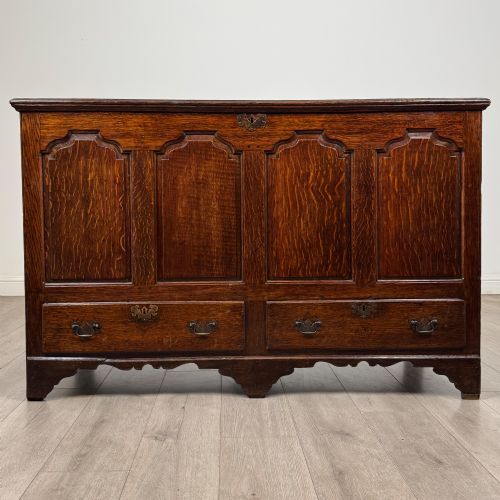
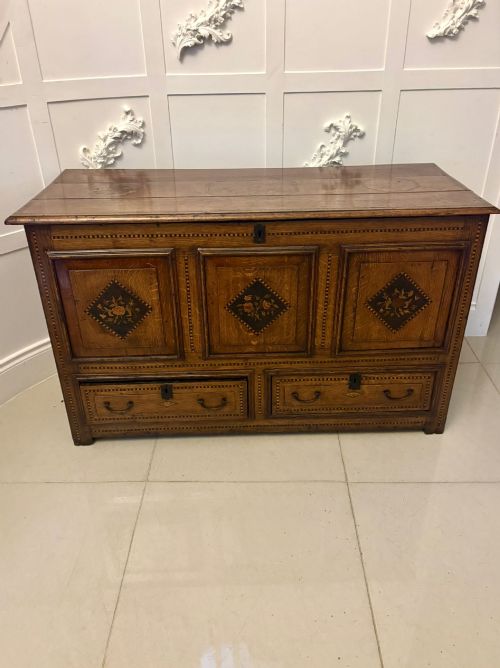
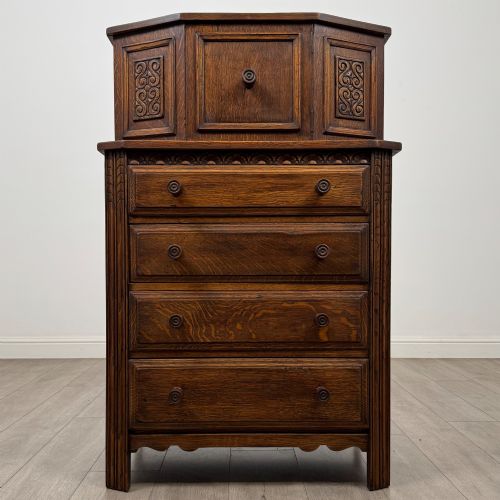
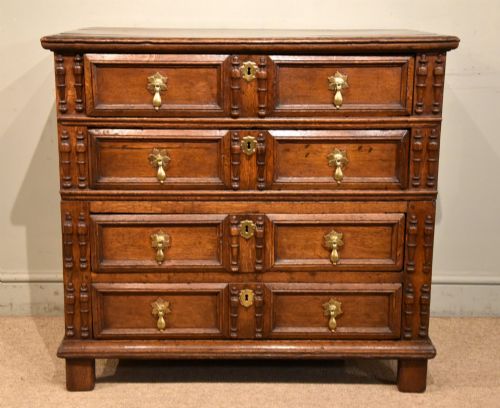
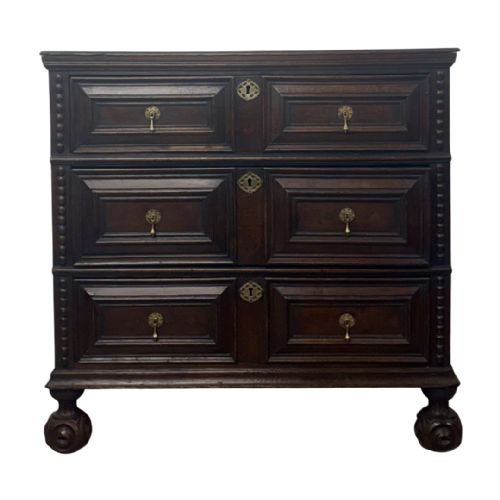
These items bring together practical storage forms such as mule chests, sideboards, chests of drawers, and cupboards built from timber. The search phrase carved panel drawers points directly to furniture featuring articulated wooden drawer fronts and storage compartments adorned with hand-carved ornamentation.
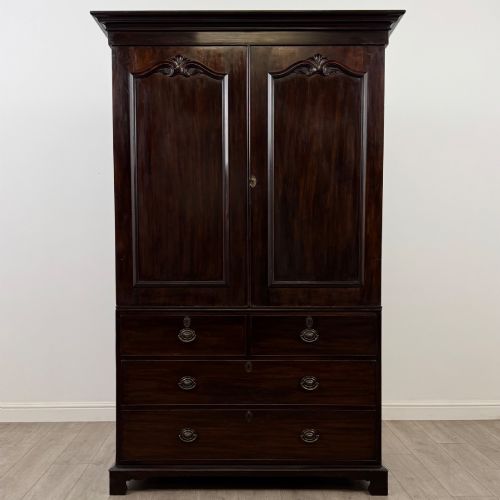
Most examples appearing here span from the seventeenth century through to the early twentieth century, taking in Jacobean, Georgian, and Edwardian periods. Pieces range from mule chests and low dressers to linen presses and bedside cabinets.
Oak dominates the selection, joined by walnut, mahogany, and ash alongside brass and iron hardware. Common stylistic threads include geometric mouldings, marquetry inlay, and panel construction handed down through generations of cabinet makers.
Materials and construction methods
Makers relied primarily on solid English oak, shaping panels with hand tools and securing them within sturdy frames using traditional joinery. Burr elm panels and walnut surfaces also appear, offering varied grain patterns across drawer fronts and lids.
Carving was executed directly into the solid timber using gouges and chisels to produce geometric patterns, foliage, and strapwork. Iron and brass handles, drop pulls, and hinges completed the construction, fastening functional doors and drawers to heavy carcases.
Carved Panel Drawers Retail Price Guide 2026
Typical asking prices for carved panel drawers among the pieces listed under this phrase on Sellingantiques today, from the lower quarter to the upper quarter. They describe what is for sale here now, not the wider market.
Some mule chests secretly doubled as early suitcases for travelling household staff, earning the nickname mule because they carried the load.
Factors defining quality
The depth and crispness of the chisel work set finer examples apart from simpler utilitarian pieces. Crisp relief carving that retains sharp edges points to skilled hand execution rather than hurried production.
The integrity of the timber and the retention of original brass hardware or iron mounts influence the character of each piece. Superior items display harmonious grain matching across panels and drawers without excessive timber replacement over time.
The Carved Panel Drawers Glossary
- Mule chest
- A storage chest featuring one or more drawers at the base beneath a hinged lid compartment. This hybrid form bridges the traditional coffer and the chest of drawers.
- Coffer
- A heavy wooden storage box used for household goods and valuables before fitted closets became common. These often feature hinged lids and elaborate front panels.
- Marquetry
- The art of applying decorative veneer pieces in wood to form intricate patterns and pictures on furniture surfaces. It appears on select seventeenth-century panels.
- Geometric moulding
- Raised wooden strips applied to drawer fronts and door panels in symmetrical patterns. This technique defined late seventeenth-century ornamentation.
- Linen press
- A tall piece of furniture designed for storing textiles, combining sliding trays or shelves behind upper doors with lower storage drawers.
Carved Panel Drawers: Frequently Asked Questions
How do I date a carved oak chest?
Examine the construction joints, timber selection, and style of the carved panels on the front and sides. Seventeenth-century items often display hand-split oak boards and pegged mortise and tenon joints.
Later revivals from the Edwardian period or the 1920s mimic these older styles but utilise modern machine-cut timber and standardised fixings. Look closely at the tool marks and the wear patterns around the drawer pulls for clues to genuine age.
What is the difference between a coffer and a mule chest?
A coffer is a simple storage trunk with a single compartment accessed exclusively through a hinged lid on top. This traditional form was used for centuries to store blankets, garments, and valuables.
A mule chest adds one or more pull-out drawers beneath the main storage compartment. This development allowed users to reach stored items without lifting the heavy lid or removing objects stacked on top.
How should I care for antique oak furniture?
Keep wooden furniture away from direct sunlight and sudden temperature shifts from central heating or radiators. Excessive heat causes timber to dry out and split along the grain.
Apply a traditional beeswax polish sparingly to nourish the dry wood and maintain the natural lustre of the surface. Avoid modern silicone sprays that build up and attract dust over time.
Where were these pieces originally made?
The majority of the seventeenth and eighteenth-century items originate from English workshops utilising local timber stocks. Regional cabinet makers built these sturdy pieces for domestic use in farmhouses, manors, and town dwellings.
Later nineteenth and twentieth-century examples also include continental European pieces, such as French bedside tables and Spanish console furniture. Each region contributed distinct regional motifs and timber choices to the construction.