
Carved Painted Armchairs
These carved painted armchairs bring character to a room through regional finishes and period forms.
Carved Painted Armchairs
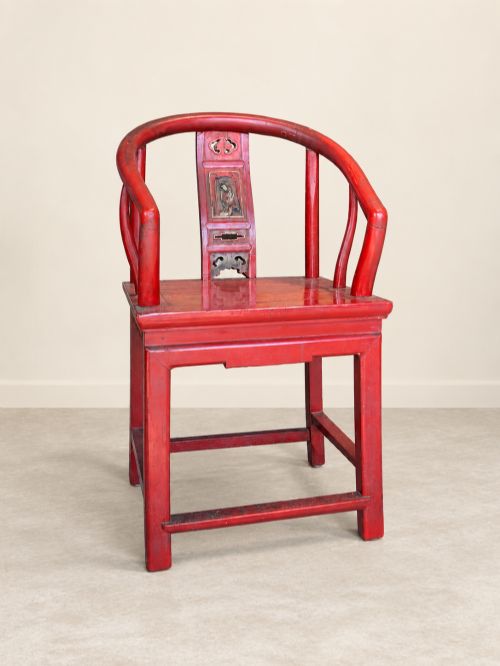
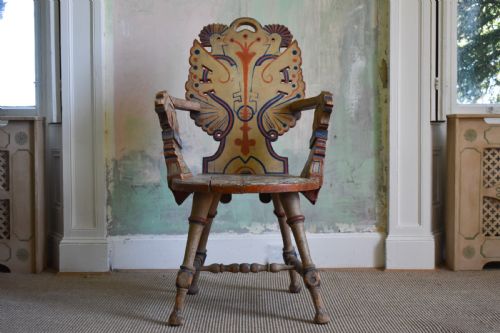
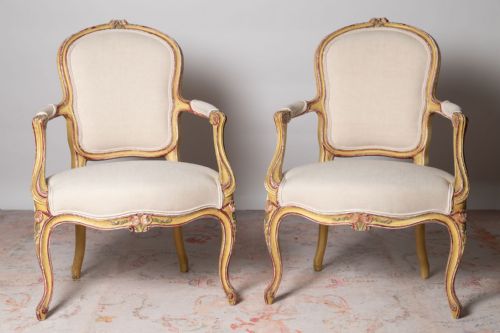
When you search for carved painted armchairs, you encounter seating built across several centuries, with French regional styles and Louis designs appearing frequently among the listings. These pieces combine exposed timber frameworks with decorative paintwork, ranging from formal salon seating to folk art forms.
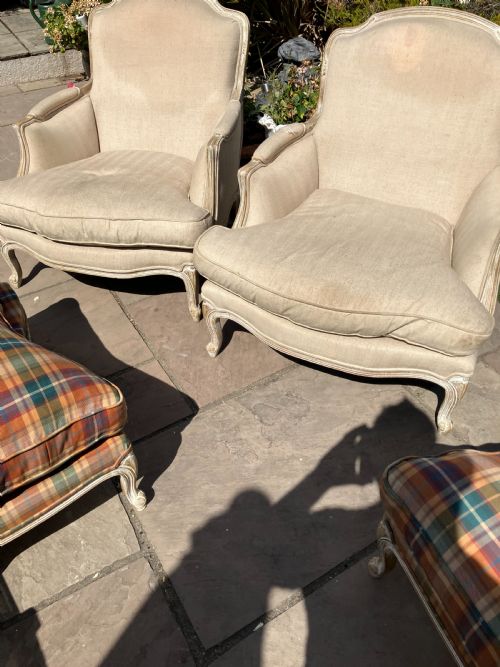
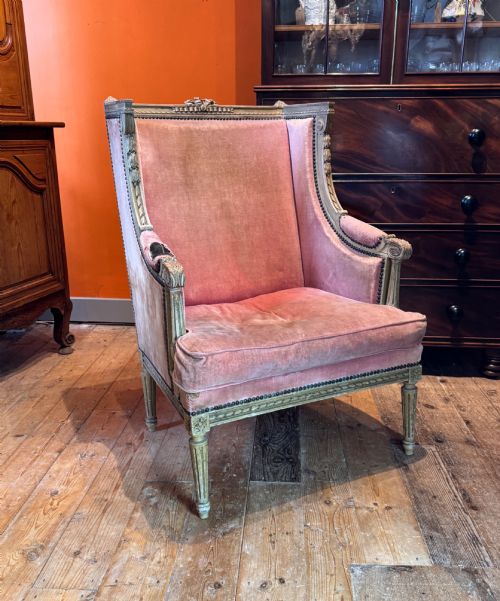
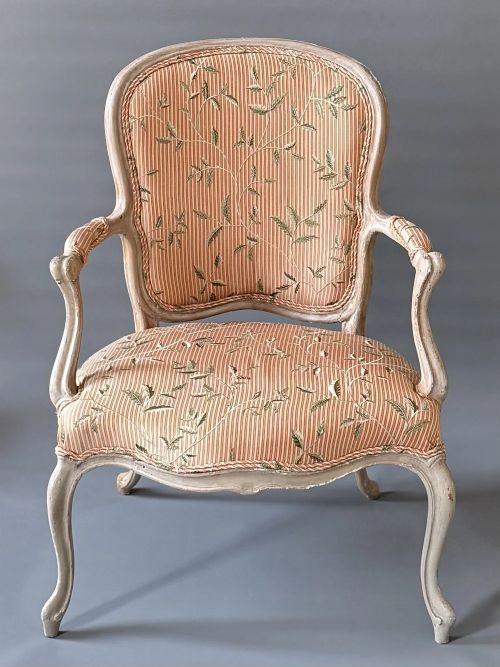
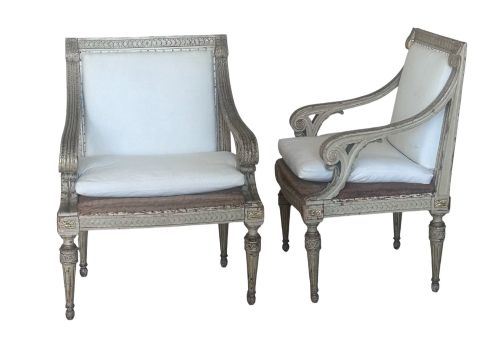
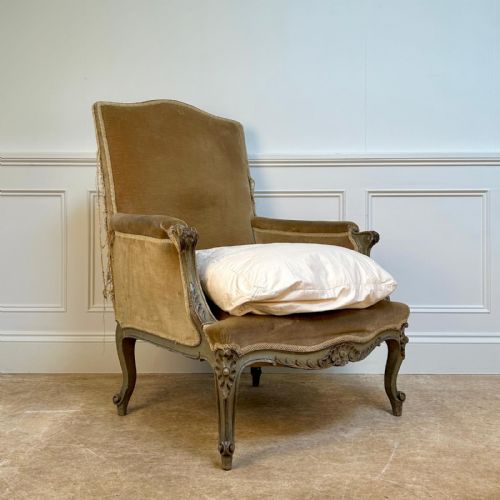
The selection includes open armchairs, bergères with upholstered sides, and occasional chairs originating from diverse European and global workshops. Examples span the eighteenth, nineteenth, and early twentieth centuries, reflecting changing decorative tastes across different countries.
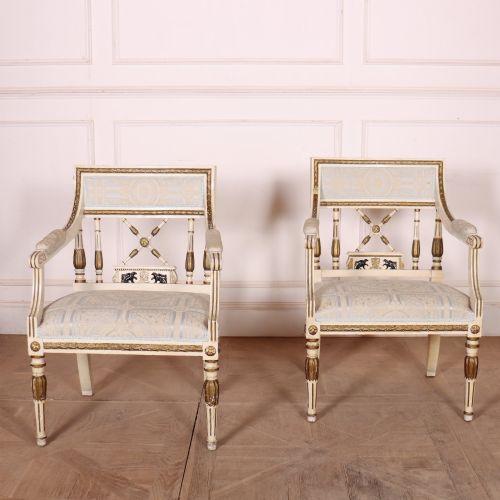
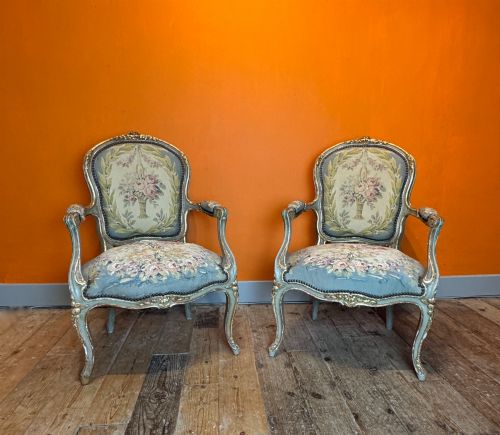
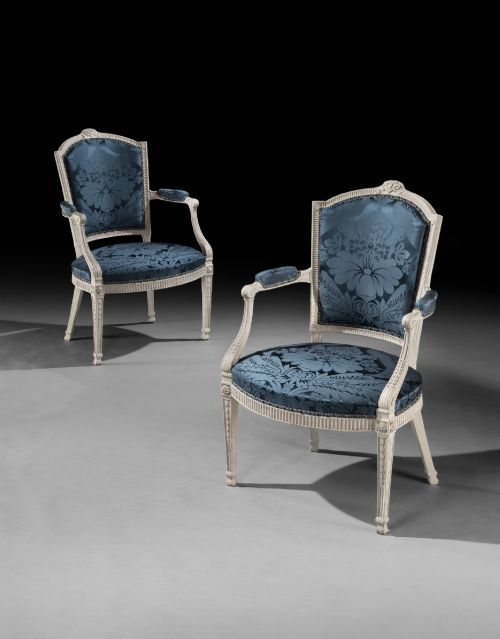
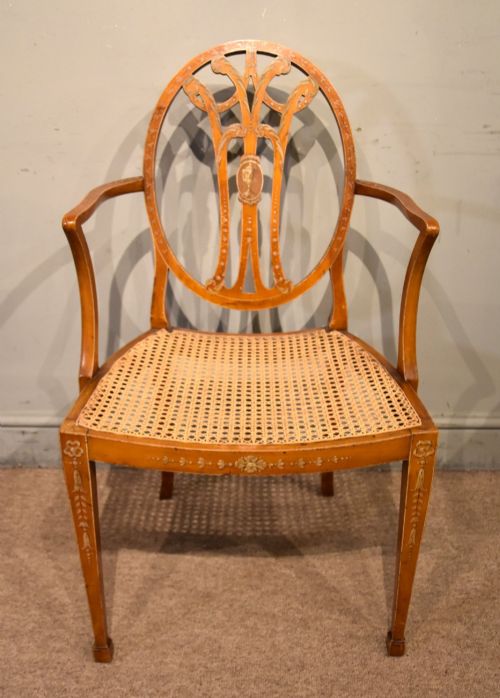
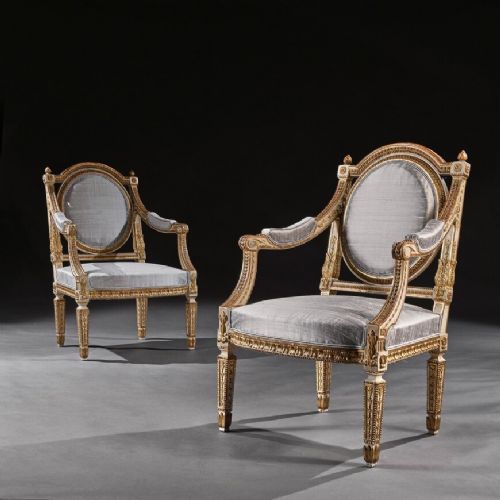
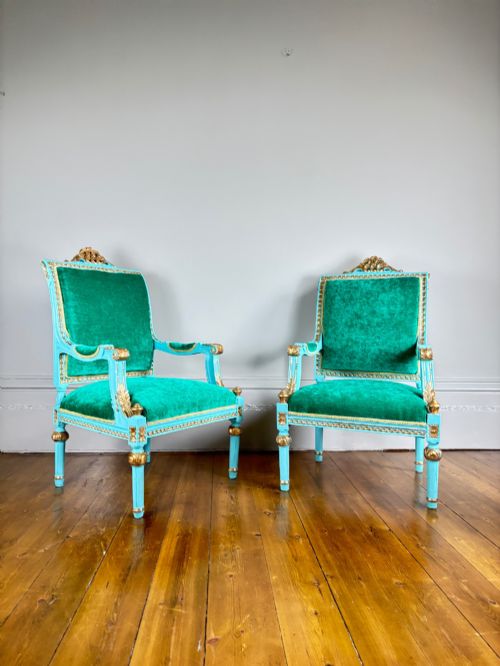
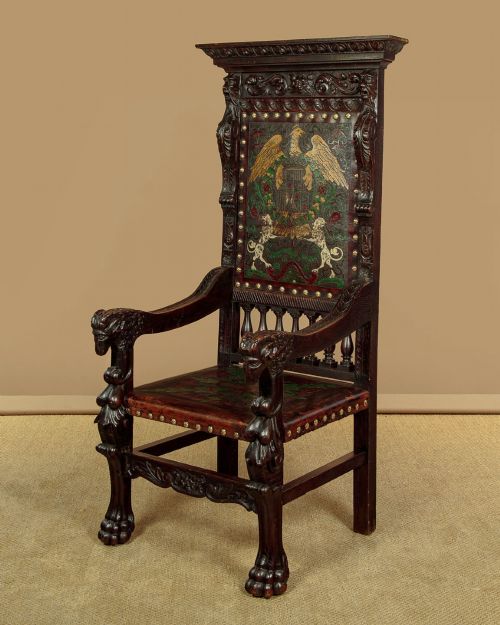
Buyers often find matched pairs alongside single items, offering options for various room layouts. The physical forms vary from neoclassical medallion backs to rustic country thrones and Gothic revival designs.
How they were made
Frames are constructed from timbers such as beech, walnut, oak, and satinwood, shaped by hand carving to form curved cabriole legs, fluted supports, and ornamented crest rails. Joinery techniques depend on the period, utilising traditional joints to secure the structural skeleton.
Surfaces receive layers of paint, sometimes combined with parcel gilding to highlight carved details like acanthus leaves and ribbons. Original painted finishes often show age through craquelure and wear, revealing the underlying wood or preparatory gesso layers.
Upholstery methods involve traditional stuffing materials secured beneath fabric coverings, including linen, velvet, tapestry, and needlework panels. Many pieces retain period textiles, while others show later reupholstery that respects the historic frame.
Several armchairs incorporate carved animal paws and hidden compartments, proving past owners took their resting comfort very seriously indeed.
What varies in quality
The crispness of the wood carving dictates much of the visual distinction between standard production and finer examples. Sharp, deep relief work on scrolled arms and crestings indicates a skilled hand at the bench.
The integrity and preservation of the painted surface alter the character of a piece. Intact original paint layers with historical patination hold different aesthetic appeal compared to later or refreshed decorative coats.
Proportion and structural balance separate simpler utilitarian items from high-status salon seating. Balanced arm heights, well-curved backrests, and harmonious scale determine how successfully a chair integrates into an interior.
Liberty of London·White, Allom and Co
The Carved Painted Armchairs Glossary
- Bergère
- An enclosed upholstered armchair with solid upholstered sides resting on an exposed wooden frame. These typically feature loose squab cushions and date frequently from the eighteenth century onwards.
- Fauteuil
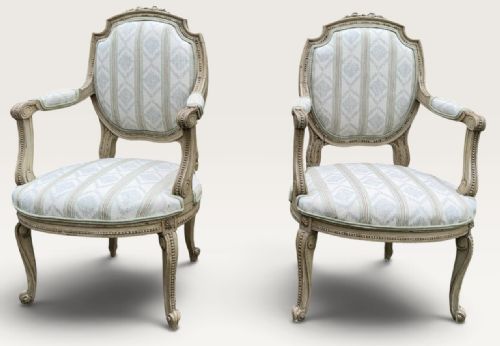
- An open-framed upholstered armchair originating in France, characterised by exposed carved wooden arms and legs. The armrests often include upholstered pads for comfort.
- Parcel Gilt
- A surface decoration technique where specific carved details receive a thin application of gold leaf over a painted base. This highlights mouldings and motifs.
- Medallion Chair
- A chair featuring an oval or circular upholstered backrest framed by carved wood. This form is strongly associated with neoclassical and Louis XVI revivals.
- Cabriole Leg
- A furniture leg that curves outward at the knee and tapers inward toward the foot, inspired by animal limbs. It is a defining feature of Louis XV and related styles.
Carved Painted Armchairs: Frequently Asked Questions
How do I identify French regional styles?
French regional pieces often display simpler carving and sturdier proportions compared to court furniture from Paris. Look at the treatment of the rails and legs for local vernacular motifs.
Provincial items may utilise native fruitwoods or simpler paint applications, reflecting the materials available to local artisans rather than royal workshops.
Are painted finishes usually original?
Many items retain traces of their first decorative scheme, though overpainting was common during subsequent interior redesigns. Examining the edges and protected recesses helps reveal earlier layers beneath the surface.
Natural wear and minor losses in the paint often corroborate age, distinguishing historic finishes from modern decorative treatments.
Can these chairs be used daily?
Most antique seating is structurally sound for regular domestic use, provided the joints remain tight and stable. Period frames handle standard sitting well, though delicate carved elements require care.
When upholstery is historic or fragile, users sometimes add protective throws or limit heavy daily wear to preserve the textile panels.
What is the difference between Louis XV and Louis XVI?
Louis XV designs emphasise asymmetrical curves, naturalistic floral carvings, and flowing cabriole legs. The overall aesthetic is organic and fluid.
Louis XVI furniture introduces strict symmetry, straight fluted legs, and geometric motifs inspired by classical antiquity, such as ribbons and medallions.