


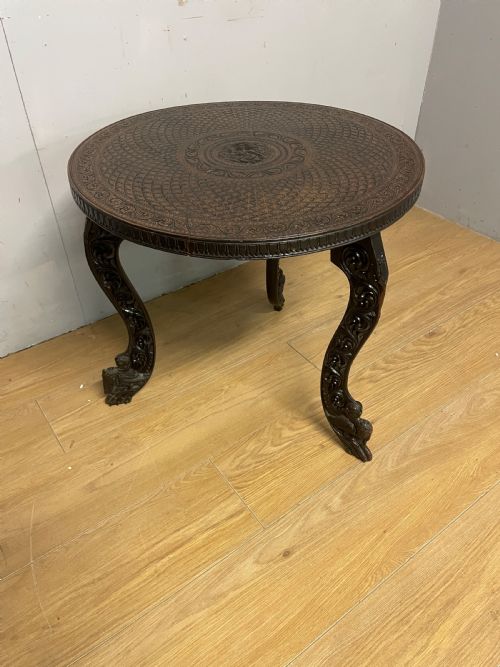


Carved Padouk Furniture
Carved padouk furniture brings dense tropical timber and intricate regional motifs together in substantial sideboards, tables and chairs.
Carved Padouk Furniture
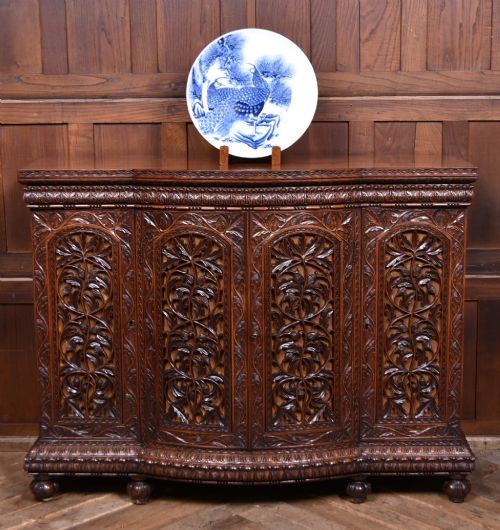
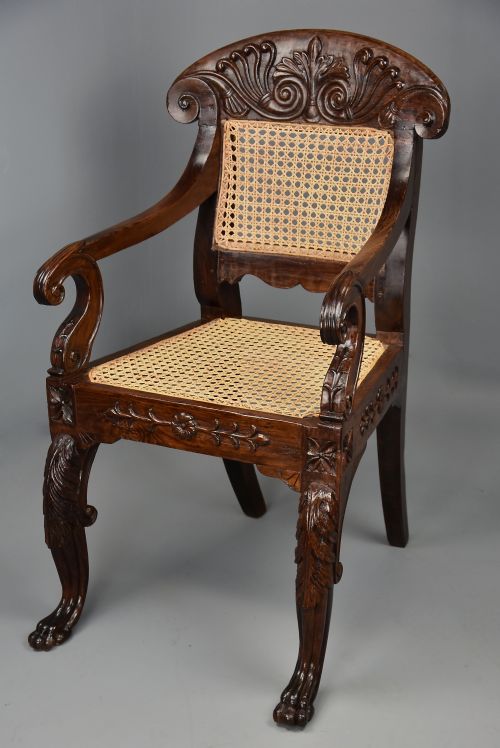
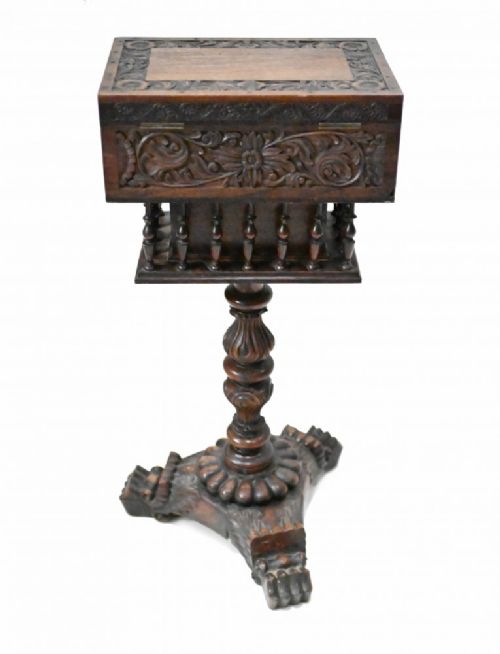
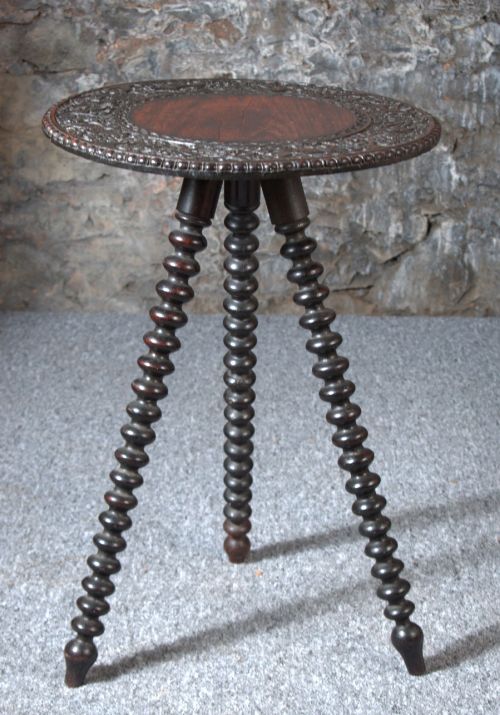
Carved padouk furniture comprises domestic and reception forms produced across the nineteenth century, encompassing sideboards, side tables, plant stands, armchairs, sofas, music chairs, coffee tables, teapoy tables, dressing mirrors, console tables, library tables, bookcases, desks, campaign chests, whatnots and wine coolers. These pieces emerge predominantly through colonial workshops influenced by Anglo-Indian, Anglo-Burmese and Qing design vocabularies.
The version most commonly met on this page is the nineteenth-century Anglo-Indian or Burmese side table, sideboard or armchair, frequently displaying deep floral and foliate carving. Alongside these sit Chinese hardwood stands, low tables and desks dating from the later nineteenth and early twentieth centuries, as well as distinct forms such as campaign chests and harpist chairs.
Materials and Construction
Constructed primarily from padouk wood or related dense hardwoods, these pieces rely on the inherent weight and deep reddish-brown tone of the timber. Secondary materials such as brass fittings, marble inserts, glass panels and cane seating appear where functional requirements dictate.
Joinery techniques support heavy relief carving executed directly into the dense grain. Workshops combined traditional mortise and tenon framing with specialised surface work, occasionally incorporating modular elements seen in campaign chests or structural elements for heavy sideboards and library tables.
Current listings span the nineteenth century, featuring materials such as brass, marble, glass and cane alongside solid padouk.
Judging Quality and Execution
Quality rests upon the crispness and depth of the carving relative to the density of the padouk timber. Superior examples exhibit sharply defined foliage and figures without splintering in the dense grain.
Proportion and structural integrity distinguish finer forms, particularly in large sideboards, library tables and campaign chests where heavy timber requires precise joinery to prevent distortion over time.
The Carved Padouk Furniture Glossary
- Padouk
- A heavy, durable tropical hardwood noted for its deep reddish hue and stability. It accepts fine chisel work exceptionally well.
- Anglo-Indian
- A style produced during the British colonial period in India that combines British furniture forms with indigenous Indian carving traditions.
- Teapoy
- A small occasional table, often fitted with compartments or lids, originally designed for holding tea caddies.
- Campaign chest
- A modular chest of drawers built in sections with recessed brass handles and corner brackets for transport by military officers.
Carved Padouk Furniture: Frequently Asked Questions
What is padouk wood?
Padouk is a dense tropical hardwood known for its deep red or reddish-brown colour and exceptional durability. It darkens naturally with age and exposure to light.
Furniture makers valued it for its stability and resistance to pests, which made it suitable for export furniture produced in colonial workshops.
How do I care for padouk furniture?
Keep these pieces away from direct heat sources and strong sunlight to prevent the timber from drying out or splitting. Dust regularly with a soft, dry cloth.
Apply a neutral wax polish sparingly only when the wood appears dry, avoiding silicone-based sprays that damage historic finishes.
How do I distinguish regional styles?
Anglo-Indian pieces typically feature deep floral and acanthus leaf carving applied to familiar Regency or Victorian forms. Chinese examples often utilise clean rectangular lines or stands associated with the Qing Dynasty.
Burmese production frequently employs dense figural and scrolling vegetal motifs on seating and tables.