
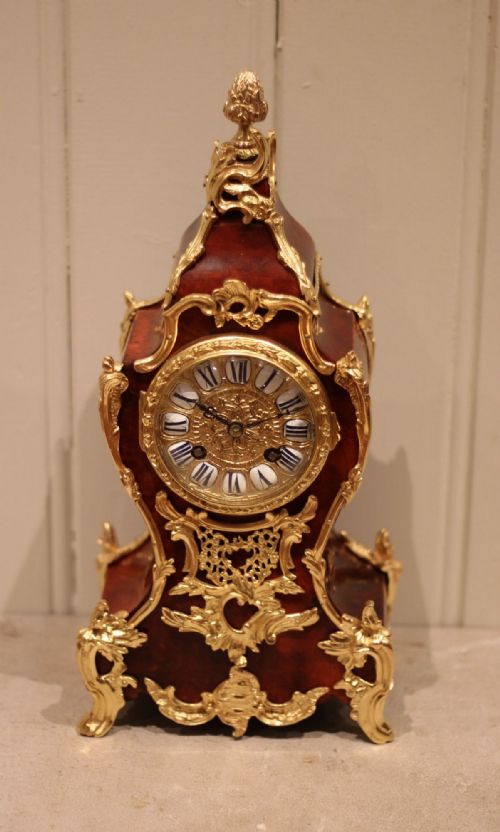


Carved Ormolu Clock
A carved ormolu clock brings magnificent gilt bronze detail and striking period craftsmanship into any room.
Carved Ormolu Clock
A carved ormolu clock represents a sophisticated blend of metalwork and horology, most frequently encountered in nineteenth-century French mantel clocks and clock sets. These items display intricate gilt bronze or ormolu mounts, often paired with materials like marble, mahogany, and tortoiseshell.
Buyers browsing a carved ormolu clock selection will find substantial variety in stylistic approach, ranging from elaborate French Rococo Revival designs to cleaner Art Deco interpretations. The forms span from traditional mantel pieces to grand bracket clocks featuring detailed decorative mounts.
The nineteenth century dominates the available examples, though older seventeenth-century table clocks and later twentieth-century pieces occasionally appear. This spread allows collectors to examine how mantel clocks and table clocks evolved across different periods while retaining their metallic ornamentation.
Materials and construction methods
The creation of a carved ormolu clock relies heavily on the skilful application of gilt bronze and ormolu, which provides the signature golden metallic sheen. Artisans cast and chased these bronze elements meticulously before applying the gilding.
Supporting structures utilise a diverse palette of traditional materials, including ebony veneer, tortoiseshell, burr walnut, mahogany, and white marble. These rich woods and stones form the body of mantel clocks and bracket clocks, creating a heavy and durable foundation for the metalwork.
Enamel and glass frequently complement the primary materials, appearing on clock dials and protective bezels. Precision movement components inside the brass and bronze housing ensure accurate timekeeping alongside the decorative exterior.
Tortoiseshell surfaces offer a warm, mottled amber glow that makes even the most serious seventeenth-century timekeeper look delightfully tactile.
Distinctions in craftsmanship and design
The standard of a carved ormolu clock is largely defined by the depth and crispness of the chasing on the gilt bronze mounts. Finer examples show sharp relief and careful hand-finishing, whereas simpler versions exhibit softer surface detail.
Material selection and cabinetry skill further divide the range, with dense hardwoods like ebony veneer and burr walnut representing superior construction over standard secondary woods. The integration between the heavy bronze mounts and the wooden or marble chassis demands exact alignment.
Maker attribution also influences standing, as signed works from established horologists carry distinct historical weight. The complexity of the movement, such as quarter repeating mechanisms, separates standard mantel timepieces from more intricate horological achievements.
Joseph Windmills·Samuel Marti·Lenzkirch
The Carved Ormolu Clock Glossary
- Ormolu
- Gilt bronze, derived from the French term meaning ground gold, applied to metallic decorative elements. This technique creates a rich golden finish on decorative mounts.
- Mantel clock
- A domestic timekeeper designed to stand on the shelf above a fireplace. These objects often feature elaborate architectural or sculptural cases.
- Rococo Revival
- A nineteenth-century design movement resurrecting the asymmetric scrolls, curves, and natural motifs of the eighteenth-century French style. It appears frequently on ornate clock cases.
- Bracket clock
- A portable table clock originally constructed with a wall bracket for support. Over time, the term came to describe a distinct style of large wooden table clock.
- Quarter repeating
- A mechanical complication allowing a clock to chime the hours and quarters upon demand. This feature demonstrates advanced horological skill within antique timepieces.
Carved Ormolu Clock: Frequently Asked Questions
How do I date a carved ormolu clock?
Dating relies heavily on stylistic cues, materials, and movement signatures. Nineteenth-century pieces often favour ornate Rococo Revival or architectural marble designs.
Examining the backplate, dial construction, and wood types helps narrow the decade of production. Maker signatures also provide a reliable anchor for specific periods.
Where should I place a mantel clock?
These clocks suit stable, level surfaces away from direct sunlight and excessive moisture. Mantelpieces, sideboards, and dedicated clock brackets offer ideal display positions.
Because many examples utilise heavy bronze and marble, ensure the supporting furniture can safely bear the substantial weight.
How do I care for ormolu mounts?
Ormolu requires gentle dusting with a soft, dry cloth to prevent the accumulation of dirt within the chased crevices. Avoid harsh chemical cleaners and abrasive polishes.
Preserving the original gilt finish protects the visual character of the metalwork over decades of ownership.
What is the difference between a bracket clock and a mantel clock?
Bracket clocks historically sat upon a matching wall shelf and often featured carrying handles for portability. Mantel clocks generally sit directly on a flat surface without a wall mount.
Bracket clocks frequently employ wooden cases with brass dials, whereas mantel clocks frequently incorporate marble or gilt bronze architectural framing.