


Figural Bronze Desk Clock
These heavy figural bronze desk clock designs unite classical storytelling and fine metalwork, bringing nineteenth-century cast metal figures and precision timekeeping together on a single base.
Figural Bronze Desk Clock
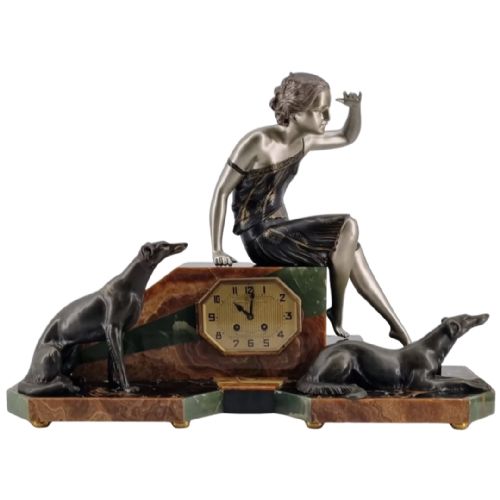
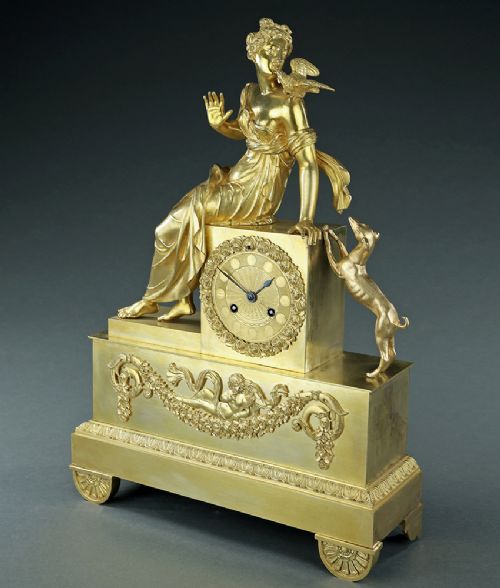
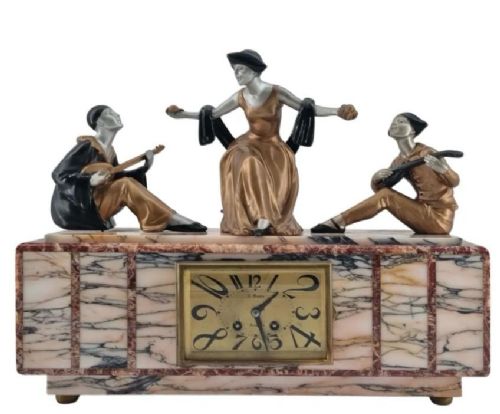
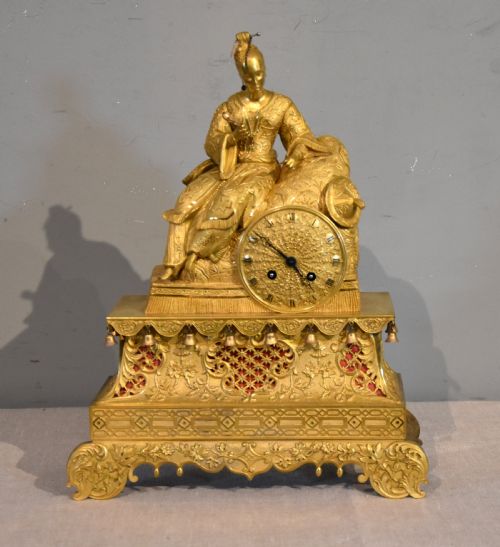
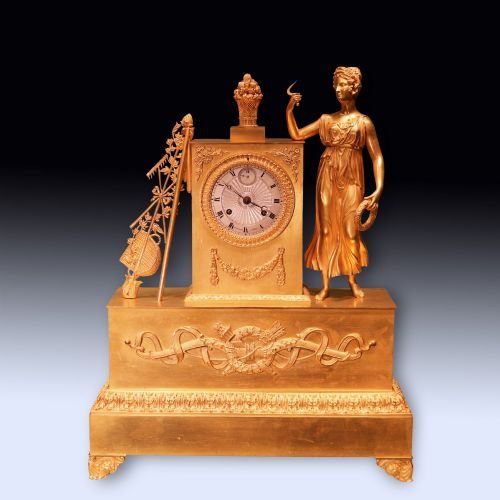
A figural bronze desk clock places a cast metal personage, animal or allegorical scene alongside a working clock face, typically resting on a marble or metal plinth. The examples seen on this page span the nineteenth century, the Regency era, and the early twentieth century, drawing on French Empire, Rococo Revival and Art Deco aesthetics.
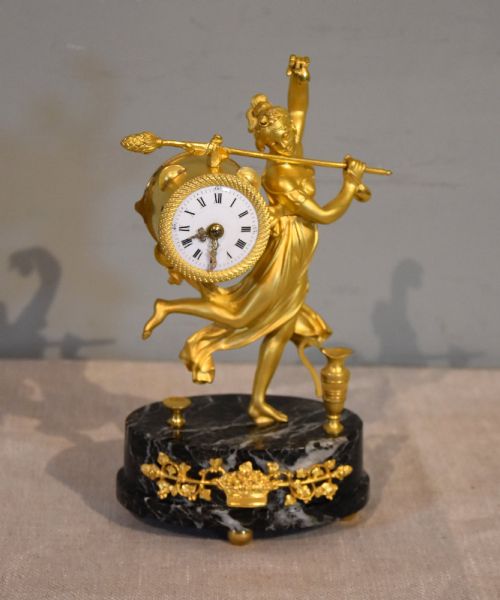
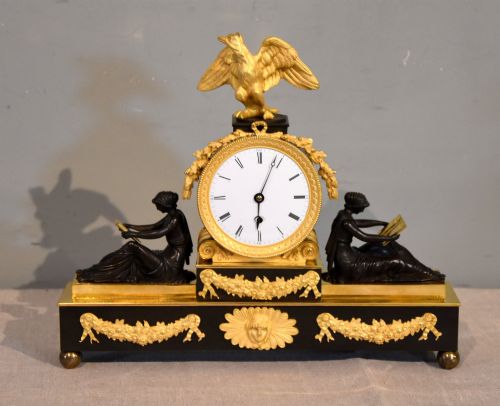
The most frequent form on this page is the French mantel clock or table timepiece, often featuring cherubs, romantic pairs or mythological figures cast in gilt bronze and ormolu. English Regency pieces also appear, pairing brass and gilt work with fusee movements on structured bases.
How they were made
Makers shaped these objects using bronze, brass and gilt metal, applying fire gilding or ormolu techniques to impart a rich golden surface. Many incorporate contrasting green marble, glass panels or hand-painted enamel dials that display Roman or Arabic numerals.
Foundries combined lost-wax casting for the figural elements with precise mechanical movements, often housing escapements within marble plinths or architectural bronze casings. Artisans then chased the cast surfaces by hand to sharpen the detail on hair, drapery and foliage.
Object forms span mantel clocks, table clocks, and complete three-piece clock garnitures.
What varies in quality
The refinement of the chasing separates superior castings from simpler production, visible in the crispness of a cherub's feathers or the fluid drape of a garment. Better examples retain their original fire gilding and mercurial ormolu finish rather than later electroplated coatings.
The integrity of the movement and the harmony between the bronze figure and its marble or gilt base dictate the overall success of the piece. Clocks signed by recorded makers or housing original fusee movements represent the higher tier of these works.
Baetens London·Canaillor of Paris·Japy Freres·Lemerle Charpentier·Deniere and Cailleaux·John Bennett Cheapside London·Henry Berkeley Square London·Bently & Beck London·F Marti·Frères Raingo
The Figural Bronze Desk Clock Glossary
- Ormolu
- Gilded bronze produced by applying a mercury-gold amalgam to a cast bronze base and heating it until the mercury vaporised. This historic technique creates a deep, matte golden lustre.
- Fusee
- A conical pulley used in mechanical clocks to maintain even power delivery as the mainspring unwinds. It ensures consistent timekeeping across the duration of the wind.
- Japy Frères
- A prominent French clockmaking dynasty operating through the nineteenth century, known for supplying mechanical movements to numerous makers. Their signature often appears stamped on the internal brass plates.
- Gilt Bronze
- Bronze metal coated with a layer of gold through mechanical application or chemical gilding. It provides the appearance of solid gold while utilising a durable bronze substrate.
- Clock Garniture
- A matching set consisting of a central clock flanked by decorative side pieces such as urns or candelabra. These arrangements were designed to form a unified decorative scheme on a mantel or desk.
Figural Bronze Desk Clock: Frequently Asked Questions
How do I wind a fusee movement?
Insert the winding key into the dial or back plate and turn it gently clockwise until resistance indicates the spring is fully tensioned. Take care not to overwind antique mechanisms.
Most single fusee clocks require weekly attention to maintain accurate time. Regular servicing by a qualified horologist keeps the chain and gears operating smoothly.
How should I clean gilt bronze?
Dust the surface lightly with a dry, soft artist brush to remove settled particles from crevices and chased details. Avoid commercial metal polishes, which can strip historic gilding.
If deeper cleaning is necessary, use a damp cloth with mild soap, drying the metal immediately afterwards. Moisture left in small recesses can cause corrosion.
How do I tell French and English pieces apart?
French pieces often emphasise sculptural figures in ormolu and marble, reflecting Empire or Rococo tastes. English examples frequently rely on fusee movements housed in brass-mounted mahogany or architectural bronze cases.
Signatures on the dial or backplate usually reveal the origin. London makers typically signed movements with their street address, whereas French workshops stamped foundry marks.