

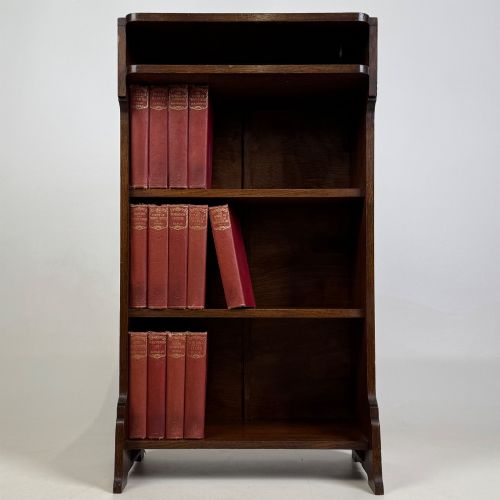
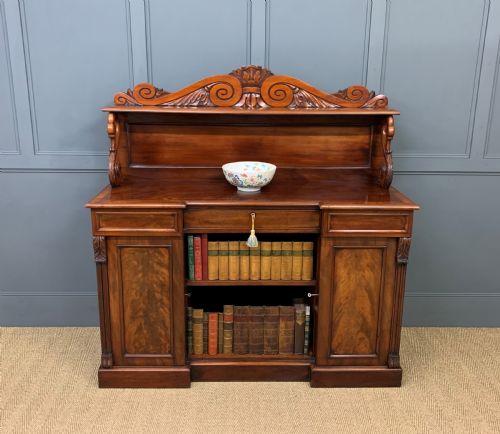
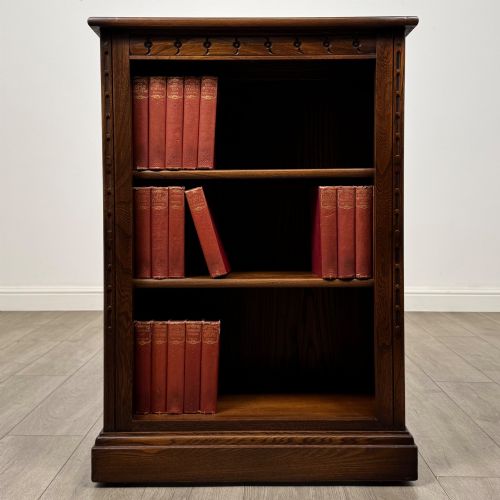
Carved Open Bookcase
A carved open bookcase brings immediate architectural weight and accessible storage to a room, holding centuries of craftsmanship in exposed timber.
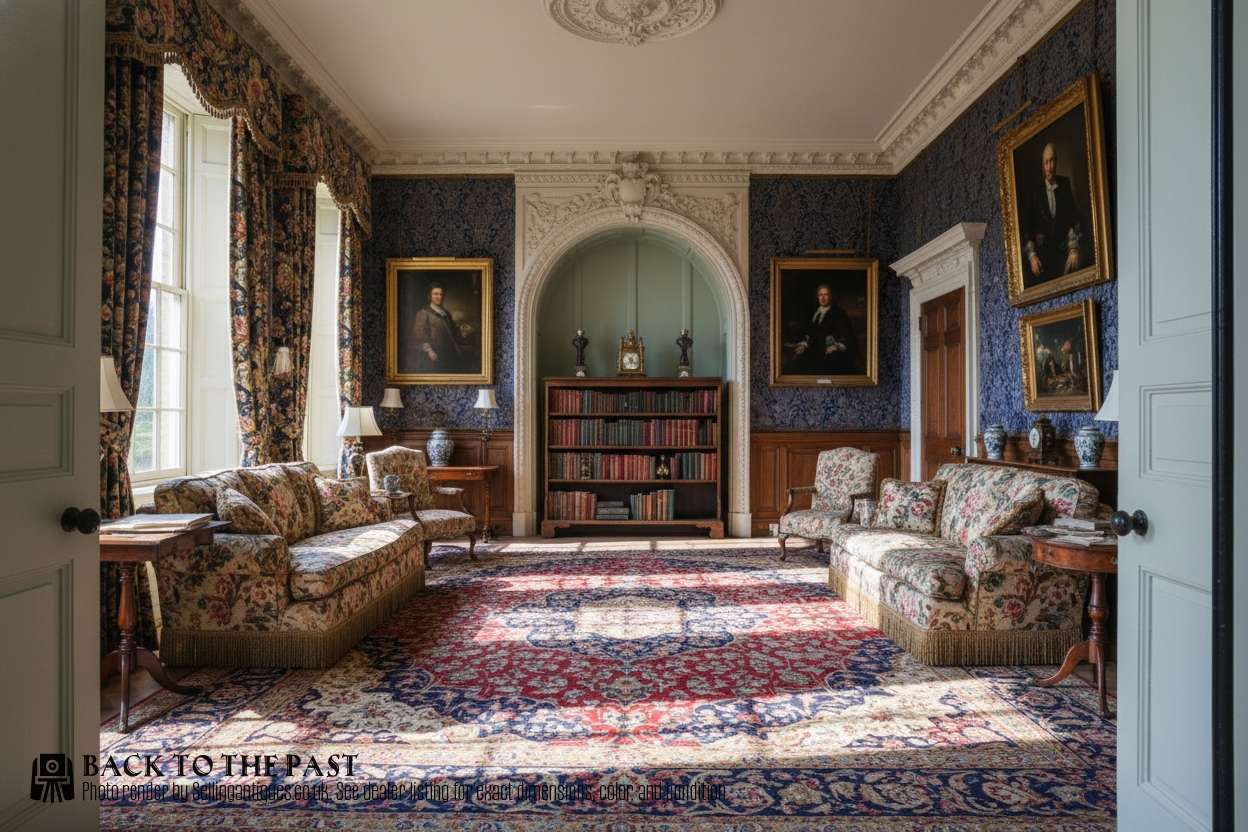
Carved Open Bookcase
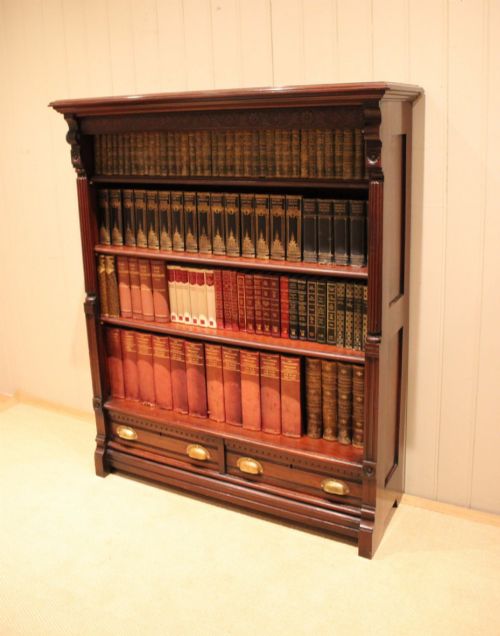
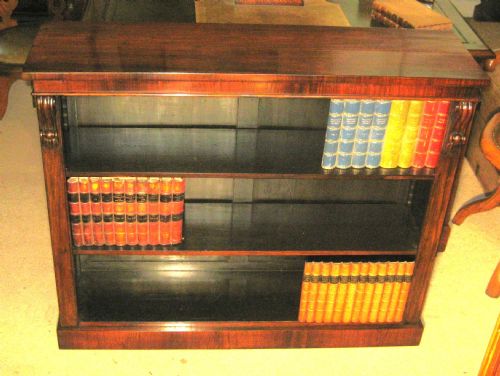
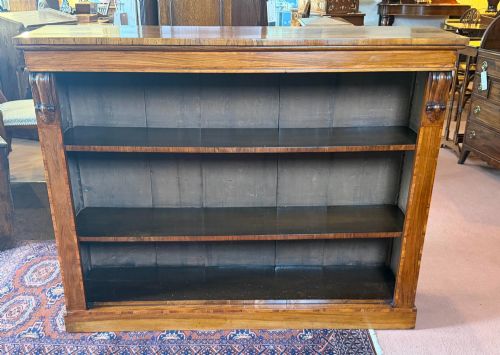
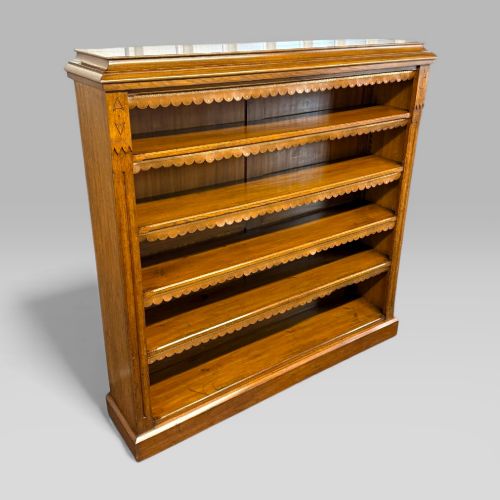
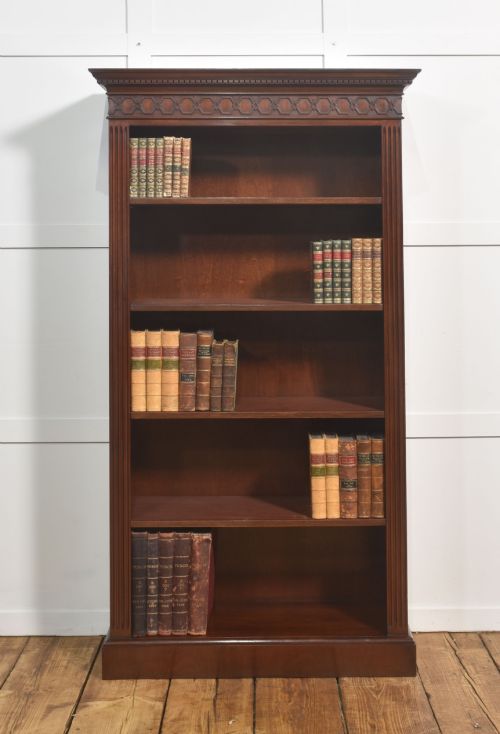
A carved open bookcase displays volumes and decorative objects without the barrier of glass doors, relying instead on architectural cornices, pilasters, and carved panels. These items emerge primarily from the nineteenth and early twentieth centuries, spanning Victorian, Edwardian, and Regency periods.
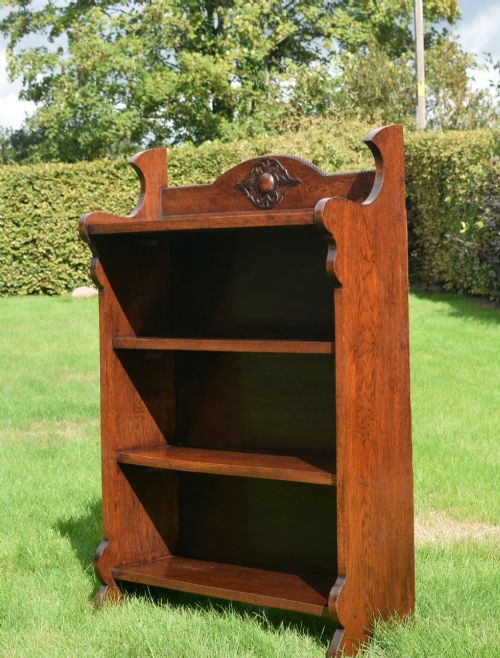
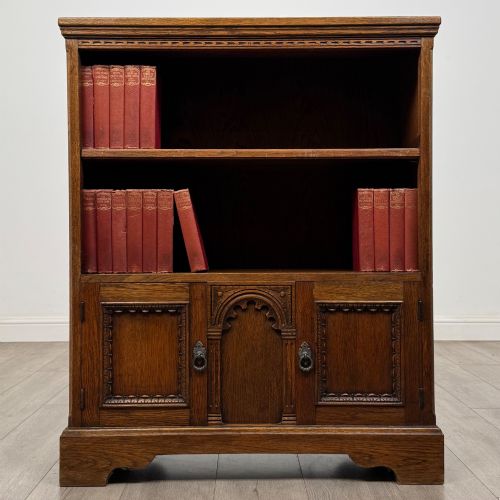
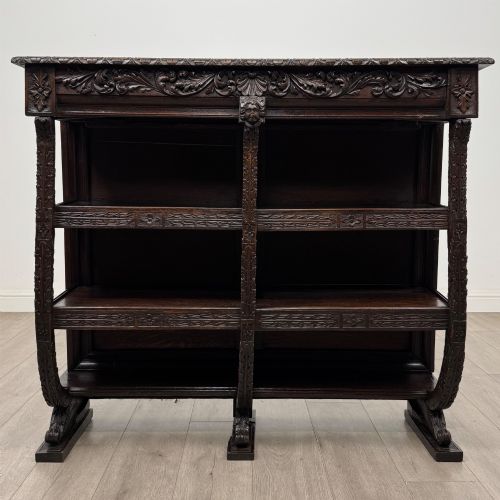
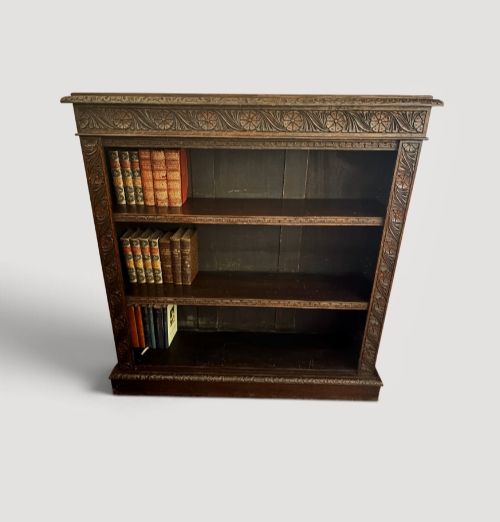
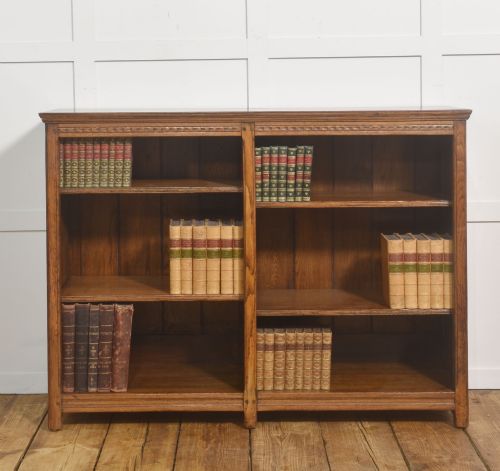
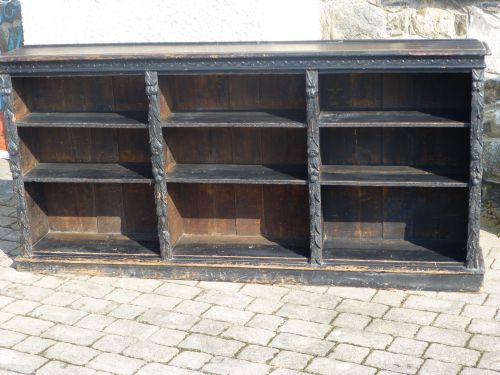
The version most commonly encountered on this page is the solid oak Victorian or Edwardian model, frequently decorated with foliate motifs or green man masks. Alongside these traditional British forms, buyers find mahogany, walnut, and rosewood iterations influenced by Arts and Crafts, Jacobean Revival, and Japonisme styles.
Materials and construction methods
Makers built these pieces predominantly using dense hardwoods such as oak, mahogany, walnut, and rosewood, supplemented by brass fittings and occasionally marble tops. Solid timber construction provided the structural rigidity necessary to support heavy shelves of books without sagging.
Carving was executed by hand directly into the wood framing, particularly along friezes, cornices, and upright stiles. Adjustable shelving systems utilising wooden ratchets or brass pins appeared frequently in later nineteenth-century examples to accommodate volumes of varying heights.
Listings feature pieces spanning the Regency, Victorian, and Edwardian eras, constructed from oak, mahogany, walnut, rosewood, and pine.
Distinguishing tiers of craftsmanship
Quality rests in the depth and crispness of the wood carving, where hand-chiseled detailing displays sharp relief and fluid movement compared to mechanical stamping. The choice of timber also dictates grade, with figured grains like flame mahogany and burr walnut marking out superior examples.
Structural integrity and secondary woods define the interior standard, marked by closely fitted joints, solid backboards rather than thin plywood, and carefully rebated shelves. Pieces retaining original adjustable mechanisms and harmonious proportions command greater distinction.
Gabriel Viardot·Gillows·Liberty and Co
The Carved Open Bookcase Glossary
- Green Man
- A sculptural architectural motif depicting a human face disgorged from foliage or entirely composed of leaves. This decorative element appears frequently on nineteenth-century revivalist oak furniture.
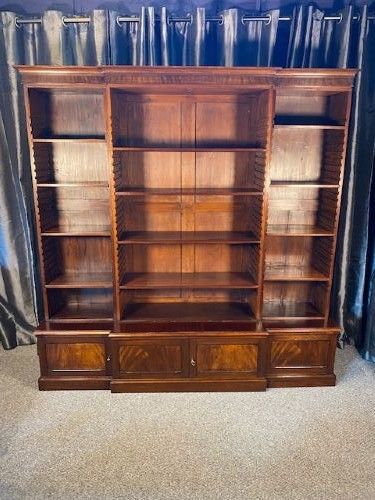
- Breakfront
- A piece of furniture featuring a central section that projects forward from the flanking wings. This configuration adds visual rhythm and depth to larger library bookcases.
- Etagere
- A set of open shelves for displaying small objects or books, often freestanding or designed with slender uprights. These pieces gained popularity during the Victorian and Edwardian periods.
- Japonisme
- A late nineteenth-century artistic movement reflecting Japanese aesthetic influences on European design. It manifests in asymmetrical layouts and characteristic carved motifs.
- Frieze
- The wide horizontal band situated just below the cornice of a bookcase. Carved open bookcases frequently utilise this space for prominent foliate or geometric relief work.
Carved Open Bookcase: Frequently Asked Questions
Where should I place a carved open bookcase?
These bookcases anchor living rooms, studies, or libraries against flat walls where their carved details can be appreciated without obstruction. Because the shelves are open, placement away from direct sunlight protects vulnerable rosewood and mahogany finishes from fading.
Ensure the room maintains stable humidity to keep the solid timber from expanding or contracting excessively. Low dwarf versions also function well beneath windows or serve as room dividers in spacious interiors.
How do I adjust the shelves?
Most nineteenth-century examples utilise either vertical wooden ratchet strips or rows of holes fitted with brass pins to support movable shelves. You lift the shelf slightly, reposition the supports within the slots, and lower the board back into place.
Take care when sliding shelves along older wooden tracks to avoid scoring the interior veneer or timber. If a shelf sticks, check that the weight of the books has been removed entirely before attempting adjustments.
Can these hold heavy volumes?
Solid oak and mahogany construction provides inherent strength capable of supporting dense collections of reference books and hardbacks. Thick timber boards resist bending under substantial weight across standard spans.
Earlier pieces with adjustable wooden ratchets distribute loads effectively down the vertical stiles. Distribute heavier folios toward the lower, fixed shelves to maintain optimal balance across the entire unit.
How do I distinguish Victorian from Edwardian pieces?
Victorian bookcases generally favor heavier proportions, deeper relief carvings, and darker finishes such as walnut, rosewood, and ebonized wood. Stylistic influences often draw heavily from Gothic, Jacobean, or Renaissance revival themes.
Edwardian pieces tend toward lighter oak constructions, smaller dimensions, and cleaner lines influenced by the Arts and Crafts movement. Carvings on Edwardian examples frequently feel sparser and brighter in tone compared to their mid-nineteenth-century predecessors.