


Carved Oak Wooden Trunk
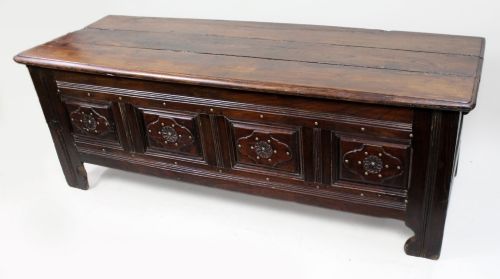
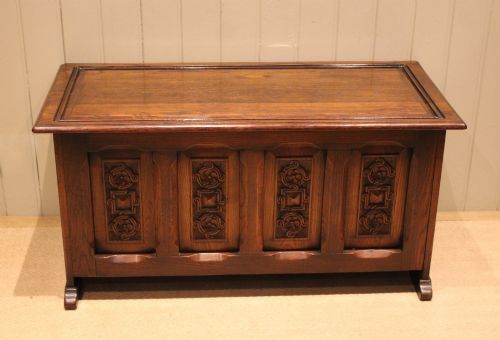
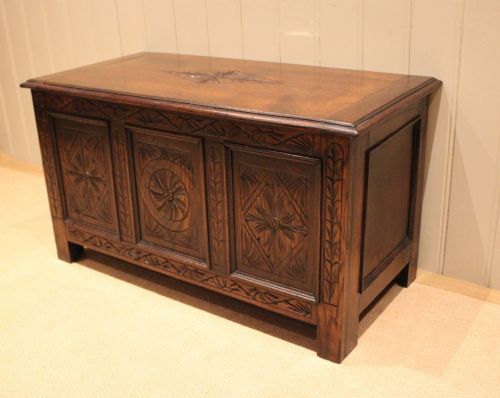
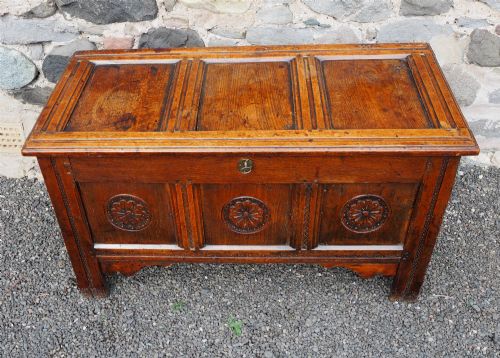
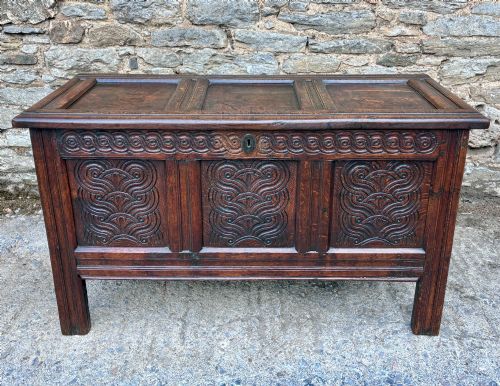
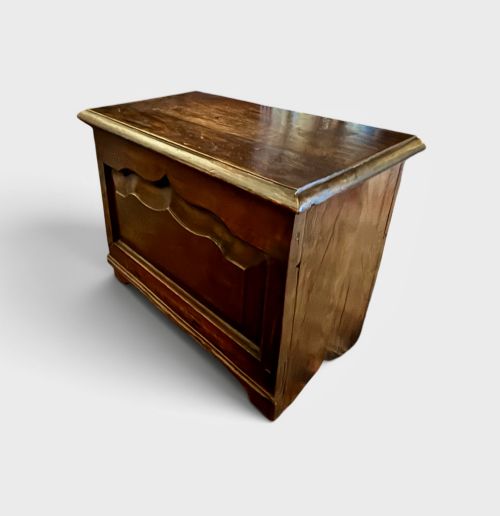
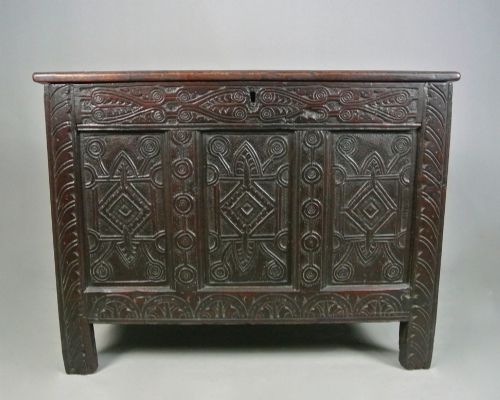
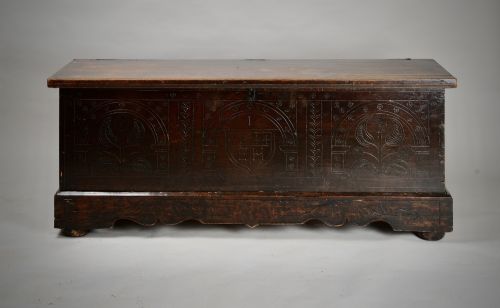
These carved oak wooden trunk pieces are heavy timber storage chests built to endure centuries of daily domestic use.
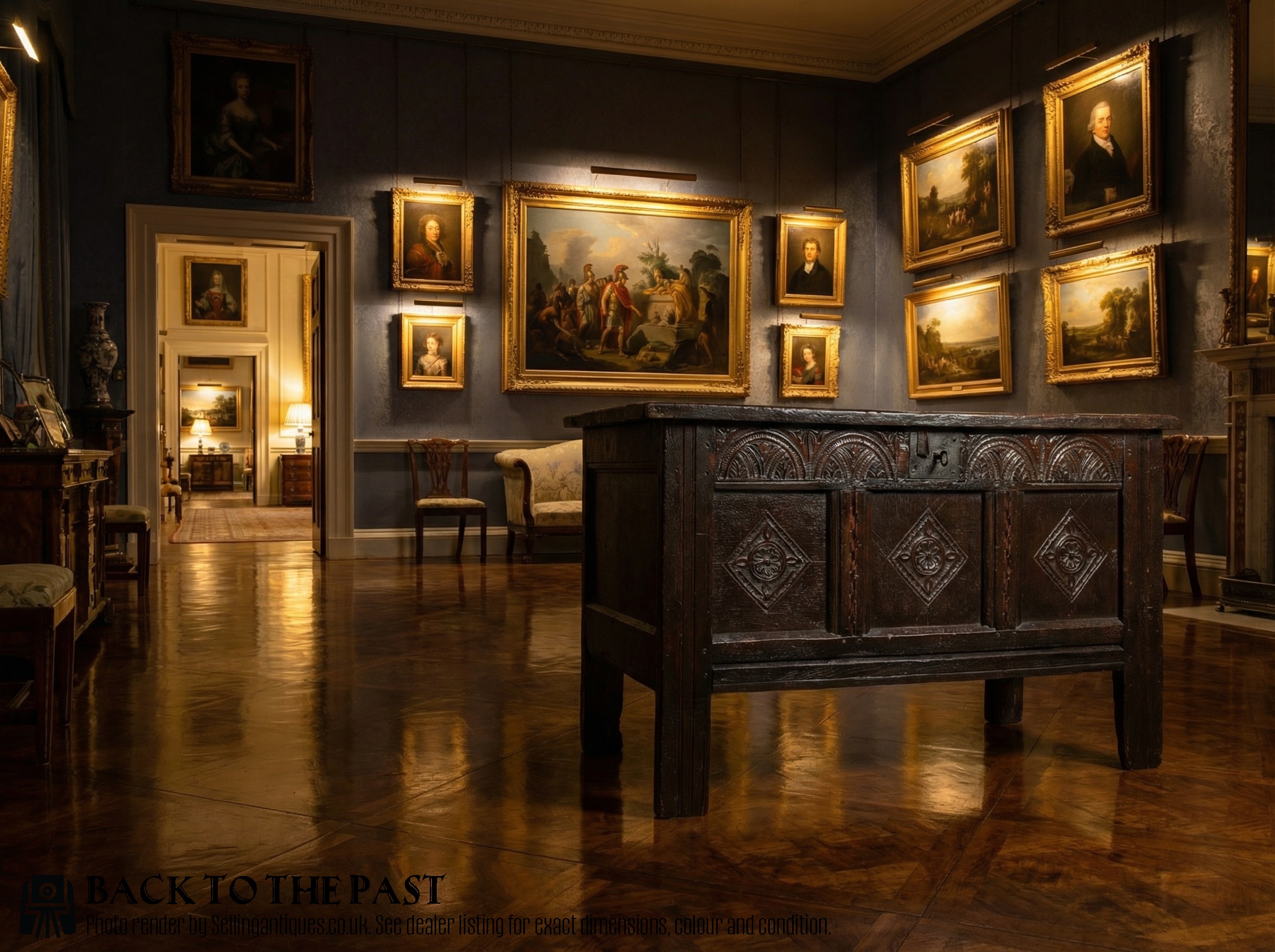
Carved Oak Wooden Trunk
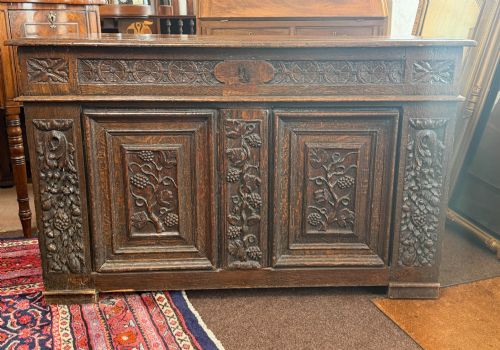
A carved oak wooden trunk most commonly appears as a coffer, blanket chest or mule chest, serving as the primary household storage furniture before fitted wardrobes existed. The examples encountered here span from the sixteenth century through the Georgian and Edwardian eras up to the nineteen-thirties.
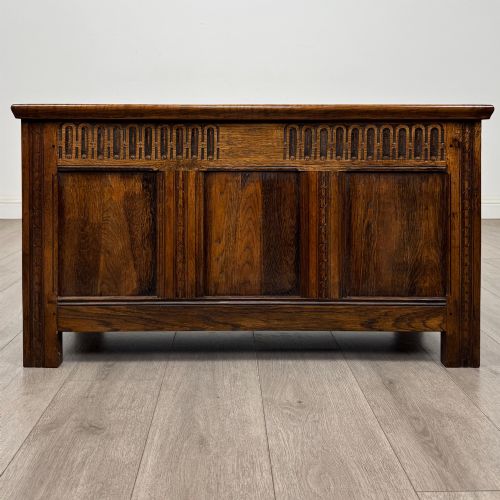
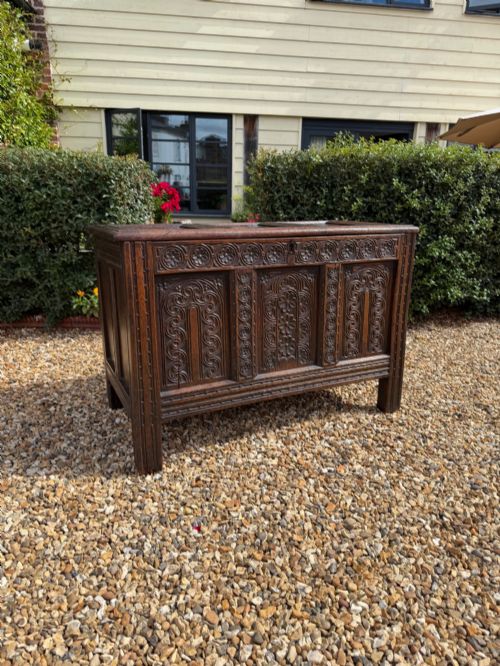
The heavy reliance on seventeenth-century pieces means buyers frequently find joined oak construction with panelled fronts, often bearing carved geometric or floral motifs. Later revival pieces from the twentieth century mirror these older vernacular forms using similar solid timbers.
Materials and Construction
Makers built these chests from solid oak, utilising frame and panel construction to accommodate the natural seasonal movement of the timber without splitting. Iron or brass hardware, including strap hinges and lock plates, fastened the lids and secured the contents.
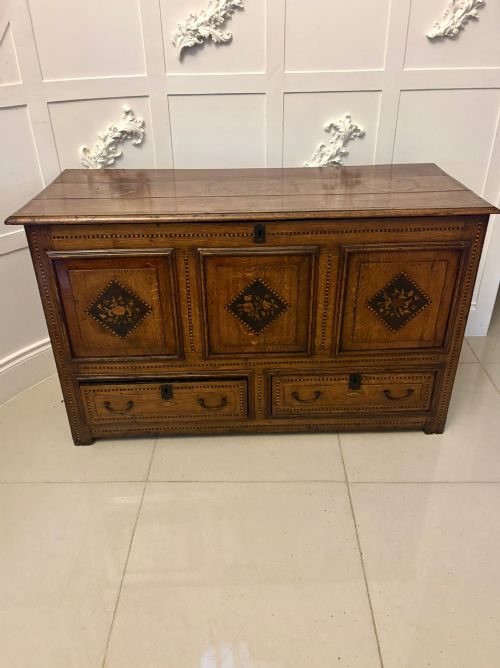
Decoration relied heavily on direct carving into the solid oak, occasionally supplemented by marquetry inlay or mixed inlay woods to create contrasting patterns on the front panels.
Many seventeenth-century chests feature primitive carved initials of the original owners, preserved stubbornly in the oak.
Assessing Quality
Superior quality rests in the crispness of the original oak carving and the integrity of the joined frame rather than later decorative additions. Pieces retaining their early hinges, original boards, and authentic surface patination stand well apart from heavily restored examples.
The proportion and balance of the panels define the aesthetic success of the chest, with smaller or regional pieces often demonstrating particularly careful proportioning by local joiners.
The Carved Oak Wooden Trunk Glossary
- Cofer
- A traditional wooden chest used primarily for storing valuables, linens, or documents. These heavy boxes formed an essential part of early household furnishings.
- Mule chest
- A storage chest featuring one or more drawers beneath the main lift-top compartment. This form developed in the eighteenth century to provide more accessible storage.
- Joined oak
- Furniture constructed using mortise and tenon joints secured with wooden pegs rather than simple nailed boards. This method provides immense structural rigidity.
- Marquetry inlay
- Decorative patterns formed by fitting contrasting veneer woods into prepared recesses within the solid timber surface. This technique adds pictorial or geometric richness.
- Jacobean
- A design style spanning the early seventeenth century characterised by heavy proportions, straight lines, and strapwork carving. Pieces from this period display deep tooling.
Carved Oak Wooden Trunk: Frequently Asked Questions
What were these wooden trunks originally used for?
Households utilised these heavy chests to store valuable textiles, woollens, and domestic documents securely away from damp stone floors. Their flat tops also allowed them to function as tables or extra seating benches within the home.
Over successive centuries, families kept them in bedchambers and halls for general storage before dedicated wardrobes and drawers became common domestic fixtures.
How do I tell a seventeenth-century chest from a later revival piece?
Early pieces display hand-split timber marks, pegged joints, and natural wear patterns accumulated over hundreds of years of use. The wood develops a dry, deep patination that modern staining and reproduction techniques struggle to replicate accurately.
Twentieth-century revival pieces often utilise machine-sawn timber uniformity and modern fastening methods hidden within the construction, even when styled to match earlier eras.
Can I use a heavy oak chest as a coffee table?
The sturdy construction and flat lids make these chests suitable for placement in modern living spaces as coffee tables or window seats. Their internal capacity provides practical storage for blankets and bulky items while anchoring a room.
Care should be taken to protect the historical timber surface from moisture rings and excessive heat by using appropriate coasters or glass tops.
What is the difference between a coffer and a mule chest?
A standard coffer consists solely of a top-opening box with a single deep compartment accessed by lifting the lid. Reaching items at the bottom requires removing everything stacked above them.
A mule chest incorporates one or more drawers beneath the main box compartment, allowing easier access to stored garments without lifting the heavy lid itself.