




Carved Oak Weather Instrument
These carved oak weather instrument selections combine practical meteorology with robust nineteenth and early twentieth century joinery.
Carved Oak Weather Instrument
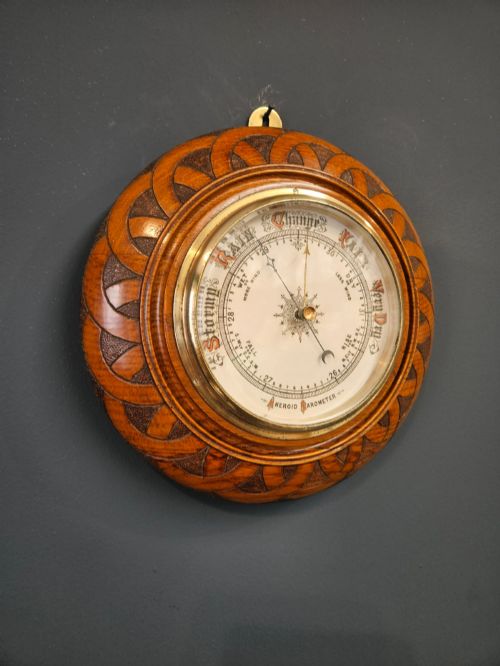
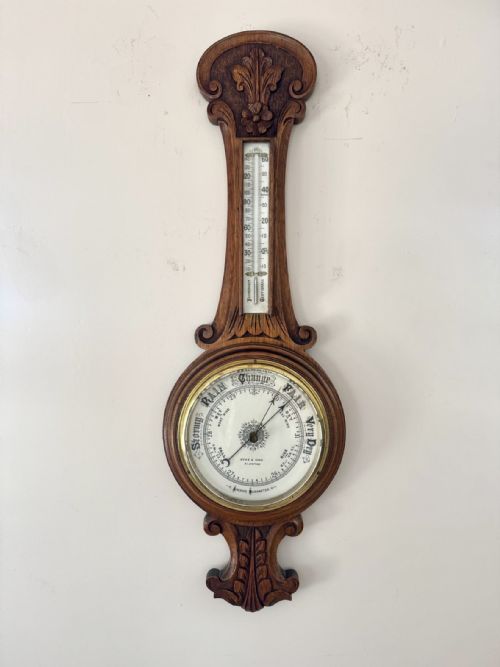
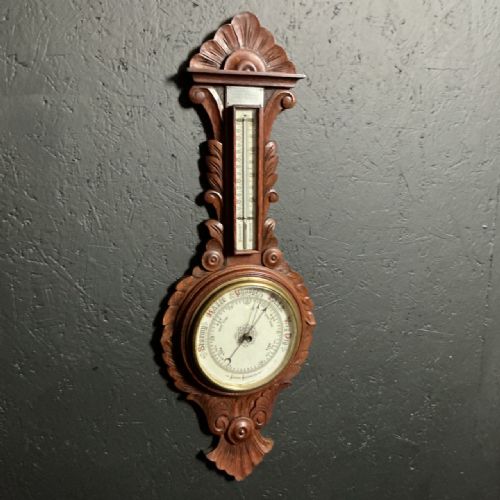
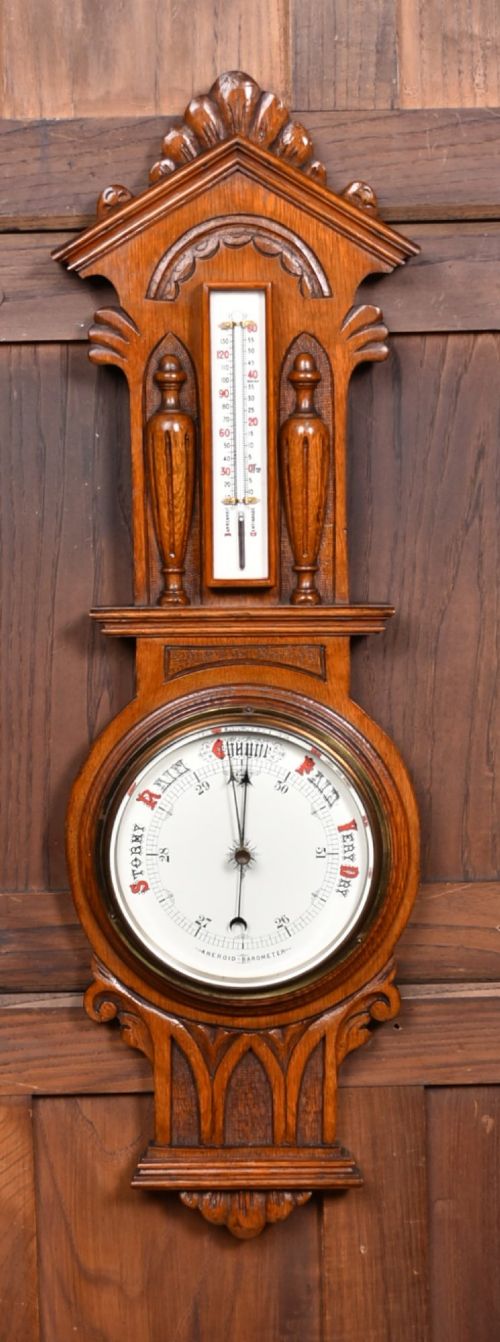
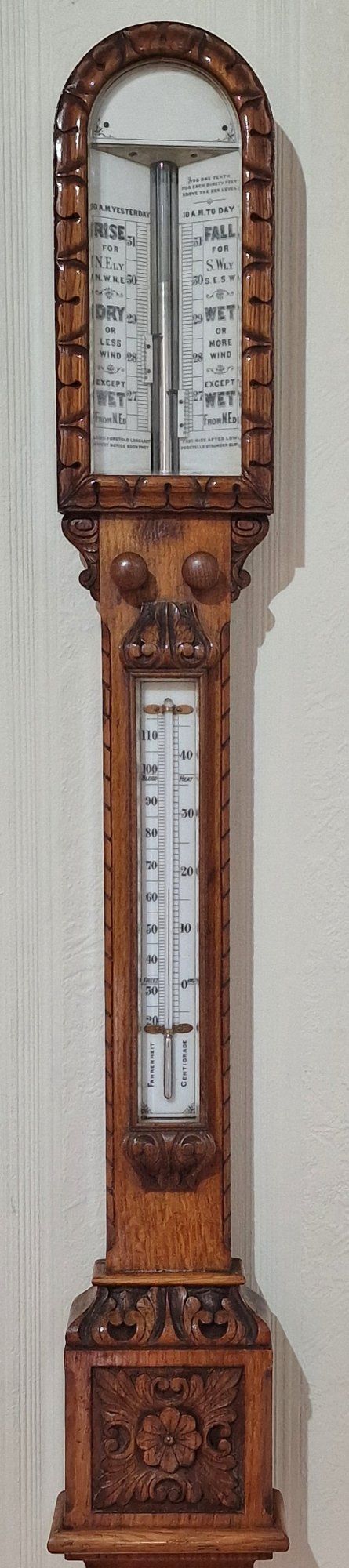
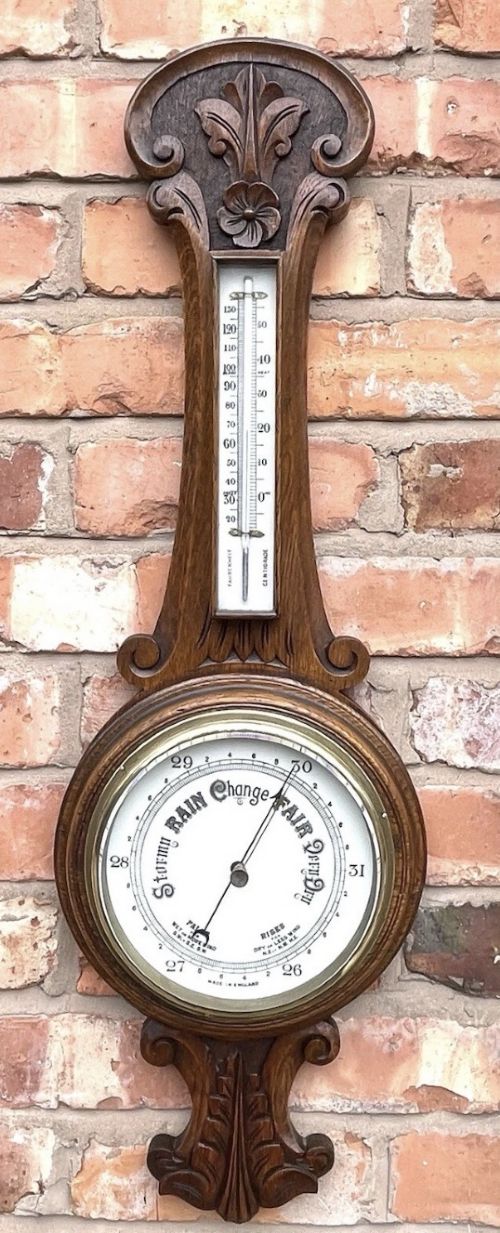
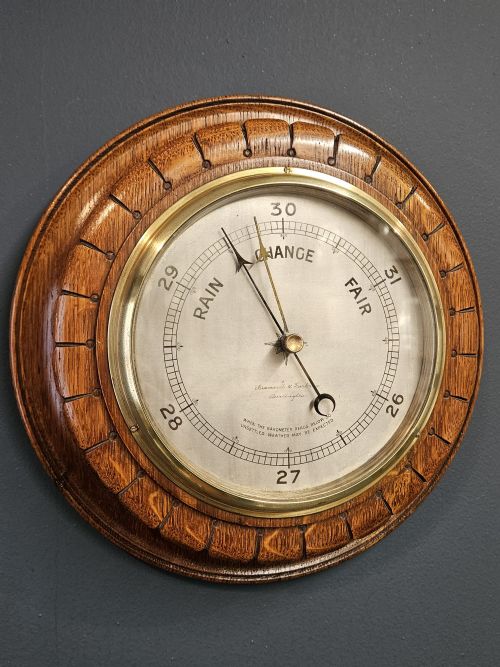
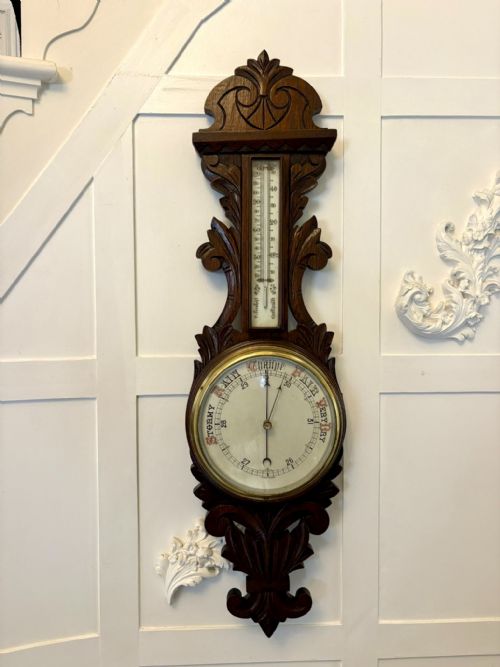
A carved oak weather instrument is typically a domestic domestic wall piece housing a barometer, thermometer, or clock within a solid timber case. Buyers searching for a carved oak weather instrument encounter numerous Victorian and Edwardian examples featuring detailed foliage, birds, or geometric motifs carved directly into the grain.
The banjo barometer and the stick barometer dominate the selection, alongside wheel barometers and combination desk pieces. Most pieces date from the nineteenth century or the early 1900s, reflecting the period's fascination with domestic atmospheric tracking.
Materials and construction methods
Makers utilised solid oak, walnut, and carved wood for the structural housings, often combining deep relief carving with turned elements. The timber frames frequently house brass bezels, ceramic dials, and silvered metal scales protected beneath bevelled glass.
Internal mechanisms rely on mercury columns in stick barometers or sealed metal aneroid capsules that expand and contract with atmospheric pressure changes. Artisans mounted these delicate scientific movements securely within heavy wooden backboards to ensure reliable calibration.
Some nineteenth-century instruments include detailed carvings of small woodland birds perched directly above the weather dial.
Assessing quality in construction and carving
Quality rests upon the crispness of the hand carving and the reputation of the instrument maker named on the dial. Pieces bearing signatures from established scientific instrument makers demonstrate superior dial legibility and precision mechanical engineering.
The thickness and grain selection of the oak case further distinguish standard production items from exceptional workshop commissions. Intricate animal or botanical carvings executed with depth and clarity indicate superior craftsmanship compared to plain moulded surrounds.
Hyde & Sons Sleaford·Bramwell & Harbron of Darlington·Negretti & Zambra·W Watson & Sons·J Hughes London·Maple & Co·J Hicks of London
The Carved Oak Weather Instrument Glossary
- Aneroid barometer
- An instrument that measures atmospheric pressure using a flexible metal box without liquid. Changes in air pressure cause the capsule to expand or contract, moving a pointer across the dial.
- Stick barometer
- A tall, narrow barometer that uses a mercury-filled glass tube to measure atmospheric pressure directly against a vertical scale. These often include exposed tubes protected by wooden cowlings.
- Banjo barometer
- A household weather glass housed inside a symmetrical wooden case shaped vaguely like a banjo. The design typically incorporates a circular dial at the top and a thermometer along the vertical stem.
- Silvered metal
- A brass or copper dial plate treated to achieve a metallic silver finish, typically engraved with weather descriptions and numbers. The fine black fill within the engraved lines ensures clear reading.
- Admiral Fitzroy barometer
- A storm glass design popularised in the nineteenth century featuring multiple scales, chemical tubes, and instructions for predicting local weather shifts. These substantial oak pieces often include integrated thermometers.
Carved Oak Weather Instrument: Frequently Asked Questions
How do I read a barometer?
Read the main pointer and tap the glass gently to see if the needle moves toward higher or lower pressure. Rising pressure generally indicates improving weather conditions, while falling pressure signals approaching rain or wind.
Compare the primary pointer with the manually set indicator needle to track whether pressure has increased or decreased since your last observation.
Where should I hang a wall barometer?
Hang your barometer on an interior wall away from direct sunlight, radiators, and draughty doorways. Consistent room temperatures prevent mechanical stress and ensure accurate atmospheric readings.
Ensure the wall fixing supports the weight securely, as solid oak and glass instruments can be surprisingly heavy.
How do I date an oak barometer?
Examine the style of the carving, the typography on the dial face, and the type of glass used. Victorian pieces often display heavy Gothic or Black Forest motifs, whereas Edwardian versions favour lighter framing.
Makers' signatures and registry marks stamped on the brass bezel or timber backboard provide the most reliable dating evidence.
Are mercury barometers safe to keep?
Enclosed mercury stick barometers are entirely safe for domestic display provided the glass tube remains sealed and undamaged. The mercury is safely contained within the heavy wooden housing and glass cover.
Avoid attempting to dismantle or transport mercury barometers without securing the reservoir cistern first to prevent spills.