


Carved Oak Wall Rack
A carved oak wall rack brings functional timber storage and period character straight to a hallway or kitchen wall.
Carved Oak Wall Rack
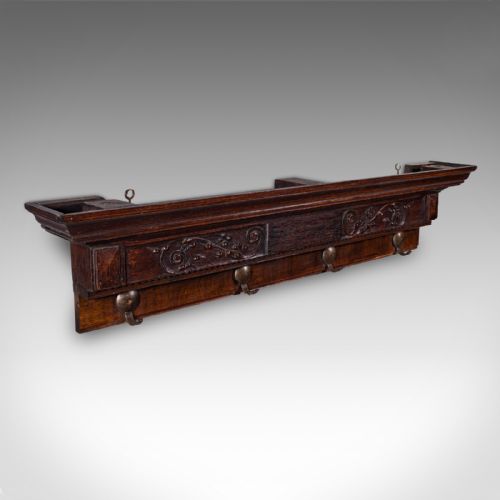
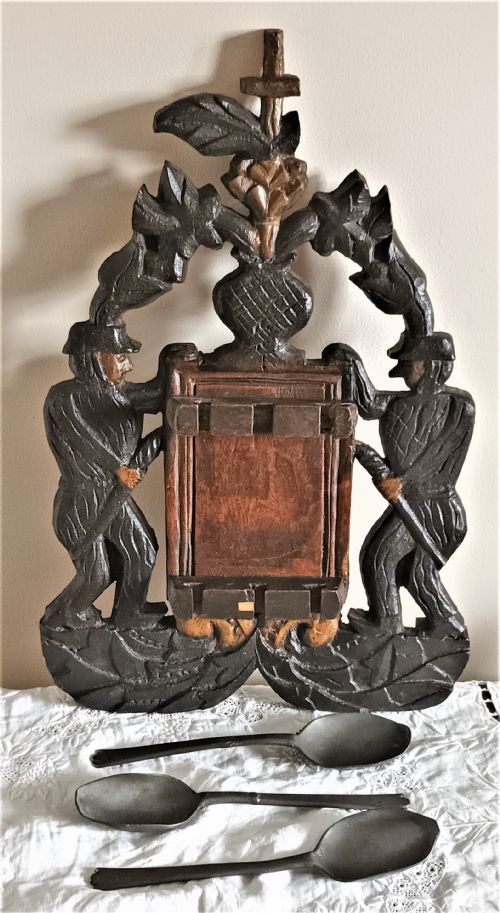
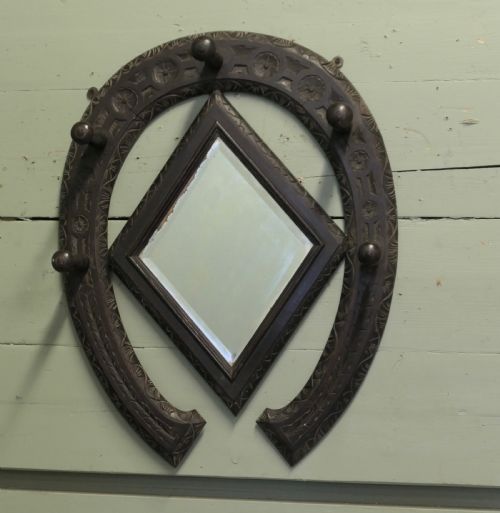
A carved oak wall rack serves practical purposes around the home, appearing in forms such as coat racks, plate racks, wall shelves, and spoon racks. These pieces span centuries of domestic design, running from the seventeenth century through the Georgian and Victorian eras into the early twentieth century.
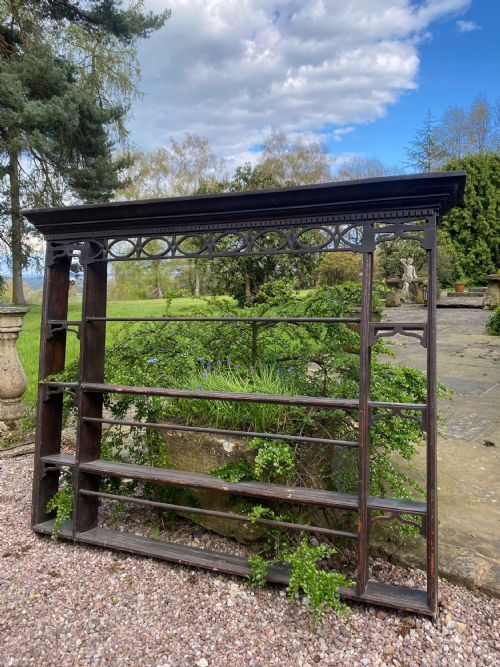
The version most commonly encountered on this page combines structural timber with hanging capacity or display space. Examples range from simple eighteenth-century delft racks to nineteenth-century Gothic revival hall stands and hanging wall shelves.
Materials and construction
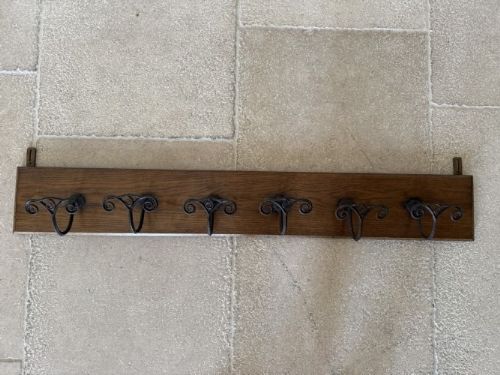
Makers relied primarily on solid oak, utilising its durability and grain for wall-mounted framework. Secondary materials such as brass, iron, and pewter appear frequently in hooks, fittings, and associated tableware.
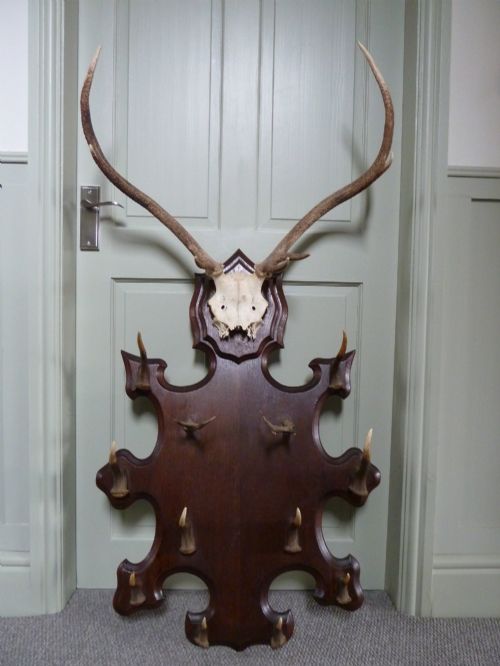
Organic elements like horn, bone, and stag horn occasionally integrate into the design for hooks and mounts, particularly on taxidermy and hall rack variations.
Stag horn and taxidermy elements occasionally creep into the woodwork, proving Victorians loved hanging coats on actual wildlife.
Defining quality
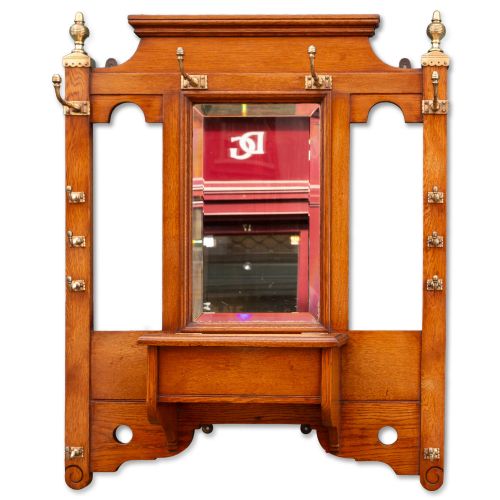
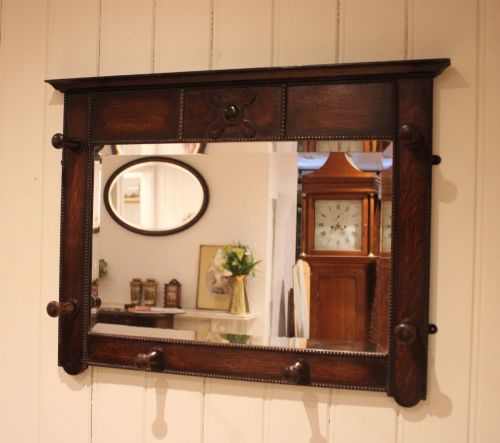
Quality rests upon the depth and crispness of the carving, the integrity of the timber joints, and the survival of original surface patination. Pieces that retain their matching brass hooks or integrated mirrors show greater original ambition.
Simpler vernacular examples rely on honest proportions and sturdy construction rather than ornamentation. The distinction lies in whether the timber framing and decorative motifs remain unaltered by later alterations.
The Carved Oak Wall Rack Glossary
- Delft rack
- A wall-mounted wooden shelving unit designed to display ceramic plates upright against slats or grooves. These pieces typically originate in eighteenth-century domestic kitchens.
- Trefid spoon
- An early dining implement featuring a flattened, three-lobed terminal handle shape. They are frequently associated with antique spoon racks from the seventeenth and eighteenth centuries.
- Hall stand
- A combined wall and floor furnishing incorporating coat hooks, hat pegs, and mirror glass. Victorian examples often integrate umbrella storage or taxidermy elements.
- Gothic revival
- A nineteenth-century design movement drawing inspiration from medieval architecture. Pieces in this style utilise pointed arches, tracery, and heavy carved ornamentation.
- Corinthian column
- A classical architectural column style featuring ornate acanthus leaf capitals. They appear as decorative supports on larger regional plate and delft racks.
Carved Oak Wall Rack: Frequently Asked Questions
What is the difference between a plate rack and a wall shelf?
A plate rack contains specific grooves and wooden slats designed to hold ceramic plates upright without sliding. Wall shelves provide flat horizontal surfaces for general display or storage.
Plate racks belong primarily to kitchen and dining spaces, whereas wall shelves suit parlours, hallways, and reception rooms.
How were coat racks used in period homes?
Coat racks mounted near entryways held heavy outer garments, hats, and walking accessories for household members and visitors. Many incorporated mirrors and small ledges for letters or keys.
They served as functional furniture pieces that welcomed guests while managing everyday outdoor wear.
How can I date an oak wall rack?
Dating relies on construction methods, timber grain, and decorative styles visible across the framework. Eighteenth-century pieces often display hand-sawn boards and pegged joinery, while Victorian examples show machine-sawn components and heavier revival carving.
Hardware such as forged iron hooks or brass fittings also provides clues to the manufacturing period.
Where should I hang a wooden wall rack?
These racks require secure wall fixings attached directly to studs or masonry to support the weight of timber and items hung upon them. Hallways and kitchens remain traditional locations for coat and plate varieties.
Ensure the mounting height suits the intended use, keeping coat hooks accessible and display shelves at eye level.