



Carved Oak Vanity Stool
These carved oak vanity stool examples offer solid timber framing and classic upholstery for dressing spaces.
Carved Oak Vanity Stool
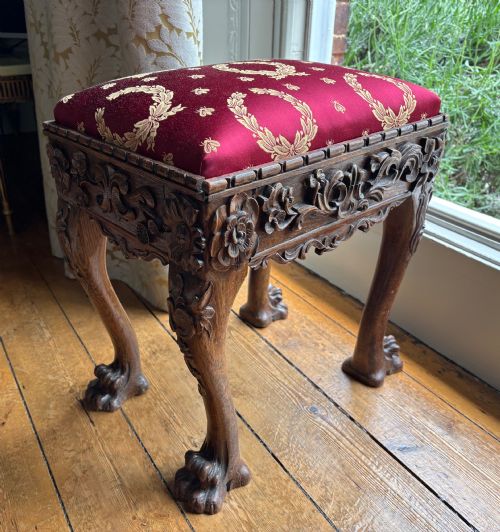
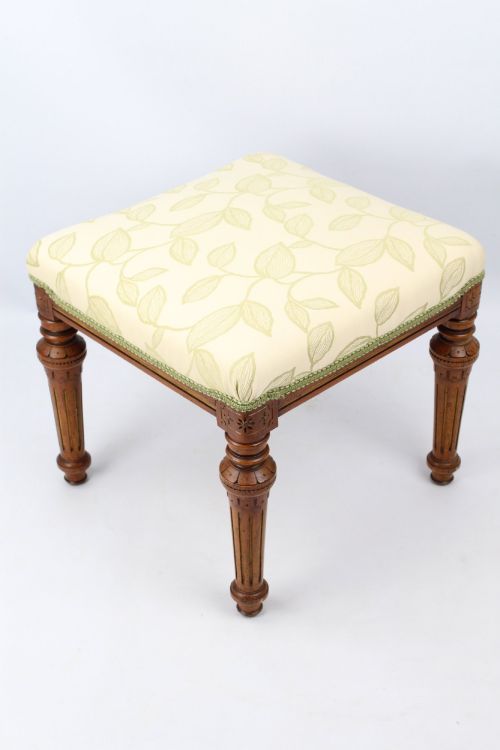
A carved oak vanity stool provides a low seating option traditionally placed before a dressing table or vanity unit. These pieces combine sturdy structural timber with upholstered seats ranging from simple fabrics to rich damask and velvet.
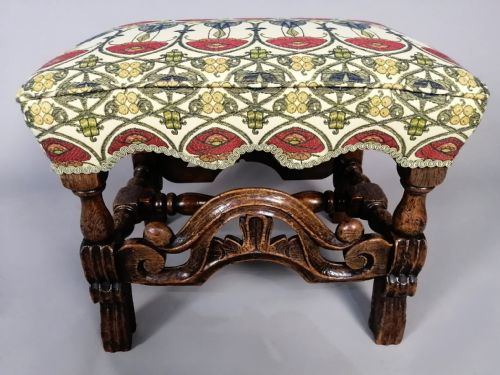
Most examples found here date from the nineteenth century through the early twentieth century, spanning Victorian, Edwardian, and various revivalist movements. Buyers meet styles including Chippendale, William and Mary, Carolean, and Neoclassical designs.
Forms vary from simple rectangular seats to elaborate X-frame constructions and spiral carved supports. They function primarily as bedroom or dressing room seating while serving as distinct decorative accents.
How they were made
The primary construction relies on solid oak, frequently shaped with hand-carved detailing, turned legs, or spiral twist supports. Some variations incorporate walnut or parcel gilt finishes alongside the standard oak framework.
Upholstery techniques involve securing fabric directly to the seat frame, utilising materials such as tapestry, damask, velvet, and standard woven fabrics. Decorative elements like glass details or carved woodwork complete the assembly of these functional seats.
Current listings span the nineteenth and early twentieth centuries, featuring oak, walnut, damask, velvet, and tapestry materials across revival styles.
What varies in quality
Quality rests in the depth and crispness of the hand-carved ornamentation upon the oak frame. Finer pieces display intricate, well-defined motifs rather than shallow or mechanical shaping.
The choice and execution of the upholstery material also define the upper tier of pieces. Original or high-grade replacement textiles like damask, velvet, and tapestry elevate the overall standard of the stool.
The Carved Oak Vanity Stool Glossary
- X-Frame
- A structural base formed by intersecting diagonal members resembling the letter X. This classical form provides both stability and architectural elegance.
- Parcel Gilt
- A decorative treatment where specific carved details or highlights are partially gilded with gold leaf. This technique accentuates particular areas of the wooden frame.
- Damask
- A reversible figured fabric traditionally woven on a jacquard loom. It provides a patterned, textured surface frequently utilised for antique seat upholstery.
Carved Oak Vanity Stool: Frequently Asked Questions
What is a carved oak vanity stool used for?
These pieces serve as seating for dressing tables and vanity setups in bedrooms. Their compact dimensions allow them to tuck neatly beneath tables when not in use.
Beyond functional seating, they add period character and decorative texture to a room through exposed timber frames and upholstered tops.
Where should I place a vanity stool?
They fit naturally in bedrooms before dressing tables, chest desks, or vanity stations. Their small footprint also suits hallways or entryways as occasional seating.
Positioning them where the carved wooden frame remains visible highlights the craftsmanship of the piece.
What styles are common in these stools?
Common styles include Victorian designs, Chippendale revival, William and Mary spiral-turned pieces, and Carolean revival motifs. Neoclassical X-frame examples also appear among the selections.
Each style draws on historical furniture traditions, incorporating distinct leg shapes, carving patterns, and upholstery choices.